

Technology is the discovery and creation of connections between things, often within a set of rules, in an efficient, easy, low cost, high yield way to achieve a specific function of the way things are organized. Science and technology can solve, create and innovate many problems and opportunities. But technology has both advantages and disadvantages. It is undoubtedly a double-edged sword. Leo Tolstoy once said. Blind faith in science is no different from ignorance. This sentence undoubtedly shows the attitude towards science and technology that human beings should have in modern society. But it backfires. In fact, what we see today is a kind of inexplicable enthusiasm for new technologies. We only pay attention to the new ability of new things, but ignore the negative impact of technology on society. Some costs may be necessary for the development of human society, but we should also calm down while evolving and define the true meaning of science and technology after the correct treatment of nature and culture.
Much of the debate about technology revolves around substitution and elimination. But does the emergence of new things really have the ability to replace or eliminate existing things? In his article, Nicholas Negroponte eloquently said that “The Physical Book Is Dead In 5 Years.” Historically, any kind of historical progress has not been the result of pure technological progress, nor has electronic books. Digital technology and the Internet have certainly greatly boosted the production and use of e-books, but historically, technological progress has meant only opportunity and possibility. In the history of books, the invention, use and promotion of printing were undoubtedly revolutionary. But this revolution in production technology does not mean a revolution in reading behavior. In the case of e-books, this digital advance appears so far to be little more than a way to supplement, rather than change, human reading habits. Clearly, what Nicholas Negroponte was saying in his article and interview was an over-obsession with technology. He even listed Kodak, in order to proof his opinion. Although this evidence does support his view, but it does not support the future of e-books and printed books in the same way. Because this example is something that has already happened. We can’t accept this way of proving that his prediction is what’s going to happen. Such a view is undoubtedly blind, at the same time, this view is not acceptable to readers. In short, by death he does not mean that paper books will die, but that they will gradually be replaced by e-books. E-books are born with the development of technology. So its argument is actually to support the replacement of old technology by new technology.
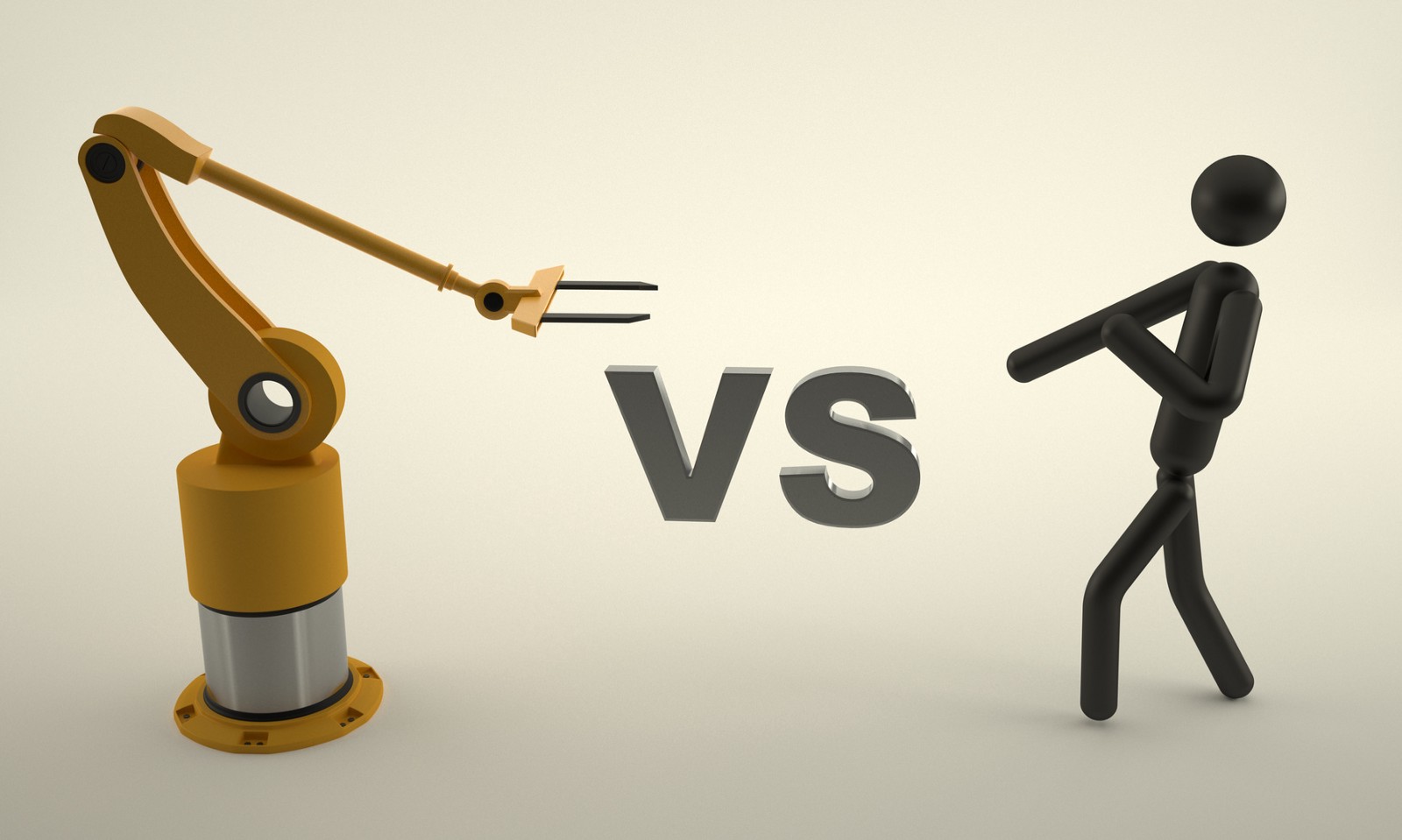
The relationship between old and new technologies is not only the relationship between e-books and paper books, but also the update iteration in artificial intelligence and automation. “with the development of technology, automation will gradually replace some manual jobs, ” Mr. Lee said in an interview. He mainly proposed that robots will replace the basic labor force first. The application of automation in various industries will bring long-term impact to traditional industries. According to the author’s prediction, drivers, inspectors, waiters and other industries will be replaced by robots first. Combined with the level of technology in our society today, we can really feel the possibility of this prediction. But this is not absolute. Ultimately, automation is a product of technological progress. The product may put some people out of work, but the technology is innocent. Therefore, the discussion of science and technology should start from the consequences of the development of technology. That is, the advantages and disadvantages that new technologies will bring to us after their birth, instead of blindly predicting whether new things will replace old things. Lee’s views in the interview were not as absolute as Nicholas Negroponte was.This way of speaking is with his own thinking about the uncertainty of technological development.This way of speaking is very appealing. This not only allows the reader to feel that his point of view has been considered, but also the reader’s doubts he also considered. Although no one can predict the future, combined with the achievements of the development of science and technology in the real world, his views can indeed make readers feel more empathy.
For these new technologies that have been born, we need to view the development and collision of old and new things objectively from a neutral position. Believe that human natural selection is in line with the needs of The Times. But for those not technical, we Will how to treat and choice, and this is a difficult problem, Anthony Sessa expressed in his article“Apple ‘s AR Glasses in his article Will Replace Your TV,” no restrictions on the size and site of AR headset Will Replace the traditional TV, this article was written by the author according to the data more, for example, a called Ahmad Nazree cool augmented reality helmet are slowly starting to enter the market. Therefore, although the content of the report has some authenticity, it does not have much practical value. This also gives the reader a sense of substitution at the beginning of the article. This is a common but persuasive way of writing. This article lists some facts, such as developed AR products. It is more effective to prove the author’s point in this way. However, the author only gives the data in the article, not the user experience. Whether a technology product can be promoted depends largely on the user experience. This argument, only from one point of view, can not fully convince the reader to support his point of view, so it is wishful thinking.

In the article Teachers vs Technology: Can Technology Replace Teachers? The author first assumes the scenario after technology replaces the human teacher, and then makes various comparisons to get the pros and cons. For example, although children no longer need to go to school, but children lose the opportunity to make friends, the machine can not provide humanized education like a teacher. The author has already had his own argument for this proposition – that is, the machine cannot replace the human teacher. As the author explains in the article, the connection between people is crucial to learning behavior. The existence of the school is not only to teach students knowledge, but more importantly, through the contact between teachers and students, students can experience some experiences outside the textbook. Although this is an outdated proposition, because this proposition has already produced results, the author still expresses that new technology does not replace all traditional things. The author used the way to ask questions when expressing opinions. This allows readers to combine their experiences to compare the author’s point of view, which is more likely to resonate with readers.
Through these articles, I think their unified focus is whether the current technology development is completely correct. In some industries, machines can never replace labor. Such as teachers, doctors, libraries, art. Because the machine has no mind. The emergence of high technology will only make people’s lives more efficient and convenient. It cannot completely change certain aspects of human society. Not all inventions are qualified to replace humans. When we talk about what technology can bring to humans, we should also consider which technology can make us lose. For example, the unemployment rate, the proportion of property, and the subject of human society are still human. Not all humans need all advanced products. Traditional culture is not in contradiction with modern science and technology. We can neither promote the development of modern science and technology at the expense of the disappearance of traditional culture, nor can we ignore the development of modern science and technology to protect traditional culture. Only by adhering to the two wings of modern science and technology and traditional culture can we create a brighter future for the development of the entire human race.
Work Cited:
Reisinger Don. “A.I. Expert Says Automation Could Replace 40% of Jobs in 15 Year.” The Fortune. 10 January, 2019. http://fortune.com/2019/01/10/automation-replace-jobs/
Fedena. “Teachers vs Technology: Can Technology Replace Teachers?”Fedena Blog. 4 May, 2018. https://fedena.com/blog/2018/05/teachers-vs-technology-can-technology-replace-teachers.html
Sessa Anthony. “Apple’s AR Glasses Will Replace Your TV.” Augment. 19 April, 2018. https://medium.com/augment-the-world/apples-ar-glasses-will-replace-your-tv-f1c055abf10f.
Mims Christopher. “Predicting the Death of Print.” MIT Technology Review. 23 August, 2018. https://www.technologyreview.com/s/420329/predicting-the-death-of-print/
 Cosner Rhetoric