
Ella Burr
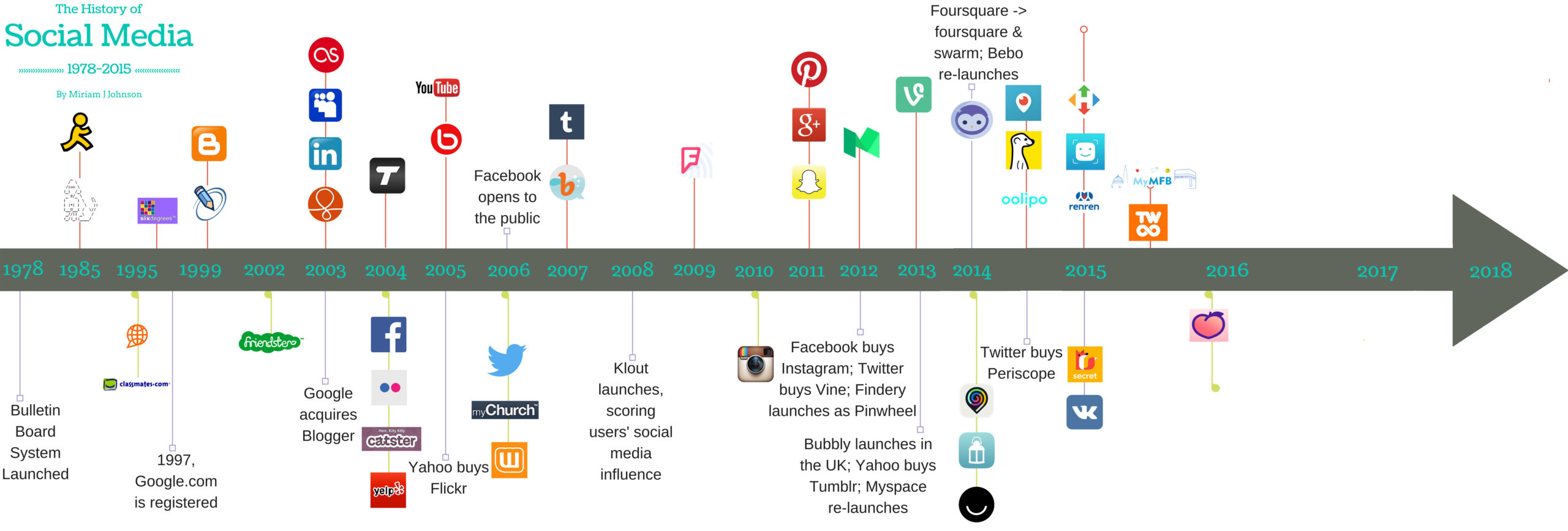
Social Media is a platform which provides information, knowledge, and awareness of the latest trends to people all over the world. Social Media has heavily increased over the years, and more people take part in it than ever before. Social Media, accompanied by Google Search, Instant Search, and other forms of internet and technology have implemented into society that information needs to be nearly instantaneous. Not only are industries coming out with social apps, but technology has a whole is immensely modernizing. Technology has been heavily present recently due to the ongoing pandemic, COVID-19. Classes all over the world have been taken over by Zoom, job interviews have been moved to video calls online, and even children as young as kindergarteners are learning through the computer. Electronics and technology of some sort has been around for as long as most can remember and is constantly advancing, seen in the image below. It is easy to say almost everyone is tied to some form of technology each day, but the affects that technology and the media are assumed to be leaving on society creates many conversations among people. Some believe these advances are benefitting our world, and many feel the opposite.
There are many opinions Social Media and new advances in technology are leaving people to feel, but much of our society is grateful for them. Author Jenna Wortham wrote the article “How I Learned to Love Snapchat”, where she discusses her views on communication through a device. Wortham believes phone calls leave an awkward feeling on people, which is why she loves Snapchat, which is an app where you communicate through pictures or texts that disappear after a select amount of time. Wortham states, “Texting freed a generation from the strictures and inconvenience (and awkwardness) of phone calls, while allowing people to be more loosely and constantly connected”. What Wortham enjoys Is the simplicity and efficiency of a text or a quick post. Jenna Wortham is a woman in her thirties, which I believe has much to do with the light she shines on the media. These advances are new, and the younger generations are the ones who most efficiently pick up the newest trends. Also, Technology has allowed many adults to work from home during our current Pandemic, keeping many young adults and families afloat. Similar to Wortham, Kenneth Goldsmith wrote the article, “Go Ahead: Waste Time on the Internet” where Goldsmith provides information on why and how the internet is important, and the positive impacts it brings to modern day society. In Goldsmiths article, he makes a point in comparison to spending hours watching tv, he says “ Our time spent in front of the computer is a mixed time, a time that reflects our desires as opposed to the time spent sitting in front of the television where we were fed shows we didn’t necessarily enjoy.” This is a great example of advances, because TV has been around longer than many forms of internet supporting his point that on the internet you’re engaging in what you’re actually interested in, instead of spending your time watching television shows you do not care to see. The internet is a way to allow people to freely research and learn about topics they are most interested in. More people are driven by their interests now than ever before because they have access to information on almost any topic you could imagine just at their finger tips. Both authors do a phenomenal job informing their audience with reasons technology is helping us, but of course not all agree.
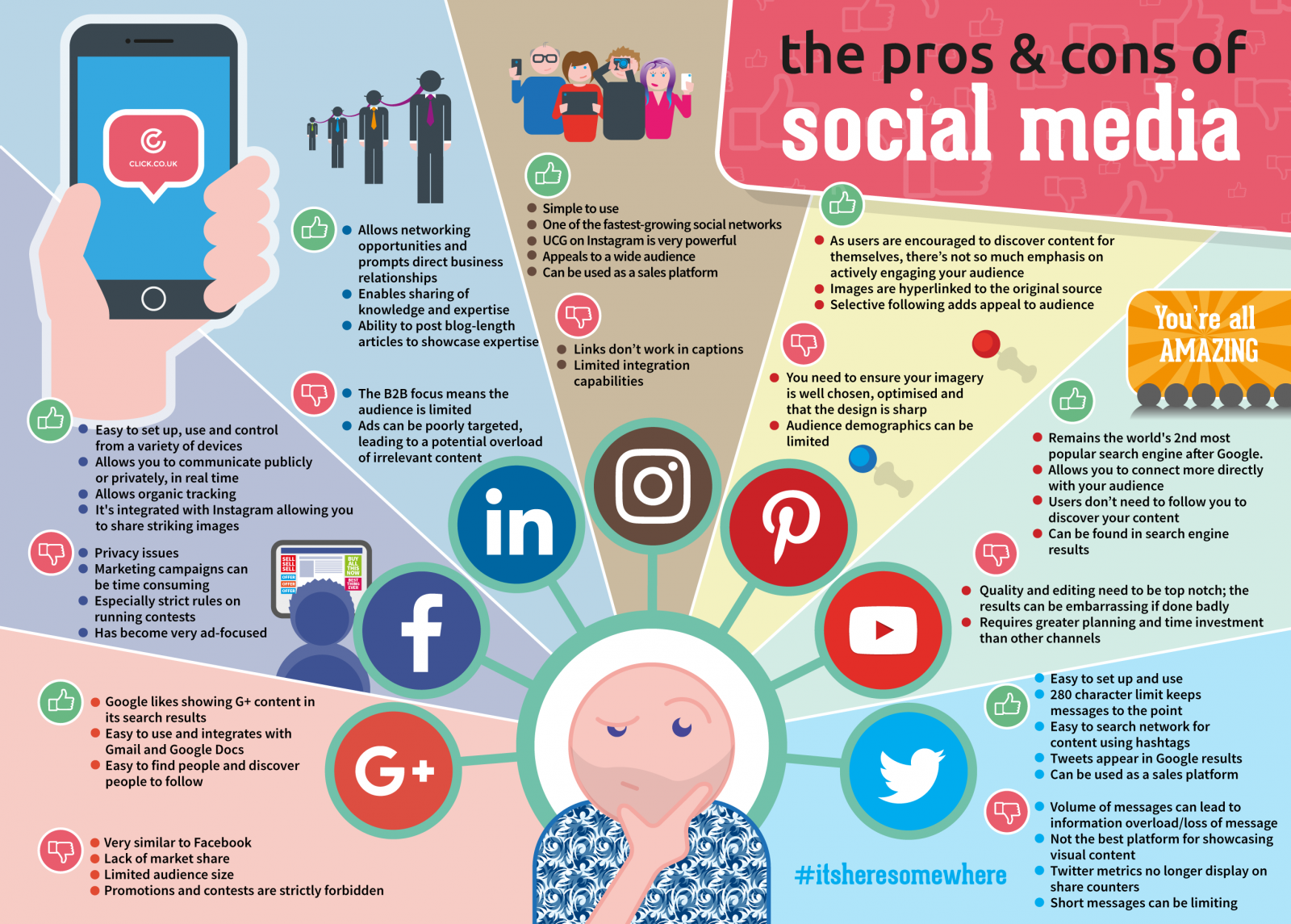
There are many people in our society that are very against technology and how it’s affecting younger generations. Nicholas Carr wrote the book “The Shallows: What the Internet is Doing to Our Brains” explaining the different ways the internet is negatively affecting our brains. While talking about the advances of the internet, Carr says, “What the Net seems to be doing is chipping away my capacity for concentration and contemplation. Whether I’m online or not, my mind now expects to take in information the way the Net distributes it: in a swiftly moving stream of particles. Once I was a scuba diver in the sea of words. Now I zip along the surface like a guy on a Jet Ski (Carr 139).” What Carr is getting at is the internet and its instant gratification is taking away people’s ability to take their time to find information. His reference “zip along the surface like a guy on a Jet Ski” is another way of him stating reading is turning into skimming, and the information does not last long-term in a person’s memory. Carr creates many of his arguments around the idea of “distraction” that is caused by the interaction with the internet. Carr talks about Google as a company that wants to be able to give information as fast as it can, saying “The last thing the company wants is to encourage leisurely reading or slow concentrated thought (Carr.” Then follows with “Google is, quite literally, in the business of distraction (Carr 157).” Carr wrote this book from the perspective of someone older in society, now experiencing these advances. There has been a negative connotation around technology for as long as most can remember, and has just as many cons as pros, seen below. Before there was social media, it was adults saying television is frying children’s brains. No matter the type of electronic, there is always those who are not in favor of it. I believe many people who are against technology are of an older age and are not quite used to it. The dramatic changes are what makes them “dislike” the media and continue on their ideas of the negative effect being left on society.
Although there are many people who feel social media and technology are helping our society and many who feel it is hurting it, there are also people who lie somewhere in between. Clive Thompson wrote an article called “Smarter than You Think: How Technology is Changing Our Minds for the Better” and although this article was written in a positive bias, Thompson says “The one thing that both apocalyptic and utopians understand and agree upon is that every new technology pushes us toward new forms of behavior while nudging us away from older, familiar ones (Thompson 457).” By saying this, Thompson is not implying new technology is neither good nor bad, he is closing in on the idea that as a society we are moving in a different direction. Those who see the cup half full, opposed to half empty are those who see technology as a positive change.
Social media and technology are going to continue advancing and will probably never stop. The issue is not whether social media and technology is “good or bad”, it’s the idea that the world is changing. The ones not in favor of these changes are those who want to keep the world traditional. Younger people are more open to this idea because they come from a society that is far from traditional, and constantly changing. Benjamin Franklin once said “Change is the only constant in life. Ones ability to adapt to those changes will determine your success in life”, the world continues to evolve, leaving no option but to either evolve with it, or sit back and be mad that it is no longer the way it used to be.
WORK CITED
Carr, Nicholas G. The Shallows: What the Internet Is Doing to Our Brains. W.W. Norton & Company, 2020.
Goldsmith, Kenneth. “Op-Ed: Go Ahead: Waste Time on the Internet.” Los Angeles Times, Los Angeles Times, 12 Aug. 2016, http://www.latimes.com/opinion/op-ed/la-oe-goldsmith-wasting-time-internet-20160812-snap-story.html.
Thompson, Clive. “Smarter than You Think: How Technology is Changing Our Minds For the Better” They Say/I Say, with Readings. 4 ed., edited by Gerald Graff, Cathy Birkenstein, and Russel Durst, W. W. Norton & Company, 2018. Pp. 457
Wortham, Jenna. “How I Learned to Love Snapchat.” The New York Times, The New York Times, 18 May 2016, http://www.nytimes.com/2016/05/22/magazine/how-i-learned-to-love-snapchat.html.
 Cosner Rhetoric