


The alarm goes off at 7:00 am, corporate professionals kick start their daily morning routine with a cup of black coffee. They say the hot beverage increases their personal stamina. At noon, a handful of employees suffer migraines from stress, but they conveniently take one or two Aspirins to diminish the excruciating headache and go back to their collective productivity. If the company asked its employees about their drug use, they would deny any consumption. However, the reality is that everybody consumes drugs, whether they are organic or artificial, like Caffeine or Salicylate. The previously mentioned drugs are not harmful, but some others are. While they might not kill whoever consumes them, these drugs become an issue when people such as professional athletes use them with a profitable purpose.
It is not surprising that human beings tend to have an affinity for substances that increase the body’s physical and mental functions. According to History.com, going back to ancient civilizations, such as Mesopotamia or Greece, people used cannabis or opium, among other substances, with recreational and medicinal purposes. As these civilizations gradually developed, sports surged, gained power, and prestige. Victorious athletes not only gained respect and pride but also wealth and fame. Rewards motivated amateur athletes to become professionals and succeed in their sport. Athletes drank special concoctions which helped them out to increase their performance during the competitions.
Fast-forward to the present day, athletes still manipulate their bodies and minds with high-tech drugs, blood transfusions, hormones, etc. The previous techniques are known as Doping, the use of banned substances in sports. When controversy sparks in the news referring to this complex topic some fans act incredulous and feel disappointed, others justify their idol’s actions. Among the general public, fans and sports eminences there is always a long, heated debate towards doping. The World Cup, Tour de France, the Olympics…just to mention a few competitions, have all been the center of attention due to professional athletes been caught in doping acts. The spectrum of opinions and arguments about what should be done with the doping range widely. The pro-doping side says that sports would be better off if certain drugs and treatments are legalized. On the contrary, the anti-doping side argues that the solution is not as simple as waving a magic wand, instead, anti-doping institutions must continue to ban substances that clearly give special advantage to competitors.
The Proposition
As a member of the proposition, Chris Smith, a Forbes journalist, enumerates in his article, “Why It’s Time To Legalize Steroids In Professional Sports,” the economic and ethical reasons for which performance-enhancing drugs (PEDs) should be legalized sports so that all athletes are even when they compete against each other. Given the fact that Forbes is a business magazine, the article focuses more on business arguments. Nonetheless, just because the author strongly highlights the commercial side of doping, it does not mean his ethical points are powerless.

Smith agrees with his opponents that anti-doping agencies are not delivering positive results regardless of the plethora of drug tests and suspensions to athletes along the years. To entice the reader’s attention Smith recalls the infamous Lance Armstrong’s case in which the cyclist was found guilty for poor sportsmanship. He was stripped of his seven Tour de France titles in 2012. After presenting popular doping cases, Smith asserts that it is naive to think that other athletes are not undergoing through the same or better doping techniques. What triggers Smith to take a radical position on this debate is his exhaustion from the stagnant solutions that anti-doping institutions offer to the repetitive doping cases in sports.
Smith starts off by saying that approved PEDs and steroids would allow athletes from different backgrounds to even out first, and later to become physically extraordinary. He reasons, “Not only would the playing field suddenly be even for all players, but it would also be at a higher level.” In his statement, Smith glorifies artificial human capacity. According to him, after the standardization of competitors, the audience would be able to witness the birth of “super athletes,” and be marveled by the pinnacle of human endurance, speed, and strength. The readers might think his argument carries an elitist, or an ambitious tone. The elitist tone gives a general sense that Smith’s logos intends to reach out only to those athletes who can afford to spend a considerable amount of money on special drugs. While the ambitious tone helps to highlight Smith’s pathos; he wants to make the excitement for superhumans contagious. Athletes only want to become the best in what they do, with doping they would reach unimaginable capacities. Opening the doors to PEDs would lessen the judgment against athletes who only want to reach their maximum capacity by using them.
Following up, Smith brings up a financial factor. When super athletes perform exceptionally in the field like baseball players Mark McGwire and Sammy Sosa did in the 90s, fans go berserk. He asserts that if games become wildly entertaining and exciting, fans are willing to spend extra money on the team’s gear. This means that the sports industry economy gets activated and it is highly beneficial from a business standpoint. While it is true that the sports industry gains money, it is also true that ethics within sports decline. Some people will say that super-athletes’ morals will always be under scrutiny, and that nowadays fortune outweighs fairness. With his example, some readers could say that Smith infers that the ultimate and contemporary goal for sports is money.
The Opposition
Whereas some people have decided that doping is impossible to eradicate, others in the debate table remain optimistic about the fight against cheating. The opposition fervently discusses that sports should remain doping-free. In a Bloomberg article, “Sport, Drugs and Cheating,” Grant Clark proposes a gradual solution for the drugs conundrum. Clark opens his article by saying that two possible aids that can prevent to catch dopers: Advanced technologies, and whistle-blowers. The argument chooses to use emotions and be emphatic with the readers. The motivation to continue fighting against quacks is contagious and optimistic, he says, “drug cheats may rest a little less easy.” To some readers, this might seem somewhat conformist, but “slow progress is still progress” (Anonymous), it is unarguably that progress with little steps is better than to remain stationary.
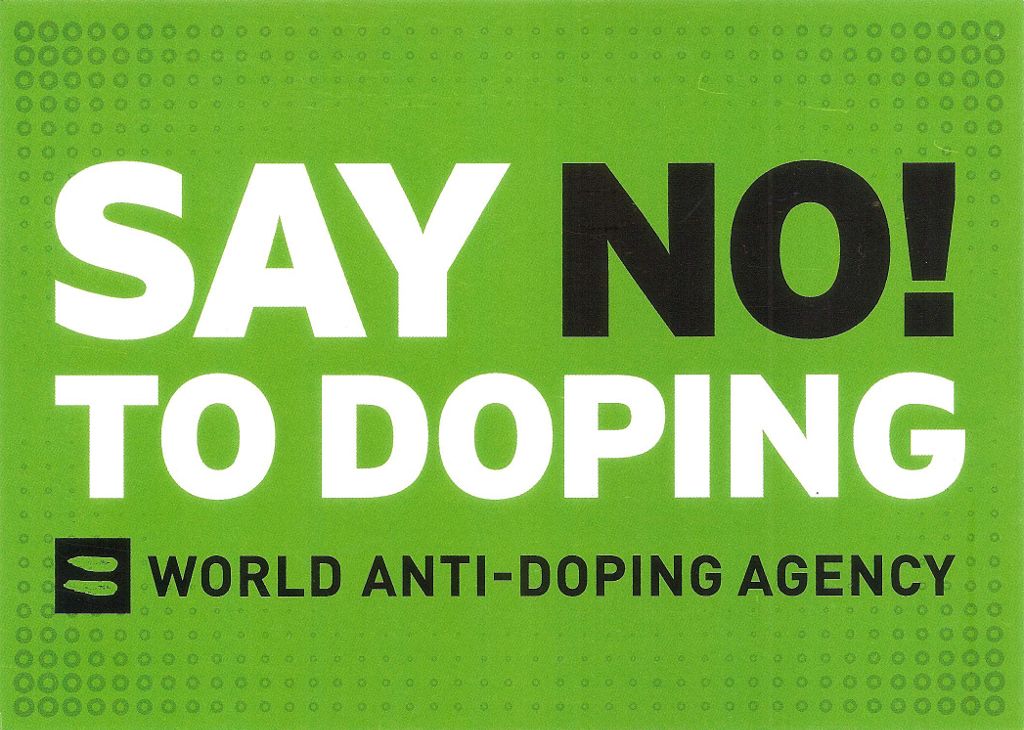
Clark’s article development is as follows: The Situation, The Background, and The Argument.
The Situation

The case of Lance Armstrong remained as one of the most notorious and talked doping cases in sports history until the recent Russian team’s case in the Olympics of Rio 2016 hit the world news headlines. Clark presents the timeline for the scandal to best explain the mafia behind sports. Nowadays, any urine or blood sample from professional athletes are stored in high-tech headquarters. In Rio, this system was used. As time passes by, technology gets exponentially more efficient and precise. Perhaps the first time when those samples were tested out the machines did not detect any abnormalities. If at some point an athlete becomes a target of scrutiny, anti-doping authorities can check the samples out with the newer technology and re-run tests to confirm or decline if the athlete underwent through some type of banned PEDs. The Russian team faced the previous inspection scenario after doping allegations in the media against them (in 2017, Netflix streamed the documentary Icarus directed by Bryan Fogel. In this film, the whistleblower, Dr. Grigory Rodchenkov talks about how Russia has been cheating in the Olympics for several years). To everyone’s surprise, they were guilty. “Among the guilty parties, track and field, weightlifting and Russians dominated.” This example is enough evidence to emphasize that doping should remain unacceptable. Since drugs kill the spirit of competition. No more effort is needed, with PEDs no more hard work would be put in.
The Background and The Argument
Clark tells the story of how banning became important, among the most common practices in the 60s Olympics were “blood doping (via injections of the hormone EPO or blood transfusions) and taking anabolic steroids or human growth hormone.” His main point is that since the 60s these practices have been carried out, perhaps athletes become slyer every year and outsmart anti-doping agencies, but the problem itself is still there. He ultimately asserts that baby steps are better than nothing, “Anti-doping enforcers say drug-taking will never be eradicated but that they need additional investigatory powers and financial support to keep notching small victories.” By laying out the alarming current status of cheating athletes, Clark increases his ethos. He aims to impact his audience with facts and make the readers eager to pay attention to his proposed solution, which is restructuring the internal system of anti-doping agencies. This change would be mainly led by advanced technology, and with the help of protected whistle blowers, like the man who spoke against the Russian team.
Sports have existed since ancient cultures, and athletes have always been ambitious about winning. Nowadays, sports face a problem, athletes will do anything necessary to become the best, even if that translates to doping. The debate divides between legalizing PEDs or finding new ways to make sports doping-free. Both sides seem viable, however, more dialogue needs to be created.
Works Cited
“Caffeine & Aspirin.” RadioActiveFM, 26 July 2018, http://www.radioactive.fm/caffine-aspirin/.
Clark, Grant. “Sport, Drugs and Cheating.” Bloomberg.com, Bloomberg, 8 Feb. 2018, 10:52 PM CST, http://www.bloomberg.com/quicktake/doping.
Editors, History.com. “Heroin, Morphine and Opiates.” History.com, A&E Television c Networks, 12 June 2017, http://www.history.com/topics/crime/history-of-heroin-morphine-and-opiates.
Fogel, Bryan, director. Icarus. Icarus, Netflix, 20 Jan. 2017, http://www.netflix.com/title/80168079.
“Icarus Review: This Netflix Documentary Is One of the Most Politically Relevant Watches of This Year- Entertainment News, Firstpost.” Firstpost, 25 Sept. 2017, http://www.firstpost.com/entertainment/icarus-review-this-netflix-documentary-is-one-of-the-most-politically-relevant-watches-of-this-year-3928903.html.
Levin, Josh, and Josh Levin. “Lance Armstrong Is Keeping the Thing He Prizes Most: His Righteous Indignation.” Slate Magazine, Slate, 24 Aug. 2012, slate.com/culture/2012/08/lance-armstrong-doping-usada-is-taking-away-his-seven-tour-de-france-titles-but-hes-keeping-what-he-prizes-most-his-righteous-indignation.html.
Smith, Chris. “Why It’s Time To Legalize Steroids In Professional Sports.” Forbes, Forbes Magazine, 24 Aug. 2012, 4:10 PM, http://www.forbes.com/sites/chrissmith/2012/08/24/why-its-time-to-legalize-steroids-in-professional-sports/#3b886dfb65d2.
“Survey about Doping Controls among EUSA Members.” EUSA, http://www.eusa.eu/news?Survey-about-Doping-Controls-among-EUSA-Members.
 Cosner Rhetoric