

With the rise of the Covid 19 pandemic and the mandates of social distancing, virtual instruction has become crucial. While it may be necessary now, many have come to wonder what this means for the future of education. Online learning and education has become a growing phenomenon with the increase of technological use and the mass improvements that have followed. As we trade in our paper and pencils in for tablets and laptops, there are numerous pros and cons to take a look at.


Among these advancements in technology are increased uses of: Virtual Reality, 3D printing, and holographic projections. George Greenbury recently gave a TED Talk, “Schools without classrooms: the potential of online education and how to fulfil it”, analyzing the potential for online schooling. Being a teacher himself, he has seen first hand how a classroom can fail to effectively teach a student.
“School improves the efficiency of teaching, but makes it less effective”
George Greenbury
Greenbury believes school takes away two crucial components of learning: one-to-one learning and hands on activities. He believes online learning has the potential to allow us to “have our cake and eat it too”. He builds his argument by admitting that most online education is not intrinsically engaging and essentially ineffective, but only because it mimics traditional school. He takes on a hopeful approach to reveal that online learning has the potential to build these relationships and practical application aspects that traditional school is lacking. Greenbury concluded his talk by envisioning how online education can be rebuilt to provide video rich education, an opportunity for one-to-one and hands on learning, an opportunity to build.

While Greensbury focuses on a hopeful future, Darienn Pitt wrote an article called “Face-to-face learning is better than online“emphasizing the reality of our present. Pitt, who is a student at the University of Alabama, brings to light a new perspective on the topic of online schooling. While Greenbury is a teacher, speaking for the well-being of his students, Pitt speaks out for many students across the country who may share his beliefs. At the start of his essay he talks about how it is easier to engage in class if it is in person, saying that “many students are not as connected online as in person”. Pitt talks about how online school has brought about many challenges of its own. Asynchronous classes often require a level of self-discipline and motivation that many students lack, or struggle to achieve. Pitt also mentions how completing your homework nowadays doesn’t even require you to leave the house which can, in turn, cause people to feel cooped up. Pitt’s appeal to relate to the average student effectively gets his point across as he speaks negatively about his personal experiences of online schooling. Greenbury and Pitt’s arguments seem like polar opposites at first, but Pitt’s argument may actually support Greenbury’s claim that there is a fundamental issue in how online school is taught.
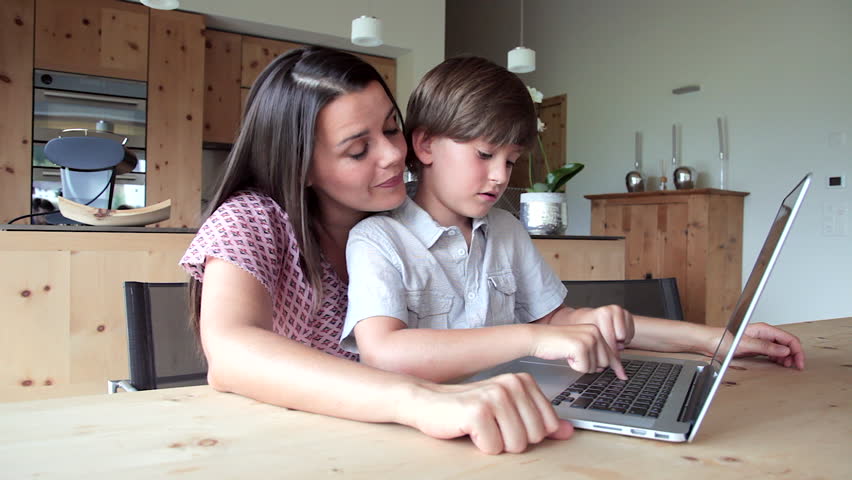
After reading about viewpoints from teachers and their students, one might begin to wonder how parents feel about sending their children to online school. Parents of younger children have had increasing concerns about how online education is effecting their children. Emily Gould from The Atlantic expressed her viewpoints vividly in her essay “Remote Learning Is a Bad Joke“. She opens with how much she hates this new age of virtual meetings, describing them as an “allergic reaction” and “a form of physical torture”. Her word choice here brings a crawl to her readers skins as they may recall how terrible it is to have an allergic reacting. Or their toes may curl from the thought of being physically tortured. Gould’s word choice brings on a strong start to her essay. After getting her personal opinions out of the way, she began to talk about her 5-year-old son, Raffi. Gould expressed her concern for Raffi’s well-being as he cannot interact with his classmates like he used to, “He was used to being able to talk to his classmates directly, to hug them and hold hands with them and fight with them”. Another aspect Gould touches on is that virtual instruction may be forcing her child to grow up faster by making then learn online etiquette from the age of five, while “He’ll have the rest of his life to figure out the niceties of interacting with people through a screen”. Gould’s concerning tone gives her essay a strong appeal to parents who also have younger children. Her essay outlines not only the difficulties of online agendas, but also the separation of social connections and wellbeing of her child.

Now, virtual learning may not be as bad as some people make it out to be. Not everyone is against it. Brandon Busteed from Forbes argues for online education in his article “Online Education: From Good To Better To Best?” believing that online courses are “a better way to learn”. Busteed packed his article with facts and statistics to support his claims. This approach appeals to those who aren’t swayed by the personal narratives that others may give. Busteed worked in some credibility as he recalled the time he took an online course through the Columbia Business School and claimed “It was as good an experience as I’ve had in traditional classrooms”. Busteed uses three main ideas to prove online learning better. The first being that online learning allows you to go at your own pace which can give you more control over your education. The second is that multimedia content provides better access to students and professors which allows for less scheduling conflicts. Finally, Busteed argued that online courses have a greater number of assessments which allows for personal growth to be tracked easier. Busteed comes on strong with his views of how great online learning can be that it gives him more of an assertive tone. This use of language may not be effective towards some individuals, but can be motivating to others who crave an assuring, strong-willed person to push them to try new things.
With the rise of technology and online education, many are saying farewell to paper. Countless textbooks are now being offered online, and many classrooms are eliminating paper all together. Claudia Wallis took a look at whether it was worth it or not in her article, “A textbook dilemma: Digital or paper?” Wallis’s compares and contrasts both sides and takes an informative approach to educate us on both sides. She opens with an anecdote about her friend’s son debating on whether to buy a physical textbook or the online version. Many parents and students can relate to this opening and would want to continue reading in order to find out if the more expensive paper books are worth it. Wallis dives into a study done by educational psychologist Patricia Alexander, a literacy scholar at the University of Maryland, who analyzed whether there was a difference between paper and online learning. The conclusion of the study was that students were able to recall and expand the material that was read more effectively if it was on paper. Another observation was that online readers were given a false sense of confidence, giving the illusion that since they were able to read through the material faster they learned faster. Wallis’s use of facts and studies solidified her argument and backed her ideas. Overall, Wallis appeared to conclude that paper is the way to go.
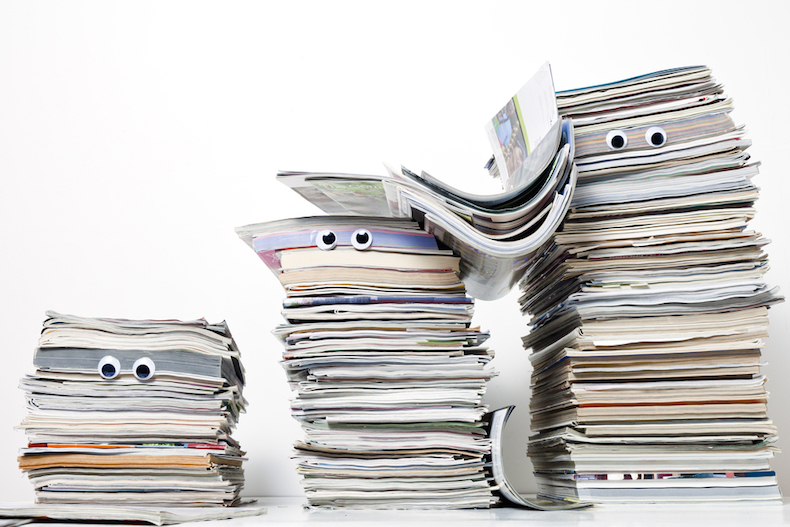
While paper may be more effective, it is worth it to consider that it can be expensive. According to an article written by Ben Johnson, a school of just 100 teachers would spend at least $25,000 a year on just paper, excluding any costs of printing, ink and services. Wallis also stated in her essay that if people are self-aware and able to deeply question and analyze the text, then online reading can be as effective as paper reading. Johnson also was in favor of eliminating paper, as he shared a story of how his son has been learning in a paper free classroom.
All of the viewpoints that have been examined today take various approaches to answer the big question: What is the best way to educate our students? Greenbury spoke for the teachers and thought that teachers should be focused on the connections that are made between the teacher and student. Pitt spoke for the students in giving voice to those who find it hard to stay motivated online. Gould spoke out for parents across the nation who struggle to force their young children to sit in front of a screen while being socially deprived and forced to mature while learning virtual etiquette. Wallis spoke informatively to educate those on the benefits of reading off of paper versus virtual text while Johnson briefly mentioned how much money we could save if we eliminated paper. There is no right or wrong answer when it comes to virtual education. Some may focus on efficiency to teach material while others may worry about its effects on students’ prosperity. So, “What is education, and the best way to teach it?”, that is up to the individual to decide.
In conclusion, there is no one approach to the debate of online education versus physical. There also is not one straight answer to if we should keep traditional textbooks or start incorporating electronic textbooks into our learning styles. In person classes have their advantages, just as virtual classes do too. As we transition in to a technology focused world, maybe one day we will have a learning method best suited for everyone. Just like Greenbury, we can be hopeful of a better future.
Work Cited
Busteed, Brandon. “Online Education: From Good To Better To Best?” Forbes, 5 March, 2019, http://www.forbes.com/sites/brandonbusteed/2019/03/05/online-education-from-good-to-better-to-best/?sh=2ec52df66912.
Gould, Emily. “Remote Learning is a Bad Joke.” The Atlantic, 18 August, 2020, http://www.theatlantic.com/ideas/archive/2020/08/kindergartener-virtual-education/615316/.
Greenbury, George. “Schools without classrooms: the potential of online education and how to fulfil it.” TED: Ideas Worth Spreading, 3 September, 2019, http://www.ted.com/talks/george_greenbury_schools_without_classrooms_the_potential_of_online_education_and_how_to_fulfil_it.
Johnson, Ben. “Paper and pencil Curriculum: How much do you rely on it?” Edutopia, 23 February, 2011, http://www.edutopia.org/blog/paperless-schools-techology-ben-johnson.
Pitt, Darienn. “Face-to-face learning is better than online.” The Crimson White, 8 April, cw.ua.edu/64870/opinion/face-to-face-learning-is-better-than-online/.
ProCon.org. “Should Tablets Replace Textbooks in K-12 Schools?” Britannica ProCon.org, 4 December, 2018, tablets-textbooks.procon.org/.
Wallis, Claudia. “A textbook Dilema: Digital or Paper?” The Hechinger Report, 23 August, 2017, hechingerreport.org/textbook-dilemma-digital-paper/.
 Cosner Rhetoric