
In recent years, two major events have put “security” in the public eye, and governments around the world have raised the issue of the current state of “security” at the national level. At the very beginning, it was Snowden’s “PRISM”—a secret surveillance program executed by United states government have shocked the whole world. It turned out that all countries and sensitive jobs were exposed to the surveillance of the us government. Traces of surveillance can be seen in communications, in anything on the network. Through this event, people began to pay attention to their information security. In order to protect their privacy right, people start to protest the government. The second issue was the attack on France by the terrorist group ISIS in 2018, with links between its members and the release of information allegedly spread through the encrypted messaging platform Telegram. The incident has shone a spotlight on technology companies and exposed the irreconcilable tension between privacy and national security. In the Internet media, the debate about this has never stopped.
The article “Stop spying on Wikipedia Users” written by Jimmy wales and Lila Tretikov argued that the US national security agency’s massive surveillance program on the Internet violates the constitution’s right to privacy. To Wikipedia volunteers, their anonymity is not guaranteed, and the national security agency may track their activities: not only what they read or type, but also sensitive and private information about an individual’s actual location and their identity. This would stifle free speech and the exchange of knowledge. Not just editors, but hundreds of millions of readers in the United States and around the world whose job it is to communicate sensitive information to people outside the world. Privacy is a fundamental right. It is a prerequisite for free speech and supports freedom of investigation and assembly. It gave people the right to read, write and communicate in secret without fear of persecution. The victim not just the user of Wikipedia, one of the documents revealed by the Snowden specifically identified other major media like CNN, Gmail and Facebook are also the targets for surveillance. By using that monitoring, N.S.A can learn nearly everything a typical user does on the internet.
The author of “Online Privacy Issue is also in play in Petraeus scandal” —Scott Shane also supports Jimmy’s view. On the Internet, and especially in emails, text messages, social network articles and online photos, these activities linked Americans work and live closely together. Sensitive private information stored on computer servers for years is likely to be discovered by investigators, even though the events they are investigating may not have anything to do with it. When government investigators monitor online crime, espionage and subversion, they will inevitably invade people’s private lives. That’s a scary thing for privacy advocates. When law enforcement investigators dig deep into the private sector of the Internet, they can also uncover completely irrelevant information, leading to surprisingly damaging results. And when the investigation is keep going, it is easy to blur of lines between the private and the public.
In “Blowing a Whistle” the author Thomas Friedman takes a different view. In the world where people live, if a government wants to protect its citizens from a real terrorist threat, it must use big data within legal and judicial constraints. This is an inevitable operation. That’s not an ideal approach, but another 9/11 would be far more damaging to civil liberties. The author is more worried about another 9/11 than about a government invasion of privacy. That is to say, the heavy blow brought by terrorists is more terrible and deadly. This is not because the author does not care about civil liberties and privacy, but because a 9/11 incident — or worse, a nuclear material attack, for example — could send America, a supposedly good open society straight to the end.
“Belgium Says Law Limiting Raids May Have Allowed Suspect in Paris Attacks to Escape” , Milan Schreuer demonstrated how Belgian law prevented police from searching private homes at night after the terrorist attacks in Paris , which allowing attackers who were holed up inside to escape. The terrorists escaped because of the law, which was designed to protect family privacy. The news further reinforced the reputation of the Belgian government as dysfunctional and inefficient, with all its ill effects. Concerns about civil liberties and the safety of people, the government have put the region on a high alert, with schools, markets and public transport closed. The Belgian authorities have increased the frequency and intensity of the raids, but they have brought no significant new information to light. The decision to go by the book underscores the difficult balance between national security and the privacy of citizens in Europe and the United States in an era of terrorist threats.
Freedom of privacy is a fundamental right. As far as respecting human rights are concerned, personal privacy is absolutely inviolable. In addition, with the development of technology and the improvement of encryption methods between communication products. Theoretically, personal privacy can be guaranteed with no doubt. But in terms of national security, this phenomenon of absolute security is completely impossible. Whether rumor or fact, the phenomenon of backdoor of various hardware devices and software systems is extremely common.
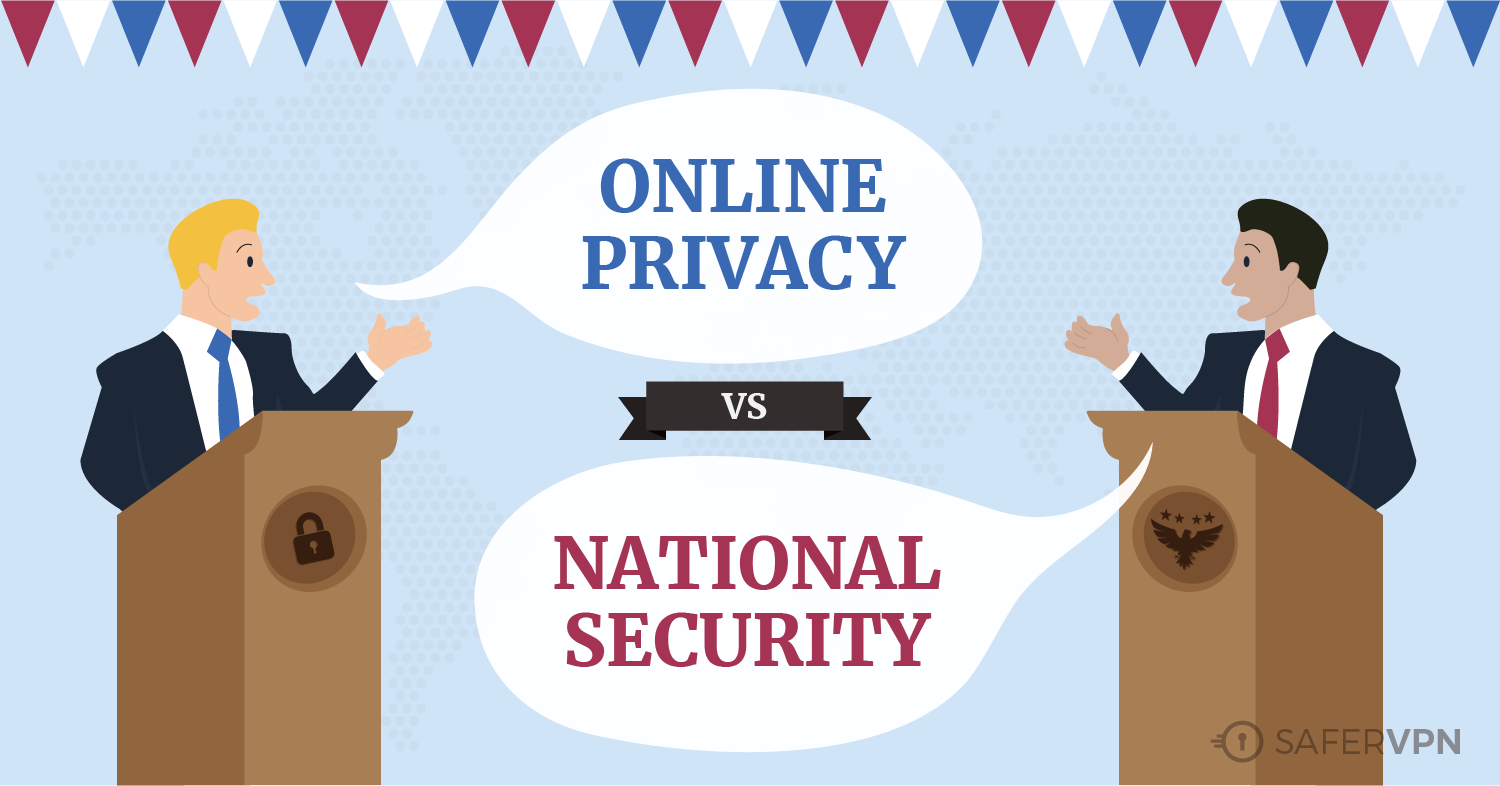
So, the question ultimately falls on the balance between national security and citizens’ privacy: to what extent should citizens’ privacy be allowed to be accessed by the judiciary in the name of national security. The U.S. constitution does not specify which is more important, national security or personal privacy. The key is to judge whether the government’s access to data is to meet the legitimate public security needs of the society, or whether the government’s access to data is an abuse of rights caused by the way it destroys individual freedom and privacy but is not regulated.
In an international legal environment, in order to protect individual rights, national interests should sometimes make concessions to maintain the civilization of modern society. But at the very least, if national security can not be guaranteed, there is no privacy for the individual. Without privacy, national security may lose its greatest value. Because at this stage of national security is not guaranteed, the country is not the country, the people’s privacy is nothing. National security and social stability are the preconditions for reform and development. Only with national security and social stability can reform and development continue. In the premise of ensuring national security, how to ensure that personal privacy will not be violated? How to balance these 2 things is still a question to all the countries and people.
Source:
1. Wales, Jimmy, and Lila Tretikov. “Stop Spying on Wikipedia Users.” The New York Times, The New York Times, 10 Mar. 2015, www.nytimes.com/2015/03/10/opinion/stop-spying-on-wikipedia-users.html.
2. Shane, Scott. “Petraeus Case Raises Concerns About Americans’ Privacy.” The New York Times, The New York Times, 13 Nov. 2012, www.nytimes.com/2012/11/14/us/david-petraeus-case-raises-concerns-about-americans-privacy.html?mtrref=www.google.com&gwh=C78E6B5FDF9868E3C40C5A3771A2F50D&gwt=pay.
3. Friedman, Thomas L. “Blowing a Whistle.” The New York Times, The New York Times, 12 June 2013, www.nytimes.com/2013/06/12/opinion/friedman-blowing-a-whistle.html.
4. Schreuer, Milan, and Sewell Chan. “Belgium Says Law Limiting Raids May Have Allowed Suspect in Paris Attacks to Escape.” The New York Times, The New York Times, 16 Dec. 2015, www.nytimes.com/2015/12/17/world/europe/belgium-says-law-limiting-raids-may-have-allowed-suspect-in-paris-attacks-to-escape.html?_ga=2.192036269.647702604.1555434360-1766241882.1555218145.
 Cosner Rhetoric