What’s the deal with college?

Who knew a little piece of paper could be so important?

By: Ella Benhart April 12, 2019

Via The Odyssey Online

College is preached to high school students across the country as the only way to survive in a capitalistic society. A small piece of paper serves as the life raft to which so many twenty-year olds cling to. The sad reality is that such a small piece of paper comes at such a high cost. Between rising tuition rates and corrupt admissions, many claim that colleges benefit only the rich. Despite the elitist reputation of many universities, programs have and are being established to aid low income students in obtaining a degree. Many students now rely on scholarships and university funded programs to pay for their degree. The very students higher education aims to help, seem to be excluded from the narrative. College is beyond a doubt an important tool for getting ahead in the work force, but this tool seems to be available only to a certain audience.

So why is college so important?

According to the Mark Heckler, college education remains invaluable for all students. Heckler states that a college degree is the only way to prepare for a financially unstable future. According to The Chronicle of Higher Education, the earning gap between students with a high school diploma and those with a college degree can be upwards of thirty thousand dollars a year. Over a lifetime the earning gap is over a million dollars. Additionally, college graduates are more likely to receive benefits such as health insurance and retirement plans. Heckler also states that factors such as the automation of some jobs can have an effect a secure future. The jobs most likely to be taken over by artificial intelligence are low skill jobs, jobs not traditionally held by college graduates. Heckler also mentions that while automation will force many workers out of a job, it will also provide work for skilled workers. Engineers are needed to keep the machines running and college graduates are the ones to step up to the plate. In summary, investing in a good education is ultimately an investment in a better future.

That’s great, but what about low income students?

It is undeniably true that college benefits workers in more ways than one, but many students cannot afford to make such an investment. Luckily, many universities are rising to the occasion. Schools such as Amarillo College are turning to programs affectionately termed “no excuses”. Amarillo College’s No Excuses Poverty Initiative allows students struggling to make ends meet to attend school at an affordable rate. Since the Initiative was instated, the college’s three-year graduation rate has risen from nineteen percent to forty-eight percent. The college has started a food pantry and dips into emergency funds to support students who otherwise would be one emergency away from dropping out. One student’s mentor even payed for expenses when the student could not. Amarillo is not alone in its fight against student poverty. The City University of New York and Tacoma Community College both have instated similar programs to keep students afloat and in school. Even independent groups have taken on the fight for low income students. Programs such as Single Stop, who serve students all across the country, connects students with vital services they would otherwise have no access to. In today’s society, more and more resources are becoming available to aid students on the financial side of college.

Via The Gates Foundation

So everyone can afford college?

Unfortunately, programs like No Excuses cannot serve every student struggling to afford college. Many colleges cannot afford to support programs that offer that much support to students. Many programs have been put in place outside of schools to combat the rising cost of higher education, but still aren’t enough. Others just cannot keep up. For example, the Pell Grant’s ability to cover student’s expenses has fallen drastically. Forty years ago, the Pell Grant covered fifty percent of student’s two-year expenses. Now the six-thousand dollar grant only covers thirty-seven percent of student’s needs. With tuition skyrocketing, the Pell Grant still cannot make school affordable for some students. The result is a cycle of poverty that people cannot escape. The very students needing a good education seem to be excluded from reaching that good education.

What about the students who do not live on the edge of poverty but are not rich enough to bribe their way into schools? The infamous Pell Grant typically only goes to households earning less than fifty-thousand dollars. Scholarships used to be the default method that middle-class students used to afford college, but due to the rising tuition, colleges have found their revenue stalling or even decreasing. The decrease in revenue led to excessive cuts to scholarships. Even though middle-class students’ attendance is on the rise, financial aid is still scarce. Many colleges use hefty scholarships to entice high achieving students into enrolling turning financial aid into “a recruitment and enrollment management tool rather than an affordability mechanism”.

Elite universities offer services that lower income students arguably deserve more. Large scholarships, grants for internships, and most importantly, a world class education should draw low income students in large numbers. Realistically, the graduates of elite colleges have an increased chance of joining the middle or upper class. Low income students are rarely the children of top university graduates, thus rendering them ineligible for legacy admissions. According to “Dream Hoarders” author Richard V. Reeves, “the way we organize our education system excludes many of those in the bottom 80%”.

Why can’t the bottom 80% go to good schools?

Not only does high tuition prevent copious amounts of students from attending, but the admissions process works against them as well. Most recently, the scandal dubbed “Operation Varsity Blues” saw the arrests and most recently, the indictment of wealthy parents bribing their child’s way into top universities. Parents payed for someone else to take their child’s entrance exams, bribed coaches to classify students as athletes, and even bribed school officials. Some parents even faked photos of their child participating in a sport in order to gain admission. Operation Varsity Blues exposed the corrupt world of higher education admissions corruption for the entire world to see. Even though some of the parents involved in the scandal pleaded guilty to money laundering, many parents are still giving their student a leg up in a completely legal way.

 Legacy admissions are nothing new, but they are becoming a problem. In short, “legacy preference is the practice of providing qualifying students who have some sort of family connection to the school with an advantage in the college admissions process” according to Think Progress. According to CNBC, thirty-six percent of Harvard’s graduating class of 2022 was composed of legacy admissions. Additionally, in 2015, legacies were five times more likely to be admitted to Harvard than students without ties to the university. Some schools even promise deferred admissions to students of certain wealthy parents.

In conclusion…

While a college degree seems like the only way to make an income in modern society, the loans and debt associated with a degree scare off many students. The students intended to be helped by a college degree seemed to be the ones harmed by college admissions. Still, the benefits of a college education are undeniable. Higher education may seem like a headache, but it is the gateway to the real world.

Works Cited

Dewan, Bryan. “Why Do Colleges Still Give Preference To Kids Whose Parents Went There?” 2 May 2016. ThinkProgress. 4 April 2019.

Fieldstadt, Elisha and Tom Winter. “Lori Loughlin among 16 parents indicted on new charges in college admissions scheme.” 9 April 2019. NBC News. 9 April 2019.

Heckler, Mark A. “The Importance of a College education.” 11 September 2018. Chicago Tribune. 4 April 2019.

Mangan, Katherine and Julia Schmalz. “A Culture of Caring.” 3 April 2019. The Chronicle of Higher Education. 4 April 2019.

Martin, Emmie and Yoni Blumberg. “Harvard’s freshman class is more than one-third legacy—here’s why that’s a problem.” 7 April 2019. CNBC. 4 April 2019.

Owen, Stephanie and Isabel Sawhill. “Should Everyone Go to College?” Graff, Gerald, Cathy Birkenstein and Russel Durst. They Say I Say with Readings. New York: W. W. Norton and Company, 2018. 318-335.

Selingo, Jeffrey J. “Can The Middle Class Afford College?” 8 May 2017. The Washington Post. 4 April 2019.

Uniform-ity and Equality

Picking out clothing for the day is a part of a daily routine. One considers many factors including anything from the weather, the day’s activities to come, and simply the way they would like to present themselves. However, this simple task may be a distraction on a path to success. A widely discussed debate in today’s world is whether or not students should be required to wear uniforms to school. There are many different factors contributing to this controversy. In examining this argument through five different sources, it is easy to see that this debate contributes to a larger conversation regarding equality in the classroom.

Race and Culture in a Classroom

A major factor regarding this debate is the presence and expression of race and culture in a typical classroom. A simple way one is able to embrace diversity and express their culture is through clothing. In her article refuting the use of uniforms, Jennifer Weiss interviews a mother. In discussing the ability of her daughter to pick out clothing, the mother mentions “it teaches her to embrace diversity on every level, even in dress” (Weiss). These feelings directly expressed by a mother further emphasize Weiss’s point that when a uniform is not required, a student is able to wear clothing they feel exemplifies and expresses the culture from which they come from. The use of a uniform can inhibit this expression. Because students are unable to embrace their culture, they may be led to feel uncomfortable in comparison to their classmates, therefore contributing to feelings of inequality in the classroom.

However, a uniform also has the capacity to place all kids on the same level in the classroom. In a Newswise article in support of uniforms, it is argued that because they are wearing the same thing, students are unable to be racially profiled and judged based upon their clothing. In the article, an interviewed professor, who witnesses uniform use daily, says that the wearing of uniforms “puts all kids on the same playing field” (Newswsie). This credible statement contributes to equality in the classroom in the sense that students are all provided the same opportunities through their appearance. The judgement that the students may otherwise face is not present, allowing them to focus on their studies in the same way as their peers.

Socioeconomic Status

Another factor that contributes to classroom equality is socioeconomic status. In a school in which uniforms are not present, each student is faced with the task of purchasing clothing. This can be a daunting task for those of low economic status. In a world in which appearance leads to friendship, one feels pressure regarding the clothing they should purchase and wear. In her article regarding pros and cons of uniforms, Sarah Kuta argues that students feel the pressure to purchase the newest and most expensive clothing to fit in, a difficult task for those with little money. In the presence of a uniform, this pressure is lifted. In his article in support of uniforms, Bill Gough continues this argument in mentioning that when every student is provided the same clothing to wear, there is no need for individuals to purchase clothing to fit in. This provides an excellent way for every student to remain equal in the classroom. Their socioeconomic status does not contribute to their ability to fit in with their peers based upon the clothing they wear.

Unfortunately, uniforms can also provide a very visible difference between those of different socioeconomic statuses. Sarah Kuta presents another side to the issue in mentioning that an old and worn uniform can be very easily seen in comparison to a brand new one. She includes an interview of Tari Hardy, a middle school principal, who mentions that in looking at the children of lower economic status, “their uniforms were never as fresh, never as well fitting as the more affluent students” (Kuta). This statement is highly credible, coming from a principal who sees students every single day. Through this, Kuta argues that the requirement of uniforms can result in isolation of those who cannot afford newer clothing. Because of this, these students then worry about fitting in with their peers. In this way, lower-income students are not provided an equal experience in the classroom as their higher-income peers.

School Pride

In selecting an outfit, students are provided with the opportunity to express school pride. In the absence of uniforms, students are able to show their love of their institution in the way they would like to. If one student would prefer to wear a sweatshirt with the school logo, but another student would rather wear a skirt of the school’s colors, they are able. Each student is provided the equal opportunity to express their pride in a way they are comfortable with.

Perhaps the simplest way to show school pride and unite a student body is through the use of uniforms. In wearing school logos and colors everyday, students are able to develop a sense of love and pride for their school, along with a feeling of unity with their peers. Sarah Kuta emphasizes a benefit of uniforms through her interview with Samantha Chizauskie, an elementary school teacher, who expresses that “There is solidarity in wearing uniforms,” she says. “It’s like having spirit day every day” (Kuta). By including yet another testimony from a school professional, Kuta establishes great ethos. Her inclusion of this statement further emphasizes that uniforms encourage students to consider one another as equals in class every day. In providing the students with uniforms as a way to be prideful, every student is provided the opportunity to express pride. Additionally, although her article as a whole refutes the wearing of uniforms, Jennifer Weiss touches on this point as well. She too argues that uniforms contribute extensively to school pride through the quotation of a school superintendent, who comments, “the wearing of uniforms contributes to school pride” (Weiss). By including this statement of counterargument, Weiss is able to establish more credibility. In this instance, both authors contribute to the conversation in arguing that with uniforms, no one student can be considered more prideful than another, and the student body works in unity. Therefore, providing students yet another opportunity to remain equal in the classroom.

Self-Expression and Individuality

The clothes a person chooses to wear every day can serve as perhaps the most basic way to express individuality. Some argue that the requirement of uniforms inhibits this form of self-expression, individuality and creativity. In discussing the concept of uniforms, Mark Oppenheimer suggests that by agreeing to wear uniforms, students are participating in “one of the great surrenderings of liberty in modern history” (Oppenheimer). In his essay, Oppenheimer discusses that elements such as freedom of choice are important in self esteem in students. In order to be provided with an equal opportunity to succeed in the classroom, students must be allowed to express their personalities freely. Sarah Kuta touches on this idea as well, mentioning that through the prohibition of clothing choice, the development of self-definition and expression is limited. She again cites a schoolteacher, who mentions that “It is important for young people to be able to express themselves, and some do it best through their clothing” (Kuta). This statement connects the reader to the classroom and establishes immense credibility. Both authors argue that students should be provided an equal opportunity to express themselves, in order to lead to equal learning opportunities.

On the other hand, some argue that students are provided many opportunities to emphasize their personalities, even if it not through their daily outfit choices. Some schools that require uniforms allow for slight alteration of the typical uniform through accessories such as socks, hair bows and jewelry. Through this, students are provided the opportunity to be creative with their clothing choices. It is also argued that self-expression and choice is a distraction for students in the Newswise article. The article argues that because they are frequently thinking about how they would like to define themselves, students are less likely to focus on their school work (Newswise). With this information, the article argues that students who struggle more with their daily outfit selections and self definition are at a disadvantage in comparison to those who do not struggle with this. In order to create more focus and equality in the classroom, it is argued that individuality and choice should be limited.

Final Thoughts

The concept of school uniforms is much bigger than just the clothes that students wear at school. In examining these five sources, one can see that there are many factors that play into this debate regarding topics such as race and culture, socioeconomic status, bullying, school pride, and individuality and expression. This debate contributes to a much more complex conversation regarding equality in the classroom for each and every student.


Gough, Bill. “Advantages of Wearing School Uniforms.” Los Angeles Times, Los Angeles Times, 21 Nov. 1993, http://www.latimes.com/archives/la-xpm-1993-11-21-hd-59758-story.html.

Kuta, Sarah. “The Pros and Cons of a School Uniform Policy.” School Leaders Now, We Are Teachers, 17 Oct. 2018, schoolleadersnow.weareteachers.com/school-uniform-policy/.

Oppenheimer, Mark. “The Downsides of School Uniforms.” The New Yorker, The New Yorker, 6 Sept. 2017, http://www.newyorker.com/culture/culture-desk/the-unquestioned-goodness-of-school-uniforms.

“School Uniforms Equalize Students | Newswise: News for Journalists.” School Uniforms Equalize Students, Newswise, 19 July 2006, http://www.newswise.com/articles/school-uniforms-equalize-students.

Weiss, Jennifer. “Do Clothes Make the Student?” The New York Times, The New York Times, 16 Sept. 2006, http://www.nytimes.com/2006/09/16/nyregion/nyregionspecial2/17Runiforms.html.

How Well Do We Understand Police Brutality?

https://eji.org/history-racial-injustice-ongoing-police-violence

When news about police shooting down unarmed black men and women is so common, it becomes hard to deny that there is a problem in our country. We can no longer deny that police brutality exists when unarmed black people were killed at 5x the rate of unarmed whites in 2015. We cannot deny that there is racism involved. Still, these problems persist and there is a constant debate about police brutality. What is the cause of police brutality, and how should it be handled?

Opinion: It’s An Individual Problem

Many people argue that while there have been police who have committed acts of police brutality, it is unfair to characterize the entirety of police forces as killers. This is an individualist outlook. A sort of “there’s always a few bad apples in the barrel” view on the issue. According to CNN, Canterbury of the Fraternal Order of Police suggests that there should be more training and better selection, along with better wages, and a change in police culture. CNN also cites, Christy Lopez, who has investigated into police brutality through the Justice department. She states that when police brutality occurs, communities distrust them, and in turn are rude to the police. This makes the police feel disrespected and oppressed and it perpetuates a cycle of police brutality.

These opinions suggest that policemen guilty of committing acts of police brutality are racist, but not the police forces themselves. The solutions offered are: punishing acts of police brutality, better race training, hiring more selectively, and compelling people of color and police to respect each other more.

The part of this opinion that suggests that people of color need to create a better relationship with police officers receives criticism from the fact that it is victim blaming and does not guarantee the safety of black lives. Another problem with this position entirely is that it sees that it acknowledges that racism within the justice system in America exists, but it mostly suggests individualistic reforms. It also suggests that the system works; that it only needs to be tweaked through better police training and weeding out the racists rather than reworking the system entirely and/or replacing it.

The “bad apple” argument has also been discredited by many academic sources and research projects to show that police brutality goes beyond racist cops being in the police. A study by Princeton University shows that police brutality is extremely disproportionate between whites and minorities and that police brutality stems from racist motivations. So if better police training is not enough, what should the police do?

Opinion: It’s An Institutional Problem

Other opinions on police brutality state that rather than it being an individual issue, that it stems from systematic racism. It states that police brutality is not something you can reform by simply telling cops to be less racist and by asking people of color to be nicer.

For instance, in Ijeoma Oluo’s book, So You Want to Talk About Race, her chapter, Is Police Brutality Really About Race? she explains the vast history behind police brutality in America. She cites how police forces were originally the Night Patrols responsible for capturing “escaped” slaves and re-enslaving them. After the civil war, the Night Patrols were turned into the first police forces. In the post-Reconstruction era, police participated in terrorizing black people. They were KKK members. Oluo states, “[Our police force] was created to police black Americans and serve white Americans…Our police forces were created not to protect Americans of color, but to control Americans of color…what we need is different policing. Policing not steeped from root to flower in the need to control people of color” (91-95).

https://www.vox.com/identities/2016/8/13/17938186/police-shootings-killings-racism-racial-disparities

What is this “different policing?” and how is it different from the previous opinion’s solutions? For one, this opinion says, “one rotten apple spoils the whole barrel.” This opinion sees police brutality as an institutional problem entrenched in the U.S.’s history. Police brutality does not come from racist police, but rather systemic racism. Institutional problems are changed by changing the institution. Across the U.S., legislation has been passed at the state level about when to use force. In April of 2018, Shirley Weber introduced Assembly Bill 931, which would change the requirements for the use of force from “reasonable” to “necessary.” According to NPR, the Seattle police department agreed to change their use of force policy and make more efforts to deescalate confrontations. These measures, however, raise concerns about police officer’s safety.

This argument also agrees that there needs to be a cultural change. It does not agree that it is the responsibility of people of color to have a more “respectful” attitude towards police. Many black men and women have been gunned down while being respectful. So while more police training and better selection methods will help combat police brutality, there needs to be a systemic change and it is not the responsibility of the marginalized population to control that.

This opinion also suggest that police reform cannot only be through changing the police officers. It needs to occur through legal enforcement because in order to fix a systemic racial issue, the institution itself needs to be changed. This is shown through the laws earlier mentioned, but some suggest that there should be more done. One example is Campaign Zero, an activist group against police brutality, that suggests ten principles of police reform. Some of these intersect with the individualist approach, which is better training, community representation, and community oversight, but the other principles differ. For instance, it suggests, ending broken windows policing, limiting use of force, installing body cams/filming the police, ending for-profit policing, demilitarization, fair police-union contracts, and most importantly, independently investigating and prosecuting the police. This is important because in most situations of police brutality, local prosecutors rely on the local police departments to conduct investigations into crimes. This undoubtedly creates a conflict of interest because if police officers are investigating their own officers. Campaign Zero suggests that the changes in investigating should be: lower the standard of proof for Department of Justice civil rights investigations of police officers, use federal funds to encourage independent investigations and prosecutions, establish a permanent Special Prosecutor’s Office at the State level for cases of police violence, and require independent investigations of all cases where police kill or seriously injure civilians. These changes would drastically change the justice system in America, and thus address some of the institutionalized racism that exists in our police departments.

This point of view, in comparison to the individualist outlook on police brutality, has more reliable evidence, research, and solid solutions. This makes this side of the debate more reliable but it is still fairly controversial to the public. The idea of changing the justice system so much is hard for people to imagine when they see America from an individualistic approach, but also because the idea of changing the government seems like a radical and impossible task.

So…What Now?

The first opinion, that police brutality is an individual issue and needs to be handled as such makes sense on a surface level but it does not have a lot of factual support to back it up. The second opinion, that police brutality is a result of institutionalized racism, has a lot more evidence. It also has a lot more solutions with evidence to show that they would be effective if implemented.

Both these opinions, however, intersect in some of their solutions and they all share a common motivation to combat racism and achieve peace.

Works Cited

“Article 931.” Bill Text – AB-931 Criminal Procedure: Use of Force by Peace Officers., leginfo.legislature.ca.gov/faces/billNavClient.xhtml?bill_id=201720180AB931.

Goncalves, Felipe. “A Few Bad Apples? Racial Bias in Policing.” Industrial Relations Section, 2018, pp. 1–80., doi:http://www.princeton.edu/~fmg/JMP.

“History of Racial Injustice: Ongoing Police Violence.” Equal Justice Initiative, eji.org/history-racial-injustice-ongoing-police-violence.

“Independent Investigations and Prosecutions.” Campaign Zero, http://www.joincampaignzero.org/investigations.

Kaste, Martin. “For Police, A Debate Over Force, Cop Culture And Confrontation.” NPR, NPR, 25 Sept. 2014, http://www.npr.org/2014/09/25/351373721/police-mental-stamina-metrics-shed-light-on-deadly-force.

Lopez. “There Are Huge Racial Disparities in How US Police Use Force.” Vox, Vox, 14 Nov. 2018, http://www.vox.com/identities/2016/8/13/17938186/police-shootings-killings-racism-racial-disparities.

Moralmondayct. “Statement Regarding Police Brutality.” Moral Monday CT, 1 Apr. 2018, moralmondayct.org/2018/03/30/statement-regarding-police-brutality/.

“Police Killed More than 100 Unarmed Black People in 2015.” Mapping Police Violence, mappingpoliceviolence.org/unarmed.

Vera, Amir. “Should Police Use of Force Be Regulated? The Answer Isn’t Simple, and That’s a Problem.” CNN, Cable News Network, 30 Sept. 2018, http://www.cnn.com/2018/09/30/us/police-use-of-force-legislation/index.html.

Planned Parenthood: Should You Support It?

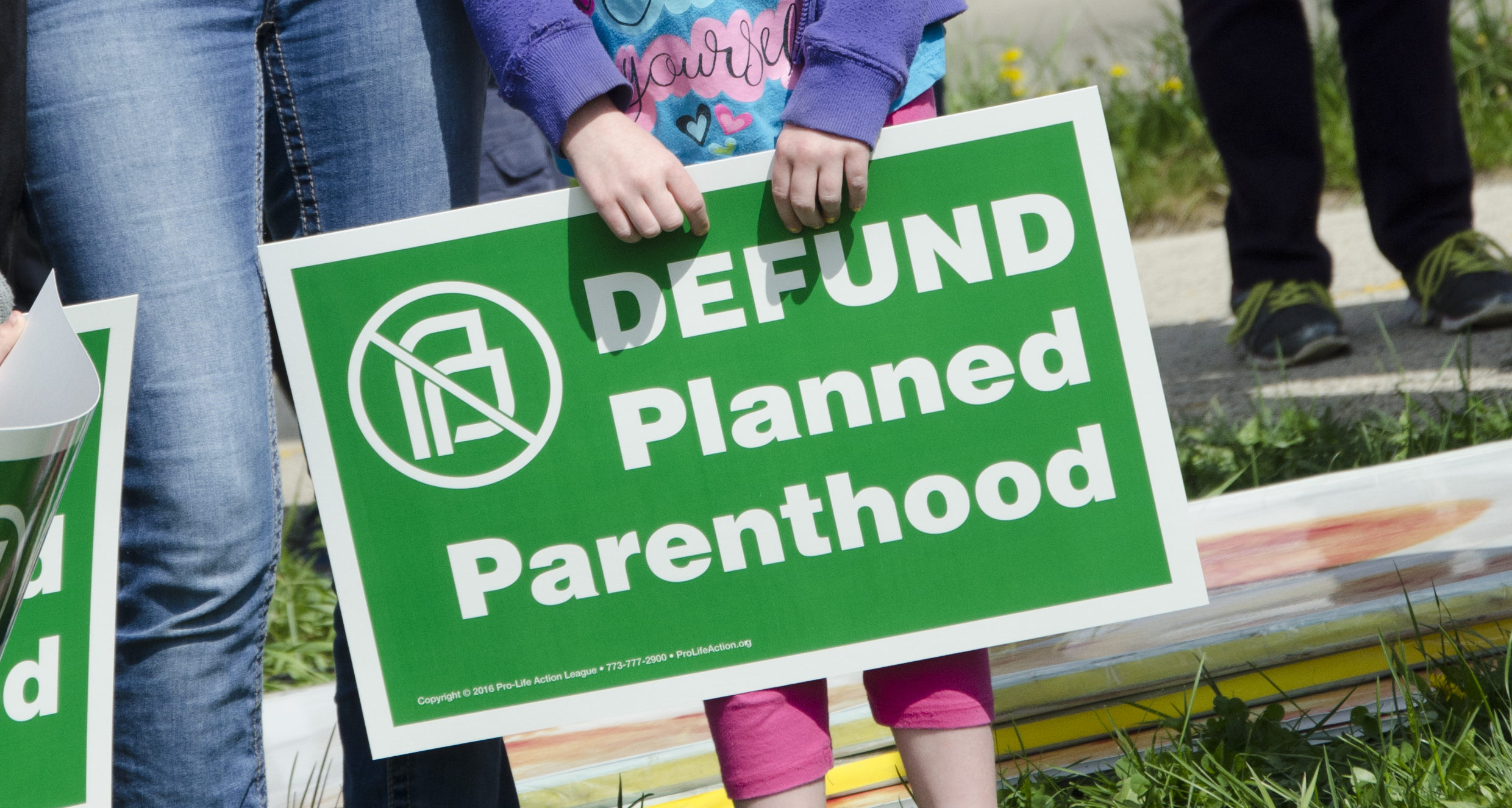
Image result for planned parenthood
Photo by Elizabeth Brockway on thedailybeast.com

Planned Parenthood is a non-profit organization that almost everybody living in America has heard about. Most people likely have a strong opinion on the organization and its services offered, thus making it one of the most current, hotly-debated topics. Planned Parenthood is an organization that, according to its official website, “delivers vital reproductive health care, sex education, and information to millions of women, men, and young people worldwide.” Perhaps the most well-known of the many services Planned Parenthood offers is abortion, particularly for teens and young adults. This is the issue that is the root cause of debate, as people argue about women’s rights for their own bodies in contrast to the rights of an unborn child. However, despite the abortion debate taking up most of the spotlight in the entirety of Planned Parenthood, there are many services offered for people who otherwise could not receive healthcare such as cancer screenings, STD screenings, and vaccinations. With all of this information in mind, there are many complex viewpoints and perspectives to explore about this organization.

What different viewpoints are there for Planned Parenthood?

Although every person’s opinions vary slightly, the main viewpoints on Planned Parenthood can be placed into one of three different categories:

  1. People know that planned parenthood does abortions, and they support this and their services
  2. People know that planned parenthood does abortions, and they think this is wrong and thus don’t support planned parenthood at all
  3. People know that planned parenthood does abortions, don’t agree, but support their providing of other beneficial services to both men and women who can’t afford healthcare

These perspectives can be described as more liberal, more conservative, and then somewhere between the former two, respectively. Even without these assigned labels and affiliations, there are a variety reasons for which each perspective is supported. Although the superficial debate is if people should support Planned Parenthood and its services, when looking deeper into each topic, it leads to the questioning of people’s rights to express their religion, pay taxes, and ultimately if abortion and related services can and should be controlled by the government. There are many complex questions associated with these ideas, but most viewpoints fall into one of the three categories below.

1. Why people support Planned Parenthood and all of its services

The Planned Parenthood website provides in-depth detailing of their services, including everything from sexual and reproductive health services to information on more general, important health topics such as depression, diabetes, and hypertension. As they say in their mission statement, “The mission of Planned Parenthood is to provide comprehensive reproductive and complementary health care services in settings which preserve and protect the essential privacy and rights of each individual.” Men and women of all ages, backgrounds, and ethnicities can access Planned Parenthood’s services in an environment that they describe as non-judgmental and affordable. They are currently expanding their global health front through a program called Planned Parenthood Global, which works in countries in Africa and Latin America to educate and provide sexual healthcare services and information.

Although their website itself describes the large variety of expert medical care offered, most people tend to associate Planned Parenthood with young women receiving birth control and abortions. They boast the position of being “the nation’s leading sexual and reproductive health care provider, and the nation’s largest provider of sex education.” When a young woman goes to the clinic, Planned Parenthood has the ability to perform an abortion, conduct an abortion referral if abortions are not performed at that particular location, and administer emergency contraception. They offer both a pill and in-clinic abortion as “a safe and legal way to end pregnancy,” which is what 3 in 10 women in the U.S. will use by the time they are 45 years old.

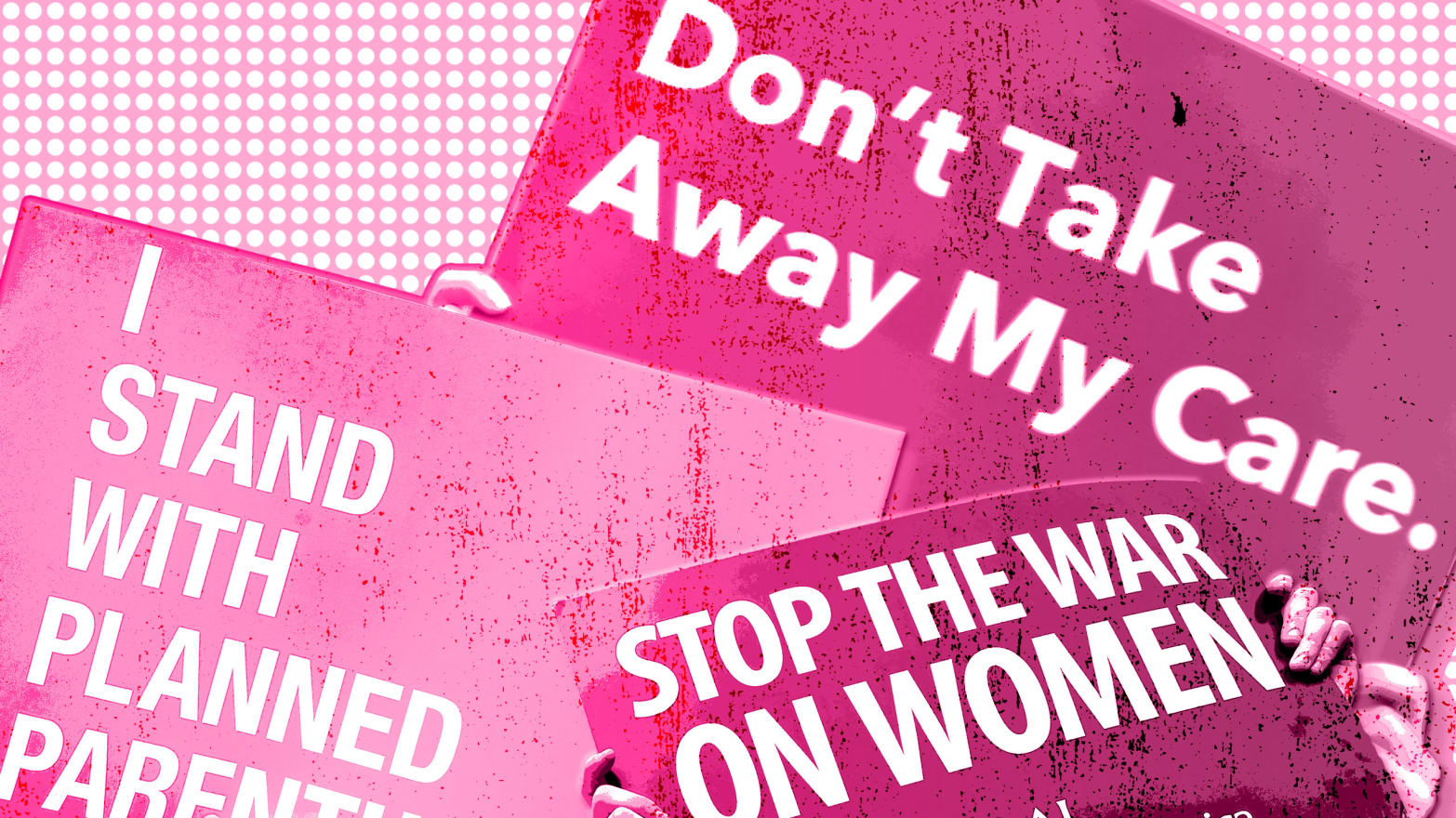
Image result for I stand with planned parenthood sign
Photo from feministing.com

2. Why people do not support Planned Parenthood or any of its services

To put it simply, many people do not support Planned Parenthood because they perform abortions. Although Planned Parenthood offers a large variety of other medical services for groups of people who otherwise have financial or otherwise difficult situations for receiving care, people may not support Planned Parenthood either because of opposing personal religious beliefs or because federal tax dollars support the institution (or a combination of both). According to an article by The New York Times entitled “Trump Administration Blocks Funds for Planned Parenthood and Others Over Abortion Referrals,” a new rule will prevent any organization that receives money through a program called Title X (including Planned Parenthood) are not able to refer patients for an abortion or perform an abortion in the same clinic/facility. This reform has the potential to lead more people to support Planned Parenthood if they did not support it simply because of its abortion practices.

There is also a financial aspect to this debate. In an article by Newsweek, they highlighted an interesting tweet by someone using the hashtag “#StandWithPP”: “If liberals really #StandWithPP why don’t they donate themselves rather than forcing all Americans to pay.” This represents the idea that not everyone should have to use government funding through Title X or any other program to support practices not everybody believes in or with which they agree. Thus, both religious/moral beliefs and disagreements with government funding prevent people from supporting Planned Parenthood.

3. Why people support Planned Parenthood and its services excluding abortion

Some people who morally/religiously disagree with abortion are still in support of the other health services they provide, whether that be related to sexual and reproductive health or more general care. According to an article by Newsweek, an interesting point is raised by Dr. Carrie Pierce, a physician who performs abortions in Oregon: “Closing Planned Parenthood would make an increase in abortions more likely… because the organization also provides contraception and standard women’s health care.” People who do not agree that abortions should be performed may agree that the contraception and other healthcare provided by Planned Parenthood can prevent the need for abortions. In addition to contraception, services such as cancer screenings, colonoscopies, and other important healthcare practices are offered that some people normally could not afford. This perspective of partial support for Planned Parenthood is perhaps the most complex, because it is the most relative to the individual person. It may call someone to disagree with abortion but feel that the other services provided are important enough to outweigh their uneasiness; on the other hand, it also has the potential to make people not support Planned Parenthood at all because of this one service with which they disagree.

What are YOU going to do?

While this article explores the various perspectives on the Planned Parenthood debate, diving deeper in shows there are ultimately two options for direct action: people can either vote for the funding or defunding of Planned Parenthood. According to an article by The Washington Post, the defunding debate is particularly complex because “Planned Parenthood cannot use federal funding for abortions, anti-abortion groups claim that federal funding is “fungible” and there is no way to ensure that some of the funding provided for other services does not cross-subsidize abortion services.” This indicates that there are loopholes in any plans to defund Planned Parenthood. Particularly, defunding through Title X is different than any previous attempts in the past because “the new rules will not explicitly forbid abortion counseling by Title X providers.” Thus, with all of the political complexity in the midst of this issue, it is up to you to inform yourself and take action according to your own beliefs, whether that be by attending rallies, campaigns, or ultimately voting for what you believe in.

References:

Belluck, Pam. “Trump Administration Blocks Funds for Planned Parenthood and Others Over Abortion Referrals.” New York Times, 22 Feb. 2019, https://www.nytimes.com/2019/02/22/health/trump-defunds-planned-parenthood.html. Accessed 20 March 2019.

Loffredo, Nicholas. “Both Sides of Planned Parenthood Debate Proclaim #IStandWithPP.”Newsweek, 11 Feb. 2017, https://www.newsweek.com/planned-parenthood-debate-protests-istandwithpp-555711. Accessed 20 March 2019.

Planned Parenthood. Planned Parenthood Federation of America Inc., https://www.plannedparenthood.org/. Accessed 20 March 2019.

Rovner, Julie. “Trump Proposes Cutting Planned Parenthood Funds. What Does That Mean?” Washington Post, 22 May 2018.
https://www.washingtonpost.com/national/health-science/trump-proposes-cutting-planned-parenthood-funds-what-does-that-mean/2018/05/22/76a3a568-5ade-11e8-9889-07bcc1327f4b_story.html?noredirect=on&utm_term=.0e632b9d8c2d. Accessed 11 April 2019.

To Ban a Book

To read, or not to read? To ban a book that holds a controversial topic from those who it might hurt, or to let others read what they want, when they want? A banned book is “one that has been removed from the shelves of a library, bookstore, or classroom because of its controversial content”. While society has taken less abrasive measures over challenging or banning books, in the past, and still practiced in certain districts today, controversial books were “burned and/or refused publication” (ThoughtCo).

Unlike many controversial topics, the arguers cannot be split into just pro-banned books and anti-banned books. There is a spectrum of arguments over banned books, with certain voice arguing over no banning, banning certain topics, or letting people pick and choose within family circles what should be read. Some of loudest voices in the argument are the American Library Association, concerned parents, and authors themselves. These three arguers represent main points of the spectrum of banned books.

There are many reasonings behind why someone, whether a parent, a school district, or even an entire county, would ban a book. These reasons can be organized into eight broad categories, as listed by Butler University: racial issues (Huckleberry Finn with the n-word), encouragement of damaging lifestyles (Light in the Attic with breaking household items), Blasphemous dialogue (Bridge to Terabithia with one of the main characters saying goddammit), sexual situations/dialogue (Looking for Alaska with sex scenes), violence/negativity (Hunger Games with said tournament), witchcraft (Harry Potter with the worldbuilding), political bias (Inherit the Wind with the Scopes v Monkey trial), or it is labeled for an age group that should not be reading about the heavy topics listed prior (The Giver with being in middle and elementary school libraries). (Butler University). While these books have been challenged and sometimes banned, there are organizations fights against banning books while teaching others the consequences of banning.

The American Library Association (ALA) is an organization that promotes libraries and library education. The ALA’s goal in the banning book discussion is “to provide leadership for the development, promotion, and improvement of library and information services and the profession of librarianship in order to enhance learning and ensure access to information for all” and in the situation of banning books, for any reason, fights back against their mission statement. The ALA wants to educate the masses, mainly children and those who cannot access information easily, and if the home/school will not teach those who need education, libraries will fill in what is left out. While libraries hold a position of power within the city and government, many children still have to follow an even greater power: their parents.

While their position of power is smaller compared to ALA, parents all across the world voice their concerns over what their child should or should not read.  One parent, Jenni White, on an education board argues, “School officials didn’t have an interest in standing for children’s innocence. In fact, the only reason their children were able to choose other books from the reading list was their significant pushback against the administration. Although it’s unpleasant, unpopular, and decidedly ‘unfun’, parents must cautiously review all reading materials coming home from school and be prepared to fight for something better on their behalf if necessary” (Federalist).  While the parent’s viewpoint on the topic is not the absolute extreme of the banning books argument, she wants to make sure that his children are not exposed to sensitive information too early in their lives.

Another administrator, Mark Hemingway, describes his opinion on what banning books looks like: “Your local community has simply decided that finite public resources are not going to be spent disseminating them. Judgments are made all the time about what goes on shelves for both practical and moral reasons. This is not book banning” (Federalist). Mark Hemingway makes the connection that the school districts already pick and choose what books goes on their shelves, sometimes varying by library. Why is that not called book banning, yet when a parents speaks up over what books their child has to read in a school curriculum is deemed worse? While librarians and parents are typically the arguers that often shed their opinions on the topic, there have been instances when authors themselves   weigh in on banned books.

An opinion that typically is outspoken by other contenders is an author’s point of view on the subject matter. John Green, author of The Faults in Our Stars, states an opinion that is on the neutral side of the conversation. In his vlog video post not long after his first book Looking for Alaska was published, he informed his viewers “The high school administrators and english teachers got together and they wrote a letter, saying ‘we’re going to teach this book. . .if you’re okay with your kid being taught this book, please sign this permission slip, otherwise the kid will read another book.’ So parents who are cool with having their kid read Alaska will read Alaska, and parents who aren’t cool with it get to have their kid read some other book”. The tone he uses describes that he, as an author, is okay for teachers to warn parents of the potentially triggering book their children are about to read, and give them a fair chance and warning in case they think differently. He does not condone people who read only the passage in question and blindly try to ban the book from the school district.

In another video, posted in 2016, he reiterates his position as an author, “I don’t think it should be up to me whether Looking for Alaska, or actually any book is in a school or a library. Because I am not a teacher or a librarian” (John Green). Even though he is the author of the book, John Green realizes that his opinion no longer matters once the book enters a library. He should not have power over what kids read, only the kid and their school officials, not their parents.

While there are clear extremes on the topic if whether or not books should be banned, the entire argument spans over spectrum a opinions from librarians, parents, and authors, each ranging in between the two extremes. There are many reasons to either ban books, or keep them on the shelves. Each side of the spectrum has valid reasons as to why they believe they are right. If there was any chance to reach a compromise to the discussion, whether to ban books or not within the level of children and young adults, it should be up to the reader.

Works Cited

“About the American Library Association.” About ALA, ALA, 2019, http://www.ala.org/aboutala/.

Admin. “Top Ten Most Challenged Books Lists.” Advocacy, Legislation & Issues, ALA, 27 Dec. 2018, http://www.ala.org/advocacy/bbooks/frequentlychallengedbooks/top10#2017.

Admin. “Frequently Challenged Books.” Advocacy, Legislation & Issues, 9 July 2018, http://www.ala.org/advocacy/bbooks/frequentlychallengedbooks.

“Banned Books Wanted Posters.” Alexandria Library Automation Software, 14 Sept. 2018, http://www.goalexandria.com/banned-books-wanted-posters/.

Culture. “In Defense of Book Banning.” The Federalist, FDRLST Media, 20 Mar. 2014, thefederalist.com/2014/03/11/in-defense-of-book-banning/.

“LibGuides: Banned Books: Reasons for Banning Books.” Reasons for Banning Books – Banned Books – LibGuides at Butler University, Butler University, 15 Sept. 2017, libguides.butler.edu/bannedbooks?p=217686.

vlogbrothers. YouTube, YouTube, 30 Jan. 2008, http://www.youtube.com/watch?v=fHMPtYvZ8tM&t=5s.

White, Jenni. “Parents Shouldn’t Let Schools Force Kids To Read Smut.” The Federalist, FDRLST Media, 17 Mar. 2016, thefederalist.com/2016/03/15/parents-shouldnt-let-schools-force-kids-to-read-smut/.

The Complicated Situation Involving the Payment of College Athletes.

Why paying college student-athletes is not as easy as it seems.

One question that remains fresh on sports fans’ minds before, during, and after any college sports season is whether or not the athletes should be paid for their play.

A recent New York Times article describes the situation from an outside point-of-view. Multiple factors play a role in this massive question that seems to loom over current college sports.

  • Does compensating college athletes balance the risk of injury while playing?
  • Just how much money do college sports programs bring in to the school?
  • Will players who believe they should be paid protest college sports?
Photo credit: https://www.huffpost.com/entry/college-athletes-getting-paid-here-are-some-pros-cons_b_58cfcee0e4b07112b6472f9a

College athletes engage in countless hours of practice and games in order to contribute to their respective teams. This article describes a recent injury to one of men’s college basketball’s best players: Zion Williamson. Williamson, a five-star recruit, chose to attend Duke University in hopes of hearing his name called on NBA draft night. In a recent Duke Blue Devils game, Williamson’s shoe ripped, causing a right knee injury to the elite prospect. Zion Williamson, a projected top two draft pick, almost had his career ended in a regular season basketball game. If this injury was something as serious as a torn ACL (very common among basketball players), he may not have been drafted as high or even at all.

Writer Jeremy Engle illustrates how a possible salary to players would offset potential injury to high-level players. Engle also explains the economical view of the school. Duke, a high division-1 school, is sponsored by Nike. The athletics company gives millions of dollars to the University in order for their players to wear Nike shoes and jerseys. This money is not divided up. It is given back to the program and none of it goes to the players.

NBA athletes have begun to speak out against college athletics, stating that players should protest and not play until they receive compensation. One NBA player, Demarcus Cousins, even went as far as to bash the NCAA in a post-game interview. “College basketball and the NCAA is bulls—…there’s so many risks involved to get to the ultimate goal.” One might argue that Cousins has a point, where some might argue he is hypocritical. Cousins attended the University of Kentucky and was drafted fifth overall in the 2010 NBA draft.

Why Everyone Loses With Paying College Athletes

A world where the NCAA is forced to pay their student-athletes is one that would ruin college sports, according to Cody J. McDavis. He is the author of a New York Times article and former Division-1 athlete that argues against the possible rule change.

Paying college students to play sports is not financially possible with most schools. “A handful of big sports programs would pay top dollar for a select few athletes, while almost every other college would get caught in a bidding war it couldn’t afford.” McDavis explains his reasoning behind his claim that college athletes should be happy with scholarships.

According to McDavis, only a small sample of schools would even get the chance to offer money to its possible players. Many top prospects come from families in need. The players would choose the highest pay in order to help their families. This lack of available compensation would cause players to choose only the most profitable schools, cheating smaller schools of the chance to sign and enroll a top prospect.

Photo credit:https://www.forbes.com/sites/artcarden/2018/07/26/college-athletes-are-worth-millions-they-should-be-paid-like-it/#4907b800452e

College Athletes are Worth More than any Scholarship can Offer

Art Caden, associate professor of economics at Samford University, preaches that these athletes are worth millions to their respective schools. In a Forbes article discussing the value of college players, Caden brings up the scrutiny players endure and how they are not compensated adequately.

  • Do professional athletes require professional salaries?
  • An athlete’s priorities
  • Why even go to college?

Caden focuses on Stanford University star running back Bryce Love in his article. The college athlete draws huge crowds of people who watch in awe at his play. Art Caden quotes former Stanford grad and economist Damon Jones-“You demand professionalism, pay professional salaries.”

As discussed in the Forbes article, athletes are criticized if they do not live and breathe sports. Star running back Bryce Love, a human-biology major, intended to graduate the following winter. Love skipped a PAC-12 media day in order to attend class, for which he was then criticized for his absence.

The emphasis for these star athletes is clearly athletics over education. Art Caden argues for change in this sense. An athlete should be awarded for their dedication to further their education, yet Bryce Love was criticized for his priorities. With current scrutiny over an athlete’s priorities, why should they even be required to attend college if it is just a bridge to pro sports?

‘Ok then, what’s the second most important thing on campus.’ Photo credit: https://www.cartoonstock.com/directory/c/college_sports.asp

But is it Fair to Pay Players?

According to an article written by Matthew Brooks, student at Drexel University, NCAA players not receiving endorsements or any pay besides tuition should be outlawed. The article speaks from the viewpoint of a student currently enrolled in a Division-1 school. It is important to note that this was also published in a student-run editorial based out of Drexel University (more information on the editorial can be found here).

  • Salaries of coaches
  • Revenue of sports
  • Chance of Injury

As reported in the article, University of Alabama head coach Nick Saban made over $11 million this past season. Brooks explains this as malpractice of the school’s money. The author questions the justice of having officials of the team making well over the amount of tuition offered to athletes.

While no specific numbers are provided regarding revenue, the article discusses the profit of big name schools and their sports programs conceptually. Matthew Brooks questions the NCAA’s strict rules prohibiting athletes from self-marketing, arguing that athletes would stay to play at their school longer if they were able to make money.

At the peak of concerns for a college athlete is the high risk of injury, regardless of the sport. From concussions to torn ACLs, athletes face the dangers of playing every time they step on the field or court. Adding pay would possibly even out this risk to allow players to be more comfortable and confident.

It Truly is a “Sticky” Situation

The decision of whether or not college athletes should receive compensation for their play is not one that can be answered easily. Simply put, the dilemma is one filled with opinions of many backgrounds and beliefs. From newspapers to magazines to student editorials, there are multiple arguments for either side. This question has lingered around college sports for decades, and it does not seem to be moving in either direction. Schools with profit would be able to pay their players, but that would also mean they would have to cut programs/plans that would have been funded by the profits. Smaller schools would increase their debt. Yet these players devote huge chunks of their lives training and practicing in order to play college sports. Playing in college is a great way for these amateur athletes to get exposure to possibly play at the next level. This situation is one filled with many side-streets of arguments and information. Fans, officials, schools, and most importantly players of college sports will have to wait for this argument to be worked out completely.

Works Cited:

Engle, Jeremy. “Should College Athletes Be Paid?” The New York Times, The New York Times, 26 Feb. 2019, http://www.nytimes.com/2019/02/26/learning/should-college-athletes-be-paid.html.

Mcdavis, Cody J. “Paying Students to Play Would Ruin College Sports.” The New York Times, The New York Times, 25 Feb. 2019, http://www.nytimes.com/2019/02/25/opinion/pay-college-athletes.html?module=inline.

Carden, Art. “College Athletes Are Worth Millions. They Should Be Paid Like It.” Forbes, Forbes Magazine, 26 July 2018, http://www.forbes.com/sites/artcarden/2018/07/26/college-athletes-are-worth-millions-they-should-be-paid-like-it/#5ce768e1452e

“College Athletes Deserve to Be Paid for Their Play.” The Triangle, 1 June 2018, http://www.thetriangle.org/opinion/college-athletes-deserve-to-be-paid-for-their-play/.

Gaines, Cork. “The 27 Schools That Make at Least $100 Million in College Sports.” Business Insider, Business Insider, 25 Nov. 2017, http://www.businessinsider.com/schools-most-revenue-college-sports-texas-longhorns-2017-11.

Thenoelforte. “About The Triangle, Drexel’s Independent Student Newspaper.” The Triangle, http://www.thetriangle.org/about/.