Are we benefiting from online education?

Have you ever stopped to think that maybe online education is not helping and is instead hurting our mindsets? Although many feel that online education is beneficial, online education is having a tremendously negative effect on students. To further explain, many more students are losing motivation to succeed because the new curriculum they are using has a negative outcome on their grade and they are not being monitored. In today’s society, online education is the utmost concern due to external influencers. To put in perspective, this year every individual has been affected academically due to Covid-19. For example, all students were removed from in-person learning and placed in an online learning platform. Online education has drastically changed the way people are supposed to learn. Students are faced with many difficulties due to the lack of face-to-face learning and more screen time. 

In an article “How Effective Is Online Learning,” by Susanna Loeb she identifies how students lose person to person interaction with others by not being able to socialize. Loeb states, “In comparisons of online and in-person classes, however, online classes aren’t as effective as in-person classes for most students.” Online classes are deemed to be the most harmful and least helpful to students because of the progression of students’ knowledge and the decrease in the communication mindset of the human brain. Many parents when their kids are growing up set a limited amount of screen time, because they do not want their mindsets to adapt to only watching a screen. But as education is changing nowadays all students are now having to adapt to screen time more often because all education is now online. That being said, given that students are watching a screen all day they are losing the traits needed for the real world outside of a screen. By students staring at the screen all day, it has been said that technology can shape the human brain in decreasing the intelligence the brain had from being controlled and being manipulated into a different view. Screen time is changing kids minds into thinking all they will see in their future is a screen and not face to face recognition. Especially the young childrens’ mindsets are being developed into not communicating with others besides family members, which is making more people socially awkward.

Although online education has its flaws, many believe that students are obtaining more information due to self teaching. Self teaching is a way to show the responsibility and independence a student/kid needs to teach and learn their own paths. Brandon Busteed states, “So real-time interactivity, rather than place, seems to be emerging as the defining factor behind student preferences.” A lot of students would rather not have to be told to be in a certain place at a certain time they would rather be in their own place of comfort studying and learning in an environment they feel comfortable and capable to learn in. Dynraski wrote, ”Online courses have the potential to improve instruction at every level of education. Adaptive online courses can allow students to learn at their own pace, with material adjusting to fit the needs of both advanced and remedial learners.”

Coronavirus: Students Flock To Online Learning Amid Lockdowns

That being said, online students do have the potential to learn and develop at their own pace, which does help them to learn how to grow in their own way and to challenge themselves to be responsible. But students learning at their own pace does not give them structure. By not having the structure that in-person learning provides, students feel as if they are able to procrastinate their work. Students who procrastinate may not have as much knowledge due to time constraints whereas others test better when they take the time to learn and develop.

Also, many people think that online versus in-person classes are two completely different learning environments and do not teach the same material or have the same effect. Loeb addresses’ in her article, “Most online courses, however, particularly those serving K-12 students, have a format much more similar to in-person courses. The teacher helps to run virtual discussion among the students, assigns homework, and follows up with individual students.” Even though in-person and online courses use the same type of strategy, online courses are not the way to help students develop, but it is the way to hurt their development. This is her point of view on the way the teachers run their classes and the similarities of the way they go after the outcome of it. For both online and in-person learning, the teachers follow a structure that they try to reflect on the students as well through guides themselves. Adair states, “Guidance for faculty to help them translate their teaching expertise into a different learning modality. Institutions that have invested in faculty training for online teaching/design, development of course templates and/or web-enhanced courses will be in a much better position.” Teachers do not teach themselves the curriculum that they are teaching students, they follow guidance given to them through a higher power that will guide the students the same way they are being guided whether it is online or in-person. Although teachers are being more prepared than the students for online education the students receive the best education the teachers can give, but it does not mean the students are retaining the Information. Despite the teachers trying to give them the best education, students are not taking the time to listen and take notes that will help them process more information. Preparing teachers is a good thing, but an even better would be to prepare the students as much as we did for the teachers. I feel as if it is unfair to the students that they did not get the same treatment as teachers did to prepare for what was about to come. Teachers had been mentally, physically, and emotionally prepared for what was about to come and how they expected the outcome for students to be, but they did not expect as many students to not contend with the new learning environment. Teachers and students had been prepared for the same things they had been doing, but what they have received is not in fact what anyone has signed up for. Maybe if students had been prepared more there would have been more of an increase in grades rather than a dramatic decrease.

Even though online learning is not really an option for any student because of the conditions our economy is in right now. Students can adapt a really great strategy in teaching themselves the curriculum. Personally I do not like the new online learning, but I feel it is safer for everyone so that there is less person to person contact. Other than the health of person to person contact the outcome of online learning is substantially worse for the outcome of a students education. Dynarski states, “Online students did substantially worse than students in the same face-to-face course: They earned lower grades, were less likely to succeed in subsequent courses, and more likely to drop out.” A lot of statistics show how students’ grades have decreased due to the new online curriculum showing that the outcome for students’ education will dramatically decrease. The online learning, in my opinion, is not doing well for students trying to learn and develop. I feel as if teachers should hold in person classes every other day with a limited amount of people to each room wearing a mask, 6 feet apart per desk, and sanitizing the desk after each use. The curriculum for students would have a much greater increase in grades if it was held back in-person even though there are alot of risks there would not be as much risk with less people per room or even per day.

A lot of people do not know how unfair it is to students that they have to adapt in the middle of the school year and try to develop into something new. Yes students do not have a choice into how the rest of their academic career is going to go, but the extent it goes to for students can be changed. Meaning the higher up personnel could rethink the new education into a better way for everyone to learn. Another way for teachers to teach could be an A and B day. Which could be an A day for half the students with a limit of 10-15 people per room 6 feet apart with masks on while the other half has a day off, and then the same goes for a B day. From personal experience, I have seen first hand a lot of kids procrastinating their online education. Because most of the online learning classes are videos a lot of students put classes off until later when they feel bored and have nothing to do so they study. I have seen a lot of my friends as well do that because they feel as if they can procrastinate up until it is time to turn something in or have an exam. Since students do not have a structured in-person class where the teacher can see what they are doing and if they are fully attending class they feel as if it is not important to pay attention because there is no one to check and make sure. 


Works Cited:

Loeb, Susanna. “How Effective Is Online Learning? What the Research Does and Doesn’t Tell Us.” Education Week, 1 June 2020, http://www.edweek.org/ew/articles/2020/03/23/how-effective-is-online-learning-what-the.html. 

Busteed, Brandon. “Online Education: From Good To Better To Best?” Forbes, Forbes Magazine, 5 Mar. 2019, http://www.forbes.com/sites/brandonbusteed/2019/03/05/online-education-from-good-to-better-to-best/?sh=75b9c06c6912. 

“Inside Higher Ed.” Most Teaching Is Going Remote. Will That Help or Hurt Online Learning?, http://www.insidehighered.com/digital-learning/article/2020/03/18/most-teaching-going-remote-will-help-or-hurt-online-learning. 
Which Side of Society Are You On?

Ella Burr

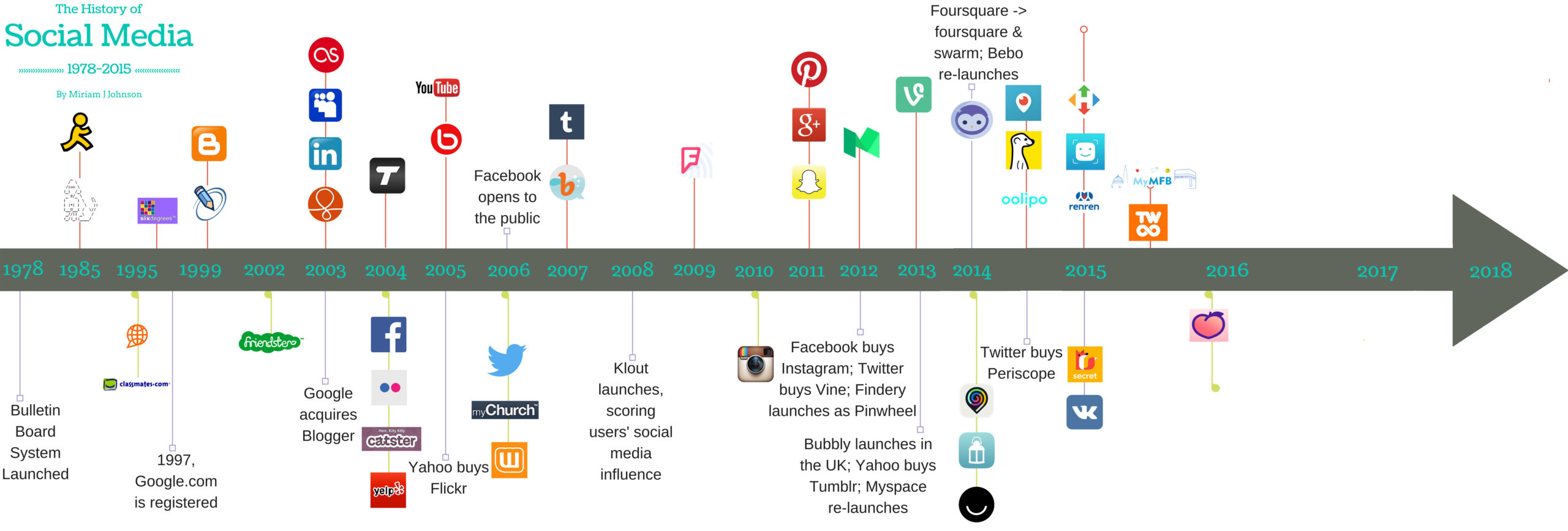
Social Media is a platform which provides information, knowledge, and awareness of the latest trends to people all over the world. Social Media has heavily increased over the years, and more people take part in it than ever before. Social Media, accompanied by Google Search, Instant Search, and other forms of internet and technology have implemented into society that information needs to be nearly instantaneous. Not only are industries coming out with social apps, but technology has a whole is immensely modernizing. Technology has been heavily present recently due to the ongoing pandemic, COVID-19. Classes all over the world have been taken over by Zoom, job interviews have been moved to video calls online, and even children as young as kindergarteners are learning through the computer. Electronics and technology of some sort has been around for as long as most can remember and is constantly advancing, seen in the image below. It is easy to say almost everyone is tied to some form of technology each day, but the affects that technology and the media are assumed to be leaving on society creates many conversations among people. Some believe these advances are benefitting our world, and many feel the opposite.

social media timeline
https://keymediasolutions.com/news/evolution-of-social-media-platforms/

There are many opinions Social Media and new advances in technology are leaving people to feel, but much of our society is grateful for them. Author Jenna Wortham wrote the article “How I Learned to Love Snapchat”, where she discusses her views on communication through a device. Wortham believes phone calls leave an awkward feeling on people, which is why she loves Snapchat, which is an app where you communicate through pictures or texts that disappear after a select amount of time. Wortham states, “Texting freed a generation from the strictures and inconvenience (and awkwardness) of phone calls, while allowing people to be more loosely and constantly connected”.  What Wortham enjoys Is the simplicity and efficiency of a text or a quick post. Jenna Wortham is a woman in her thirties, which I believe has much to do with the light she shines on the media. These advances are new, and the younger generations are the ones who most efficiently pick up the newest trends. Also, Technology has allowed many adults to work from home during our current Pandemic, keeping many young adults and families afloat. Similar to Wortham, Kenneth Goldsmith wrote the article, “Go Ahead: Waste Time on the Internet” where Goldsmith provides information on why and how the internet is important, and the positive impacts it brings to modern day society. In Goldsmiths article, he makes a point in comparison to spending hours watching tv, he says “ Our time spent in front of the computer is a mixed time, a time that reflects our desires as opposed to the time spent sitting in front of the television where we were fed shows we didn’t necessarily enjoy.” This is a great example of advances, because TV has been around longer than many forms of internet supporting his point that on the internet you’re engaging in what you’re actually interested in, instead of spending your time watching television shows you do not care to see. The internet is a way to allow people to freely research and learn about topics they are most interested in. More people are driven by their interests now than ever before because they have access to information on almost any topic you could imagine just at their finger tips. Both authors do a phenomenal job informing their audience with reasons technology is helping us, but of course not all agree.

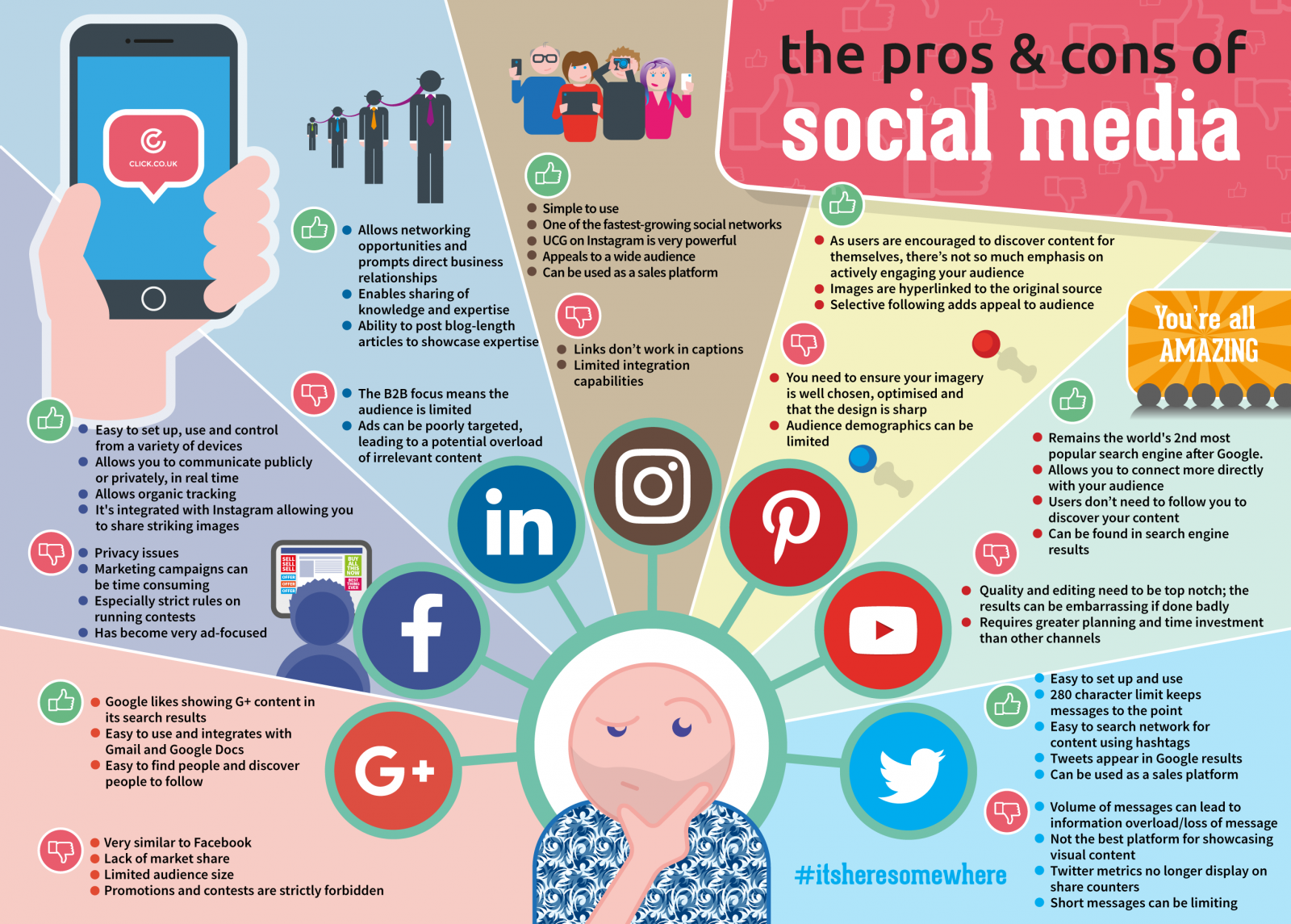
There are many people in our society that are very against technology and how it’s affecting younger generations. Nicholas Carr wrote the book “The Shallows: What the Internet is Doing to Our Brains” explaining the different ways the internet is negatively affecting our brains. While talking about the advances of the internet, Carr says, “What the Net seems to be doing is chipping away my capacity for concentration and contemplation. Whether I’m online or not, my mind now expects to take in information the way the Net distributes it: in a swiftly moving stream of particles. Once I was a scuba diver in the sea of words. Now I zip along the surface like a guy on a Jet Ski (Carr 139).” What Carr is getting at is the internet and its instant gratification is taking away people’s ability to take their time to find information. His reference “zip along the surface like a guy on a Jet Ski” is another way of him stating reading is turning into skimming, and the information does not last long-term in a person’s memory. Carr creates many of his arguments around the idea of “distraction” that is caused by the interaction with the internet. Carr talks about Google as a company that wants to be able to give information as fast as it can, saying “The last thing the company wants is to encourage leisurely reading or slow concentrated thought (Carr.” Then follows with “Google is, quite literally, in the business of distraction (Carr 157).” Carr wrote this book from the perspective of someone older in society, now experiencing these advances. There has been a negative connotation around technology for as long as most can remember, and has just as many cons as pros, seen below. Before there was social media, it was adults saying television is frying children’s brains. No matter the type of electronic, there is always those who are not in favor of it. I believe many people who are against technology are of an older age and are not quite used to it. The dramatic changes are what makes them “dislike” the media and continue on their ideas of the negative effect being left on society.

pros and cons of social media
https://www.click.co.uk/resource/the-pros-cons-of-social-media/

Although there are many people who feel social media and technology are helping our society and many who feel it is hurting it, there are also people who lie somewhere in between. Clive Thompson wrote an article called “Smarter than You Think: How Technology is Changing Our Minds for the Better” and although this article was written in a positive bias, Thompson says “The one thing that both apocalyptic and utopians understand and agree upon is that every new technology pushes us toward new forms of behavior while nudging us away from older, familiar ones (Thompson 457).” By saying this, Thompson is not implying new technology is neither good nor bad, he is closing in on the idea that as a society we are moving in a different direction. Those who see the cup half full, opposed to half empty are those who see technology as a positive change.

Social media and technology are going to continue advancing and will probably never stop. The issue is not whether social media and technology is “good or bad”, it’s the idea that the world is changing. The ones not in favor of these changes are those who want to keep the world traditional. Younger people are more open to this idea because they come from a society that is far from traditional, and constantly changing. Benjamin Franklin once said “Change is the only constant in life. Ones ability to adapt to those changes will determine your success in life”, the world continues to evolve, leaving no option but to either evolve with it, or sit back and be mad that it is no longer the way it used to be.

WORK CITED

Carr, Nicholas G. The Shallows: What the Internet Is Doing to Our Brains. W.W. Norton & Company, 2020.

Goldsmith, Kenneth. “Op-Ed: Go Ahead: Waste Time on the Internet.” Los Angeles Times, Los Angeles Times, 12 Aug. 2016, http://www.latimes.com/opinion/op-ed/la-oe-goldsmith-wasting-time-internet-20160812-snap-story.html.

Thompson, Clive. “Smarter than You Think: How Technology is Changing Our Minds For the Better” They Say/I Say, with Readings. 4 ed., edited by Gerald Graff, Cathy Birkenstein, and Russel Durst, W. W. Norton & Company, 2018. Pp. 457

Wortham, Jenna. “How I Learned to Love Snapchat.” The New York Times, The New York Times, 18 May 2016, http://www.nytimes.com/2016/05/22/magazine/how-i-learned-to-love-snapchat.html.

Is it Worth to Rethink the Way that We Use Transportation to “Go Green?”

Over the past few decades, climate change has been a very controversial topic. Some believe that climate change doesn’t exist and others want to do something about it because they are concerned about global warming. Climatologists have been studying the gradual rise in the earth’s temperature due to the burning of fossil fuels, cutting down rainforests, and farming livestock which has been emitting greenhouse gases into our atmosphere. Scientists have found that if we rethink the way we use transportation we might be able to reduce the emission of carbon dioxide to almost none by 2050. So you might be thinking, how can we possibly reduce our carbon dioxide emissions to little to none?

The Effect of Electric Vehicles on the Environment

Electric vehicles have been the new trend in the automobile industry, they are brand new, they are practical, and they are fun. Electric vehicles use renewable energy so you may never have to stop for gas ever again, the way they work is you plug in your vehicle wherever there is a charging station. These new vehicles are more responsive, so they drive nicer and are more digitally connected. According to the Office of Energy Efficient and Renewable Energy, the US alone used nearly nine billion barrels of petroleum just last year, and two-thirds of that large number was just from transportation. Using electric vehicles cuts that number down since they use renewable energy and other domestic materials like coal, nuclear, and natural gas sources. Electric vehicles can help reduce carbon dioxide emissions and cut down on smog present in large cities.

However, electric vehicles also have a couple of downsides, one example is that they come with a hefty price tag, the average electric vehicle price is around $55,600. Although car corporations, like Tesla, are coming out with more “affordable” options such as the Standard Range Plus Model 3 still starts at $37,990 so they are trying to appeal to the average consumer but realistically, not everyone can afford a car with that price. One could also argue that you are saving money in the long run because Vanessa Page claims, “no more expensive gas” and “the yearly cost to drive a Tesla Model S 85D 15,000 miles is $612.” So overall, you will have to pay more money upfront when getting the car, but over time you are saving because you do not have to buy gas anymore. So if we are talking about if it is worth it to go green with our transportation, that would be a personal preference of the consumer, because the logistics of a normal car and an electric one comes down to if you always want to pay for gas. With a car like a Tesla, it needs to be charged on a regular basis, but you don’t have the hefty costs of gas every time you charge up.

The Effect of Trucks vs. Trains on the Environment

In Chanie Kirschner’s article, she makes an argument on how trains are more environmentally friendly than trucks. Trucks dominate transported freight across the United States 70% to trains 30% according to Kirschner. Trains are significantly better at hauling large amounts of cargo, using much less fuel compared to trucks. Kirschner writes a statistic from “The Association of American Railroads, estimates that on average, a freight train can move 1 ton of freight about 484 miles on just one gallon of fuel.” Trucks also destruct the main highways and roads over time because they are hauling a lot of weight on small roads, compared to trains that transport their goods over strong railways. The aims in this article is saying how the transportation of goods should be done via trains instead of trucks because they don’t use as much fuel, therefore not emitting as much carbon dioxide. Kirschner tried to persuade us by establishing her ethos when she quotes The Association of American Railroads and stating the statistic about the amount of fuel a train uses. I do believe her blindspot in this article is how she doesn’t establish who would be willing to make the switch from truck to train transportation, and the impacts of all of the truck drivers in America. However, Kirschner’s tone is very informative, and one may be convinced that she is well educated on the subject and provides reliable sources to support her claims.

New Driving System

One main cause of greenhouse gases is the emission of fossil fuels, back in 2018 the average American commuted about 27 minutes just one-way to work according to Ingraham. Over a span of one year that adds up to be around 225 hours or just over 9 calendar days. There are 7.8 billion people in the world, and if we are all contributing to greenhouse gases we aren’t going to have a future with our planet. This is why we need to come up with a new solution for our driving system. In Bill Ford’s TED Talk, he describes how we not only need smart cars, but we also need smart roads, smart parking, and smart public transportation. Since transportation is such a major topic, in order to get the result of little to no carbon dioxide emissions, we need to change the whole system. Ford lists many different locations around the world and how they are trying to solve the emission of fossil fuels. Just a couple of examples are, in “Masdar in Abu Dhabi uses driverless electric vehicles that can communicate with one another, and they go underneath the city streets. And up above, you’ve got a series of pedestrian walkways,” he also mentions in Hong Kong they have a system called octopus, “it ties together all the transportation assets into a single payment system,” it has “parking garages, buses, trains” all operating on the same system. These are two examples of cities that have changed their whole transportation system for the better and they are starting to see results in conserving fossil fuels and using more renewable energies.

Bill Ford is taking advantage of his relatives, his great grandfather being Henry Ford, and on his mother’s side, his great grandfather was Harvey Firestone, as a platform in order to convince people that he is educated on the subject and has the resources a.k.a. money, to do so. He seems hopeful and encouraging in the way he talks to the audience, he truly believes that we can make transportation eco-friendly very shortly. I feel like he’s trying to encourage everyone to come up with solutions for transportation, not just well-educated climatologists, he is hopeful that we can all help to make a difference. The only blind spot in his argument is where we will get the resources and funding to pursue this vision of his. Although his aims are clear and we can see he wants to help us see that we need to take into account what other countries have been doing, gather the research and data, then to make a plan of action to complete in the years to come in order to save our planet before it’s too late.

Cleaner Alternatives to Fossil Fuels

In Monica Araya’s TED Talk, she talks about her homeland, Costa Rica, and how they have been running just about 100% of their electricity from hydropower, geothermal, wind, solar, biomass sources. She goes on explaining that they have made a huge accomplishment in running their electricity from natural sources, but just like the United States, Costa Rica’s energy source from oil is up to 70%. Araya says after the civil war in 1948, Costa Rica abolished their army and invested military funds into “social spending,” things like free healthcare and education, the government also used the funds for preserving the rainforests and starting the transformation onto hydropower. Since they have completely changed the culture and government structure once before, Araya is confident that Costa Rica could do it again, and this time around they would stop the use of fossil fuels. She admits that it would be a difficult transition but now is the perfect time since the “model of transportation and urbanization is broken,” and the cities are meant “for the people” and not cars and buses. Araya is trying to say how we can transform our environment and transfer over to renewable energy, but it is going to take commitment and determination to get it done because this is a huge task to stop using fossil fuels, but once we do, we will have a safe and clean environment to live in.

Although Araya’s points are very convincing I do feel that she has a blindspot in her argument because she is solely focused on Costa Rica, global warming is a “global” problem, not just one country, so getting a large country like the United States to do the same as Costa Rica would be a lot harder to transfer onto renewable energy sources. But her assertive and passionate tone is really convincing and I believe that a place like Costa Rica could set an example for the rest of the world to follow. From watching her TED Talk, you may assume that her audience is everyone but Costa Ricans because she is confident in all of what they have accomplished and hopes that everyone else will take notes and act on renewable energy sources just like them.

Taking a Step Back, Why Should We Care?

For the people who believe in climate change, they are looking for a plan of action to start doing now, so we have a habitable world in the future so the generations to come can succeed. They value the environment around them and they want to make it better than it already is right now.

The Opposing Side

Regardless of all of the scientific evidence that supports the impact of using fossil fuels causing climate change, everybody has the right to their own opinion, and not everyone believes in climate change. There was a survey put out by Business Insider and some of the people’s responses for why they didn’t believe in climate change were: the weather has not changed/ it’s still cold, the temperature varies naturally, conflicting or insufficient scientific evidence, news reports and research are false, thinking God is in control, the list goes on and on. There is opposition because people have different backgrounds, education, and beliefs, which means that not everyone will have the same concern about climate change.

There are 4 out of 10 Americans that don’t acknowledge climate change, the reason behind this is because we tend to focus and want to take action on issues that are personal, abrupt, immoral, and happening right now, according to PBS.org. Climate change is always discussed as something we will worry about in the future, we will start to use renewable energy, we will start transfer over to electric cars in the future, this select group of people thinks the solution is something we should worry about down the road and not now. This group of people have other priorities, they would rather worry about the military, terrorism, immigration, and especially the economy. The economy is very important to those who don’t believe in climate change because they would much rather have a strong, powerful country, than an eco-friendly and liberating one.

This ongoing debate on whether climate change is real isn’t going to change anytime soon, because Americans can’t seem to get on the same page. But what you have to ask yourself is, do you want your children and grandchildren to have a safe and healthy environment to grow up in? If you said yes, then we should start doing something about global warming instead of saying “we will plan something,” we need to take action now rather than later.

Works Cited:

Araya, Monica. “Transcript of ‘A Small Country with Big Ideas to Get Rid of Fossil Fuels.’” TED, June 2016, http://www.ted.com/talks/monica_araya_a_small_country_with_big_ideas_to_get_rid_of_fossil_fuels/transcript.

Arjona, Vanessa. “Batteries, Charging, and Electric Vehicles.” Energy.gov, 29 Sept. 2020, http://www.energy.gov/eere/vehicles/batteries-charging-and-electric-vehicles.

Bertrand, Natasha. “Here’s Why People Don’t Believe In Climate Change.” Business Insider, Business Insider, 25 Nov. 2014, http://www.businessinsider.com/public-religion-report-climate-change-2014-11.

Ford, Bill. “A Future Beyond Traffic Gridlock.” TED, Mar. 2011, http://www.ted.com/talks/bill_ford_a_future_beyond_traffic_gridlock.

Hanson, Joe. “It’s Okay to Be Smart.” PBS, Public Broadcasting Service, 11 Aug. 2016, http://www.pbs.org/video/its-okay-be-smart-climate-science/.

Ingraham, Christopher. “Analysis | Nine Days on the Road. Average Commute Time Reached a New Record Last Year.” The Washington Post, WP Company, 4 Oct. 2019, http://www.washingtonpost.com/business/2019/10/07/nine-days-road-average-commute-time-reached-new-record-last-year/.

Kirschner, Chanie. “Which Is More Efficient for Freight: Truck or Train?” Treehugger, 18 Aug. 2019, http://www.treehugger.com/which-is-more-efficient-for-freight-truck-or-train-4863063.

Page, Vanessa. “The Economics Of Owning A Tesla Car.” Investopedia, Investopedia, 28 Aug. 2020, http://www.investopedia.com/articles/active-trading/041515/economics-owning-tesla-car.asp.

Paying the Price of Being a Woman

I would like for you to take a moment and think about a woman you know. It could be your mother, your sister, a friend, significant other, or maybe even yourself. Think about the different hardships they endure, the obstacles they have overcome, and the adversity they may face in their everyday lives. Now, ask yourself, should having access to basic menstrual products be included in those difficulties? 

On any given day, 62.5% of women worldwide do not have access to proper menstrual care.

Over the past decade or so, the issue of menstrual equity has been brought in to light and fiercely debated. Should women have access to free period products and menstrual care? More important than the question itself, is the question of why is this a debate in the first place? By forcing men and women alike to ask this question, true values held by the government, healthcare, and frankly humanity in regard to women are revealed. Many sides of this issue are concerned about a variety of topics including women’s overall health, access to low-income women in particular, and the education of adolescent girls. Many are also concerned with who will pay for this and how? Will women take advantage of these free products? These are all valid concerns that contribute to the conversation of menstrual equity.

Before we begin, I feel it might be useful to know exactly what getting your period entails, so let’s start there. The menstrual cycle is about twenty-eight to thirty-two days long and is on a constant loop. A girl’s period is the process of the shedding of the uterine lining. Remember that female figure I asked you to think about in the beginning of our conversation? Yep. This happens to her too. Every month. When this event occurs, a woman experiences bleeding for anywhere from three to eight days. In addition to the bleeding, women experience any number of other symptoms. These can include abdominal cramping, breakouts, sore and sensitive breasts, lower back pain, fatigue, bloating, diarrhea, nausea, gassiness, constipation, headaches, food cravings, and mood swings. As my fellow women know and you men can probably imagine, this is not a very pleasant experience. Due to this extensive list of symptoms, there are also a number of products that are needed to care for a woman during this time. Everyone knows the basics of pads, tampons, and you may even know about underwear liners; however, there are also menstrual cups, period underwear, new regular underwear, heating pads, pain relief medication, acne medication, and potentially birth control to consider.

Affording all of these different products can be next to impossible for many women around the world. Hannah Olsen, an online blogger, contributed to the conversation by laying how just how much a period actually costs. Based on a number of factors, including how long a period is on average, how long one can leave a tampon in- no more than eight hours-, and how many periods a woman may have in her lifetime, Olsen calculated the average amount women can expect to spend on the products alone. For tampons and pads she estimates that a woman could spend at a minimum $1039 over her lifetime. If they chose other, less conventional products such as the menstrual cup or period panties, the cost could be somewhere around $400. In addition to these costs, women have to spend money on the medications and heating pads. These can run a hefty bill of around $300-800. Having a period-being a woman-is very costly.

Unfortunately not all women can afford these costs. A study was conducted that surveyed women in the St. Louis area of Missouri. The study, run by E.J. Mundell, found that out of 200 women who were considered to be at or below the poverty line,

“two out of three had to go without feminine hygiene products at least once over the prior year, due to cost.”

“About one-fifth — 21 percent — said this happened on a monthly basis, and nearly half said they often had to make tough choices between buying food or period-related products.” Many women all over the world share this experience. Period products and care are simply too expensive and can’t be afforded. This causes many women to resort to other methods to care for themselves.

Ruth Cooper, a neuroscience and behavior major at the University of Notre Dame, gave a speech in her college course “Great Speeches” in which she discussed the tampon tax and how she feels it ridiculous and infuriating that the products to care for women on their period are seen as a “luxury”. In her speech, she points out that when women can’t afford to buy tampons or pads, they often resort to using whatever they can find, such as old rags, socks, or even paper. These women may also use the period products they do have for way longer than recommended. These alternative methods that low-income women are forced to use can cause serious health issues.

A lack of access to free menstrual care leaves women vulnerable to different diseases and infections. Using a tampon for longer than recommended-usually around 6-8 hours-can lead to toxic shock syndrome (TSS). This is a very serious and potentially life threatening disease that is caused by the growth of Staphylococcus aureus (staph) bacteria. This bacteria begins to grow and inhabit the uterus when a tampon is left in too long. The toxins from this bacteria enter the blood stream, which is not safe. In addition to TSS, women can contract different urinary tract infections (UTIs), vaginitis, and other bacterial infections. The risk of women having these health issues can be greatly reduced by providing access to free menstrual products and care to all women.


A woman’s health is not the only area of her life that is impacted by her lack of access to free menstrual care. In the United States, nearly one in five teenage girls living poverty loose educational opportunity due to this issue. This is a global issue as well, according to Megan Markle and World Vision, a humanitarian aid, development, and advocacy organization. During her time traveling throughout India with this organization in 2017, Her Royal Highness the Duchess of Sussex made some astonishing observations. She learned that 113 million girls are at risk of discontinuing their education all due to the simple fact that while on their period, these girls do not have proper supplies to take care of themselves. This hinders them from attending school. They fall too far behind to catch up which makes completing their education almost impossible. The Duchess also points out that when a girl is forced to miss school due to her period, she is behind her male classmates by 145 days. These baffling statistics show that lack of access to products and poor education are directly linked. By forcing women to pay for these bare-necessity products, an argument is made about the value of education for women. Simply put: a girl’s education is not highly valued by society, but making money is.

An important aspect to this conversation concerns who is going to pay for these products in order to make them free to the public. As Gina Davis points out in her essay “No, Our Tampons And Birth Control Shouldn’t Be Free”, we essentially end up paying for them anyway. She explains that in order for any government to make a product or service free to the people, it must be paid for using tax money. That would mean that taxes need to be raised to fit menstrual products into the budget of what the government can pay for and provide. Davis also makes the point that taxes would be raised more than what period products actually cost. A box of tampons, as we discussed earlier, costs around $7, but your taxes would be raised by much more than that. Not only would you be paying more for your own products, you would also be paying for someone else’s products.

Another concern of making tampons free is brought into light by Tennessee senator Joey Hensley. He expresses his concerns of state revenue taking a hit if the state lost the tax money made from purchasing period products. He estimated that the state of Tennessee would lose about $137,000 annually if these products were not taxed. The fact is, there is a lot of tax money made in the period industry. States rely on this money to be able to help pay for roads, schools, and parks. What would happen to these public services if this tax money was lost? Senator Hensley is also concerned that women would take advantage of the free products and hoard them for themselves. This could cause a supply shortage and lead to the same problems that were trying to be fixed.

All of these different concerns reveal the values that are most important to our society and different governments. For some health is more important, for others education is of the utmost value, even still economy and money are the most principle. The debate over menstrual equity has exposed what people value for women. One last time, I would like for you to think about that prominent woman in your life. What values do you have of her? What is most important?

Works Cited:

ACLU. “The Unequal Price of Periods.” ACLU.org, http://www.aclu.org/sites/default/files/field_document/111219-sj-periodequity.pdf.

Beachum, Lateshia. “Male Lawmaker Frets about Loss of State Income If Tampons Are Included in Tax-Free Holiday.” The Washington Post, WP Company, 13 Feb. 2020, http://www.washingtonpost.com/health/2020/02/13/tennessee-tampon-tax-joey-hensley/.

Cooper, Ruth. “Bleeding Money.” Fresh Writing, University of Notre Dame, freshwriting.nd.edu/volumes/2017/essays/bleeding-money.

Davis, Gina. “No, Our Tampons And Birth Control Shouldn’t Be Free.” The Odyssey Online, The Odyssey Online, 5 Aug. 2020, http://www.theodysseyonline.com/tampons-birth-control-shouldnt-free.

Markle, Meghan. “Meghan Markle: Periods Affect Potential.” Time, Time, 8 Mar. 2017, time.com/4694568/meghan-markle-period-stigma/.

Mayo Clinic Staff. “Toxic Shock Syndrome.” Mayo Clinic, Mayo Foundation for Medical Education and Research, 18 Mar. 2020, http://www.mayoclinic.org/diseases-conditions/toxic-shock-syndrome/symptoms-causes/syc-20355384.

Mundell, E.J. “Study: Many Poor Women Can’t Afford Tampons, PadsD.” WebMD, WebMD, 16 Jan. 2019, http://www.webmd.com/women/news/20190116/study-many-poor-women-cant-afford-tampons-pads.

Muthara, Gladys. “Menstruation Can Stop Girls From Getting Education in Kenya.” Time, Time, 18 May 2016, time.com/4339388/kenya-menstruation-education/.

Olsen, Hanna Brooks. “How Much Does a Period Cost, Anyway?” Medium, Medium, 17 Oct. 2017, medium.com/s/bloody-hell/how-much-does-a-period-cost-anyway-6a2263828ae3.

The Legal Drinking Age is Ridiculous

By: Lily Anderson

Today is the day, your twenty-first birthday, the day you have been waiting for since you were introduced to pretty much any social scene ever. The fears of entering a bar, scared that your cheap fake ID won’t work are officially over. Young Americans wait years to be able to finally legally drink without any care in the world, while young Europeans get the pleasure of that three years earlier. America has one of the highest drinking ages in the world but many kids decide to overlook that law and drink well before the age of twenty-one. Scientists want to even raise the legal drinking age to twenty-five after extensive research done on our brains. Many American adults are very against the thought of drinking before twenty one which has caused multiple issues between individuals, their families, and law enforcement. While Americans are struggling to not get caught drinking underaged, citizens in other countries around the world are enjoying their alcoholic drinks before the age of eighteen, due to carefree laws in place. In many countries like Germany, they are even having alcohol served to students at prom. This brings into question, why is America so strict about the legal drinking age? 

Throughout the years, there have been many complaints from underaged teenagers pushing the government to change the legal drinking age back to eighteen after President Ronald Reagan officially changed it to twenty-one in 1984. Many people do not understand how most countries in Europe and many other countries around the world allow eighteen-year-olds to consume alcohol but the American government has such high standards for their citizens. In fact, lowering the drinking age could mean safer consumption of alcohol for individuals. “Lowering the drinking age to 18 would allow 18-to-20-year-olds to consume alcohol safely in regulated environments, with supervision”(Otte, UNEWS). Instead of underaged drinkers hiding around and drinking secretively to themselves, lowering the drinking age would provide young adults with a safer environment. By doing this it would teach individuals how to safely drink with supervision constantly around them, rather than a small group of teens experimenting for the first time when none of them know their own limits. By doing this it would provide young adults with guidance and information from experienced drinkers. This is something they would not receive if they are hiding their underaged drinking. 

The other side though has a different belief though. People believe the drinking age should remain at twenty one because it is irresponsible to allow kids under the age of twenty-one into clubs. Lowering the age restriction would allow young adults into more violent areas. “Neighborhoods with higher densities of bars, nightclubs, and other alcohol-selling locations suffer more frequent assaults and other violent crimes”(ProCon). Neighborhoods with higher densities of bars and clubs experience much higher violence rates and they are trying to keep kids out of there. This seems completely naive to many people though. We send hundreds of thousands of our young adult citizens to fight every year to protect this country from harm. While they are out fighting for their own lives and our lives our government is scared that young adults will be going into more dangerous areas just because there are a couple of bars and clubs in the area. Yes, it can be more dangerous, but when looking at places like Iowa City, which has a huge bar and club population, this does not fit into that stereotype. Many college towns are filled with kids drinking on the weekends and because of that, there need to be safer precautions in place for them. Maybe our country should focus on making safer environments that surround the high bar and club populations instead of trying to keep kids out of them. From the looks of it, our government already does not do a very good job of stopping underage drinking. This is pretty relevant in any college town you will step onto.

At the age of eighteen, we are pronounced legal adults. At this time we are allowed to enlist in the United States Military, buy tobacco and nicotine products(up until this year), make medical decisions for yourself, stand on a jury, and get married. Yet there are still precautions and restrictions to letting American eighteen-year-olds drink. The people on the other side of this argument states, “A person cannot legally purchase a handgun, gamble in a casino (in most states), or adopt a child until age 21, rent a car (for most companies) at age 25, or run for President until age 35”(ProCon). They say that drinking should be restricted because of the responsibility it holds for oneself and others. Yet again, the other side falls short when thinking through this. Nicotine and tobacco products are proven to cause cancer and addiction but we still allow legal adults to get a hold of that. We allow eighteen-year-olds to stand before a doctor and figure out what is wrong with them physically and mentally without the parental guidance they were legally bound to have for eighteen years. We allow them to stand before a court and determine someone’s prison sentence because our government sees fit that at eighteen years old when you legally become an adult, you can make that life-changing decision for someone. Our government allows each United States citizen to make all of these life-changing decisions for themselves and others, yet we still question the aspects of the legal drinking age. I have multiple friends serving in the United States Marines and all of them are rather annoyed at the fact that after a long day’s work serving our country they cannot sit down and enjoy a nice beer. 

 Ronald Reagan changed the legal drinking age to twenty-one to combat the drunk driving issues that were happening during his time as president. Reagan implemented this by threatening states with a ten percent cut on their federal highway funding. After this law was passed, there has been a major decline in young adults drunk driving. From 1988 to 1998 there was about a thirty-six percent decline in traffic fatalities involving alcohol. “The number of young drivers in fatal crashes with a positive BAC dropped 61 percent, from 4,393 in 1982 to 1,714 in 1998”(TrafficTech). No doubt upping the drinking age improved drinking and driving fatalities but it does not just stop there. Many other attributes fall into changing the drinking age, one of them being binge drinking. Researchers found a seven percent decrease in binge drinking among college students from 1988 to 2011. Along with that, there was a thirteen percent decrease in binge drinking among high school students. In current days we do not know how true that is anymore. There is a whole epidemic going around America based on college students drinking. An article published by the National Institute of Alcohol Abuse and Alcoholism reveals that fifty-five percent of college students aged eighteen to twenty-two have admitted to drinking alcohol and thirty-seven percent admitted to binge drinking. Raising the drinking age might have worked in the past for a good amount of time, but college students have become obsessed with the aspects of drinking and partying in their free time that has caused most of them to put the legal drinking age law straight to the back of their minds. 

Both sides of this argument make a very strong case but there’s no denying the holes present when looking at the side that says the drinking age should remain twenty-one. It brings into question, why is America so strict with its drinking age when places like Great Britain are so lenient with it? There is factual evidence that shows lowering the drinking age may be smarter for young adults so they can develop a healthier way of drinking and learning not to binge drink. A big reason scientists do not want to lower the drinking age is because research found that our brains do not develop until age twenty-five. Yet, the drinking age is not even twenty-five and at the age of eighteen U.S. citizens can still purchase nicotine and tobacco products that have a serious effect on the brain. Underaged drinking also costs the U.S. economy twenty-four billion dollars in 2010. By lowering the drinking age, this would significantly decrease the amount of money the U.S. is spending because of underage drinking. There are many aspects that go into changing the legal drinking age, but there is no denying the facts that are included. 

Citations:

https://one.nhtsa.gov/people/outreach/traftech/tt261.htm

https://ourcommunitynow.com/lifestyle/things-you-can-legally-do-in-the-u-s-when-you-turn-18

Should the Drinking Age Be Lowered from 21 to a Younger Age?

Is the me too movement helping or hurting women?

By: Fiona Fitzsimons

I’m sure everyone has seen the trending tag “#metoo”. This tag has so much more meaning to it other than just being a meaningless hashtag on someone’s post. In 2018, thousands of women participated in the “me too” movement. This movement was calling out powerful men for sexual harassment and sexual assault, once one brave women took the stance against a man, they were not alone. After one woman would call out a certain powerful man, many other females shared the same experience with that same man. Not only did this movement call attention to sexual harassment in workplaces, this movement has made so many positive changes for females. Many have heard of the uplifting story’s of the me too movement but few have heard of any negatives. The media focuses on all the positives of this movement which tend to block out the negatives of the “me too” movement. 

In the past women have chosen to stay silent when a boundary was crossed by a male, especially when it was someone they worked with. It wasn’t worth losing their job, they thought. They thought it was their own fault and started to believe that they were in fact the guilty one. This was the problem the me too movement solved. Thousands of women stood up for themselves and called out these horrible men around the world. Times magazine gave their well known person of the year award in 2017 to “The silence breakers”. The “silence breakers” were those women participating in the me too movement who broke their silence. Times highlights these brave women on speaking out on their experiences. Many explained that they were threatened by their attacker to not tell anyone, some stating they would even go after the victims’ kids, if they were to speak up. This article focuses on how speaking out wasn’t the hard part, many victims explain in this article that they would experience assault from their attacker multiple times and how their attack held such an emotional and physical burden, many experienced some form of PTSD. Thousands of women across the nation came together and discovered they were not alone. All experienced such gruesome harassment and the aftermath of it left them feeling alone and depressed.  This award from Times, gives light to these brave women who participated in the me too movement, and how future generations of women will be affected in such a powerful way. This article ensures that sexual harassment in the workplace will be reduced, and those who experience it will receive justice for their assaults.

Although this movement started up in the United States, it quickly spread across the seas, creating a global movement. Multiple countries have experienced a movement similar to the one seen in America. America was very lucky to have such a positive and quick response to the me too movement. Sadly, countries like India limit justice for females. When indian women took the stance amongst their attackers, they were shut down and told there’s no evidence. As explained in the Washington Post, women quickly became discouraged in India. Although these attackers did not receive a just punishment, the women accusing them felt some sort of satisfaction calling out their attackers. In some way drawing negative attention to powerful men, even the minister of India. The article expands on how Japan had a similar experience with the me too movement. Victims were calling out their male perpetrators and were being shut down, It was easy for them to become discouraged as well. Luckily they weren’t, these women demanded justice and created a movement similar to the me too movement, called “flower demonstrations’ , this movement was calling out powerful men for sexual harassment. This was proof that Japan’s society was slowly but surely making a positive movement for females across Japan. 

This movement gave relief to so many suffering victims. For example, As stated in USA Today, Miriam Mayer experienced heartbreaking sexual assault attack at the start of her hollywood career from a male composer, she states “I really wanted/needed that job, it was a great opportunity, but I couldn’t go back. There was no one to report to”. Miriam like many other women valued her career, and had to give up on it due to sexual assault. She thanks the me too movement as now women who experience what she did will now have an opportunity to report and speak up, and hopefully not have to give up their career, like herself. Many victims felt like themselves again and found relief in knowing their attackers were getting punished for their disgraceful actions. Females across the nation stood up together for tramus they have experienced and finally received justice for. Now, the nations younger generations were even being taught about sexual harassment, and how wrongful it is. Girls are now taught how to protect themselves and deal with harassment, while boys are taught to not conduct such an evil attack. How could such a powerful movement even be at question for hurting women?

Sadly, with everything comes backlash. After this moment, many men found fear in working with women. Mens news feeds were filled up with successful, powerful men being thrown behind bars. Although women benefited from calling out their attackers, they have received consequences in their workplaces due to this movement. Men have become so overly conscious when working with women, that they would rather be working with men. Recent studies done by the Human Resource Executive showed that  22% of men and 44% of women agreed that females were being excluded from social interaction due to the fear of men being accused. This is extremely harmful to women’s careers. When competing with males at jobs, they are presented with less opportunities due to the fact that they are female. Sadly, nearly one third of men claim they stay away from holding one on one meetings with women, out of fear of being falsely accused according to Human Resource Executive. Once again this is a major setback to women who are constantly competing with males. After a poll conducted in 2019 by Human Resource Exec, it found 19% of men stay away from hiring women they find attractive, as they see that as a liability to their office. Unfortunately, as women gain more respect in workplaces and receive justice for their tragic attacks, they recieve setbacks in their careers for simply being a female. This makes one question the risk versus the reward in this situation. If one were to value their career and receive a massive loss of opportunity due to them being seen as a “liability” in a work place, one would not be too fond of the me too movement.

Much more evidence was found to support the backlash of the me too movement, as time went on. Harvard Business review explains the “Mike Pence Rule”. This so called “rule” being that a man would not eat dinner one on one with another woman not being their wife. Obviously this is very threatening to women, if every man were to follow this “rule” women would be passed up in so many opportunities, big and small. The bigger problem about this “rule”, is that this is a leader of our country stating that.  When a country’s leader is saying things that will negatively affect females, it really makes one think if women have made progression through the me too movement. Tim Bower, the author of this article explains that when networks as big as the New York Times were posting articles on how positive and powerful this movement is, he didn’t believe it. He knew from the start this movement would hold many consequences for women. Stepping forward in aspects of harassment yet stepping backwards in the form of females careers, as Bower explained. Bower touches on how in recent feminist movements, women have come far in the sense of workplace gender equality, yet this me too movement serves as a huge step backwards. Unfortunately, he forecasted the truth. 

This question being asked if the me too movement is helping or hurting women, really depends on one’s values. If one were to value their career and how hard they have worked, just to have missed opportunities of promotion due to their gender. This movement would obviously be hurting them. They would not be benefiting from this powerful movement in the long run. Whereas, If a woman was constantly being harassed in her work place, and was suffering, she would  graciously benefit from this. She would finally be free of her attacker and could find peace in that. Everything comes with backlash. Even some of the most positive powerful movements like this me too movement come with backlash. 

Writing this paper I honestly felt disappointed in myself. I thought it was wrong to even question the me too movement. As it was such an uplifting movement to so many women suffering around the world. I was ashamed by the backlash I researched about, It was my first time hearing of it. How could such a powerful movement like this wound up hurting women at the same time of helping them. I really think the question being asked has an answer depending on one’s values and background. I guess it’s really asking if women are benefiting or falling back more due to this movement.

Obesity, Why Does it Never Stop?

People go on a diet for many reasons. To look better or to stay healthy. However, despite the efforts that people put in, in 2020 40 percent of Americans are suffering from obesity, being the highest recorded. According to the Trust for America’s Health article, with COVID-19, the insecurity of food put more Americans at risk for obesity. What caused these high rates of obesity in the US? Is it the fast-food company’s fault for selling unhealthy products? Does one’s surroundings or environment have any impact on their food diet? Through several articles, we will see different perspectives and arguments regarding this issue.

Most cities have scarce access to cheap and healthy food due to large grocery stores being miles away from neighborhoods. So people often find convenience stores to get food quickly. Olga Khazan, author of ‘Why Don’t Convenience Stores Sell Better Food?’, argues that one’s environment has an impact on their food diet. Khazan talks about the connections between obesity and the lack of affordable, easy, and healthy food that people in cities face.

“According to the D.C. Central Kitchen’s calculations, 88 percent of food retailers in the District sell mostly junk food or processed food”. Most small convenience stores and corner stores don’t stock many fruits and vegetables because of the high cost of delivery and refrigeration. So a program called The Healthy Corners, organized by The D.C. Central Kitchen, helped these small convenience stores deliver fresh products with a fleet of trucks they owned. The D.C. Central Kitchen mostly helped stores that didn’t have a full-service grocery store nearby. Through this program, 67 Healthy Corners were in low-income neighborhoods.

However, although these changes were made, overweight and obesity rates weren’t going down. Khazan mentions a study in Health Affairs that was similar to this situation. A new grocery store opened in Philadelphia. While people were consuming more fruits and vegetables, obesity rates were higher than before. Turns out that people were still relying on corner shops for quick snacks and food. The author comes to the conclusion that the goal shouldn’t be reducing obesity, but to give people the option to choose a healthy diet.

What this article highlight is how people don’t have the chance to choose their diet. Olga Khazan first criticized convenience stores for the lack of healthy food available. With the study from Health Affairs, Khazan finds out that reducing obesity shouldn’t be the main focus. People will still look for quick, affordable, and unhealthy food despite having more fruits and vegetables to choose from. What’s important is giving people the opportunity to choose a healthy diet. This article believes that one’s surrounding, such as convenience stores and far way grocery stores, have an impact on the increasing obesity rate. What Olga Khazan further emphasizes is the importance of choice.

The second article called ‘Don’t Blame the Eater’ also doesn’t find the cause in the eaters but the environment and the fast-food companies. David Zinczenko opens his argument with his personal experience. He used to live on a fast-food diet because that was the only affordable meal he could get during that time. His parents split and they were both working long hours. Zinczenko then asks what other alternatives are there for teens. With the high number of fast-food restaurants available and low prices, it is natural for teens to eat fast food frequently.

In addition, Zinczenko points out that there is a lack of information on fast food packaging. Since fast foods aren’t covered under the Food and Drug Administration labeling law, most packaging doesn’t have any information about the calories we are consuming. The author uses a specific chicken salad as an example which states that it is only 150 calories, excluding the information about the addition of 190 calories for the almonds, 560 calories for a packet of dressing containing 2.5 servings, and 450 for coke. This additional information was either listed separately or in small letters at the back of the packaging. People are

This article also believes that one’s surroundings, fast food companies, have an impact on the increasing obesity rate. Zinczenko believes that obesity rates increased since the only food options are the fast-food restaurants that are available around every corner. Through this statement, the author argues that it is not the eater’s fault but how the surrounding factors have led to obesity. Zinczenko also finds another problem with the fast-food restaurants, packaging. What this article highlights is that the eaters are not to blame. It is natural for them to be overweighted because people and their surroundings have led them to be this way.

In the year 2020, a new virus called COVID-19 was found. The rapid spread of COVID-19 has taken lives and changed people’s lifestyle. People are in quarantine and avoiding contact. With this new environment an article by the Trust for America’s Health saw connections with obesity and found results that show with the pandemic obesity has increased.

The article first states how obesity may impact on health including COVID-19 risks. According to the State of Obesity: Better Policies for a Healthier America, the adult obesity rate has increased to 42.4 percent. “Obesity is one of the underlying health conditions associated with the most serious consequences of COVID infection, including hospitalization and death.” This means that 42.4 percents who are obese are at the risk of health impacts from COVID-19. Child obesity are also increasing with 19.3 percent of US young people, ages 2-19, have obesity. In addition, 12 states have adult obesity rate above 35 percent. Also the article states that food insecurity is closely related to obesity. There were high levels of food insecurity during the 2008-2009 financial crisis and COVID-19. According to IS Census Bureau survey, “25 percent of all respondents and 30 percent of respondents with children, reported experiencing food insecurity between April and June of this year.”

What this article shows are statistics and facts from studies and researches. This article shows how the COVID-19, our new environment, has changed our lifestyle along with the rates of obesity. With the data provided it clearly shows that with the increase in spread of COVID-19, obesity rates have increased. These numbers show that this change in environment has made people change their lifestyle and eventually led to higher obesity rates.

The final article called ‘Sedentary lockdowns put kids at risk for obesity. Here’s how to help them stay moving‘ talks about how COVID-19 has made an impact on child obesity. With the spread of COVID-19, schools moved online and more children were stuck at home. Using an observational study as evidence, it has shown that due to the lockdown there is a higher chance of child obesity. The study observed 41 children in Italy and found that they were eating an extra meal per day than usual. Also the hours sitting in front of the computer has increased, reducing any physical activity. The author, Ryan Prior, believes that with the quarantine, it is important for family members to help and keep a healthy and active lifestyle.

This article also deals with the relation between COVID-19 and obesity. Ryan Prior specifically mentions the lockdown that the COVID-19 has led to. Through this lockdown, people were eating more and moving less. Ryan Prior believes that the increasing obesity rate that recent studies show is due to the new lifestyle that COVID-19,a new environment, made.

The first two articles argues that convenience stores and fast-food restaurants have caused an increase in obesity by not giving people a healthy food option. The other two articles talk about obesity and its relation to COVID-19. What these four arguments have in common is that they all find the cause of one’s surround and environment for obesity and not the eater. With different perspectives, these four articles express different values on the same conversation, how does the environment and one’s surroundings affect obesity.

Free Healthcare vs. Other Healthcare

https://www.commonwealthfund.org/publications/issue-briefs/2020/jan/us-health-care-global-perspective-2019

Which healthcare method is more effective? What kind of healthcare systems are there? A lot of questions and opinions come into the conversation of healthcare in the United States. There are many different approaches to healthcare and I’ll be explaining the main ideas of some. I will also talk about their purposes, who is affected, and concerns. In this blog post, I’m going to analyze different methods of healthcare and how they are viewed from different sources.

Free Healthcare

The purpose of free healthcare is that people should not have to pay to receive basic medical care. Ivy Panda’s main idea of this argument, in their essay, is that people would visit the doctors when necessary and follow prescriptions. In regard to ethics, a goal behind this policy is being able to protect people’s personal morals and rights, such as autonomy. This has appeals to an audience who suffer from chronic illnesses or that have long treatment plans. Free healthcare would also value the importance of helping the sizable amount of mental illness in the United States. Since elevated suicide rates may indicate a high burden of mental illness, free healthcare could make a dramatic change to that. This would happen by being able to diagnose, treat, and teach people how they can live with their mental illnesses when they weren’t able to before. Despite the highest spending, Americans experience worse health outcomes than their international peers. Even with the United States’ advances in medicine, it still does not provide a positive outcome for a lot of patients. This could be solved by offering free healthcare and ensure that every patient is evaluated and treated for the best outcome possible. The essay also explains common health issues that need attention. Obesity is a large problem in the United States. Obesity also causes a lot of conditions that can be life threatening if not treated. With the right care and motivation, people will more likely seek help for this condition if they are not charged for treatment. People in poverty or are homeless would now receive the care and the supplies they need take care of themselves when they count before. A lot of these people suffer from malnutrition and that can be solved with certain medical care. Children in foster care that require medical attention would also receive better care now that free healthcare would cover more of their treatment. Immigrants and people traveling from places such as Canada could also receive cheaper or free healthcare with help of this policy. Overall, free healthcare would benefit people who can’t afford or don’t have access to basic healthcare. It would give a chance for every citizen in the United States to improve their quality of life regardless of income or insurance.

Concerns

The author fails to address problems that would arise with this policy. Some concerns of free healthcare may be the funding. There are a lot of factors that play into medical care. Some examples of significant expenses may be hospital stays, ambulance rides, scans, or pharmaceuticals. Another concern is hospital and private practice staffing. With the large increase in patients, places that provide patient care will need a lot more staff. The increase in the number of patients with free healthcare does not bring in the funding to places, so there would be limited ways to pay the extra staff.

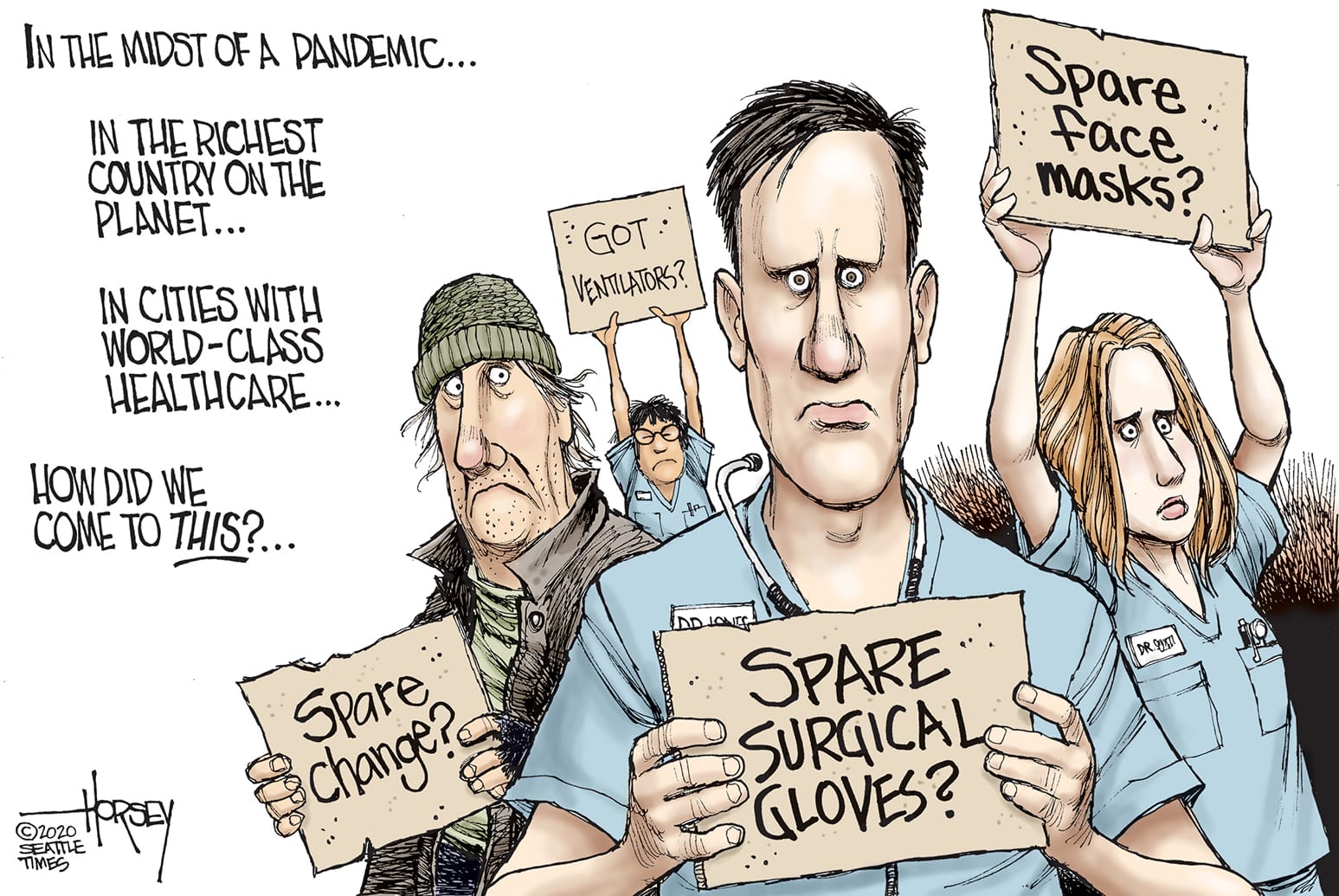
https://pcdn.columbian.com/wp-content/uploads/2020/03/03-29-Cx-EditToon-Medical-Supplies.jpg

Other Healthcare

On the other hand, Michael Winther’s essay explains that paid healthcare values a patient’s right to choose their care, is able to have advanced medical equipment, and to have enough sufficiently paid staff. The idea of this method is without the funding to pay staff, patients will receive less or inadequate care. The funding for free healthcare will most likely come from tax dollars, resulting in higher taxes for everyone no matter how many times an individual visits the doctor. Staff that is not getting paid enough will tend to not be as motivated. He mentions that paid healthcare also limits the access to pharmaceuticals. With free healthcare, an increase in pharmaceuticals is prescribed leading to an excess amount of unused drugs. This could lead to more cases of addiction and reliability on certain drugs. Risky behaviors (such as smoking, drug abuse, and gang membership, to name just a few) result in a heavy burden on our medical care system. This problem would only increase with the surge in new patients. Drug abusers and prostitutes are provided plentiful and free medical care (at taxpayer expense), while many elderly and disabled are denied medical procedures because they are less productive members of society. One of his main appeals of paid healthcare is preventing complications like this from happening. Make no mistake—universal health care makes the health-conscious taxpayer pay for the excessive medical needs of those who choose not to protect their health. Taxes are meant to improve the quality of life for citizens, not to aid in the harmful acts that hurt the economy. With government provided healthcare, patients will be guided to the care they would receive instead of choosing. Even though every type of care is important, with certain situations, patients may need unique treatment. Instead of getting top care treatment, a patient may receive general care. In his essay, Winther concludes that paid healthcare ensures that every patient is getting the right attention and resources.

Concerns

Winther addresses the obvious problem that our current healthcare system is failing to do. Some concerns of paid healthcare is that not everybody may be able to afford or have insurance for healthcare. The people that can not afford care or do not have insurance often have issues that go untreated and become a bigger problem. People that require lifelong treatment for a condition may not be able to get it because of the inability to access medical care. A solution that is commonly brought up is potentially making insurance more available from employers.

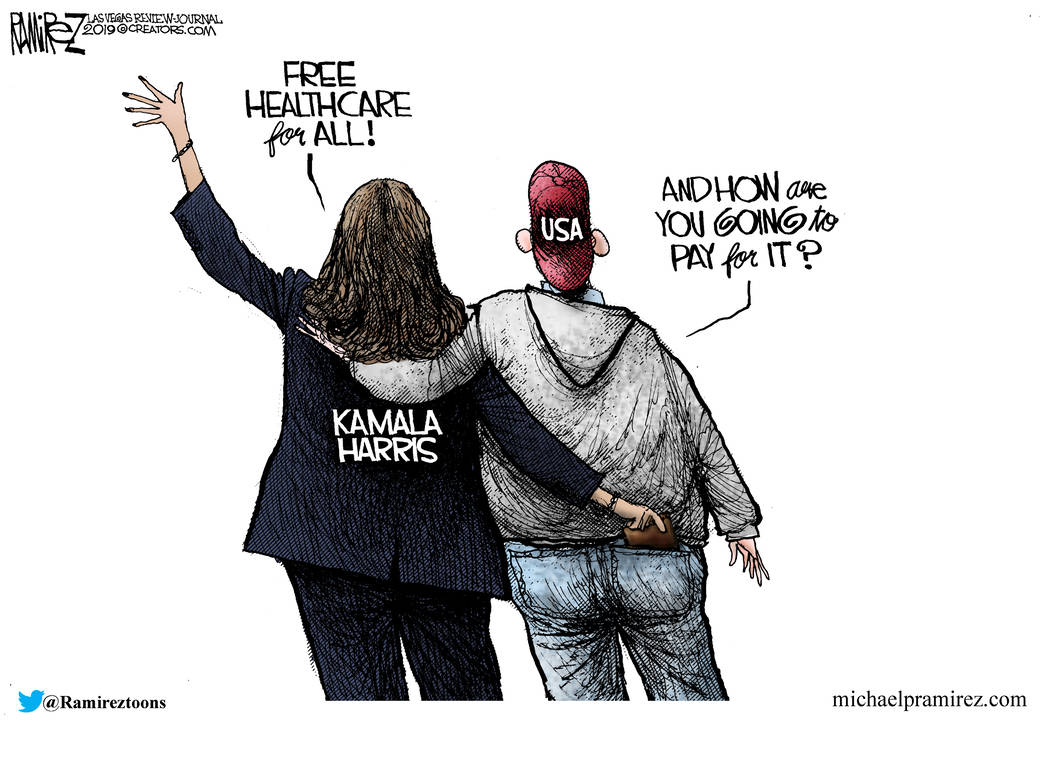
https://www.reviewjournal.com/wp-content/uploads/2019/01/11725732_web1_web_rmz-jan30.jpg

Differences and Similarities

The differences between these systems are quite contrasting. One difference is obviously the pricing of medical care. Free healthcare argues for free government provided healthcare with taxes being the contributor of the funding. On the other hand, paid healthcare argues for medical care provided by insurance or out-of-pocket pay. Another difference between the two is that the different methods might give patients different outcomes. For example, a person with free healthcare will be likely to stay longer in a hospital to ensure recovery. On the flip side, every day in the hospital for a patient is more money so they are more likely to leave sooner. Some similarities may include the care for the patient. Every patient would receive the same kind of care regardless of their healthcare policy.

A Different Approach

Eric Dishman is a medical technology specialist. He performed a TED talk about taking a different approach on the healthcare system. He wants more people to be able to treat themselves at home instead of being hospitalized. For example with technology taking a bigger part of our everyday world, it could also have a large impact on our medical care. Eric talks about as a child he was hospitalized and only got sicker the longer he stayed. Another comment he made about his stay was that, “the professionals were miracle workers, but they’re working in a flawed, expensive system that’s set up the wrong way“. He concluded from the experience that care must occur at home as the default model, not in a hospital or clinic. He suggests that devices we use to diagnose our symptoms, such as an ultrasound, can be plugged into smartphones and used at home. The process could be guided through the machine itself or a physician through technology. This decreases the need for hospitalizations and unnecessary spending. Obviously, this routine would not be as effective for certain patients that need special care that can only be provided in a hospital setting. Dishman also introduces the new idea of “care networking”. Often a lot of problems arise because of miscommunication among different specialties in patient care. Care networking is having a team designated to a patient with the same goal and enough educational background to treat all the problems that arise. Patients need consistency with their care in order to prevent miscommunication that lead to mistakes. For example, Eric said himself while he was in the hospital that “three different specialists had prescribed three different versions of the same drug to me.” His main goal is to make health care a team sport. This will normalize people working together not because they have to but because they want to for patients.

All the methods of healthcare have their own goals and concerns. Free healthcare provides care to everyone. Paid healthcare provides medical care without the taxation of other citizens. Team healthcare, while still not developed, would provide a way to treat symptoms and diagnose patients at home with the guided care of a physician, if necessary. The essays and other media I looked over and studied helped me understand the different arguments concerning healthcare policies. Even though these healthcare methods each have very different ways of accomplishing their goal, they all consider the well being of patients. As medicine, patient care, and technology advance, healthcare policies will evolve with it, no matter what approaches are taken.

Works Cited:

Dishman, Eric. “Transcript of ‘Health Care Should Be a Team Sport.’” TED, March 2013, www.ted.com/talks/eric_dishman_health_care_should_be_a_team_sport/transcript?language=en.

IvyPanda “Free Health Care in America.” IvyPanda, 29 May 2020, https://ivypanda.com/essays/free-health-care-in-america/#ivy-csf-section. Accessed 7 Nov. 2020.

Tikkanen, Roosa, and Melinda K. Abrams. “U.S. Health Care from a Global Perspective, 2019: Higher Spending, Worse Outcomes?: Commonwealth Fund.” U.S. Health Care from a Global Perspective, 2019 |Commonwealth Fund, 30 Jan. 2020, www.commonwealthfund.org/publications/issue-briefs/2020/jan/us-health-care-global-perspective-2019

Winther, Micheal R. “Healthcare in America.” https://principlestudies.org/essays/health-care-in-america/. Accessed 7 Nov. 2020.

National Parks: Private or Public?

The divided views on our nation’s parks

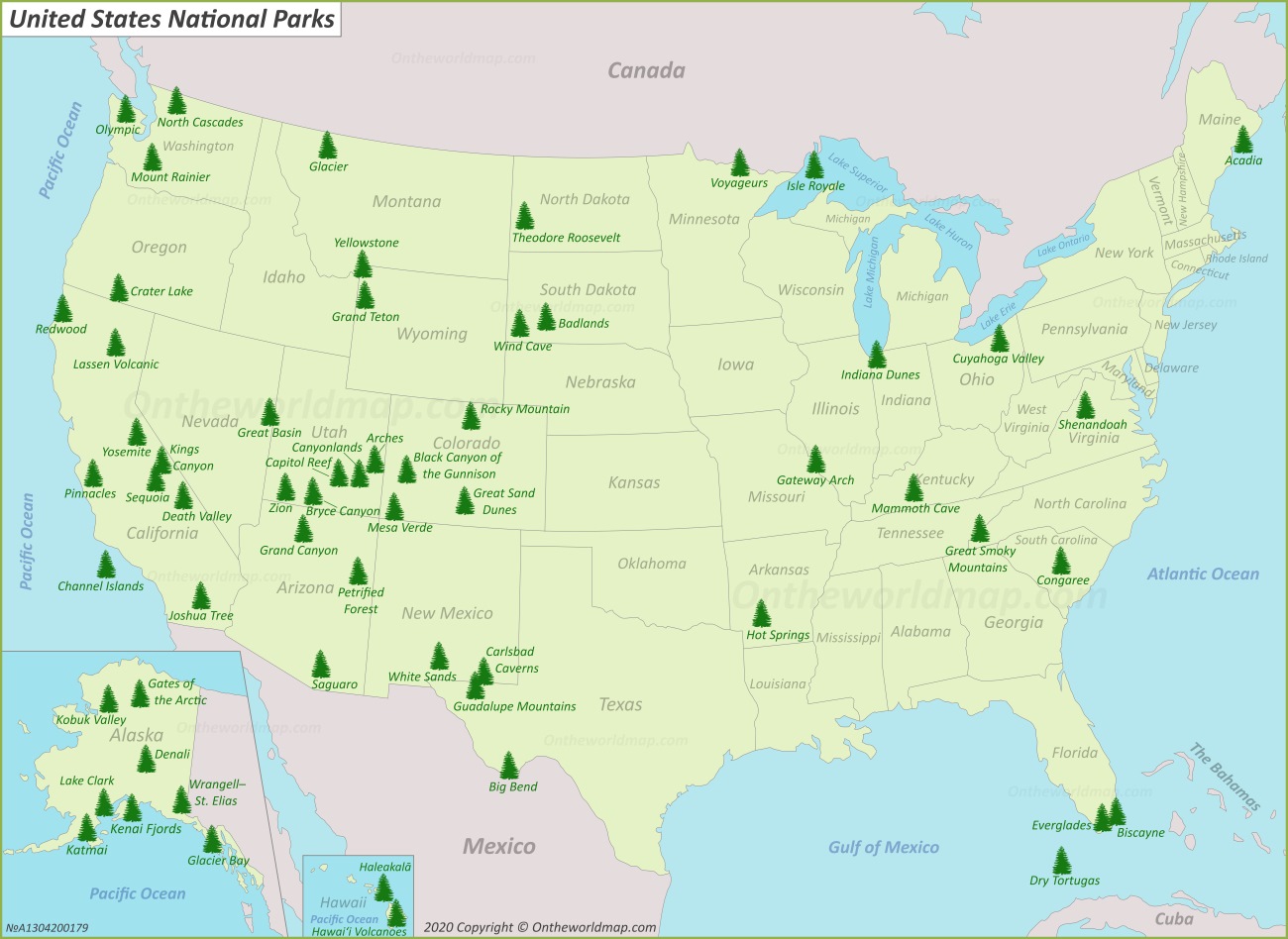
U.S. National Parks Map

National Parks are beautiful, pristine places that are full of wildlife and some of the most beautiful natural formations in North America. Since around the time first national park (Yellowstone) was created in 1872, the argument over whether or not the government should own parks and use tax dollars to keep them running and in good condition has been a continuous discussion. National parks attract millions of visitors each year in the United States but some people believe that the hard earned money of Americans should not be taken to pay for national parks in the form of taxes; while many others do believe that our national parks are well worth the money they take to keep up and running. The cause of the divide in recent years is heavily influenced by the fact that many of the parks are unfortunately in poor condition. While one side believes that the government should use more tax money towards maintenance and upkeep for the parks, the other believes that we should cut our losses and sell the parks off to private buyers.

Privatizing Parks

 One main argument over the National Park System is that they should be privatized as many people believe that American tax dollars should not go to the funding of the Parks because they view it as a waste. While this view is marginal in comparison to the other side, it is still very important to the discourse. The people who hold this view want the parks to stop being funded by tax dollars but that does not mean they necessarily want the parks to be developed but rather that the parks should be sold to private owners who will keep the parks running. One example of this comes from an opinion piece from the Washington Post by Nick Sibilla who wrote, “The National Park Service has a government-backed monopoly on managing its parks. So it has little incentive to provide quality service or even eco-friendly amenities…Instead of remaining a lumbering Leviathan, the Park Service should embrace market principles and privatize the parks.” While Sibilla argues that the “monopoly” on parks causes poor quality, he does not argue that the parks should be used for capital gain but rather they should be privately owned non-profits.

“Instead of remaining a lumbering Leviathan, the Park Service should embrace market principles and privatize the parks.”

Many people with conservative values share Sibilla’s views on National Parks. They value the parks but maintain the belief that the government should be cut down to what they deem the necessities and scrap everything else. This does not mean that things like parks should disappear but that they should be privatized and open for competition. This belief is also fueled by the conditions of our nation’s national parks. No matter what side of the argument Americans are on, one thing they can all readily agree on is that the parks are not in great condition. This is heavily due to the fact that government spending for our nation’s parks has decreased over the years leading to less funding for repairs. Since this has caused the quality of things such as roads and trails within the parks to deteriorate, many Americans are not satisfied with the conditions and this is where the divide really starts. Many Americans believe that the government should poor more tax money into the parks for repairs and general maintenance whereas others believe that we should cut our losses and save money by selling off the land. Over all, most Americans just want the same thing…parks in good condition.

Keeping the Parks Public

cartoon_200609_1_0.jpg
Image link

One argument that is being made from this political cartoon is that national parks are practically begging on the streets for funding as shown by Smokey holding up a sign saying “desperately short of funds PLEASE HELP” along with the poor state of his very patched clothes. The main argument being made by this drawing is that the national parks will become over commercialized if they become private. This argument is being made through the many signs in the park that have basically been turned into ads for certain companies like Coca Cola as shown by the sign declaring the name of the park, Yosemite. The artist of this drawing is arguing that privatizing parks ruins the quality of the experience and makes it less about spending time out in nature and more about generating revenue to line the pockets of rich owners. One way this is brilliantly shown is that if the revenue being made from the ads was going to the park, then the sign in front would not say that camping, fishing, and hiking are all now closed since they would be open if money was going to maintaining trails and camping grounds. This piece is very interesting because although there is not a direct argument being made through words, the artist was able to convey his argument through the facial expressions of the people and Smokey as well as the condition of Smokey’s clothes and gate office window.

Another major side on this issue is that national parks were designed to keep nature protected and preserved and that selling off the land could cause land to be developed. Many people believe that parks were created to be cheap or free and available to everyone. Many like John Freemuth and William Lowry value public land and see the national parks as public resources. One concern they have over our countries state and national parks is that, “Most states have either cut their funding for state park systems substantially in recent years or required them to be more self-sustaining. This trend has increased pressure on state park managers to generate revenue.” They believe that state and national government’s budget cuts have made the parks turn more commercial than they have ever been in the past. Many democrats hold this view close to their hearts and believe that the privatization of parks will cause parks to become less about the nature and more about attractions. One reason visitors enjoy national parks is because it allows them to be in nature without much of a visible mark left by humans. Many people fear that if the parks were privatized and became more commercial, it would cheapen the experience.

Link for image

Another article cites Don Barger who is the senior regional director for the National Park Conservation Association. He believes that national parks are an investment in the future of America. He says that “There are many things that business does or could do better than government.  But twenty years of experience working on park issues convinces me that managing our national parks isn’t one of them.” He also believes that “Every American is a shareholder of the natural and cultural heritage protected and made available by the National Park Service. The “profit” we shareholders receive for our investment is the knowledge that America’s stories and most precious natural resources will be accessible to our grandchildren’s grandchildren.” He argues that we should not see the cost of keeping national parks running as a burden because the parks are worth the price (roughly 1/14 of 1% of our nation’s national budget). He blames the poor quality of the parks on Congress’s inability to work together. He actually goes as far as to argue that keeping the parks actually helps the nations economy and that cutting the parks budget even further or privatizing the parks would actually cause problems because the parks create roughly 28,000 jobs and support many many others through people staying at hotels next to the parks or visiting restaurants and grocery stores nearby. Privatizing parks could cause less people to want to go or even to be able to go. If this happened, many jobs that depend on tourists and visitors could fail and many people could lose their jobs.

This issue is very interesting because it is not mainly an issue of being pro-park or anti-park but rather whether or not the parks should belong to the national government or a few specific people or organizations. Many republicans value parks but believe that they should have to compete in our nation’s economy due to the belief that competition creates better products and experiences. On the other hand, democrats tend to support our government owning and over seeing our national parks because it allows them to remain cheap as tax dollars are being used to keep the visiting costs to a minimum. Democrats believe that the privatization of parks would lead to inaccessibility to many poor and middle class Americans. They also fear the possibility of the parks becoming commercial and more like a theme park than an area of conservation.

A Country Divided Against Itself Cannot Stand

By: David Molfese

America. What does that word mean to you? To some, it means freedom. To others, it may stand as a symbol of hope. To the world, it means “The Land of Opportunity”. It is a place where, if you set foot in this country, your life can be whatever you want it to be. Lately though, America feels like a place where politics drives every major issue in our country. These days a man and a woman need to be on opposing sides of every argument just to be accepted by society. The bias view of the two-party system allows for sides to be taken by gender. It suggests that Republics defend the white male demographic, and that Democrats defend women’s rights. If a woman breaks rank and votes for a republican, then she may be branded as betraying the women’s movement.  In America, the two-party system also divides race. If you are white, you’re automatically supposed to vote Republican, and if you are black, you highly encouraged to vote Democrat. There’s no middle ground anymore. To have your one view heard, you may have to sacrifice another of your views to get it.  Is this what our forefathers fought for? Is this the world they imagined for us? They fought for a land of love, prosperity, and equality for all. They found for a land where all views shall be heard equally so that even the smallest voice can be heard. Sadly, as of late, it seems to not even be a possibility anymore. As Abraham Lincoln once said, “a house divided against itself cannot stand.”, and as long as this country is divided because of our two-party system, we will fail at any attempt to maintain peace and prosperity.

The main issue in America lies within the political system that we have created. What if an American would like to have more money in their pocket, then they would choose to vote republican, easy. The Republican party’s job is to cut taxes, so they vote for them. Done deal, right? WRONG! What if that same American also likes free healthcare and free college? Well, that’s tricky because, in that instance, they would vote for the Democratic party, but as stated before, they also like low taxes, a Republican issue. Therein lies the problem. You CAN’T vote for both! But why is that?

You see, the American people have been fighting for their right to choose, since the birth of the country in 1776. Even then, we had two main parties. In 1797, the Federalists, such as James Madison and Alexander Hamilton, fought for a strong central government. The second political party in 1797, more commonly known among the American people today, was the Democratic-Republic Party. Some people involved with this party were Thomas Jefferson and James Madison, and this party supported a small republic. They were against the idea of a national bank, and viewed the constitution with a strict constructionist view. These two parties started a trend that would eventually lead to this country’s toxic political divide in the next two hundred years. You see because of the creation of these two parties, people were forced to take sides even then. Instead of voting for one man/women’s opinion and his/her good morals, people were forced to choose a candidate based on party lines. First, it was a decision between a large or a small central government, then it    evolved into issues about the national bank. It later evolved into views on slavery between the republican (founded 1854) and democratic (founded 1830s) parties. During this time, republicans were in support for anti-slave movements, while others voted democratic to protect their livelihood as slave owners. During this horrible time in our Country’s history, Abraham Lincoln said this, “a house divided against itself cannot stand“, and neither can this country. Thanks to this two-party political system that has been around for centuries, we are forced to pick sides. From the birth of our nation we were hardwired to yell at each other on opposing views, and if you chose wrong you had the potential to lose everything. You could lose your job, your so-called friends, and even your family might disown you for having different political views. It’s the sad truth. We are forced to choose sides on everything, and that’s what divides us.

But what if we didn’t have a two-party system? Would you be able to vote for one party whose beliefs include things such as free healthcare, free college, while also being against abortion? Actually, YES! With the new multiparty system, these views would be recognized by a brand-new party, and it would allow for an individual’s voice to matter more than it already is. You’d be surprised how many countries actually have a multiparty system. Some major countries on this list include, Belgium (15=# of parties), Norway (9), Hong Kong (20), Ireland (14+), Poland (13), Switzerland (10), Sweden (8), and Spain (13). These are only some of the major countries in our world today that work as good, if not better, than the United States with their multiparty systems. An author by the name of Lee Drutman, winner of the 2016 American Political Science Association’s Robert A Dahl Award, given for “scholarship of the highest quality on the subject of democracy” , discusses the benefits of why we as a country need to establish a multiparty government. He points out that we as Americans do, in theory, want a third-party system. Yet, we find our selves still divided between the good old red and blue because when Americans do go to the polls, they fear if they vote for a third party, then they are going to be wasting their vote. He makes the point, though, that we need to establish a five to six party system, at least, “to represent the true ideological diversity of the country”. He then goes on to say how a two-party system is belittled by the multiparty system for one main reason. That reason is unity. You see when a multiparty system is created it “regularizes cross-partisan compromise and coalition building.” Since multiple parties would need unity to pass bills in the house and senate, it would allow more viewpoints to be acknowledged and considered by other parties. With this logic, he theorizes that voters will be happier with this new system because it regularizes negotiations and allows for government to work towards a common goal. Drutman pretty much gives the United States a step by step plan to allow this system to work flawlessly. You see, he first establishes that we need to implement the Fair Representation Act. This Act would allow states and voters to pick out their first, second, third, fourth, and fifth favorite canadite per election in a process known as rank-choice voting. If your first canadite on your ballot didn’t win the top two majority slots then your vote would go to the next guy/girl on your list. Since he/she was your next choice, your vote isn’t wasted and your voice still matters. This proposal ultimately eliminates the fear of you throwing away your vote. With every vote now meaning more, voter turnout would also be at an all-time high. Then he suggests that we should extend the number of House of Representative seats to seven-hundred. This would allow for a broader representation of people per party. Drutman also suggests that they should “get rid of primary elections, instead letting party leaders nominate their own candidates, as parties in other democracies do.” This proposal seems to be the only logical way to implement this revolutionary system of democracy into our single-minded two-party system that we have had for centuries. Since there is nothing in the constitution that says our government can’t do this right now, it would be an easy transfer into the multiparty system in the House. You see, the senate is a different story, since it specifically states, in the Constitution, that you can only have two senators per state.  There is a loop hole though. By “eliminating primaries and using ranked-choice voting-which doesn’t require constitutional changes-”it would allow for a dissolve to the “zero-sum partisanship alongside a transformed House.” With these new changes, his plan automatically eliminates gerrymandering. This is because gerrymandering only works to establish single member districts, and predictable two-party voting systems, which would be non-existent in this new system. When it came to electing the President, however, Drutman had an interesting take. The candidates would be aiming for the majority popular vote, instead of electoral college votes, and they would have to campaign to governing supermajorities and electoral coalitions. This would allow people in all parties to see the candidates for their views and integrity. Voters would then take their choice rank voting and vote for the best canadite in their opinion. This process would also eliminate a pro or anti-president congress because of how diverse the parties will become. Drutman finishes the piece on how the two-party system has caused us to have “no middle ground”. To the point where we keep tugging on the rope of politics to the point where we forget we aren’t moving the rope at all. We are waiting for our democracy to collapse, and there needs to be a change in our system now.

However, there may be some more draw backs to the multiparty system then we have previously thought. The number one issue, stated by Brandon Gaillie, was that “it eliminates the number of extremists that can be elected.” You see with this two-party, you can’t have an extremist create a party just because they want to take control. It allows for a more balanced way of life. On top of that, it is very easy for the citizens in our country to understand the two parties’ views. With a multiparty system, there are so many views going back and forth that it may confuse the voters on who they really want to vote for. A simple way they could fix this, though, would be by having a specific government website with all the party’s views and specifics on each parties’ leaders, so that voters can always be up to date with that info. Another key thing that Gaillie points out, is that the two-party system is “restrictive enough to ensure that majority receives the exact representation they want in each district.” Which is pretty smart because a small majority could win in the multiparty system. Although, since it would use rank choice voting, you would still be able to pick your next favorite canadite if your first choice didn’t win. One of the main issues Gaillie had with the multiparty system, however, is that it “slows down the process of governing”. What he is saying is that, when there is a multiparty system there would be a need to form ruling coalitions, but with a two-party system, “this allows people to vote for specific candidates that fall outside their party spectrum for certain offices.” This means you, an American, can vote for a republican for president, but also a democrat for governor. These views would still stand in the multiparty system, but maybe not in the way they are used to. There needs to be a balance of power and relatability for the parties. People need to realize that there are issues that they can agree with on both sides of the spectrum. The multiparty system stands for a symbol of hope, that you don’t have to fight for your right to choose the issues you believe in.

Our life experiences determine what sides we take on every issue we vote for. From the families we were raised in, to the schools we went to, to the friends we made along the way, we develop an opinion and we form an educated guess on which two parties we should vote for. Even if we don’t like some of the views of a certain party, it’s still a situation of the good outweighs the bad. We need to create a multiparty system that will allow millions of Americans to vote on different issues that they believe in without being forced to only choose which beliefs they prefer more. At the end of the day, we are the generation of change. It’s up to us, if we want to live in a world of broken pieces that will never fit together, or a world where we can accept our fellow Americans for the differences between us. We are known as the melting pot of the world. A million different opinions, spices, and herbs that creates the best freedom stew you will ever have. We need to learn that we need to listen, accept the other sides views, and hug it out. At the end of the day, we are all Americans, and a House unified, by something as strong as that, can stand against anything.

Work Cited

Admin. “The Democratic Party’s History of Slavery, Jim Crow, and the KKK.” Social Justice Survival Guide, Social Justice Survival Guide, 9 Jan. 2018, www.socialjusticesurvivalguide.com/2018/01/08/the-democratic-partys-history-slavery-jim-crow-kkk/.

Gaille, Brandon. “17 Advantages and Disadvantages of the Two Party System.” BrandonGaille.com, 26 Mar. 2018, brandongaille.com/17-advantages-and-disadvantages-of-the-two-party-system/.

History.com Editors. “Democratic Party.” History.com, A&E Television Networks, 4 Apr. 2018, www.history.com/topics/us-politics/democratic-party.

Lee Drutman, leedrutman.org.

Little, Becky. “Why Lincoln’s ‘House Divided’ Speech Was So Important.” History.com, A&E Television Networks, 15 June 2018, www.history.com/news/abraham-lincoln-house-divided-speech .

“List of Ruling Political Parties by Country.” Wikipedia, Wikimedia Foundation, 8 Nov. 2020, en.wikipedia.org/wiki/List_of_ruling_political_parties_by_country

Munck, Micah. “American Political Parties from 1776 to Now.” Sutori, https://www.sutori.com/story/american-political-parties-from-1776-to-now–wVx3LsL1QREEGTRek2mfymUV

“Republican Party Founded.” History.com, A&E Television Networks, 9 Feb. 2010, www.history.com/this-day-in-history/republican-party-founded.

Richardson, Valerie. “Democrats Label Republicans ‘Racist/Bigoted/Sexist’ as Political Divide Intensifies.” The Washington Times, The Washington Times, 13 Nov. 2018, www.washingtontimes.com/news/2018/nov/13/democrats-label-republicans-racist-bigoted-sexist-/.

“U.S. Constitution: Constitution Annotated: Congress.gov: Library of Congress.” Constitution Annotated, constitution.congress.gov/constitution/.