The Unsolvable Question: Who is the GOAT?

The debate on who the greatest basketball player of all time is, also known as the “GOAT” debate, is up there for one of the most discussed topics related to basketball. It seems as if no other sport emphasizes who the greatest player is as much as basketball does. Many people believe it is Michael Jordan, others think it is Lebron James, and there are numerous other basketball players that people make a case for being the GOAT. Whether it is the number of championships, individual statistics, overall dominance, the player’s legacy, or even personal bias, everyone has their rationale for who they believe the GOAT is. The numerous reasons that people use and the fact that we lack one definable set of qualifications makes picking one GOAT nearly impossible. The complexity of the GOAT discussion allows it to be relevant to more than just basketball fans. If we can determine the rationale through which we qualify someone to be the greatest of all time in a debate as intricate as the GOAT debate, then it will be possible to determine who the greatest is in all other sports or any type of competition. This leads us to the paramount question of the debate, what makes someone great and can we accurately name one person as the GOAT?

What Does it Take to be Considered in the GOAT Discussion?

The GOAT discussion is almost always a debate between Michael Jordan and Lebron James. The argument itself has occurred countless times, which means numerous cases have been made in favor of each athlete. I would guess that I’ve been in close to 100 GOAT debates myself and I’m sure any big fan of basketball can say the same. However, the majority of these debates end up turning into bickering and shouting matches. The sheer number of arguments is insignificant compared to the value that a quality argument holds.

According to Nick Jungfer, the lead writer for Basketball Forever, the aspect of Lebron’s career that qualifies him to be the GOAT is his longevity. In his article, “The Parts of the Michael Jordan-Lebron James GOAT Debate That Actually Matters”, Jungfer points out that Jordan’s subpar 15th season was his last and in Lebron’s 15th season, he led a rather “shambolic” Cavaliers team to his 8th consecutive NBA Finals appearance. Even though this article suggests that longer careers are better than shorter ones, Jungfer’s longevity argument isn’t highlighting how Lebron has played for many seasons, but rather that he has sustained his dominance for this long. It’s easy to assume that Jungfer chose this argument because he is impressed that Lebron has been the face of the league for almost two decades or because Lebron still plays at such a high level at 35 years old. Instead, by saying that “Lebron has been playing at an elite level for an inconceivably long time”, Jungfer is stressing how what Lebron is doing at this stage of his career is uncharted territory for any athlete. Even though this text accentuates Lebron’s unmatched durability, that alone doesn’t make Lebron the GOAT. Lebron’s unprecedented sustained dominance and the fact that no one has ever done what Lebron is currently doing permits Jungfer to label Lebron as the greatest. Nonetheless, regarding the phrase quality over quantity, some would argue that Lebron’s longevity isn’t enough to dethrone Jordan of his GOAT title.

That is why Jordan is the greatest ever: they all lost and he didn’t.

Zachmo Marsupalami

Zachmo Marsupalami, a sportswriter for Bleacher Report, writes an article titled “Michael Jordan: Why He’s a 6-Time Finals MVP, 6-6 Champion and G.O.A.T.“, that argues in favor of Jordan being the GOAT strictly based on Championships. Marsupalami considers losing as detrimental to an athlete’s claim to the GOAT title. He does this by listing out the few most common athletes that are considered in the GOAT debate and then discrediting them by telling how each one of them has lost in the Finals. Winning 6 championships is a very impressive achievement, but that’s not why Marsupalami is pro-Jordan. If the number of championships someone had became the metric we use to determine the GOAT, then it would undoubtedly be Bill Russell, who has 11 championship rings. Marsupalami considers Jordan to be the GOAT because Jordan never lost in a Finals series and he never let any of those series go to a game 7. It’s not about how well an athlete performs regularly for Marsupalami, it’s about being the best when it truly matters. The success of a team in a specific year is measured by their record, which is exactly how the author measures Jordan’s greatness. The ability to dominate anyone he competed against and repeatedly succeed at the most crucial moments is how Marsupalami justifies naming Jordan as the GOAT.

Is Bias an Issue in the GOAT Debate?

In the article, “Recency Bias and Its Footing in the NBA GOAT Debate” by Alex Brady, a bias that individuals unconsciously carry is revealed. Brady explains this issue by using the term recency bias. Recency bias can be defined as a bias that favors recent events over historical ones. Brady stresses the significance of the recency bias with regards to this argument because he claims that the time period an individual grew up would affect their opinion on the GOAT discussion.

You could attribute it to favoritism, yes, but I believe the greater problem is the lack of knowledge of the past.

Alex Brady

Since we are all humans and are subject to our own psychological prejudices, Brady relocates the blame from our own biases to a lack of knowledge of the past. This claim is very logical but rarely talked about. If someone grew up in the ’90s, which is considered to be the “Jordan Era” of the NBA, there is a way higher probability that they will believe Michael Jordan is the GOAT. The same is true for people that grew up in the last 15 years watching Lebron and for people that grew up watching Magic Johnson and Larry Bird compete in classic Boston Celtics vs. L.A. Lakers matchups. Watching a particular athlete and being able to witness first hand what makes them great, significantly affects opinions on the GOAT debate.

Realistically, a person sides with the athlete with whom they have had the most exposure. This can be through watching that athlete play in the present or by hearing stories from their parents or someone older than them about what it was like to watch a specific athlete from the past play. The term recency bias works well for people that have grown up more recently and are too stubborn to consider past players to be as good as current players. Nevertheless, in the case of someone refusing to consider a current player to be better than the player they idolized growing up and the general GOAT debate, the term familiarity bias better encompasses the discussion as a whole. Favoritism and emotions play a strong role in this debate, which is why someone rarely switches who they think the GOAT is. For example, people who grew up in Jordan’s Era thought that Jordan was the GOAT then and will always think that. It could be due to nostalgia or because they don’t want to believe they’re wrong, but that is why it would be extremely rare for someone to switch their GOAT from Jordan to Lebron. This bias can be problematic when applied to more serious matters. Especially right now, during the presidential election season, self-reflecting and detecting potential biases of any kind in our opinions is more important than ever.

Should We Even Try To Determine One GOAT?

Kobe Bryant, one of the most inspirational and admired basketball players of all time, claims that we need to stop comparing Jordan and Lebron so that we can fully appreciate both. Kobe played in the NBA for 20 seasons and is remembered for his work ethic and competitive nature after tragically passing away earlier this year. After years of studying film and successfully competing at the highest level of basketball, Kobe understood what made a basketball player great more than anyone. You would think that because of how competitive Kobe was and because he worked his whole life to become the GOAT himself, that he would be eager to determine the true GOAT. However, this is not the case and the complete opposite is true. As seen by his tweet from May 27, 2018, Kobe thought that it is not possible to determine the GOAT and that the debate can actually be damaging. When he said, “we can enjoy one without tearing down one”, Kobe was expressing that we do not need to think Lebron or Jordan is the greatest to fully appreciate them. The nature of the GOAT debate and any other time we compare multiple things is while you are supporting one side, you are bringing the other side down. Kobe wrote this tweet because he doesn’t think the GOAT debate is worth the expense of not fully appreciating one of the athletes. Understanding and applying this idea can be very beneficial because it warns against being overcritical and highlights the importance of cherishing the things that we take for granted in life.

The Endgame

The key difference in the source materials is not what they believe, but why they believe it. Like many popular debates, one well researched, well organized, and well-presented argument will likely still have bias and won’t affect the argument as a whole. Rather, understanding the motive behind why people take certain sides on a debate and using that to form a stance is a better route. This method is not only beneficial for the GOAT debate, it is very valuable when developing an opinion on significant matters.

Works Cited

Brady, Alex. “Recency Bias and Its Footing in the NBA GOAT Debate.” The Georgetown Voice, 24 Oct. 2020, georgetownvoice.com/2020/10/24/recency-bias-nba-goat/.

Bryant, Kobe. “We Can Enjoy One without Tearing down One. I Love What He’s Doing. Don’t Debate What Can’t Be Definitively Won by Anyone #enjoymy5 #enjoymj6 #Enjoylbjquest.” Twitter, Twitter, 28 May 2018, twitter.com/kobebryant/status/1000943668071514112?ref_src=twsrc%5Etfw%7Ctwcamp%5Etweetembed%7Ctwterm%5E1000943668071514112%7Ctwgr%5Eshare_3.

Jungfer, Nick. “The Parts Of The Michael Jordan-LeBron James GOAT Debate That Actually Matter.” Basketball Forever, 7 Mar. 2019, basketballforever.com/2019/03/07/the-key-points-of-difference-in-the-michael-jordan-lebron-james-goat-debate.

Marsupalami, Zachmo. “Michael Jordan: Why He’s a 6-Time Finals MVP, 6-for-6 Champion and G.O.A.T.” Bleacher Report, Bleacher Report, 3 Oct. 2017, bleacherreport.com/articles/637207-why-michael-jordan-is-a-six-time-finals-mvp-and-six-for-six-champion-and-goat.

Should Athletes be Allowed to Speak on Political Issues?

Speaking on social issues can cause a lot of controversy in whatever scenario you are in.  Whether it is a family function, work environment or with your friends’, people can feel very strongly towards one side or the other.  Athletes are often put in very difficult situations when it comes to these issues.  Athletes have a large following and are often thought to be role models for us, and if they act too strongly to either side, they might get some push back from the media.  At the same time if athletes don’t do anything then might get criticism for not using their platform to lead others to what they believe is right. 

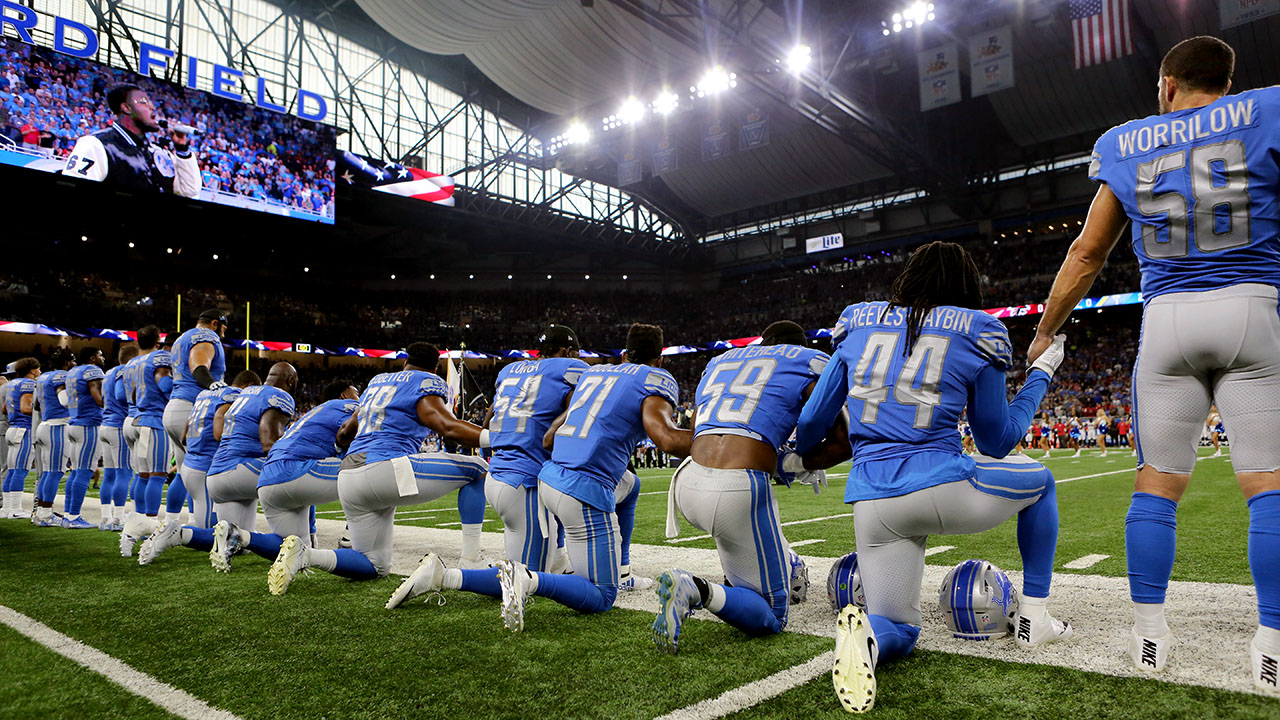
The biggest athlete as of late to take a stance on a social issue was Colin Kaepernick protesting in support of Black Lives Matter in the 2016 football season.  Colin Kaepernick received lots of criticism from people in media accusing of him being anti-American, however he felt that this was a peaceful way to call out the mistreatment of Black Americans in our society.  He was not thought highly of for what people believed as the wrong time to protest, however his protests are the base for what athletes protest for today.  During the most recent NBA season many protests took place with the same beliefs as Kaepernick had.  There was a difference in the way in which people thought of these players.  The media was a lot more supportive of their beliefs and weren’t as critical.  This shows the progress that has been made over the last four years.

In the Time article by Sean Gregory the main focus is an interview with Jason McCourty and how he feels that the protest of Colin Kaepernick and George Floyd are similar.  McCourty believes that both of them were protesting the cops use of authority as a whole rather than just the specific action.  Athletes have grown to be bolder in their views and not listen to those who want them to “stick to sports.”  The athletes aren’t concerned with how many people, but rather want to see real change by seeing a decline in police brutality and innocent lives being lost.  In the article he makes a great point about how he sees the other side of wanting to keep politics out of sports.  Showing the other side of the argument provides ethos by showing that people don’t want politics when they watch sports.  He goes one step further by saying that it isn’t about politics to them, it is their lives at stake.  Overall the aim of this article is to show us how athletes standing up for their beliefs is not to just gain attention, however, it is their life they are fighting for.  This contributes to the conversation by advocating for athletes to stand up for their life. 

Michael Jordan is arguably not only the best basketball player of all time, but best athlete to ever play sports.  His on the court play is really how he got his name, Jordan steered clear of politics and black advocacy during his time playing.  Jordan was quoted saying “I never thought of myself as an activist. I thought of myself as a basketball player,” he said. “I wasn’t a politician. I was playing my sport. I was focused on my craft.”  This quote shows that Jordan didn’t want to get involved in social issues of the time.  Jordan didn’t want others to not like him because of his political views.  The article from The Undefeated criticizes Jordan for not showing his political beliefs to the public.  The most famous instance of this is when he was asked to support a political candidate, Harvey Gantt, from North Carolina who was running against a historically racist white Republican.  Jordan was quoted saying “Republicans buy sneakers too.”  Michael Jordan was more concerned by making money and not wanting to hurt his profit by making some folks uneasy about his words.  By avoiding these controversial topics, he was able to remain neutral to the public eye and become a brand for himself.  Jordan generated more than $3 billion dollars in the most recent fiscal year.  All of this was because of this because he remained neutral and didn’t broadcast his views to the world.  In this text by Jesse Washington, he points out something that I think is very interesting.  He thinks that Jordan wanted to use his power in his own way and not be told what to do.  He probably hated Jesse Helms, but because he was asked to support him publicly, he didn’t want to.  I believe that this is a little not fair.  If you are so self-centered about yourself that you can’t show your views, it is a problem.  I believe that the reason Jordan didn’t support him was because he didn’t want to support something he didn’t know about.  After this came out Jordan remained “uncontroversial – but not uninvolved” as Washington points out.  I really like this quote, it shows that somebody can have views, but not want everybody to hear about them.  Jordan hosted many events for Obama in his campaign to be president as well as donated lots of money to various groups in support of black lives.  Overall, I believe that this article does a good job of showing both sides of Jordan, in ways he did good and times that he might have made a mistake.  At the end of the day people get to have their own opinions and it is up to them how they express them.

The next text that contributes to the conversation is a video from Ketra Armstrong, a Professor of Sport Management and Director at Center for Race and Ethnicity in Sport at the University of Michigan.  Ketra points out the power of the institution that sport is.  Sports impact on a daily basis culturally, socially, psychologically, and politically.  All of these things together make it a very powerful platform to communicate messages.  I think that is a very important thing here.  Ketra is showing us that all types of people watch sport, therefore messages can speak to many people.  Sporting events are the most watched thing of entertainment.  All of these things that come together make it that we can talk about controversial issues like race and politics.  Ketra makes a fabulous point about that black athletes make up a majority of the sport, and other members of the community feel connected to them because of their race.  Athletes spend much more time in their community rather than on the field.  So, when they’re decorated in their element of blackness and they’re not associated with a team, they’re subject to the same types of harassment and violence that the other members of their communities are.  This is the reason that it is acceptable to speak out on these issues.  This claim that is made is very important to note because often times we don’t see them as community members, but rather as athletes.  This video by Ketra Armstrong strongest piece is the tone it shows.  The tone is very upfront and bold which helps us understand the problems in the world.  Her audience is also one to note.  She is talking to those who think athletes should “stick to sport” and “shut up and dribble” which she does a very good job with her logic and logos.  She makes this easy to understand and puts it in real world applications.

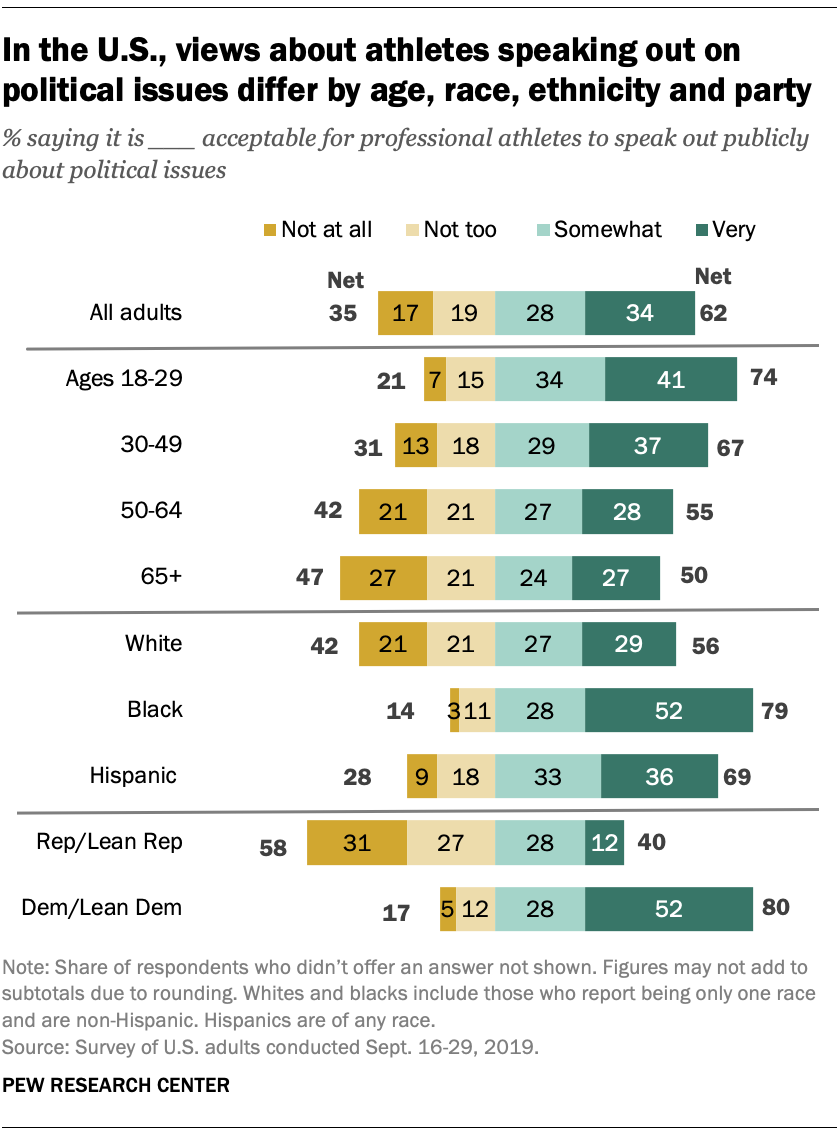
  The final piece that I looked at was research from Pew Research Center specifically the graph that are shown.  The first graph is the US views towards athletes speaking out publicly among political issues based of age, race and political party.  The data that I find most intriguing is how different the political parties are.  For example, 31% of Republicans say it is not acceptable to speak out and 12% say very acceptable while 5% of Democrats say not acceptable at all and 52% say very acceptable to speak out.  To me I am confused how just because of the political party makes you think one thing or another.  The chart also points out that the older you get the more likely you are to not want the athletes to speak out.  I think that this is because as young adults we are so in search of what we think it right and interesting in learning that we want to hear all sides of the argument.  I believe that this graph is very logical and makes it very clear to point out the trends in the United States.

After doing the analyzing of different texts I think it is important to see what role athletes play in our country.  They are often very highly paid and widely followed.  We place lots of importance on sports and athletes.  When speaking on controversial issues it can be a little awkward and when it comes to athletes speaking out, they can take a lot of heat for it.  Many times, they are told to not involve politics in sport, however this is their life that they are fighting for.  As of recent we have seen a shift in how social issues are dealt with.  Igniting with the death of George Floyd many leagues have allowed their athletes to speak out, along with making changes across the league.  This has gone a long way to help improve the treatment of all people.  While there is a lot more work to be done this is a good start to the conversation of activism in sport.

Speaking on social issues can cause a lot of controversy in whatever scenario you are in.  Whether it is a family function, work environment, or with your friends’, people can feel very strongly towards one side or the other.  Athletes are often put in very difficult situations when it comes to these issues.  Athletes have a large following and are often thought to be role models for us, and if they act too strongly to either side, they might get some push back from the media.  At the same time if athletes don’t do anything then might get criticism for not using their platform to lead others to what they believe is right. 

The biggest athlete as of late to take a stance on a social issue was Colin Kaepernick protesting in support of Black Lives Matter in the 2016 football season.  Colin Kaepernick received lots of criticism from people in media accusing of him being anti-American, however, he felt that this was a peaceful way to call out the mistreatment of Black Americans in our society.  He was not thought highly of for what people believed as the wrong time to protest, however, his protests are the base for what athletes protest for today.  During the most recent NBA season, many protests took place with the same beliefs as Kaepernick had.  There was a difference in the way in which people thought of these players.  The media was a lot more supportive of their beliefs and weren’t as critical.  This shows the progress that has been made over the last four years.

In the Time article by Sean Gregory, the main focus is an interview with Jason McCourty and how he feels that the protest of Colin Kaepernick and George Floyd are similar.  McCourty believes that both of them were protesting the cops use of authority as a whole rather than just the specific action.  Athletes have grown to be bolder in their views and not listen to those who want them to “stick to sports.”  The athletes aren’t concerned with how many people, but rather want to see real change by seeing a decline in police brutality and innocent lives being lost.  In the article, he makes a great point about how he sees the other side of wanting to keep politics out of sports.  Showing the other side of the argument provides ethos by showing that people don’t want politics when they watch sports.  He goes one step further by saying that it isn’t about politics to them, it is their lives at stake.  Overall this article aims to show us how athletes standing up for their beliefs is not to just gain attention, however, it is their life they are fighting for.  This contributes to the conversation by advocating for athletes to stand up for their life.

Michael Jordan is arguably not only the best basketball player of all time, but the best athlete to ever play sports.  His on the court play is really how he got his name, Jordan steered clear of politics and black advocacy during his time playing.  Jordan was quoted saying “I never thought of myself as an activist. I thought of myself as a basketball player,” he said. “I wasn’t a politician. I was playing my sport. I was focused on my craft.”  This quote shows that Jordan didn’t want to get involved in social issues of the time.  Jordan didn’t want others to not like him because of his political views.

The article from The Undefeated criticizes Jordan for not showing his political beliefs to the public.  The most famous instance of this is when he was asked to support a political candidate, Harvey Gantt, from North Carolina who was running against a historically racist white Republican.  Jordan was quoted saying “Republicans buy sneakers too.” Michael Jordan was more concerned about making money and not wanting to hurt his profit by making some folks uneasy about his words.  By avoiding these controversial topics, he was able to remain neutral to the public eye and become a brand for himself.  Jordan generated more than $3 billion in the most recent fiscal year.  All of this was because of this because he remained neutral and didn’t broadcast his views to the world.  In this text by Jesse Washington, he points out something that I think is very interesting.  He thinks that Jordan wanted to use his power in his way and not be told what to do.  He probably hated Jesse Helms, but because he was asked to support him publicly, he didn’t want to.  I believe that this is a little not fair.  If you are so self-centered about yourself that you can’t show your views, it is a problem.  I believe that the reason Jordan didn’t support him was that he didn’t want to support something he didn’t know about.  After this came out Jordan remained “uncontroversial – but not uninvolved” as Washington points out.  I like this quote, it shows that somebody can have views, but not want everybody to hear about them.  Jordan hosted many events for Obama in his campaign to be president as well as donated lots of money to various groups in support of black lives.  Overall, I believe that this article does a good job of showing both sides of Jordan, in ways he did good and times that he might have made a mistake.  At the end of the day people get to have their own opinions and it is up to them how they express them.

The next text that contributes to the conversation is a video from Ketra Armstrong, a Professor of Sport Management and Director at the Center for Race and Ethnicity in Sport at the University of Michigan.  Ketra points out the power of the institution that sport is.  Sports impact us on a daily culturally, socially, psychologically, and politically.  All of these things together make it a very powerful platform to communicate messages.  I think that is a very important thing here.  Ketra is showing us that all types of people watch sport, therefore messages can speak to many people.  Sporting events are the most-watched thing of entertainment.  All of these things that come together make it that we can talk about controversial issues like race and politics.  Ketra makes a fabulous point that black athletes make up a majority of the sport, and other members of the community feel connected to them because of their race.  Athletes spend much more time in their community rather than on the field.  So, when they’re decorated in their element of blackness and they’re not associated with a team, they’re subject to the same types of harassment and violence that the other members of their communities are.  This is the reason that it is acceptable to speak out on these issues.  This claim that is made is very important to note because often we don’t see them as community members, but rather as athletes.  This video by Ketra Armstrong’s strongest piece is the tone it shows.  The tone is very upfront and bold which helps us understand the problems in the world.  Her audience is also one to note.  She is talking to those who think athletes should “stick to sport” and “shut up and dribble” which she does a very good job with her logic and logos.  She makes this easy to understand and puts it in real-world applications.

  The final piece that I looked at was research from Pew Research Center specifically the graph that is shown.  The first graph is the US views towards athletes speaking out publicly among political issues based on age, race, and political party.  The data that I find most intriguing is how different the political parties are.  For example, 31% of Republicans say it is not acceptable to speak out and 12% say very acceptable while 5% of Democrats say not acceptable at all and 52% say very acceptable to speak out.  To me, I am confused about how just because of the political party makes you think one thing or another.  The chart also points out that the older you get the more likely you are to not want the athletes to speak out.  I think that this is because as young adults we are so in search of what we think is right and interesting in learning that we want to hear all sides of the argument.  I believe that this graph is very logical and makes it very clear to point out the trends in the United States.

After analyzing different texts, I think it is important to see what role athletes play in our country.  They are often very highly paid and widely followed.  We place lots of importance to sports and athletes.  When speaking on controversial issues it can be a little awkward and when it comes to athletes speaking out, they can take a lot of heat for it.  Many times, they are told to not involve politics in sport, however, this is their life that they are fighting for.  As of recent, we have seen a shift in how social issues are dealt with.  Igniting after the death of George Floyd many leagues have allowed their athletes to speak out, along with making changes across the league.  This has gone a long way to help improve the treatment of all people.  While there is a lot more work to be done this is a good start to the conversation of activism in sport.

Works Cited:

https://time.com/5846354/colin-kaepernick-george-floyd-nfl/

https://online.umich.edu/collections/democracy-and-debate/short/role-of-sports-social-justice/?playlist=understanding-the-issues

Artificial Intelligence is the Future

The first artificial intelligence program was made in 1956. Since then, researchers from all over the world to enhance and make the technology more effective. As the tech gets more and more advanced the things it can do seems infinite. That may seem like a universally positive thing, but because the technology has the ability to learn, some people are questioning if artificial intelligence should be continued to be researched and progressed. If we look into what each side is saying we can try to deduce the values and implications that go along with what they believe.  

Artificial Intelligence (AI) Definition

Unbiased AI

In Dr Mark Van Rijmenam’s article Why We Should Be Careful When Developing AI, he says that AI is biased due to being made by biased humans. He also points out the flaws with the current AI and says that it deliberately caused harm such as privacy invading facial recognition cameras. Rijmenam also writes that he fears the creation of super AI which would have autonomous self-control and self-understanding and the ability to learn. He fears that the super AI would be able to manipulate humans and other AI to achieve dominance. He believes that instead of developing this AI at such an extreme rate we should be sure to monitor the behavior of the AI and be sure to keep it under control. He says that if super AI is created it will reshape the world to its own preferences. He goes on to say that we need to train these AI agents with unbiased info, so it doesn’t reshape the world to its biases. Another fear he has is that why can’t always know why some algorithms come to a certain outcome. He thinks that we should have a way to check why the AI made each decision in order to make sure it doesn’t become biased. 

Clearly Rijmenam fears that AI will have biases that will shape the world and only benefit the things that the AI values. Obviously, this could be devastating for the group of people are that the Ai is not biased towards. He also values humanity and fears that if we are not careful AI will take over and humans will not be valued, and the computer will do whatever it believes is the most beneficial no matter the cost.  

Neuralink

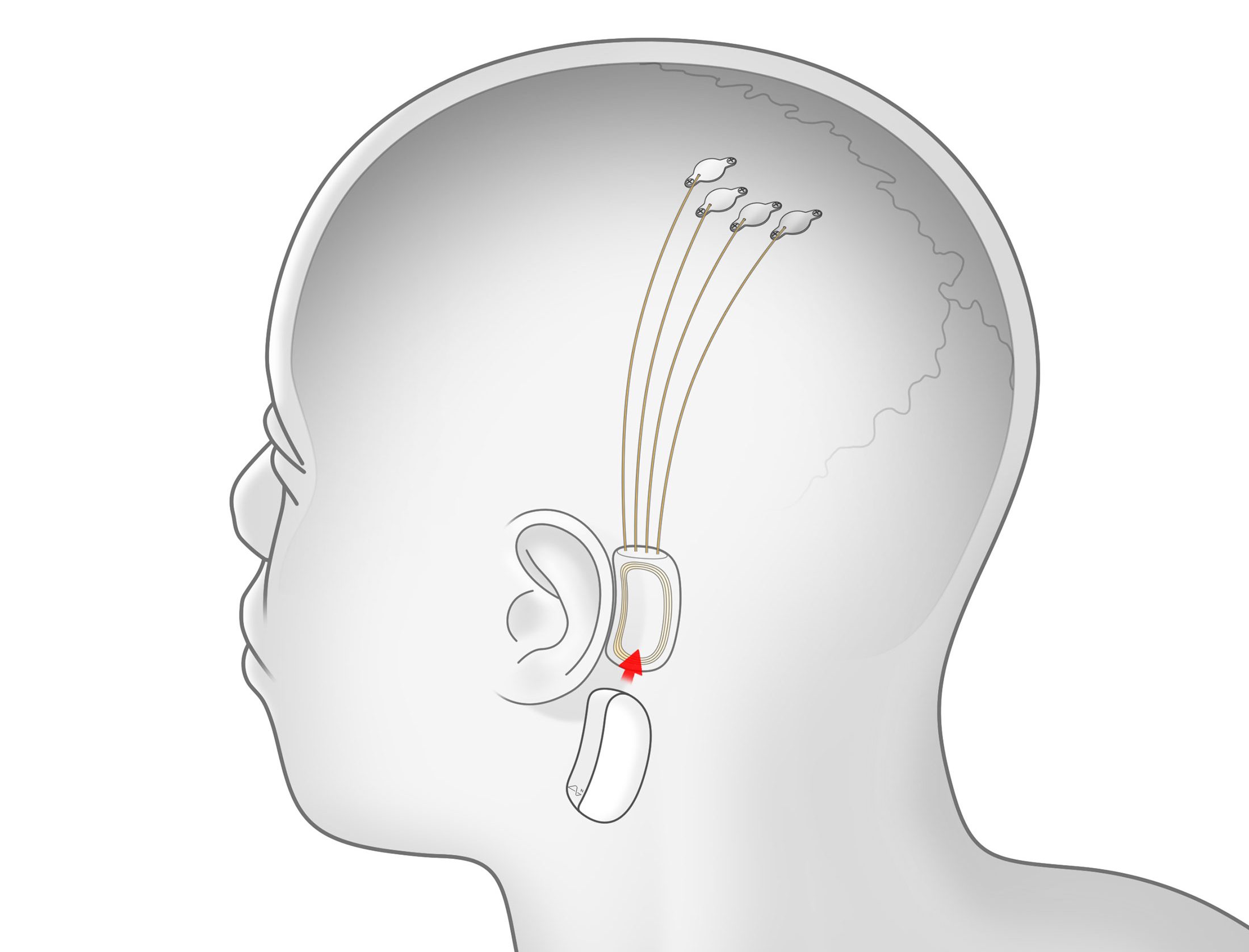
Elon musk has a different idea of how to handle AI. He believes that instead of trying to make sure that the AI is unbiased we can essentially combine with it by putting chips into our brains that connect us to the internet. Musk’s company Neuralink is already working on making this happen. Not only would the device connect us to AI, but it can also help people control prostatic limbs and many other applications.  Although this may seem like it could never happen or that it won’t happen for many years’ musk is already experimenting with the technology in animals and recently live streamed a showing of the device in pigs. If this were to happen a total change would happen to the entire structure of American society. The device also brings into question if we will retain our humanity. It also brings into question what it means to have our humanity

Elon Musk sets update on brain-computer interface company Neuralink for  August 28 | TechCrunch

If Neuralink comes to fruition it would cause a very big change in the we currently live. First, would it be up to each person to decide if they want to get the implant or not? Also, would it be up to the parent and or guardian to decide if their child should get the implant? There would be a lot that would have to be sorted out in that sense. Next, if everyone was connected to AI There would have to be a new way to pay for things or buy them. We would probably have to get rid of our current currency completely. This would happen because if half the population was walking around with super computers in their head, they would have all the knowledge that they need in their head. Also, what do the people who don’t get the implant do they always have less info because people with the computers in their heads are always connected. College would probably be rendered useless for most people as well. There would also be security issues because people will most likely try to hack into us. 

Something interesting to consider is what these implants would have on how people interpret art and music. There is no way to tell if it will be any different, but I would imagine that we would essentially evolve to see art and music as just colors and we just wouldn’t be able to see It for what it is. Another feature that Nueralink would have is that we would be able to re watch experiences that we went through. This could be very interesting because human memory is inaccurate so if we could rewind our past experiences, we would know what truly happened. In the future they might find a way to record your emotions as well and when you re watch a past experience you get to feel the same emotions that you felt at the time. That brings into question though if our emotions would be the same after the tech.  

Elon musk values the advancement of humans and fears a similar future that Rijenam fears where AI completely takes over a render’s humans useless. The difference in their thinking is that Musk’s can make people question if we are still the same creatures after getting this implant. This shows that must cares less about if we are the same creature and more about humankind surviving for as long as they can.  Rijenam on the other hand defiantly cares more about what makes us human and morals. He cares more knowing the risk that failure could mean an end to mankind.  

What is Humanity?

In Thomas Suddendorf’s, a Professor of Psychology at the University of Queensland, article he says that scholars like to say that what makes humans unique are things like language, foresight, mind-reading, intelligence, culture, or morality. He then points out that studies have shown that animals have demonstrated the same qualities so, he says, that is not what gives us our humanity? He gives an anecdote about a monkey that killed a 14-year-old boy and he joked about the monkey not having a trial for murder. He finishes his article by saying that what gives us our humanity is the ability to think about our consequences in the future and the results of them. If we go off what Suddendorf defines our humanity as, the nueralink would allow us to maintain our humanity but Rijenam also cares about our morals as well and there is no way to tell what the device will do to our morality and our values. I would imagine that Rijenam fears that our values would change too much and wouldn’t reflect the things he values and thinks should be valued.  

The Future of Humanity - Scientific American

Another thing to look at is the self-driving car. While making the car researchers had to look at every possible situation that could happen including accidents. They had to look at very hard situations such as what if the only option is to hit a dog or a person. What should it do? Also, who gets to decide. There are many things to consider when looking into this matter. An article from nature says that each country when asked these tough moral questions have different answers. One thing that most people agree on is that humans’ lives are more valuable than animals. AI would have to make these decisions as well and that brings up something very interesting. Rijenam wants the AI to be unbiased but because it was developed by humans won’t it be biased towards them?  

Fast Moving AI

Either way, there is another horse in this race the people that think that Ai shouldn’t have to be monitored at all and should progress as fast as possible. In a Fast Company article John Pavlus says that AI should be able to progress as fast as possible because it will be able to make large advances in many fields. In the article Pavlus says that between 54% and 75% of people surveyed believe that Ai will help the rich and hurt the poor. From what I can gather from the article Pavlus has way more value for economics and money than both Musk and Rijenam. He does lightly address that he thinks the AI should be unbiased, but he doesn’t give any plans how and by saying that it should go as fast as possible it’s clear that he cares more if the AI does good for the economy than if it is unbiased.  

Clearly, AI is a big part of what is going to happen in the future and there are many huge effects no matter what happens.For the most part all sides agree that if AI is used correctly it can be very beneficial to the world but as we look at each side and analyze what they value we can try to decide what is best.  

Work Cited:

“Full Page Reload.” IEEE Spectrum: Technology, Engineering, and Science News, spectrum.ieee.org/the-human-os/biomedical/devices/elon-musk-neuralink-advance-brains-ai.

Get in touchDr Mark van RijmenamDr Mark van Rijmenam is Founder of Datafloq and Mavin.org. He is a highly sought-after international public speaker. “Why We Should Be Careful When Developing AI.” AI, Blockchain & Big Data Speaker on the Future of Work, 9 Oct. 2019, vanrijmenam.nl/we-should-be-careful-developing-ai/.

Maxmen, Amy. “Self-Driving Car Dilemmas Reveal That Moral Choices Are Not Universal.” Nature News, Nature Publishing Group, 24 Oct. 2018, http://www.nature.com/articles/d41586-018-07135-0.

Pavlus, John. “AI Is Moving Too Fast, and That’s a Good Thing.” Fast Company, Fast Company, 3 Dec. 2019, http://www.fastcompany.com/90429993/ai-is-moving-too-fast-and-thats-a-good-thing.

“What Makes Us Human?” Psychology Today, Sussex Publishers, 10 Mar. 2014, http://www.psychologytoday.com/us/blog/uniquely-human/201403/what-makes-us-human.

The Controversial Affiliation of Politics in Professional Sports

For hundreds of years as technology has developed, the media and the news have snuck their way into professional sports culture to report the actions of athletes on the field, but more importantly, the actions of these individuals off the field. In many cases being an athlete and a celebrity come hand in hand, but they are still real people with their own opinions and political beliefs. This brings up the controversial topic of athletes involving political opinions in their workplace.

Generally speaking, many fans and players prefer to use sports to disconnect from the real world and take a breather from the stressors of life outside the game. However, in more recent times the drama of politics has consumed a big part of professional sports and many ask if that is really necessary. News channels such as FOX, call out ESPN for being the biggest culprit of distracting the sport culture with politics. Due to the division families and teams, some former NFL players and sports analysts such as Jason Whitlock believe that anything unrelated to the game should be dealt with in the locker room and “outsiders should not be blamed.”

On air the Fox News reporter states, “The politicalization of sports … an epidemic thats been flooding Americas favorite past times.” To the audience the use of tone shows the solemnity of losing the past time aspect of sports. The action of watching sports and coming together as friends and families has drastically changed in the recent years. These people that came together are now being divided because of their political opinions that are addressed during these events. Another major argument that Fox introduces is that people do not turn on the television at the end of the day to be told what to do and how to act. When all people want to do is watch sports, it is not beneficial to be shoving political views into the faces of these viewers.

Jason Whitlock makes another good point in his interview and says that ESPN came out and basically explained that if an individual disagrees with some of these protests then they are considered a racist. He explains that this is completely wrong and may persuade people that do not agree to stop watching ESPN or sports in general. Absolutely no one wants to go on and have their opinions disregarded and be called a racist.

However, on the contrary many individuals do not only believe that political affiliation with sports is appropriate, but many think it is necessary to use the viewership to prove certain points to the audience in times of current political crisis. The whole year of 2020 has brought some very extreme political topics to the table which may severely effect how sports are played. Whether it is Covid-19, police brutality, or kneeling during the national anthem, it is safe to say the world is changing drastically which puts companies such as ESPN in a weird position with their former “stick to sports” mantra.

ESPN has always been the leading company for sports coverage and it is the first thing that comes to mind for the topic; however, they have recently received a substantial amount of backlash for changing the morals of their company. All throughout the existence of ESPN they have wanted to create a community of sports watching that helps the audience detach from the outside world. As shown in the article above, multiple years ago the company even stood against the tweets of an employee because they were politically abusing President Trump. To prevent potential backlash and to support their company morals they condemned this social media post. In this same time frame ESPN came out with a poll asking the audience their opinion on the the topic. Nearly all the votes were in favor of not covering politics and from that day forward the company launched their “stick to sports” agenda.

The reason this idea of politics in sports becomes so controversial is because of the increasing amount of “bad news” in current times. So much crime gets swept under the rug and this NBA season in the bubble players showed particular anger in this lack of coverage. After the police killing of George Floyd the NBA came up with the idea of putting phrases and names of victims on the upper back of the players jerseys that could be customized by each athlete. This idea was initially to promote the awareness of police brutality, but soon turned into the fight against any type of inequality. However, as the fight against police continued the players began to further revolt which eventually led to boycotting playoff games and exiting the court before tip-offs. Some fans were against this action saying it was not the right thing to do, but the players felt like it was the only way to gain attention and publicity. Most fans however supported this because they too want equality just like many Americans. Turning back on the “stick to sports” slogan from years previous seemed like the only option for ESPN and that is exactly what they did. To this day ESPN said it will cover any political event as long as it involves sports, as the two are intertwined.

This photo is a powerful image that was circulated around the internet to spread awareness and to inform people of the current times. This image is very symbolic and meant to use pathos to strike emotions into the reader. The picture shows multiple NBA players kneeling, wearing “Black Lives Matter” t-shirts with their head pointed down to the floor to strengthen the impact of their main point. In this particular image the only person with their head not pointed downward is one of the two black men in this picture. This may be a coincidence but it also makes a strong point to the reader either saying we all have to battle this as a country and citizens should not disrespect each other, or that it is important to stay strong and do not put your head down in times of hardship. Overall, the photographer of the photo does a brilliant job at using rhetorical skills to strike pathos into the audience.

Many American citizens take the patriotism very seriously and veterans fall deeply into that group of Americans. Many people kneel during the national anthem to protest against the flag and the United States as a whole. Some athletes protest the anthem to call attention to issues of racial inequality and police brutality, while others kneel because players like Mahmoud Abdul-Rauf believe the flag is a symbol of “oppression and racism.” The idea of kneeling during the national anthem is one of the most controversial sub-topics in the politics vs. sports argument. This is because there are people who put their life on the line for the country and feel strongly about ideals of the flag that people disrespect on national television. This tends to cause veterans to speak out and share their opinion about how certain athletes make them feel.

About four years ago, Colin Kaepernick was all over the news because of his idea of kneeling during the national anthem. Initially, many people seemed to be against Kaepernick saying that he took the lighthearted characteristics out of the game. He seemingly ruined his career and ended up being unsigned because he was “bigger than the game” and teams did not want additional locker room distractions. It was not until recently that many athletes followed his lead and began taking the initiative to further pursue the practice of kneeling.

This political cartoon, like many others, have pieces that symbolize more than what meets the eye. This being said, the information given through the cartoon can be argued for both sides of this controversy. It is shown that Colin Kaepernick is able to gain the attention of other celebrities such as Lebron James and President Trump. This supports the idea that politics should be involved in sports because it is able to start a conversation that may not have been brought to the attention of people such as Trump and James. However, this cartoon also implements a bag of money that Kaepernick is kneeling next to. This supports the opposite side saying that politics should not be involved in sports because it takes away from the game and causes players to become distracted by potential profit that make come from speaking out or involving politics in the way they play the game. This is a perfect political cartoon because it is able to support both sides of the argument and use rhetoric in an unbiased fashion.

Although many believe that kneeling is disrespectful to Americans, especially veterans, people are willing to listen. Veterans and people that fight for our country are so important and prevalent in this argument because they live, fight, and die for the flag of the United States. As a result, when these athletes make their sport political and kneel during the National Anthem the opinions of these veterans may easily change about the particular athlete or the country overall. For example, army veteran Rocio Serna did not necessarily agree or understand with what Kaepernick was doing, but she still gave her attention without taking complete offense. Instead of fighting against Kaepernick, Serna seemingly agreed with his ideas but not so much with his actions. She describes how it is beneficial for celebrities to bring the elephant into the room because then people are more willing to talk about it.

However, not all veterans feel as positively about these outbursts by Kaepernick and the NFL. Green Beret veteran Michael Rodriguez agreed that Colin was completely in his rights, but he believes that the flag represents liberty to all the citizens instead of this idea of police brutality that these players are protesting. Rodriguez wants it known that the flag is supposed to symbolize everyone who has fought for any type of right that we have as a country. He goes as far to say that Americans do not know what oppression truly is and that we as a country are in a bubble and live a sheltered life compared to other countries.

“What if we had 100,000 Muhammed Ali’s?” -Tom Wicker (NewYork Times)

While many of these political controversies are relatively current, when the media first became involved with boxing star boxer Muhammed Ali he almost ruined his career due to sharing his beliefs through the media. Young or old, these athletes are still humans with cultural, religious and other beliefs. Muhammed Ali marks a great beginning of politics in sports with not only being involved with fighting against racism, but also anti-war efforts due to his religious beliefs. Not many people in this time period were able to stand up and use their fame to address controversial political topics. In this video it clearly shows the consequences that Ali faced such as three years in jail for dodging the draft due to his beliefs.

Finally, the fanbase of the NBA might be starting to show their opinions on the whole situation with politics and sports. There have been many claims by fans that the NBA has simply become “too political.” As shown in the article by Forbes even President Trump tweets that people are tired of watching the “too political” NBA. Thirty-eight percent of the randomly selected 2,000 people claimed that they watch less basketball because it has become too political. This is hurting the profits of the NBA and has contributed to one of the least profitable seasons in decades. These statistics of NBA profits are more than just numbers to the sport as a whole. This poll was created to settle the argument of politics in sports by getting the opinions of the public. The NBA seems to want to make this conversation about the sports community rather than the advocacy of political discrepancies that take over American news everyday. They used this topic to show their audience that the league cares about them and all of the viewers of the NBA.

In conclusion, as media and sports have developed, political conversations have become increasingly affiliated with sports and the athletes. Since sports are so popular, these athletes are idolized by many people around the world and this causes the analysis of every move an athlete makes. While their main job is to perform at maximum potential, athletes still have political views and opinions that sometimes interfere with the sport. This raises the controversy whether politics should be involved in sports or if fines should be given out for those that want to spread their beliefs.

Online Education: Is it Worth it?

With the rise of the Covid 19 pandemic and the mandates of social distancing, virtual instruction has become crucial. While it may be necessary now, many have come to wonder what this means for the future of education. Online learning and education has become a growing phenomenon with the increase of technological use and the mass improvements that have followed. As we trade in our paper and pencils in for tablets and laptops, there are numerous pros and cons to take a look at.

Classrooms have been transformed from physical to virtual.

Among these advancements in technology are increased uses of: Virtual Reality, 3D printing, and holographic projections. George Greenbury recently gave a TED Talk, “Schools without classrooms: the potential of online education and how to fulfil it”, analyzing the potential for online schooling. Being a teacher himself, he has seen first hand how a classroom can fail to effectively teach a student.

“School improves the efficiency of teaching, but makes it less effective”

George Greenbury

Greenbury believes school takes away two crucial components of learning: one-to-one learning and hands on activities. He believes online learning has the potential to allow us to “have our cake and eat it too”. He builds his argument by admitting that most online education is not intrinsically engaging and essentially ineffective, but only because it mimics traditional school. He takes on a hopeful approach to reveal that online learning has the potential to build these relationships and practical application aspects that traditional school is lacking. Greenbury concluded his talk by envisioning how online education can be rebuilt to provide video rich education, an opportunity for one-to-one and hands on learning, an opportunity to build.

Students feel forgotten as school moved virtual and like they are “left hanging”

While Greensbury focuses on a hopeful future, Darienn Pitt wrote an article called “Face-to-face learning is better than online“emphasizing the reality of our present. Pitt, who is a student at the University of Alabama, brings to light a new perspective on the topic of online schooling. While Greenbury is a teacher, speaking for the well-being of his students, Pitt speaks out for many students across the country who may share his beliefs. At the start of his essay he talks about how it is easier to engage in class if it is in person, saying that “many students are not as connected online as in person”. Pitt talks about how online school has brought about many challenges of its own. Asynchronous classes often require a level of self-discipline and motivation that many students lack, or struggle to achieve. Pitt also mentions how completing your homework nowadays doesn’t even require you to leave the house which can, in turn, cause people to feel cooped up. Pitt’s appeal to relate to the average student effectively gets his point across as he speaks negatively about his personal experiences of online schooling. Greenbury and Pitt’s arguments seem like polar opposites at first, but Pitt’s argument may actually support Greenbury’s claim that there is a fundamental issue in how online school is taught.

A mother helps her son navigate the web

After reading about viewpoints from teachers and their students, one might begin to wonder how parents feel about sending their children to online school. Parents of younger children have had increasing concerns about how online education is effecting their children. Emily Gould from The Atlantic expressed her viewpoints vividly in her essay “Remote Learning Is a Bad Joke“. She opens with how much she hates this new age of virtual meetings, describing them as an “allergic reaction” and “a form of physical torture”. Her word choice here brings a crawl to her readers skins as they may recall how terrible it is to have an allergic reacting. Or their toes may curl from the thought of being physically tortured. Gould’s word choice brings on a strong start to her essay. After getting her personal opinions out of the way, she began to talk about her 5-year-old son, Raffi. Gould expressed her concern for Raffi’s well-being as he cannot interact with his classmates like he used to, “He was used to being able to talk to his classmates directly, to hug them and hold hands with them and fight with them”. Another aspect Gould touches on is that virtual instruction may be forcing her child to grow up faster by making then learn online etiquette from the age of five, while “He’ll have the rest of his life to figure out the niceties of interacting with people through a screen”. Gould’s concerning tone gives her essay a strong appeal to parents who also have younger children. Her essay outlines not only the difficulties of online agendas, but also the separation of social connections and wellbeing of her child.

A man works on his computer at the comfort of his home

Now, virtual learning may not be as bad as some people make it out to be. Not everyone is against it. Brandon Busteed from Forbes argues for online education in his article “Online Education: From Good To Better To Best?” believing that online courses are “a better way to learn”. Busteed packed his article with facts and statistics to support his claims. This approach appeals to those who aren’t swayed by the personal narratives that others may give. Busteed worked in some credibility as he recalled the time he took an online course through the Columbia Business School and claimed “It was as good an experience as I’ve had in traditional classrooms”. Busteed uses three main ideas to prove online learning better. The first being that online learning allows you to go at your own pace which can give you more control over your education. The second is that multimedia content provides better access to students and professors which allows for less scheduling conflicts. Finally, Busteed argued that online courses have a greater number of assessments which allows for personal growth to be tracked easier. Busteed comes on strong with his views of how great online learning can be that it gives him more of an assertive tone. This use of language may not be effective towards some individuals, but can be motivating to others who crave an assuring, strong-willed person to push them to try new things.

With the rise of technology and online education, many are saying farewell to paper. Countless textbooks are now being offered online, and many classrooms are eliminating paper all together. Claudia Wallis took a look at whether it was worth it or not in her article, “A textbook dilemma: Digital or paper?” Wallis’s compares and contrasts both sides and takes an informative approach to educate us on both sides. She opens with an anecdote about her friend’s son debating on whether to buy a physical textbook or the online version. Many parents and students can relate to this opening and would want to continue reading in order to find out if the more expensive paper books are worth it. Wallis dives into a study done by educational psychologist Patricia Alexander, a literacy scholar at the University of Maryland, who analyzed whether there was a difference between paper and online learning. The conclusion of the study was that students were able to recall and expand the material that was read more effectively if it was on paper. Another observation was that online readers were given a false sense of confidence, giving the illusion that since they were able to read through the material faster they learned faster. Wallis’s use of facts and studies solidified her argument and backed her ideas. Overall, Wallis appeared to conclude that paper is the way to go.

While paper may be more effective, it is worth it to consider that it can be expensive. According to an article written by Ben Johnson, a school of just 100 teachers would spend at least $25,000 a year on just paper, excluding any costs of printing, ink and services. Wallis also stated in her essay that if people are self-aware and able to deeply question and analyze the text, then online reading can be as effective as paper reading. Johnson also was in favor of eliminating paper, as he shared a story of how his son has been learning in a paper free classroom.

All of the viewpoints that have been examined today take various approaches to answer the big question: What is the best way to educate our students? Greenbury spoke for the teachers and thought that teachers should be focused on the connections that are made between the teacher and student. Pitt spoke for the students in giving voice to those who find it hard to stay motivated online. Gould spoke out for parents across the nation who struggle to force their young children to sit in front of a screen while being socially deprived and forced to mature while learning virtual etiquette. Wallis spoke informatively to educate those on the benefits of reading off of paper versus virtual text while Johnson briefly mentioned how much money we could save if we eliminated paper. There is no right or wrong answer when it comes to virtual education. Some may focus on efficiency to teach material while others may worry about its effects on students’ prosperity. So, “What is education, and the best way to teach it?”, that is up to the individual to decide.

In conclusion, there is no one approach to the debate of online education versus physical. There also is not one straight answer to if we should keep traditional textbooks or start incorporating electronic textbooks into our learning styles. In person classes have their advantages, just as virtual classes do too. As we transition in to a technology focused world, maybe one day we will have a learning method best suited for everyone. Just like Greenbury, we can be hopeful of a better future.

Work Cited

Busteed, Brandon. “Online Education: From Good To Better To Best?” Forbes, 5 March, 2019, http://www.forbes.com/sites/brandonbusteed/2019/03/05/online-education-from-good-to-better-to-best/?sh=2ec52df66912.

Gould, Emily. “Remote Learning is a Bad Joke.” The Atlantic, 18 August, 2020, http://www.theatlantic.com/ideas/archive/2020/08/kindergartener-virtual-education/615316/.

Greenbury, George. “Schools without classrooms: the potential of online education and how to fulfil it.” TED: Ideas Worth Spreading, 3 September, 2019, http://www.ted.com/talks/george_greenbury_schools_without_classrooms_the_potential_of_online_education_and_how_to_fulfil_it.

Johnson, Ben. “Paper and pencil Curriculum: How much do you rely on it?” Edutopia, 23 February, 2011, http://www.edutopia.org/blog/paperless-schools-techology-ben-johnson.

Pitt, Darienn. “Face-to-face learning is better than online.” The Crimson White, 8 April, cw.ua.edu/64870/opinion/face-to-face-learning-is-better-than-online/.

ProCon.org. “Should Tablets Replace Textbooks in K-12 Schools?” Britannica ProCon.org, 4 December, 2018, tablets-textbooks.procon.org/.

Wallis, Claudia. “A textbook Dilema: Digital or Paper?” The Hechinger Report, 23 August, 2017, hechingerreport.org/textbook-dilemma-digital-paper/.

Free College Tuition

College is the plan after high school for many Americans as it is an investment in their future, but when this investment cripples them for the decades to come is it really worth it? In the United States there are 45 million borrowers of student loans who owe collectively 1.6 trillion in student debt. This puts student loan debt second in the category of consumer debt with mortgages coming in at first. The questions that arise from this student loan debt crisis are should college tuition be free? Who will pay for tuition free colleges? Who would get offered free college tuition? These questions are what sparks the debate of free college tuitions.

In an article “Should College Be Free” by Anne Dennon she brings up the reasons why free college is a must need in America in this time and age. College will create futures, boost the economy, and narrow the opportunity gap. Comparing the Covid-19 crisis with that of the post World War II and how the GI bill allowed for more than 2 million veterans to get a free education. The outcome of this was a booming economy as more people were buying homes, cars, and even starting business thanks to the free college education. Free tuition colleges would narrow the opportunity gap as those bright student who cant afford college would now be able to get an education thus creating competition in the long run. While free college tuition sounds great the opposing side have some great questions like It it affective?

In the opposing side of the free college tuition debate “Free College does not eliminate college debt” Sandy Buam brings to light some valid points as to why free college tuition wouldn’t change much in the college debt crisis. Valid arguments like those of college debt can come from all sorts of spending like housing and living expenses and not tuition. Another valid point that she argues is that free college would come at a price for some as those in lower income families would benefit greatly from this while higher middle classes and up would be put in a tough spot. College debt goes beyond tuition as factors must be taken into consideration like how much money they came in with, how much money they earned while in college, and what other expenses were they taking on while in college.

Works Cited

Baum, Sandy, and Michael McPherson. “‘Free College’ Does Not Eliminate Student Debt.” Urban Institute, 22 Aug. 2019, http://www.urban.org/urban-wire/free-college-does-not-eliminate-student-debt.

https://www.urban.org/urban-wire/free-college-does-not-eliminate-student-debt

Writers, Staff. “Should College Be Free?: BestColleges.” BestColleges.com, BestColleges.com, 12 June 2020, http://www.bestcolleges.com/blog/should-college-be-free/.

https://www.bestcolleges.com/blog/should-college-be-free/

Prostitution: Prejudice and Profit

Though often considered one of the oldest professions to exist, prostitution has a history fraught with legal implications, moral debates, and deeply-rooted stereotypes. During the 18th and 19th centuries, prostitution was mostly legal in America and brothels were common. Even as prostitution was declared technically illegal, it didn’t vanish but rather confined itself to red-light districts that government officials turned a blind eye too. However, as the nineteenth century progressed, individual states as well as Congress created laws illegalizing prostitution. Now, it is only legal in one state: Nevada. Currently, prostitution is typically branded as a misdemeanor crime while pimping and pandering (the business side of sex work) are felonies. On the other hand, in many European countries, such as Germany and Switzerland, prostitution is a legal, regulated industry.

With 42 million prostitutes in the world and 1 million of them in the US, the debate around sex work has wide-ranging impacts, especially for minority groups such as women, people of color, the lower-class, and the LGBTQ+ community. How best to treat sex work legally and the larger implications of the topic has led to fiery debates and differing opinions even within ideological groups such as feminists.

An Inherent Sign of Inequality

In the article, “Why Prostitution Should Never Be Legalized” by feminist Julie Bindel, prostitution is established as a cruel and damaging industry. Not only should it be illegal, it should be eradicated. Contrary to other views that depict sex work as an opportunity for women’s empowerment, she claims that it is a consequence of a patriarchal society that takes advantage of vulnerable women.

Her research into movements and organizations that support the decriminalization of sex work, such as Turn Off the Blue Light in Ireland and the International Union of Sex Workers in London, found that most supporters aren’t actual sex workers. Rather, they’re pimps and customers, the people that get the most out of the legalization of prostitution. This is in an interesting find because clearly those that benefit from prostitution have an inherent bias towards it regardless of its effect on society or sex workers. However, these few cases cannot be proven typical of all movements and organizations that support the legalization of sex work, and Bindel might be choosing examples that match her narrative.

[Decriminalization] is not the way forward – unless we want to make it easier for the men who run the global sex trade to make more money out of women’s bodies.

Julie Bindel

Her words establish that a primary concern of hers (and abolitionists- the people that advocate for the eradication of prostitution entirely) is that decriminalization will enable men to further the power gap between the sexes. Pimps, brothel-owners, and other men with authority in the industry are Bindel’s main enemy, and she views them as abusers and users. While others may argue that sex work and prostitution is an opportunity for women to embrace their sexuality and use it for their own profit, she claims that it is the male overseers and organizers that profit the most while they pedal women as their product.

Furthermore, her argument carries a slightly condescending tone towards prostitutes as it establishes her moral compass in regards to women doing as they please with their bodies. She says that prostitutes sell their bodies “like burgers,” which insinuates that prostitutes reduce themselves to cheap, unhealthy, and desirable objects. This is regardless of how prostitutes see themselves. She also critiques society in that it views flesh as a “commodity.” It is a means to attain money because it has been reduced to the level of that of inhuman materials like steel or wood.

A Real Job

The biggest arguments for decriminalizing sex work are that this would protect sex workers and promote equality, which are showcased in the article “Sex Work is Real Work and it’s Time to Treat it That Way” by LaLa B Holston-Zannell. She utilizes a logos approach that largely avoids the conversation of the morality of sex work, which leaves her perspective less open to opponents. However, though Holston-Zannell makes reasonable inferences about benefits, there is little hard evidence or statistics to back up these conclusions.

If sex work were to be decriminalized, Holston-Zannell reasons that sex workers would face less violence, both from the police and their clients. In either case, the illegality of sex work forces sex workers to occasionally endure violence or coercion in order to avoid arrest. If arrest was no longer a fear, sex workers could report cases of assault and violence against them without consequence.

The article was posted in June of 2020, which was shortly after the murder of George Floyd by police and the ensuing surge in popularity of the Black Lives Matter Movement. This led to increased social awareness of police brutality and abuse of power. The article cleverly connects to that issue, expanding the idea of police corruption beyond race and into other groups of people that fall victim to a white and male dominant society.

In addition to connecting the sex work debate to the police brutality controversy, Holston-Zannell implicates its effects on the LGBTQ+ community and trans women of color in particular, thereby widening the stakes of the debate to a larger group of affected people as well as making her argument intersectional. According to her, sex workers are more likely to be part of the LGBTQ+ community, and anti- sex work laws reduce incomes from sex work, which push subgroups already more effected by poverty deeper into it. She also points out that black trans women of color are often profiled as sex workers by police, fostering an environment of fear and distrust with the police. The criminalization of sex work contributes to the problem of mass incarceration, as well as disproportionately impacting trans women of color too.

The author alludes to her personal stakes in the argument when she uses “we” to refer to black trans women. This can potentially build her credibility because she is more aware of how the nuances of race and gender identity affect the sex work conversation.

Holston-Zannell’s points emphasize that she values improving the lives of and protecting sex workers. She does not speculate on sex work’s more general effects on the health of society, nor does she deeply examine whether sex work is immoral or not. She is chiefly focused on helping sex workers, potentially failing to recognize other implicates and nuances or general patterns.

From the Perspective of a Sex Worker

Juno Mac’s Ted Talk on “The Laws that Sex Workers Really Want” advocates for the full decriminalization of sex work, and many of her reasons align with Holston Zannell’s. She effectively summarizes why full criminalization (all involved can be arrested), partial criminalization (the buying and selling of sex are legal but other activities like brothel-keeping are not), and criminalization of buyers are not in the best interest of sex workers:

Fear of law enforcement makes [sex workers] work alone in isolated locations, and allows clients and even cops to get abusive in the knowledge they’ll get away with it. Fines and criminal records force people to keep selling sex, rather than enabling them to stop. Crackdowns on buyers drive sellers to take dangerous risks and into the arms of potentially abusive managers. 

Juno Mac

However, she also explains why legalization and regulation of the industry is also not the best solution. This may seem surprising to some because on the surface, it sounds like this is what sex workers would want or what is the most effective at keeping sex workers safe. Mac counters this by arguing that only rich brothel owners would be able to easily navigate the restrictions and fulfill the requirements caused by regulation. Poor sex workers, often from marginalized groups, would likely still take the illegal route out of desperation, and as a result, they’d face the same issues and risks that they did when sex work was criminalized.

Though Mac favors decriminalization as the ideal solution , her main point is that lawmakers and all people should listen to sex workers in regards to the issue of sex work because they’re the “ones most affected by these laws.” It is not the house mom or accountant or celebrity that see their lives and livelihoods threatened by how sex work operates in the world or how it is legally treated. It is sex workers with the most at stake in this conversation.

If you care about gender equality or poverty or migration or public health, then sex worker rights matter to you. Make space for us in your movements. That means not only listening to sex workers when we speak but amplifying our voices.

Juno Mac

Through connecting sex worker rights to multiple other issues such as race, gender, and class, Mac creates higher concern for an issue that most people don’t think about. It is an interconnected issue and all people, sex workers or not, should care about it if they care about human rights and equality (this puts pressure on activists and the like who have not participated in this discourse). Still, she emphasizes that boosting the voices of sex workers is most important in this issue. The priority is not other people’s feelings and morals.

From the Perspective of an Ex-Prostitute

The opinion piece “Buying Sex Should Not Be Legal” by Rachel Moran takes a starkly different approach to the issue than Mac. Moran argues that full decriminalization will do more harm than good.

The effort to decriminalize the sex trade worldwide is not a progressive movement. Implementing this policy will simply calcify into law men’s entitlement to buy sex, while decriminalizing pimping will protect no one but the pimps.

Rachel Moran

Like Bindel, she believes that legal acceptance of prostitution gives men a sense of having the right to women’s bodies. However, framing men as an enemy or opponent in unsubtle terms (Bindel more carefully references the patriarchy, so that her enemy is a societal phenomenon, or targets men at the top of the sex work industry specifically) opens her argument up to defensive attacks from men, who perhaps might lay blame on prostitutes for their choices.

She also ties in the issues of class like Mac, but to a different end. She argues that those who willingly consent to sex work ( as a rebuttal to one argument in favor of sex work because women consent to it) are white and middle class women often part of escort agencies, while the majority of sex workers are the unprivileged, poor minority that might have been forced or coerced into the trade.

 Their [white women in escort agencies] right to sell doesn’t trump my right and others’ not to be sold in a trade that preys on women already marginalized by class and race.

Rachel Moran

Her own harrowing story follows this pattern. After the death of her father and inability of her mother to care for her, she ended up on the streets and was pimped out at the age of 15, leading to great effects on her mental health. This experience is much different that Mac’s, who chose to join a brothel as an adult woman in order to pay the bills. It is this difference in background that likely contributes to their difference in opinion. Not all sex workers experience sex work the same way.

Moran’s proposed alternative is an approach that Mac shot down. She advocates for the criminalization of sex buyers and legalization of sex selling, often referred to as the Nordic model because this system was implemented in Norway. This solution is less likely to trap women in the sex industry while decreasing the market demand and hopefully reducing the industry as a whole.

According to Moran, sex work is inherently coercive. She doesn’t have a negative perception of sex itself, but she views sex work as entirely different than normal, consensual sex and entirely different than “ordinary employment.” Prostitution involves “ritual degradation” by strangers using women’s bodies “to satiate their urges.” Her tone demonizes sex buyers and portrays prostitutes as victims, which is sharply different than how some prostitutes/ sex workers view themselves, as working women doing what is necessary to make ends meet.

Her opinions represent a rift in agreement amongst feminists. Most modern, third-wave feminists believe in women’s sexual freedom, but not all feminists see sex work as part of this liberation. In Moran’s eyes, sex work is so unlike typical sex that the issues are separate. Opposing feminists might argue that banning sex work is an effort to control women and how they chose to use their bodies. However, the arguments of Bindel, Holston-Zannell, Mac, and Moran all appear to agree that regardless of one’s opinion on sex work, it is a women’s issue and the debate’s outcomes chiefly affect women. Thus, it should be women’s voices that are listened to, even if those voices speak in favor of differing solutions.

Putting It All Together

A key difference in the source materials, two of which that support decriminalizing sex work and two of which that do not, is the label placed upon the subject of the debate. Sex worker or prostitute? Supporters of decriminalization tended to use the term “sex worker”, which suggests that sex work is a legitimate form of work and is merely an exchange of goods and services, as is every other career. On the other hand, opponents of decriminalization tend to use the term “prostitute,” which carries with it a long history and a negative connotation that is very much associated with the poverty, violence, and the poor conditions some prostitutes experience.

Though each text clearly leans in one direction or the other, each does so for different reasons and places importance on different values. Bindel cares about the patriarchy and how sex work enforces it while Holston-Zannell prioritizes the well-being of sex workers. Mac emphasizes the necessity of listening to the voices of sex workers while Moran advocates for the end of of an exploitative, predatory industry above all else. All seem to care deeply about the issue and the people involved, but their personal histories and knowledge have led to radically different ways of approaching the problem. This makes the discussion of sex work particularly complex. Those that have similar values may have different solutions, and those proposing the same solution may do so out of different values.

It seems that the only wrong answer is thinking that there is only one right answer.

Citations

Bindel, Julie. “Why Prostitution Should Never Be Legalised .” The Guardian, Guardian News and Media, 11 Oct. 2017, http://www.theguardian.com/commentisfree/2017/oct/11/prostitution-legalised-sex-trade-pimps-women.

Holston-Zannell, Lala. “Sex Work Is Real Work, and It’s Time to Treat It That Way.” American Civil Liberties Union, http://www.aclu.org/news/lgbt-rights/sex-work-is-real-work-and-its-time-to-treat-it-that-way/.

Lubin, Gus. “There Are 42 Million Prostitutes In The World, And Here’s Where They Live.” Business Insider, 17 Jan. 2012, http://www.businessinsider.com/there-are-42-million-prostitutes-in-the-world-and-heres-where-they-live-2012-1.

Mac, Juno. “The Laws That Sex Workers Really Want.” TED, Ted Conferences, http://www.ted.com/talks/juno_mac_the_laws_that_sex_workers_really_want/transcript?utm_campaign=eNewsletter.

Moran, Rachel. “Buying Sex Should Not Be Legal.” The New York Times, The New York Times Company, 29 Aug. 2015, http://www.nytimes.com/2015/08/29/opinion/buying-sex-should-not-be-legal.html.

“Prostitution Is Legal in Countries across Europe, but It’s Nothing like What You Think.” Business Insider, 13 Mar. 2019, http://www.businessinsider.com/prostitution-is-legal-in-countries-across-europe-photos-2019-3.

Schwartzbach, Micah. “Prostitution Laws.” Criminal Defense Lawyer, Nolo, 7 Oct. 2020, http://www.criminaldefenselawyer.com/crime-penalties/federal/Prostitution.htm.

(Don’t) Be a Man

Boys will be boys. Boys are not emotional. Boys do not cry. Boys will learn how to act like men.

It is no surprise that this is how most male youth grow up. From a young age, boundaries are set that separate the girls from the boys. The girls get pink, the boys get blue. The girls get barbies, the boys get action figures. The girls will cheer, the boys will play. The lists go on and on. Most importantly, girls are more prone to express their emotions, while boys primarily do not. Societal standards like these create the difference between how boys and girls deal with their emotions.

In an article written by Alyson Schafer, she touches on the subject that many people tend to shy away from; men and their feelings. In many ways, this is the elephant in the room for so many conversations. In my opinion, the strongest argument she points out is the fact that parents are not as nurturing to their sons because boys are seen as the “stronger and tougher” sex. To an extent, this terminology is fitting due to the fact that the biological makeup of men is built to be stronger. Although men have thicker bones and high levels of testosterone, this idea does absolutely nothing but creates a downwards domino effect towards gender equality for men. The social construct that men should always be less emotional than woman can only be damaging to their mental state. This fact alone proves why male suicide rates are higher, and the ideas that men talking about mental illness and their feelings leads to them being labeled as a “pussy”. It truly is a no-brainer, the restrictions created by society on male emotions is already evident to be damaging. Men are more trapped when it comes to their emotions, which obviously makes it harder to seek help. Women have always been viewed as being more emotional than men, which creates a strange barrier that men are forced to be stuck behind. Growing up, the boys that were more emotional were seen as “outcasts” compared to the rest of the kids. If a girl cried at school, it was genuinely normal and no one would bat an eye. On the other hand, if you see one tear coming from a boys eye, he is obviously “way too sensitive”. If society wants change, it starts with making men feel more comforting seeking help when it comes to their emotions.

At a young age is when the “Be a Man” motto is learned amongst impressionable boys. If a boy cries, he needs to stop, because it is not manly. Geraldine Walsh wrote an impressive article about teaching boys to ignore their feelings from an extremely young age. She stated, “Encouraging boys to suppress their emotions and be tough and stoic can have damaging consequences for their mental health in later life”. This is where toxic masculinity may enter the chat, but that is something that we will touch on in a little bit. When enforcing the “Be a Man” argument, many times anger will become the prominent emotion, because it can easily mask other emotions. The anger replacing sadness phenomenon is still as prevalent as ever. For instance, pent-up anger leads to emotional distress. As a result, this can lead to inappropriate behavior such as domestic abuse, substance abuse, as well as physical destruction (perhaps punching a whole through the wall).

When speaking to my boyfriend, Luke Juricek, about this taboo topic, a few interesting points came up to the surface explaining why society is this way. First of all, there is science behind societies emotional gender differences. Men are physically stronger, which naturally puts them into the position of acting as a supplier. Throughout time, it has been harder for women to establish themselves in self sufficient roles in civilization. Women were incapable of performing the same strenuous tasks as men, leading to an early formation of societal standards. Men worked while women partook in a familial role. If a male were to not work properly, he would be at risk of losing his entire livelihood. Women have always been viewed to be more nurturing as men have been more straightforward/ tough. Due to these precedents, men have always had a tougher disposition, while females were allowed to be more nurturing as well as emotional. It is absolutely no doubt that there are people out there that prefer the traditional gender roles, and believe in men being tough at all times. While this system may have some forms of evidence, in some forms it does not defend the emotional values of men. This system is evidence in modern day by societies’ capability to encourage men to suppress their feelings. When a little boy is growing up, it is quite common to hear “be a man” come out of someones mouth, usually their father. Whether a boy is crying, playing sports, etc., you will hear “be a man”. When it comes with being a man, it comes with not being emotional. If men have been forced to limit their emotional expression, it is no surprise that society is still telling them to void their feelings to this day.

Now, let’s talk toxic masculinity. Oxford Languages states that toxic masculinity is a set of attitudes and ways of behaving stereotypically associated with or expected of men, regarded as having a negative impact on men and on society as a whole. When it comes to this subject, it usually correlates with bullying, objectifying women, and the term “boys will be boys”. The aspect of bullying is derived from feeling that you are dominant over someone else. In regards to toxic masculinity, the bully would feel that they are more manly, compared to the bullying victim. Bullying not only provides a feeling of superiority, but also discourages the victim from ever truly expressing their feelings. This can lead to drastic effects in an individuals self perception, as well as their self confidence. It is a tragic domino effect as the bullying victims feel unable to share how they feel, which only pushes the pain that men face during their daily lives. Additionally, it is no secret that men objectify women. Although women are just as capable of harassing men, it is much more common for men to assault women, based on the desire to feel superior. It is immediately evident why men struggle so much to display their emotions as even women are subject to the consequences of toxic masculinity. As far back as most people are able to remember, the term “boys will be boys” was always mentioned at some point. This stereotype almost helped boys get a pass on being messy, aggressive, loud, and numerous other examples. The term is essentially an umbrella term for toxic masculinity when one truly does think about it. As we pay attention to this topic more and more, it is no doubt that this idea is extremely negative, but it puts men in a tough spot too. This is the societal norm, so concurring with it creates an outcast. The Gillette commercial tagged below is a great visual for the way that todays society not only works, but the way that it is starting to make improvements. It truly is a difficult subject, but with the more light it has, the easier it becomes to understand how men are victimized when it comes to their personal feelings

Truly at the end of the day, men deserve to talk about their feelings and feel more comfortable to seek help for mental illness. The stigma around men being sensitive and name-calling needs to end, immediately. With the background of the way that men have been brought up, and with the societal norms, it is a great thing to see mens mental health gain more attention. It is with no doubt that many people in the world believe in men keeping the extreme masculine role, but it does have the possibility to come with consequences. Men, if you are seeing this, it is your sign to let go of “Manning-Up” and be authentic with your inner feelings. As Jill Suttie writes about teaching boys to be more in touch with their emotions, the future generation is hopefully listening.

Works Cited:

About the Author Jill Suttie Jill Suttie, and Jill Suttie Jill Suttie. “How to Raise Boys Who Are in Touch With Their Feelings.” Greater Good, greatergood.berkeley.edu/article/item/how_to_raise_boys_who_are_in_touch_with_their_feelings. 

Walsh, Geraldine. “Fears for Tears: Why Do We Tell Boys Not to Cry?” The Irish Times, The Irish Times, 10 Sept. 2019, http://www.irishtimes.com/life-and-style/health-family/parenting/fears-for-tears-why-do-we-tell-boys-not-to-cry-1.4006399. 

“Why More Men than Women Die by Suicide.” BBC Future, BBC, http://www.bbc.com/future/article/20190313-why-more-men-kill-themselves-than-women. 

Schafer, Alyson. “This Is Why Boys Need More Emotional Support Than Girls.” HuffPost Canada, HuffPost Canada, 8 Dec. 2017, http://www.huffingtonpost.ca/2017/11/17/boys-emotional-support_a_23280737/. 

Chamie, Joseph. “More Women Stay at Home Than Men.” More Women Stay at Home Than Men | YaleGlobal Online, 25 Jan. 2018, yaleglobal.yale.edu/content/more-women-stay-home-men. 

Venker  | September 22, Suzanne, and Oneinchpunch. “More Evidence That Couples Prefer, and Do Better with, Traditional Gender Roles.” Washington Examiner, 22 Sept. 2017, http://www.washingtonexaminer.com/more-evidence-that-couples-prefer-and-do-better-with-traditional-gender-roles. 

Should Professional Football Be Banned?

“I’ve been fuzzy-headed a lot. You use your head a lot, and at the end of my career, I’ll probably be talking like Muhammad Ali.”

Former NFL Offensive Lineman Jason Smith
DENVER, CO – DECEMBER 28: Strong safety David Bruton #30 of the Denver Broncos lies on the ground in pain after a play that would force him out of the game with a reported concussion during a game against the Oakland Raiders at Sports Authority Field at Mile High on December 28, 2014 in Denver, Colorado. (Photo by Doug Pensinger/Getty Images)

NFL Football is America’s new national pastime. According to Samford.edu, “It is clear that NFL fans are more engaged with their sport’s teams than the MLB, thus making their teams more valuable. While the MLB and baseball had a good run as “America’s Pastime,” it may be time to turn the reigns over to football.” The age old tradition of getting together with a group of friends to grill out and consume your favorite alcoholic beverage while watching your hometown team compete for victory is ingrained in our American culture. The rush that comes from watching your team score a late touchdown to seal a game or the elation from securing a playoff spot is second to none in the sports world. While these breathtaking moments rule television sets and sports outlets nationwide, there is a darker side of American Football that isn’t covered in the media, where players suffer traumatic brain injuries which in many cases lead to lifelong complications.

Imagine this scenario, your favorite NFL team’s star quarterback is sprinting down the field attempting to pick up a first down. As he tries to make a defender miss, he slips and collides helmet to helmet with an opposing player. While the announcers exclaim about the huge gain on the play, the quarterback stumbles off the field, seemingly disappearing from the game. A few plays later, the same quarterback returns back to the field as if nothing had happened. After the game, it is reported that this player had suffered a concussion and was taken into the concussion protocol program, but had been deemed healthy enough to return to the contest. While there are many programs put in place in order to ensure players are checked on after large collisions, they don’t halt these head injuries. Player safety has been improved over the past years, but the number of reported concussions have been mostly stagnant. Should a sport with data this alarming be allowed to continue to operate?  Proponents who call for a cancellation of NFL Football cite that the sport can lead to brain trauma, and that advancements in player safety haven’t had as many positive effects on the game as intended. The opposing viewpoint, those who believe that professional football should continue, claim that the sport has never been safer, and that new technological improvements in equipment and further research into preventing helmet to helmet contact have protected players like never before.

Football has never been safer: Let the sport continue:

With the arrival of data and information detailing the deadly effects of CTE (Chronic Traumatic Encephalopathy), the NFL has rushed to make the sport safer, and to find ways to reduce harmful collisions between players. Writer Gregg Easterbrook of The New York Times details many of the advancements that the league is making in order to make football safer. Concussions, one of the controversies at the forefront of football, have been reduced according to reports from the NFL. In 2019, the number of concussions reported in the NFL were at a low, reaching only 214 cases compared to 2018’s report of 281 concussions. One possible reason for the reduction in cases could be attributed to various rule changes such as limiting both the opportunity for kick returns in games and contact between players in practice. Easterbrook also calls for an additional rule change, banning the three and four point stance, which in today’s game are unnecessary. By furthering his argument, Easterbrook attempts to reason with his audience by introducing the odds of an NFL player receiving a concussion: only one in ten.

“Would you accept a 1 in 10 chance of concussion in return for $2.8 million, the average N.F.L. annual salary? Maybe yes, maybe no. An adult can grant informed consent regarding that choice — in turn, audiences can enjoy the games guilt-free.”

Gregg Easterbrook, writer for The New York Times

Through informing his audience about the fact that there is only a ten percent chance of a player receiving a concussion, Easterbrook asks his readers if they would risk this miniscule chance for almost three million dollars, a very enticing deal to ponder.

Former Super Bowl champion Marvin Washington writes for The New York Post and details how football, in his words, “is safer than it has ever been.” Washington recognizes that this claim may be contrary to popular opinion, and in doing so details the lengths that the NFL has gone to to make the game more safe. By respecting the fact that there is another viewpoint to the topic, Washington builds his ethos with his audience. In detailing the new measures to support player safety, Washington informs how there have been thirty nine rule changes in the past few years (the article is from 2016). Some of these rules include kickoffs being moved to avoid the opportunity for kick returns, medical experts being implemented on sidelines, and penalties for striking a defenseless player. Washington explains that CTE is a monumental issue in the NFL, but is one that can be solved by further research and development into technology. He calls out to his audience and asks them to, “demand more from the NFL.” Washington would also like the NFL to lead research instead of looking for it, and to be ahead of the curve. Washington is effective in his argument by attempting to reason and communicate with his audience, acting as a leader for a movement that is getting closer to a positive result.

Both Easterbrook and Washington contend that the NFL should be allowed to continue by demonstrating that advancements in technology and rule changes have made the game exponentially safer. To strengthen their arguments, both writers try to reason with their audience through the use of logic.

Football is deadly and therefore should be banned:

When the 2015 film Concussion debuted in theaters around the country, decade long secrets that the NFL had been trying to shelter had come to light. The case of former Pittsburgh Steeler Mike Webster, the first player to have been discovered as having CTE, shined a light on the disastrous effects of head to head contact in football. While prior to the movie many were in fact aware that football wasn’t particularly safe, it wasn’t public knowledge about the extent that the brain disease affected players and the alarming frequency at which it has been found in former athletes’ brains.

“In 2017, Dr. Ann McKee performed autopsies on 111 former NFL players. An astonishing 110 revealed CTE—over 99%.”

Michael Dong, writer for Medium.com

Writer Dave Bry for The Guardian lays out his reason for why football should be abolished, by comparing fans of the game to the likes of “Roman citizens cheering as gladiators fight to the death in the Colosseum”.

NFL team owners, who make money from the spectacle, are more on a level with Leonardo DiCaprio in Django Unchained.

Dave Bry, writer for The Guardian

In developing his case, Bry details the year-long argument he had experienced with one of his friends about whether the NFL should be allowed to continue. He explains that his friend contends that NFL players are adults and professionals who can make their own decisions on if they want to risk their health to play and that if professional football should be banned, then shouldn’t other professions such as police officers and firemen have the same fate? Bry acknowledges that his friend’s argument contains some good points, but that it is flawed. Bry refutes his friend’s claim by explaining that we pay to watch these athletes go out and ruin their bodies and deteriorate their minds. He compares this enjoyment of the physical contact to a primal urge that we have inside of us. Bry additionally says that professional football isn’t necessary for society to function, unlike police and firemen who have a job to keep society organized and safe. Although Bry and his buddy disagree on virtually every point, there is one where they find a common ground: the abolishment of helmets. Bry and his friend cite that helmets have caused more damage than prevented it, and that if helmets were taken away then players would be less inclined to attempt dangerous hits as it would render players unconscious. Bry’s acknowledgement of the counterpoint to his argument and reasoning with the other side is a sign of strength in his writing and persuasion. The way he uses an everyday experience of a debate with his friend until they find a common ground helps to strengthen his points and build a relationship with his audience by relating to them and their experiences. Bry uses an informal, yet informed and persuasive tone to contend his views.

Writer Michael Dong for Medium.com explores why professional football should be outlawed through the mediums of statistics and studies. First detailing CTE and it’s detrimental effects on the brain, Dong builds his logos. Dong also investigates first hand accounts of brain trauma and how former professional players have died very young as a result of the disease.

“It is no longer debatable whether or not there is a problem in football — there is a problem.”

Michael Dong, writer for Medium.com

In an attempt to strengthen his claim that Football is unsafe, Dong informs that both Dr. Bennet Omalu’s research which found the first case of CTE in a former NFL player and Dr. Ann McKee’s studies were questioned and criticized by the NFL. Dong wants his audience to know that the league has tried to keep CTE a secret, and that if not prompted to, would have never done anything to combat it. He informs us that this is because they are more concerned about money and viewership than player safety, and that if the NFL had not intervened with and delayed data about CTE, the professional game would be steps ahead of where it currently sits right now. Dong does acknowledge that there have been some beneficial attempts made to make the game safer such as, “New helmet technology, improved player education, and rule changes”, but that they are too little and too late. Dong takes the stance that it is all up to the NFL and calls them out to make a change now before it becomes too late.

What makes Dong’s argument effective is different from Bry’s. While Bry attempts to appeal to his audience by relating to them and posing his argument in an everyday situation by using pathos, Dong takes a more scientific route and investigates and analyzes studies and numbers, taking a logical stance. Both arguments are effective and detail why the NFL should be banned and explore different reasons as to why. 

NFL football is one of America’s most polarizing topics. The debate on whether players should be allowed to risk their mental and physical wellbeing for large sums of money is one that has been heated for the past decade. One side contends that the sport has become very safe, and will become even more safe as time goes on. With new safety measures imposed on the game, it will allow for the game to flourish and continue for decades to follow according to proponents of professional football. Contrary to these beliefs is the viewpoint that the league has been reluctant to make changes and conduct further research, and that the game won’t become any safer unless the sport is changed completely (i.e. no helmets, new tackling techniques, etc). The debate comes down to whether you enjoy the professional game enough to watch players suffer brain injuries each week. Should a sport this dangerous be allowed to continue? Or should it be up to the players themselves on whether they want to play? 

Works Cited:

The Associated Press. “NFL Players’ Quotes about Concussions.” Fox News, FOX News Network, 18 Nov. 2009, http://www.foxnews.com/wires/2009Nov18/0,4670,FBNHidingConcussionsQuoteBox,00.html?cmpid=prn_foxsports.

Bry, Dave. “American Football Is Too Dangerous, and It Should Be Abolished | Dave Bry.” The Guardian, Guardian News and Media, 4 Jan. 2016, http://www.theguardian.com/commentisfree/2016/jan/04/american-football-is-too-dangerous-and-it-should-be-abolished.

Dong, Michael. “Football’s CTE Problem Is Real- Divulging the NFL’s Dismissal of the Disease and Downplaying of…” Medium, Medium, 5 Nov. 2019, medium.com/@michaeld830/footballs-cte-problem-is-real-divulging-the-nfl-s-dismissal-of-the-disease-and-downplaying-of-3287f8b21863.

Easterbrook, Gregg. “Football Is Here to Stay.” The New York Times, The New York Times, 7 Sept. 2019, http://www.nytimes.com/2019/09/07/opinion/sunday/nfl-football.html.

Freeman, Nate. “Is Football Now America’s Pastime?” Samford University, 3 Jan. 2018, http://www.samford.edu/sports-analytics/fans/2018/Is-Football-Now-Americas-Pastime.

Washington, Marvin. “Football Is Safer Than It Has Ever Been.” The New York Times, The New York Times, 5 Feb. 2016, http://www.nytimes.com/roomfordebate/2016/02/05/is-it-wrong-to-watch-football/football-is-safer-than-it-has-ever-been. 

Should Collegiate Athletes be Paid?

People say that playing a sport in college is like having a job. So, should these players be paid as such? Colleges year in and year out get millions of dollars off the image and likeness of the players they recruit to be a part of their program. Heck even companies paid the universities to have them in their video games and used the very same players of those teams in the game only to not pay them or list their last names on the jerseys. To me it seems like quite a double standard. The colleges and video game companies can use them to get money but they themselves aren’t given a cut.

https://www.hbsslaw.com/press-releases/ncaa-and-member-conferences-sued-by-college-athletes-in-antitrust-lawsuit-over-name-image-and-likeness-compensation#:~:text=%E2%80%93%20College%20athletes%20have%20filed%20an,to%20attorneys%20at%20Hagens%20Berman.

https://www.nbcnews.com/businessmain/former-ncaa-athletes-win-video-game-lawsuit-against-ea-6C10809666

The argument about a free education is valid. However, if the players were given a percent of the money made off of them they’d be able to pay for their own education and then some. Back in June, a class action lawsuit was made by multiple players against the NCAA. The article talks about how in 2019 when Zion Williamson (the eventual #1 pick in the NBA draft) was required to wear Nikes due to Duke’s affiliation with them and broke through the shoe, causing Nike’s stocks to plummet. Nike may have lost money using Zion’s image and likeness but overall every year the company gains money from their equipment deals with the universities. Nike displays the highs and lows of this, yet the universities build multi-million dollar arenas, pay coaches millions of dollars, and have billion dollar tv deals all because of the colleges athletes. The first instance this was brought to light was July, 2013. In this instance many players came out and said how they completely disagreed with the fact EA Sports was using their image and likeness without compensation. They eventually won the legal battle and the games are no longer made. Now I ask, how is it fair to understand that they should be paid for that but not their actual ability? Their skills are showcased throughout their college seasons yet don’t get a percentage of the money they make the university.