
Marijuana: Should It Be Legalized?

Photo by Michael Fischer on Pexels.com

For a long time, marijuana was considered a dangerous drug, but perspectives are changing and the movement to legalize it has been increasing momentum. The controversy surrounding the legalization of marijuana has been an ongoing debate for decades. From the height of marijuana use in the 60s and 70s to now, the legalization of marijuana has been a topic that has been highly disputed over in politics, in the media, and just in the general society.  Some people are completely for legalizing marijuana, arguing that it would decrease the mass incarceration of people of color. Others are completely against it, arguing that legalization will make it easier for people to misuse. Whether you are for or against it, these distinctions shape the controversy surrounding the legalization of marijuana and reflect people’s differing values.  

Critics of legalization
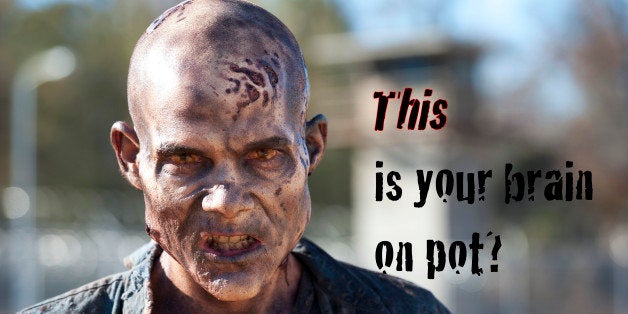
Image result for against marijuana
Photo found at https://img.huffingtonpost.com/asset/5bb8c51e25000094003a4eee.jpeg?ops=scalefit_720_noupscale

Critics argue that there is a misconception about the criminal justice system, and that the percentage of people actually in prison for marijuana is less than the amount we think. And they claim that if they do get in trouble for possession of marijuana, that it would actually benefit them because they would receive the necessary path to treatment, which would benefit the public. In their essay, “Why We Should Not Legalize Marijuana”, popular business news television channel CNBC argues that “the future of drug policy is not a choice between using the criminal justice system or treatment. The more appropriate goal is to get these two systems to work together more effectively to improve both public safety and public health”. They also argue that making it legal would only increase its use and therefore increase its potential for it to be misused and abused, while also seeing rapid increases in addiction. CNBC goes on to talk about other issues such as how it wouldn’t be a good financial decision and that drug impaired driving would increase.  

One major component of the critics is that they value public health and public safety. CNBC‘s claims they give against legalization focus on the impacts this would have on the public and on society because they give examples of how this would effect the criminal justice system, which is a public institution. They aim to show the costs it would have not related to it’s prohibition; but the costs resulting from marijuana use itself. They are concerned about how this would impact public safety and public health. They overall believe that this is a public issue. CNBC’s argument is effective and their appraoch uses logos by backing up their claims with evidence and statistics. CNBC is known to be a pretty unbiased and neutral media outlet that reports the original facts. However, a problem with this is that they don’t analyze enough and that they just overwhelm you with facts and statistics. Overall, I think CNBC does a good job of presenting their arguments and persuading the audience.  

Related image
Photo found at http://clipart-library.com/clipart/8Tzra4zXc.htm

Another big argument critics discuss are the mental health effects of marijuana, as well as the impacts it has on violence. Critics claim that massive amounts of crime are committed by people who use marijuana and that there are many people with cases of mental illnesses that are related to weed. In The New York Times podcast “Should Marijuana Be Legal?”, author Alex Berenson’s main argument is that “marijuana causes temporary and sometimes permanent psychosis that is related to violence”. He makes far reaching claims that there are many murders directed towards marijuana dealing and that marijuana plays a role in child abuse in some cases. He also argues that hundreds of people go to the hospital because of cannabis psychosis and that if you smoke marijuana as an adolescent you are more likely to suffer from psychosis in the future.  

Berenson’s position shows that he values public health and public safety, like many other critics of legalizing marijuana. In the podcast he talks about many public impacts relating to marijuana, such as violence. His claims that there are massive amounts of crime and violence related to marijuana are public issues. In the podcast, he aims to show how legalizing marijuana would negatively impact society. He’s concerned about the public good and how legalization would hurt it. He uses a very defensive approach to get his argument across. He uses pathos in his argument by talking about sensitive topics such as violence, mental illness, and child abuse. But this did not overall persuade me because he fails to back up his claims with substantial evidence and the fact that he was so defensive hurt his ethos. He also fails to realize that correlation does not equal causation.  

Advocates for Legalization

Gif found at https://big.assets.huffingtonpost.com/weed4.gif

But not all discussions about legalization value the public good. On the other side of the controversy are advocates for the legalization of marijuana. Advocates believe that marijuana should be legalized because it’s never killed anyone, most people already use marijuana, it’s safer than most legalized drugs, and it has a low risk of abuse. They also argue that it can be useful for various health reasons. In a Huffpost essay, “This Is Why Marijuana Should Be Legal Everywhere” Renee Jaques states, “the effect on sleep of THC administration closely resembles those induced by lithium”. She also says, “marijuana has been extremely successful in relieving nausea, which is extremely good news for cancer patients suffering from nausea as a side effect of chemotherapy. The drug also helps with people who have loss of appetite due to diseases such as HIV/AIDS. Furthermore, it helps relax muscle tension and spasms and chronic pain.” Advocates also use the argument that many extremely successful people smoke marijuana, such as Martha Stewart and Rihanna. They also debunk the claim that marijuana is a gateway drug, which it is not. It is a correlation, not a causation.  

In Jaques’ essay, she aims to expand on mostly private and personal reasons that marijuana should be legalized. Opposed to critics of marijuana, advocates such as Jaques value private and personal impacts that legalizing marijuana would have. All the claims she gave had to do with an individual impact and had almost nothing to do with how this would impact the society. This shows how advocates for the legalization of marijuana value personal and private impacts, in contrast to how critics focus on the public impacts. She’s concerned about the personal impacts that keeping weed illegal would have on idividuals. Jaques’ approach creates claims that could be relatable to the reader, such as the claim about how many people in general smoke marijuana and how many successful people do it as well. However, she lacks ethos and logos throughout most of her essay. She doesn’t back up some of her claims with evidence and the way she words things make her sound biased.  

Image result for marijuana funny
Photo found at https://www.askideas.com/20-most-funny-weed-pictures-and-photos/

Another argument advocates make is related to financial concerns. They make the argument that the government would make money from the taxes on marijuana sales, and they could use that money to fund different programs in different states. Advocates also suggest that the government could use that money to fund programs that help treat people with drug use disorders. In a Vox essay “The Case for Marijuana Legalization” German Lopez states, “Legalization would also allow the federal government to tax sales to fund new programs, including treatment for people with drug use disorders. A 2010 paper from the libertarian Cato Institute found legalizing marijuana would net all levels of the government $17.4 billion annually — half of that would come from reduced spending (particularly for drug enforcement), and the rest would come from taxing marijuana like alcohol and tobacco.” This suggests that legalizing marijuana would not only help the government, but it would also help individuals who are struggling with drug abuse problems.  

Lopez’s argument takes the public issue of finances and the government and turns it into a personal and private approach by explaining how we could use the tax revenue to fund new programs to help treat people with drug use problems. Like other advocates, Lopez aims to express how making weed legal would benefit individuals instead of the public. Clearly that shows how he values personal and private impacts opposed to public impacts. Lopez’s approach mostly uses logos because he uses a lot of facts and statistics. However, he fails to give some personal opinions and analyze the facts. Overall, I found this article to be somewhat persuasive because of its use of logos but it could use some more analyzing.   

Until the government makes a final decision, this will be an ongoing issue talked about on many platforms and in many ways. The debate over the legalization of marijuana, and debates in general, show values that may not be explicitly stated. But these implicit values impact the way the readers interpret the text, and also impact the way the writers express their opinions.

Work Cited 

Cnbc. “Why We Should Not Legalize Marijuana.” CNBC, CNBC, 20 Apr. 2011, www.cnbc.com/id/36267223

Douthat, Ross, et al. “Should Marijuana Be Legal?” The New York Times, The New York Times, 20 Dec. 2018, http://www.nytimes.com/2018/12/20/opinion/the-argument-marijuana-decriminalization-legalization.html. 

Jacques, Renee. “This Is Why Marijuana Should Be Legal Everywhere.” HuffPost, HuffPost, 7 Dec. 2017, www.huffpost.com/entry/marijuana-legalization_n_4151423

Lopez, German. “The Case for Marijuana Legalization.” Vox, Vox, 14 Nov. 2018, http://www.vox.com/identities/2018/8/20/17938392/marijuana-legalization-arrests-racism-violence-drug-cartels. 

Retribution or Reclamation? The Working Mother’s Tie to Domesticity

How can we stabilize the work/life balance for women in today’s climate?

In American culture today, the amount of women at the top of industry food chains is low, and dwindling at that. While there are multiple sides to the conversation about women and their roles in the workplace, the theme of domesticity and its connection to womanhood unites the arguments. This discussion is between several different vantage points, debating what actions women should take, even though each author is arguing for what they believe is equality. By combining these voices, it shapes the conversation on the fragile balance between work and life with which women are forced to deal. Thus, with this argument of work life balance, the reader can see the views of domesticity and femininity that are held by those in the top of the industry food chains, whether it be retribution or reclamation.

We Can Do It!

In Sheryl Sandberg’s TED Talk “Why We Have Too Few Women Leaders,” there’s a lot of focus on the camaraderie of women. Sandberg effectively encourages women to stay fighting the good fight by planting the seed in her audience members’ mind that one day that half of the C-level positions will be held by females. Sandberg’s ideas are exuberantly optimistic, evoking a call to action, and her tactics are skillfully smart; with her authority of a women at the top of the food chain, the universal labors of motherhood, and a smattering of jarring statistics, she convinces her audience with ease that the days of domesticity are in the past! You! Me! We as women can, in fact, have it all! But what exactly is “it all?” With Sandberg’s argument, having it all doesn’t seem much of anything like balance, but instead working oneself to exhaustion. She says: “Keep your foot on the gas pedal, until the very day you need to leave to take a break for a child.” Success seems like it would include happiness and peace of mind, but Sandberg’s vision seems like there would be little balance between her home and work life. Another thing that Sandberg assumes is that if women are to be successful, they have to really want it. She seems to disregard women who actually do want to stay with their families, looking down on them as if she’s superior because she made the hard decision of becoming the breadwinner. Sandberg also seems to claim that, yes the obstacles are hard, but with a can-do attitude, it’s possible. Sandberg comes from an elitist position, in which she, a wealthy white woman, attended a prestigious college. She’s partially blind to institutionalized racism and classism. This leaves a hole in her argument, and renders it far less effective. Sandberg’s idea of having it all, quite frankly, seems exhausting; and others felt the same as well.

Sit Back, Relax!

Rosa Brooks aggressively claims in her Washington Post article that she “hate[s] Sheryl Sandberg.” Recline! Don’t ‘Lean In,’ she cries to women, and let your natural, domestic, and more informal side take control. Brooks’ op-ed vouches for those who enjoy the slower, less gregarious side of life. Brooks’ argument is more than just allowing space for the introverts of the world, it’s an argument that women shouldn’t have to lean in. Women deserve a spot at the table without having to elbow their way in. She recalls her days of grueling work, and reflects that: “If we truly want gender equality, we need to challenge the assumption that more is always better.” After trying to lean in, Brooks effectively ruined her life. She is making a safe space for the introverts and homebodies of the world in her argument. However, her argument that women should recline is less than empowering. She is feeding into the idea that women want to be domestic. While this may be true for Brooks and other women like her, it’s not true for all. Some women want to be CEO’s, and not be tethered down by their child’s PTA. Brooks doesn’t take this into much consideration as she makes her argument, effectively playing into a the stereotype that women are the caretakers, and thus shaming women who don’t crave the maternal lifestyle.

Sisters Puttin’ in (Too Much) Work

Anne-Marie Slaughter’s piece for the Atlantic is in the same vein as what Rosa Brooks claims. Slaughter also talks about Sheryl Sandberg, and how dangerous it is to ‘lean in.’ A high position women herself, Slaughter actively works to normalize her own domesticity. In a perfect world, she claims, women can have it all: the career of their dreams and a happy family life. But the structure of America’s economy and society are failing women. She is arguing that if we change the structure, we can change the function. Slaughter had the personal experience that gives her a very high authority in her argument. She’s even self aware, recognizing her privilege and speaking to the working women who don’t have the luxury of setting their own schedule while they work as the dean of the Princeton law school. Her pathos is strong, using anecdotes that display the universal maternal instincts in women. Slaughter is on the side of reclamation, stating that a woman’s domesticity should be so normalized that every single American’s work life should model that of a working mother. According to Slaughter, only when there are 100% of women at the top is when there is equality, because when women are in charge, they keep everyone in mind, not just themselves. However, her views can be seen as problematic. She advocates that femininity should be respected as much as masculinity, however that implies that there are inherently feminine and masculine traits and concepts. Her argument leaves no room for those who identify as transgender, non-binary, or gender non-conforming. Femininity, in Slaughter’s eyes, is universally understood- the natural way for a woman to be. Yet, readers are forced to wonder, exactly what is the femininity that she says they should reclaim?

… But Don’t Women Already Have It All?

Richard Dorment has another take on this subject. In this controversy, his Esquire article is full of contradictions. As a man, Dorment has objectively less of a stake to claim in this argument, which allows for a different perspective on this part. He argues that women already have it all; compared to the past tropes, women have progressed leaps and bounds, and this shift has caused men to take the fall for women. He cites statistics that state men are severely more stressed with their work/life balance, and that men tend to spend several more hours a week at the workplace. Dorment’s tone is a bit preachy to his female readers- concerning women’s tendency to be less likely to ask for flexibility, he claims they can either fight for it or not, “but don’t complain that you never had a choice.” This is the exact opposite of what people like Rosa Brooks think. Dorment believes women should fight hard for their opportunities, Brooks says that fighting shouldn’t be required. It’s important to note that Dorment’s tone speaks as if sexism is a thing of the past, which is why his ethos is this situation is important to take a look at. Dorment is a man, writing to women, explaining to them how lucky they are to have what they have and saying they shouldn’t complain when they have to fight for flexibility. This severely hurts his authority with female readers, because he himself has never been a part of the female experience. One thing he does well is create a rapport with the reader through personal anecdotes, however he uses these as support for his arguments, when clearly his experience is not universal. Dorment is on the side of retribution, though not in the same way as Sheryl Sandberg. He’s less on the side of girl power, and more of an advocate for equalism. In his mind, men are the victims. This playing of the victim and passively shaming women for being too successful is a microaggression that leans towards sexism. Dorment’s argument, while well supported, has hints of bigotry sprinkled throughout it.

All in All…

Different writers have different size stakes to claim in the argument, and a certain deserved amplification of their voice. It’s hard to decide what exactly equality is in today’s society, and what solution will work the best in it. Each author has their point of view, followed by varied authority, effectivity, and even downfalls. So the question still remains: reclamation or retribution? There’s only one way to find out- try.

Sources:

Brooks, Rosa. “Recline, don’t ‘Lean In’ (Why I hate Sheryl Sandberg).” The Washington Post. 25 Feb. 2014. https://www.washingtonpost.com/blogs/she-the-people/wp/2014/02/25/recline-dont-lean-in-why-i-hate-sheryl-sandberg/?utm_term=.4491d5cf8f1c. Accessed 25 March 2019.

Dorment, Richard. “Why Men Still Can’t Have It All.” Esquire. 28 May 2013. https://www.esquire.com/entertainment/a22764/why-men-still-cant-have-it-all-0613/. Accessed 25 March 2019.

Sandberg, Sheryl. “Why we have too few women leaders.” TED. Dec. 2010. https://www.ted.com/talks/sheryl_sandberg_why_we_have_too_few_women_leaders.

Slaughter, Anne-Marie. “Why Women Still Can’t Have It All.” The Atlantic. July/Aug. 2012. https://www.theatlantic.com/magazine/archive/2012/07/why-women-still-cant-have-it-all/309020/. Accessed 25 March 2019.

A Digital Defense

by Jack Dietz

Our lives revolve around the media we consume. For many, the first action of a new day is to check their cell phone as they dissolve into a mindless world of digital distraction. Technology’s role has evolved at a rapidly increasing rate, and our world seems to be restructuring itself according to the parameters laid out by technology. During what is considered to be pivotal time in our society, this increasing burden placed upon us by the digital world is feared by many. However, fear that our civilization is being reduced to touch-screen tapping monkeys is irrational. Additionally, some of the articles and claims made in recent years commenting on these trends are ridiculous.

Fearing this constant technological growth would be to accept a narrow perspective of our societal change, and how the tools we use truly influence us. It is important for us to recognize that we are not losing something with our new modes of communication, rather, we are reframing the terms of communication entirely. Our society is not worse, just different. The complexities and intricacies that accompany our digital world fulfill society’s desire to grow and adapt. We are evolving as a society at an unprecedented rate, evolving at a rate made possible through technology.

Marshal McLuhan’s famous quote “the medium is the message” remains relevant today when examining the digital age developing in our evolution. With every new technological breakthrough, new contexts and normalities emerge in communication patterns that reflect the new medium. David Carr’s critically-acclaimed novel The Shallows explores the claims of McLuhan, and further investigates the deep connections between technology and our brains. Carr summarizes it in saying “the technology of the medium, however astonishing it may be, disappears behind whatever flows through it—facts, entertainment, instruction, conversation.” (Carr, 23). Although Carr adopts a rather pessimistic view of recent technological developments, many of the points made and studies referred to in The Shallows are very noteworthy. This quote reveals how the development of new mediums has rapidly changed the messages of our media, and the modes in which we communicate. The important question to consider, however, is have we changed for the better?

Many journalists and researchers (including Carr) would say “no,” and then would continue to cite some statistic about our shortened attention spans or distracted natures as they yearn for the good ole’ days. It is pretentious to insinuate that paper writing is somehow superior to computers and typing. There is some truth wrapped inside of their criticisms, however. In 2000, the average human attention span was 12 seconds, and in just fifteen years that average dropped all the way to 8.25 seconds. That is shorter than a goldfish’s attention span of 9 seconds (Digital Information World, 2018). The statistic was drawn from an infographic on Digital Informational World, which included many more interesting statistics that gave insight on this . The average page visit lasts less than a minute, and users often leave a web page in 10-20 seconds (Digital Information World, 2018). These figures may seem alarming from a certain perspective.

From another perspective, these figures tell me something completely different when considering our life-long educations in technology. Rather, I feel that our short attention spans and rapid navigation of the web demonstrate a generational increase in skill and knowledge of technology which has been fine-tuned by the continued exposure to different gadgets throughout our developments. Our actions on the Internet reflect our societal mastery of the medium, as users are so well-adept at this point they can swiftly bounce from site to site, collecting whatever data or information they see fit. Students like myself have much more extensive databases of information and accessible due to modern technological capabilities. Nobody before 2000 was able to run multiple complex programs at once and meet the level of multi-tasking required of advanced college courses. Therefore, I feel that society’s communication and digital habits have changed out of necessity in a way that allows us to better navigate our busy, expanding world- for the better.

Our ability to collaborate with technology and expand previous possibilities today surpasses any sort of traditional knowledge previously measured. Our society has essentially mastered the art of working in conjunction with computers, which has led us to new discoveries and endless links to different portals of information. A prominent example of the potential our collaboration with computers can yield comes from an excerpt of Clive Thompson’s book Smarter Than You Know adapted for They Say, I Say. In this passage, Thompson describes how the role of computers in high-level chess has evolved throughout the years- as well as the stigma surrounding them.

Chess Grand Master Gary Kasparov, left, comtemplates his next move against IBM’s Deep Blue chess computer while Chung-Jen Tan, manager of the Deep Blue project looks on in New York, Saturday, May 3, 1997, during the first game of a six-game rematch between Kasparov and Deep Blue. The computer program made history last year by becoming the first to beat a world chess champion, Kasparov, at a serious game.(AP Photo/Adam Nadel)

“The idea of a machine outplaying a human has always provoked both excitement and dread.” (Thompson, 441). This idea would become a reality in 1997, when IBM’s supercomputer Deep Blue beat chess world champion Gary Kasparov. People were feared technology was on the brink of taking us over, until we realized how successful we could be working alongside computers. This was the birth of “freestyle chess” which allowed players to combine the speed and endless possibilities of the computer with the insight and skill of human players. Players were reaching new heights and optimizing the sport as a whole. The 2005 victory of amateur chess players Steven Cramton and Zackary Stephen over the supercomputer Hydra (probably faster and stronger than Deep Blue itself) demonstrated the results that collaboration between humans and computers is capable of producing. These results reflect the strengthening of the relationship between humans and technology, and how our uses of the Internet are making us even more web-savvy.

Many of those who discredit web-based interactions fail to recognize some of the social discourses and new methods of communications it has fostered. Now more than ever, there are a multitude of creative platforms where people can express ideas. Social media platforms and instant-messaging apps like Snapchat have arguably brought us closer than ever. The level of intimacy and comfort in our interactions has been aided by the expressive natures of the platforms provided. New York Times writer Jenna Wortham’s “How I Learned To Love Snapchat” is wonderful piece that explores the rise of app and its context in the digital era. The brilliance of her article is her analysis of where Snapchat compares to other communication methods. She says: “Snapchat is just the latest and most well realized example of the various ways we are regaining the layers of meaning we lose when we began digitizing so many important interactions.” (Wortham, 474). Her stance recognizes the importance of new communications such as Snapchat while still addressing that meaning has been lost in our transition to technology. Like Wortham does, it is important that we recognize and understand some of concerns while resuming our digital habits. We are not worse at communicating- we just communicate differently.

This generational difference in communicational methods represents the classic opposition from those who fear the rapidly-changing world. The digitalization of our world does not mean a complete destruction of paper books and phone calls. You can still enjoy the traditional feel of a paper book, however, who knows how long they will be here to stay. Inversely, the digitalization of our world is definitely here to stay. Our world of social media, blogs, and streaming is becoming our new reality. Regardless how you feel about our communication trends, it is impossible to argue that technology is the most central aspect of our culture. Therefore, accepting and adapting to the changing world of technology is much more useful than resisting an inevitable present.

Works Cited

Carr, David. The Shallows. HW Norton & Company, 2010

Digital Information World. “The Human Attention Span [INFOGRAPHIC].” Digital Information World, 10 Sept. 2018, http://www.digitalinformationworld.com/2018/09/the-human-attention-span-infographic.html.

Thompson, Clive. “Smarter Than You Think: How Technology is Changing Our Mind for the Better.” They Say, I Say, edited by Gerald Graff, Cathy Birkenstein, Russel Durst, W.W. Norton & Company, 2014, 500-504

Wortham, Jenna. “How I Learned to Love Snapchat.” They Say, I Say, edited by Gerald Graff, Cathy Birkenstein, Russel Durst, W.W. Norton & Company, 2014, 500-504

Wild Animals in Cages and Cruel Ones on the Outside: Wildlife in Captivity and What it Means

Emilee Rotter

At the Core of the Debate

In 2013, CNN released the documentary Blackfish which exposed the level of cruelty and mistreatment the whales at SeaWorld theme parks were suffering and the danger posed to humans because of it. Within a year afterwards, Alex Halberstadt of The New York Times Magazine wrote an article analyzing and discussing the mental and emotional states of animals kept in captivity. The killing of a silverback gorilla at a zoo later on in 2016 resulted in articles from both Time Magazine and The Atlantic. Time Magazine’s article took the stance that zoos and aquariums play a vital role in conservation efforts. The Atlantic’s article discussed the changes zoos and aquariums continue to make to better the lives of the animals in their care. While this argument appears to just be about animals in captivity it actually raises a deeper argument about the connection between knowledge and entertainment, and where the line should be drawn in the pursuit of both.

Zoos are Helpful for Animals Both Captive and Wild

In an article penned by Dr. Robin Ganzert, CEO of the American Humane Association, for Time Magazine, Ganzert points out that, while there are bad zoos and aquariums, “ethical institutions enrich and ultimately protect the lives of animals.”

The idea Ganzert provides to back up this claim is that by having animals in captivity humans can better study them. This allows for a better understanding of how animals behave, including how they socialize, communicate, and think. With that kind of knowledge, humans can use it to protect endangered species and make other strides for wildlife conservation while also adjusting how they care for said animals in captivity.

The argument against this particular claim is that the information gathered on how animals in captivity behave cannot accurately depict the lives of animals living in their natural habitats. For example, the documentary Blackfish points out that while there is no documentation of an orca whale ever attacking a human in the wild an orca at SeaWorld is responsible for the deaths of three people.

Captive Animals are Dangerous Animals

Tilikum

Blackfish centers itself on the 2010 incident in which Tilikum, an orca whale of approximately 12,500 pounds, attacked and killed Dawn Brancheau, an orca trainer, during an event at SeaWorld in Orlando, Florida.


He’s not killing, because he’s a savage. He’s not killing, because he’s crazy or because he doesn’t know what he’s doing. He’s killing, because he’s frustrated and has aggravation. And when he’s… He has no outlet for it.

John Jett, Former SeaWorld Trainer (Blackfish)

Blackfish digs deep into Tilikum’s history. He was captured off the coast of Iceland at the age of 2 and separated from his family, and he went on to spend over 20 years in captivity. During that time, he sired 21 calves (10 of which are still alive), performed in shows to entertain paying crowds, lived in a tank not nearly large enough for him, and, most notably, was responsible for the deaths of 3 people.

As a documentary, Blackfish is able to reach a variety of different people; its accessiblity on platforms such as Netflix and YouTube allows it to appear in recommended settings for people that may have never considered looking for media about animals in captivity. Its balance of ethos and logos is shown off by interviews with SeaWorld trainers, marine animal experts, and a man who helped capture orcas for SeaWorld being its main source of information, but it does not lack in pathos. The documentary appeals to its audience mentally, but it also does so emotionally by mixing footage of orcas in SeaWorld and in the wild and encouraging the viewer to connect with Tilikum and the other orcas on an almost personal level. While SeaWorld is its main target, the documentary addresses the living conditions for animals in any captive environments and questions just how ethical it is to use animals for entertainment purposes.

Harambe

An animal does not just have to be extremely large to be dangerous, or to suffer the consequences of being danger. In 2016, the Cincinnati Zoo found itself at the center of a worldwide controversy regarding the death of their silverback gorilla, Harambe. The incident started when a 4-year-old boy crawled over the wall and into Harambe’s enclosure. Harambe grabbed the child and moved around his enclosure with said child in his grasp. In doing so, the child was at risk of being thrown against hard objects, held underwater, and injured in a variety of other ways. Zoo employees felt a tranquilizer would take too long to take effect, so they decided to shoot and kill Harambe.

The death of Harambe sparked widespread debate all over social media about animals in captivity and whether or not the existence of zoos, aquariums, and others businesses that have wild animals in captivity for entertainment purposes are ethical.

In the article, “Do We Need Zoos,” from The Atlantic, the pros and cons of zoos are weighed in a modern context, fueled by stories like Harambe and Tilikum’s, where the safety of both the animals and humans are considered to be at risk. J. Weston Phippen, the author of the article, acknowledges that, yes, zoos and similar establishments educate the general public about animals, give people an opportunity to see amazing creatures in person, and, in some cases, act as conservation centers to some degree.
However, Phippen also points out that animals suffer greatly in settings like zoos. Even if they are not being physically abused or neglected, being in captivity alone has a highly negative impact on the mental and emotional state of animals, often making them depressed, unusually aggressive, or both.

The article states that zoos and other establishments like it have the ability to change how they house and care for their animals drastically enough that they can maintain the positives that come with their business and lose the negatives. Phippen argues that an environment where wild animals are kept in cages, whether for entertainment, knowledge, or both, can never be ethical, but if humans were to create expansive enclosures where the animals have the freedom to move about as they would outside of captivity, are properly cared for, and the zoo patrons are seemingly more caged than the animals, then the establishment could perhaps be considered ethical.

Are There Others Like Tilikum and Harambe?

An article published in 2014 in New York Times Magazine addresses the psychology of animals in captivity and argues that animals in captivity can never truly be content. The article follows Dr. Vint Virga, a distinguished animal behaviorist and practitioner of veterinary medicine, through a morning at Roger Williams Park Zoo.

The article begins by citing a paper published in 2012, “The Cambridge Declaration on Consciousness in Human and Nonhuman Animals,” which asserts that mammals and some other types of animals do in fact think and feel. Therefore, they have emotional needs. Many of those needs, such as freedom, companionship, and ability to hunt and scavenge, cannot be properly met while the animals are in captivity. The evidence for this lies in the lives of animals currently in captivity. Virga introduces the writer to a range of animals, from a giraffe to birds to a red panda, all of which have difficulty living in captivity for reasons that would not affect them if they lived in the wild. Virga essentially states that the majority of what animals in captivity think and feel is negative.

So Where Does This Leave Us?

For all intents and purposes, establishments which hold animals in captivity do have benefits. They offer people the chance to see and appreciate exotic species of animals and allow research opportunities about wildlife and conservation. Dr. Ganzert’s articles is situated within this side of the argument. Whereas Blackfish and the New York Times Magazine article are on the other side of the debate. They believe that animals in captivity live unhappy and unhealthy lives, and they can even become dangerous to the humans around them. The article from The Atlantic sets itself in a place between the others; it appears that animals in captivity are not living the best lives they can, but there is hope that within time there will be a way to keep animals in captivity in a way that is both valuable and ethical. The argument here lies in a question about where the ethical line is drawn in the quest for knowledge, and while some sources believe animals in captivity does not cross this line, others do. It seems the only real answer here is to seek understanding and find the middle ground that gives animals happy and comfortable lives, provides an opportunity for research, education, and conservation initiatives, and also is a source of entertainment for guests. Whether or not this can exist, though, has yet to be discovered.

Works Cited

Cowperthwaite, Gabriela, director. Blackfish. CNN Films, 2013.

Ganzert, Dr. Robin. “Zoos Are Not Prisons. They Improve the Lives of Animals.” Time,
Time, 13 June 2016, time.com/4364671/zoos-improve-lives-of-animals/.

Halberstadt, Alex. “Zoo Animals and Their Discontents.” The New York Times, The New
York Times, 3 July 2014, http://www.nytimes.com/2014/07/06/magazine/zoo
-animals-and-their-discontents.html.

Phippen, J. Weston. “Do We Need Zoos?” The Atlantic, Atlantic Media Company, 3
June 2016, http://www.theatlantic.com/news/archive/2016/06/harambe-zoo/485084/.

Social Media: Hit or Miss? Does it ever miss, huh?

A modern-day smartphone user, bombarded with the various social medias

The Role of Social Media in Modern Society

From the rise of Myspace that millennials connected over in the late 2000s to the creation of Instagram and Tiktok which have defined many of the online experiences of those known as the iGen or GenZ, social media has taken root as an important part of socializing in the 21st century. For many, particularly the younger generation, social media has not only provided people with a new outlet to relate to and vent to others, but also with a slew of new opportunities that range from modeling deals to sponsorships, and even features on nationally recognized television shows, potentially dramatically changing livelihoods. However, the use or overuse of these digital platforms has faced backlash, from both older and younger generations, with claims of detrimental effects on both the society as a whole and for the individual. Ever since the beginning of the rise of social media, people have debated on the effects of social media, and whether the positive effects outweigh the negative ones, or if it even has any positive bearings.

Although it is clear that the issue of social media is more that just black or white, there are two main sides. One argues that the usage of social media has more positive than negative effects, while the other argues that social media’s detrimental effects far outweigh its positive ones. Overall, it appears that most have a very mixed view on social media, and believe the evidence for either side is not conclusive enough to turn to one side or the other.   

Some Things to Keep in Mind

Both of these sides are mainly based in the view that communicating via social media or using social media is unnatural as opposed to the “natural” face to face interactions. However, this may not necessarily be true, as social media has been built on fundamental human interactions. Networking, sharing and showing off one’s lifestyle, and communicating with important people in one’s life has not been recently invented with the rise of social media, rather, it has been around for centuries. Indeed, the way that these interactions are done have changed. Sending photographs via mail may have been replaced by texting “pics”, and composing letters may have been replaced with starting a conversation in DMs, but it would be unreasonable to deny that although social media has furthered these interactions on a large scale, it is based in the same desire of humans to connect to each other that has been around since the beginnings of civilization. This is valuable to keep in mind as treating social media as some incomprehensible “newfangled” invention can greatly impact one’s analyses. Further, none of these articles make any particular differentiations between the various social media platforms, which is important, as not all social medias are alike or even used for the same reasons, and can greatly differ, especially in whether their positive aspects outweigh their negative ones or not.

The “Hits”

What many seem to agree upon is that social media has made it easier for people to become a “connected” member of society thanks to the technological aspects of social media. Whether this “connection” is good or bad is another debate, but most see that it as a good representation of the technological advancements of the 21st century.

Agrawal, a journalist for Forbes, argues that one of the biggest functions of social media is to spread information and to connect people in a beneficial manner. He argues, “While some may be addicted to their social media networks, it is one of the best ways to stay informed.” and therefore, “…social media does more good than harm in retrospect.” It is indeed true that social media, most commonly used on mobile devices, helps bring information and news to the audience in mere minutes, taking only a few more for it to reach a sizable audience, and can therefore be considered one of the quickest and most accessible methods of receiving information. Agrawal gives the examples of news alert distribution, traffic message delivery, increased teen awareness, increased marketing exposure, helping to understand technological needs, and global natural disaster relief support as areas that can benefit from the proliferation of social media use.

News Alert Distribution

His first point, he points out news alert distribution is important because “News outlets can share breaking stories, alerts and other important bits of news instantly with their followers.” This is very valid, as the proliferation of news reaches more people, faster.

Traffic Message Delivery

His second point, traffic message delivery, is arguably weaker. He states that “[Social media] is a valuable tool for sending safety message and showing photos from severe crashes resulting from distractions”, and although this is true, this is a weaker point as news about safety while driving is not something that many people consider when using social media.

Increased Teen Awareness

His third point, increased teen awareness, is based on the idea that “Using social media allows teens to follow organizations and causes that they believe in”, and this is a much stronger point, as it connects to his other points about how social media allows various connections to be made that would not have been made otherwise due to distance or other factors.

Increased Marketing Exposure

For Agrawal’s fourth point, increased marketing exposure, he states, “In terms of marketing, it is the most cost effective way to reach mass amounts of consumers”. This can be seen as a both positive and negative aspect, as it is beneficial to companies who are marketing, but it can also be detrimental to consumers who enjoy impulse buying, which will be discussed later in The “Misses” section. But for those who look to sell their products or services, it is certainly a boon.

Helping to Understand Technological Needs

For his fifth point, helping to understand technological needs, he suggests that “Noting what areas of the world lack access helps developers understand the basic needs of a specific demographic group faster”, and although that would certainly be true, and definitely beneficial to those in need of access, he does not elaborate on how companies would do so, and if it this technology is currently being employed to help. He does discuss how the access brought about would help, based on how wifi can be installed to help people keep in contact especially during natural disasters.

Global Natural Disaster Relief Support

His last point about global natural disaster relief support is arguably the strongest, as it is one of the most visible on social media. After natural disasters or even tragic events such as school shootings, there are an extremely large number of people asking for donations and donating in order to help support people overcome the difficult times, and is therefore one of the most helpful.

The “Misses”

Nevertheless, social media certainly has its downfalls, and it appears as though it has the biggest negative impacts on people’s mental and emotional health. In BBC’s article, the author, Brown, discusses several mental states and emotions that could potentially be negatively affected by others on social media, even if it is indirectly.

Stress

Although many people open up a social media app to relax and de-stress, research shows that it may in fact help foster greater stress. Although it can be a place to go and rant, a coping mechanism that may decrease stress, overall others’ venting and stressing can negatively impact someone. Further, it appears that many believe that social media is a waste of time, become stressed after use, due to their perceived waste of time spent scrolling through feeds, that could have been put to use on something productive, according to one survey of 1,800 people that Brown references. Therefore, an interesting cycle appears to occur. A user might try and de-stress by opening up

Twitter and ranting, only to read others’ rants, get off the app feeling more stressed and guilty about the time spent, and then after a period of time open up the app again, to rant about how stressed they are. As for anxiety relating to stress, it appears that although rates may be higher in social-media using teens, it is yet unclear how it does.

Depression

Many people tend to associate this strongly with social media, and if one were to do so, it would not be entirely unfounded. Social media does tend to cause depression due to many factors. Brown discusses how a study “..involving 1,700 people found a threefold risk of depression and anxiety among people who used the most social media platforms.” Therefore, the concern of

Envy of others and their seemingly enjoyable lives, and low-self esteem and feelings of oneself being unattractive may also surface strongly, as image after image of perfectly Facetuned and Photoshopped faces and bodies float by. Social isolation from lack of human interaction due to time spent on social media may also contribute to depression. However, as with stress, a depressed user can also be positively impacted by social media. This is because social media is able to diagnose depression as well. Although not by a professional opinion, it can certainly help people recognize their depression, get confirmation from a licensed professional, and get the necessary treatments.

Finances

It is no secret that social medias try to sell users various products, tailored to fit one’s interests based on their activity. Therefore, many people tend to spend more money solely by utilizing social media. They see things that advertisers know they’re interested in. Gone are the times of throwing advertisements into a newspaper and hoping it reaches its target audience, now, they KNOW you are the target audience.

One journalist for the New York Times, a former Facebook user, described his life after parting with Facebook, and how he cut his online spending around 43 percent. People with restraint should scroll right past, but unfortunately many social media users are teens and younger adults who are used to online shopping, and drop hefty sums of money each month on purchases made online. Further, apps such as Instagram have now added a feature that allows users to tap on a photo to get information on where to buy, as well as prices on items featured, further encouraging online spending.

So Why do Good Girls like (the) Bad (social media) Guys?

I’ve had this question for a really long time.

Social media is extremely enticing for many, with its endless barrage of information thrown at users, thanks to the conveniences of modern technology.

Social media is still relatively new, and much of the research has been inconclusive thus far. Thus, it is difficult to determine if it is more “good” or “bad”. However, this does not mean that any of the findings should be ignored, but rather understood and taken with a grain of salt. Social media has yet to show its full potential, and is expanding, improving, and changing every day. Kids, younger and younger, join these social medias, influencing their views on the world and of themselves, and add to the growing number of users that are connected all across the world. Whether it is a boon or destructive, social media has planted itself in the middle of mainstream cultures and shows to signs of leaving.

Works Cited

Chen, Brian X. “I Deleted Facebook Last Year. Here’s What Changed (and What Didn’t).” The New York Times, The New York Times, 21 Mar. 2019, http://www.nytimes.com/2019/03/21/technology/personaltech/facebook-deleted.html?rref=collection/timestopic/Social Media&action=click&contentCollection=timestopics®ion=stream&module=stream_unit&version=latest&contentPlacement=8&pgtype=collection.

Brown, Jessica. “Future – Is Social Media Bad for You? The Evidence and the Unknowns.” BBC, BBC, 5 Jan. 2018, http://www.bbc.com/future/story/20180104-is-social-media-bad-for-you-the-evidence-and-the-unknowns.

Agrawal, AJ. “It’s Not All Bad: The Social Good Of Social Media.” Forbes, Forbes Magazine, 18 Mar. 2016, http://www.forbes.com/sites/ajagrawal/2016/03/18/its-not-all-bad-the-social-good-of-social-media/#45e786ce756f.

The War on Drugs

Photo by Pixabay on Pexels.com

The War on Drugs is a highly debated issue that remains prominent in the news despite beginning in roughly the 1970s. It began with the intent to cut down on the illegal drug trade and distribution of illegal substances. However, since its origin, it has faced pushback due to those who believe at its core, the War on Drugs is a way to achieve the racial and political objectives of those in power. Many believe the efforts to be an excuse to target minority groups and to criminalize them while others support the movement wholeheartedly, hopeful that it could result in a cutdown on crime and result in making the country safer. The government continued to put more and more resources towards the war as time went on, growing to perhaps its highest point in the late 80s and early 90s. Yet, just as support grew, so did the numbers of those who protested it. On top of that, The War on Drugs wasn’t just specific to the United States and the more time that passed, the more it began to affect other countries. While low-income areas with large minority populations were the most affected areas, the Mexican-American border was thrust into the spotlight as talk of the illegal drug trade continued to spread fear and panic. That shock and panic was furthered even more when news of the Iran-Contra affair broke and there was talk of CIA involvement in cocaine trafficking. Due to the fact that the issue is so highly contested, the media has responded to it in drastically different ways.

The History of The War on Drugs

When delving into the issue it quickly becomes obvious that the bulk of it arose roughly 40 years ago, however, the official beginning of the “war” doesn’t have a clear date. Some consider it to be in 1969 where Richard Nixon spoke to Congress and declared drug abuse to be a national threat. This was spurred on by a “dramatic jump in drug-related juvenile arrests and street crime between 1960 and 1967” (NPR). However, it wasn’t until 1971 until Nixon announced a “war on drugs” to the public and referred to drugs, particularly crack cocaine, as the number one enemy to the country. Other sources mention that there has been a war on drugs since long before Nixon gave the movement a name. According to the editors at History.com the beginning of this issue is actually all the way back in the 1800s, which was when the first congressional act to levy taxes on morphine and opium first occurred. This was a major change for most Americans considering that up until then, catalogues such as Sears and Roebuck often sold syringes and a small amount of cocaine for $1.50. It was not until 1909 that recreational use of Opium was outlawed in the United States under the Smoking Opium Exclusion Act. Yet, it was still allowed for medical purposes. There were a few more acts that followed that are worth mentioning such as:

  • The Harrison Act in 1914 which “regulated and taxed the production, importation, and distribution of opiates and cocaine” (History.com)
  • The Prohibition Act in 1919
    • However this only lasted until December of 1933 when the 21st Amendment was ratified
  • The Marijuana Tax Act in 1937
    • This simply placed a tax on the sale of Marijuana and if that tax was not paid, the perpetrator could face up to a $2000 fine and five years in prison.
  • The Controlled Substances Act in 1970
    • Signed by President Nixon, it calls for regulation of specific drugs as well as creative five levels to classify drugs based on “their medical application and potential for abuse” (History.com)

Whether one believes the war began in the late 1800s or in the late 60s, drastic changes did not truly begin until around 1973 where Nixon create the Drug Enforcement Administration. The DEA was given only about 1,470 agents and a budget that was a little less than 75 Million dollars. While those are certainly not small figures, it is worth noting that today that very same agency has almost 5,000 special agents and a budget of over $2.03 billion. Dozens of resources were poured towards the war even though only 48% of Americans in 1969 believed drugs to be a serious issue. Later on, in 1984, Nancy Reagan launched the “Just Say No” campaign which encouraged students to stop using illegal substances and to say no to those that invited others to use drugs.

Race and Politics

The first time there was mention of there being perhaps ulterior motives behind the War on Drugs was in 1994 during an interview with John Ehrlichman, Nixon’s domestic policy chief. In this interview shocking accusations were thrown out with Ehrlichman claiming that Nixon had two enemies: those against the war and African Americans. He even went so far as to say “Did we know we were lying about the drugs? Of course, we did” (History.com), claiming that the administration outright lied in order to push their own agenda. Conversation of ulterior motives, as well as efforts of the war itself, faded slightly during Jimmy Carter’s term, however they picked up once more as soon as Ronald Reagan was elected into office and his subsequent focus on the War on Drugs. This focus resulted in an increase in the number of incarcerations for nonviolent drug crimes. In 1986 the Anti-Drug Abuse Act was passed by Congress which created mandatory minimum sentences for certain drug crimes. This law was criticized, however, as a result of the fact that crack cocaine, which was used primarily in communities with larger African American populations, had a longer minimum sentence than powder cocaine which was predominantly used by whites. There was also speculation that African Americans were often targeted and arrested on suspicion of drug use much more often than white people.

Photo by ColorsinLA

Deborah Small explored the effect of the War on Drugs to minority groups in a piece that argues that the War on Drugs is in fact a war on “Racial Justice”. Small points to the fact that “Blacks constitute 13 percent of all drug users, but 35 percent of those arrested for drug possession, 55 percent of those convicted, and 74 percent of those sent to prison” (Small). Not only that but the number of incarcerations of Black women for drug offenses jumped 828 percent between 1986 and 1991, which was the height of the War on Drugs. On top of that, the Latinx community was negatively affected as well with almost half of all marijuana arrests being Latinos.

CIA Involvement

The War on Drugs was thrust into the spotlight once more when discussion of corruption was brought up again in August of 1996 when a series of articles, dubbed as the “Dark Alliance”, were published in the San Jose Mercury News. These articles made allegations claiming that “cocaine was virtually unobtainable in black neighborhoods before members of the CIA’s army–the Nicaraguan Contras–started bringing it into South Central Los Angeles in the 1980s.” (CIA). Following these allegations, a seventeen person team was formed to investigate the issue. Over 250,000 pages of documents were examined and over 365 interviews were conducted, with many of those interviews being under oath. The findings of this investigation were simple, the CIA had never been involved and every accusation was disproven. Yet, despite this, there are still some who believe that there was CIA involvement.

The War on Drugs Today

Over the years, public support towards the War on Drugs has continuously dwindled, with many believing that it creates a racial divide or simply believing that it has failed and isn’t worth the money to continue. While it isn’t as prominent today as it used to be, the War on Drugs is still being fought. Programs like D.A.R.E are reminiscent of “Just Say No” and on top of that, legal efforts are still being made to end drug use across the country and even the world. For example, in April of 2004 the Illicit Drug Anti-Proliferation Act was enacted which targeted drugs such as ecstasy and methamphetamine. The War on Drugs has turned into a global effort and it’s not a cheap one. According to a VICE article by author JS Rafaelli, it costs a total of about “$100 billion a year in policing alone” (Rafaelli). The United States continues to be at the forefront of this policing with events such as the recent trial of Joaquín Guzmán Loera taking place in New York City and in 2004, America’s involvement in the U.S. Embassy Kabul Counternarcotics Implementation Plan. Which was “designed to reduce heroin production in Afghanistan, the world’s leading opium producer” (NPR).

Photo By GPR

Despite this, ideals are changing and in 2010 Congress passed the FSA, or the Fair Sentencing Act, which cut down on the difference between crack and powder cocaine offenses from 100:1 to 18:1. Not to mention, many states have legalized the medical use of marijuana which is changing the public’s overall views of drug use as a whole. With more and more coming to believe that the War on Drugs has, and is failing, it poses the question of if this decades-long war is coming to a close.

Works Cited

“Timeline: America’s War on Drugs.” NPR, NPR, 2 Apr. 2007, http://www.npr.org/templates/story/story.php?storyId=9252490.

Editors, History.com. “War on Drugs.” History.com, A&E Television Networks, 31 May 2017, http://www.history.com/topics/crime/the-war-on-drugs.

Small, Deborah. “The War on Drugs Is a War on Racial Justice.” Social Research, vol. 68, no. 3, 2001, pp. 896–903. JSTOR, http://www.jstor.org/stable/40971924.

“Overview: Report of Investigation.” Central Intelligence Agency, Central Intelligence Agency, 3 Jan. 2012, http://www.cia.gov/library/reports/general-reports-1/cocaine/overview-of-report-of-investigation-2.html#conclusions.

Rafaelli, JS. “How the Drug War Eats the Poor.” Vice, VICE, 4 Feb. 2019, http://www.vice.com/en_us/article/43zwbg/how-the-drug-war-eats-the-poor.

Gun Violence: When is Enough, Enough?

58 people dead in Las Vegas, 50 people dead in a New Zealand Mosque, 17 teenagers killed in their school, 49 people killed in a nightclub, 20 children and 7 adults killed in an elementary school. All within the last seven years, four of these were in the last two years. When is enough, enough? How many more innocent people by the masses are going to get killed? When will our government draft laws stop these horrid attacks from happening?  Gun control has been one of the most heated topics circling throughout our society. The topic has become so prevalent that some people define themselves by it. We hear stories about how students from the Parkland Shooting are committing suicide due to the trauma, hear stories of people being in multiple shootings, and more about the lives of loved ones lost. In this country, it is legal to own heavy weapons that have caused such shootings and the ability for someone to kill a larger amount of people. This does not only affect the people who have been in the shootings with the trauma but also affects the whole country. A lot of people defend the second amendment and the other half are wishing that no one could own any weapon like that used to kill. The same people who defend the second amendment usually look at the power/ economic side of things, while the other side usually looks at the moral and social side of it. This itself is a problem as the nation could be seen as divided just from people’s political point of views. Making our country look foolish, we see the shootings and heavy weapon owning is still present all over the country. Going into a new year we see more and more shootings happening as it is increasing at an alarming and exponential rate. As we continue hearing about all the fatality and the trauma, it is affecting people all over, even those not involved. Everyone seems to have an opinion, but no one seems to have the power to do anything about it on both political party sides, as the controversy continues. 

What This Fight is Causing

It is unethical and childish for two parties to debate over a topic which takes the lives of so many men, women, and children. It is normal to have different views on topics such as this, especially because of the second amendment, but arguing whether or not we need change should never be an argument. In a way, it is almost a sense of privilege arguing over whether or not we need change. The fact of the matter is people are dying, families are losing loved ones, life is getting stripped of people who woke up and didn’t know today would be their last. We get to argue back and forth on the laws but we get to shrug off the conversation. We get to go to sleep that night. We will always have that tomorrow to finish the topic. The people who succumb to gun violence do not. The Left and the Right participate in this never-ending debate discussing rights this and rights that but the right to life, the right to feel safe in your school, the right to walk outside and know tomorrow will come.

Our Country Looks Foolish

 Our country looks foolish. There is a joking saying that gets told in circles that is “‘there is nothing we can do to fix this’ says the only country where it is repeatedly happening.” This is not just a saying either. Most notably, it was Australia in 1996 who made guns a privilege and not a right after a gunman killed 35 people in the town of Port Arthur. Following this, Australia required gun owners to have a valid reason for owning a gun, licensing rules were tightened, and they introduced a 28 day grace period before purchasing a gun.  On top of this, they placed a ban on shotguns and all semiautomatic and automatic rifles. When this was done the country bought back more than 650,000 guns (Ny times) . Since the banning in Australia, the country has yet to have a mass shooting. It has been more than 20 years. In more recent news, 50 people were shot and killed in a mosque in Christchurch, New Zealand. The day they were laid to rest – 10 days later – New Zealand Prime Minister Jacinda Ardern announced that the country will see gun reform. All the while Americans are in their homes bickering at their television blaming the other side for ruining the country. We look lousy and our government fails to accomplish anything.

Getting Guns is Hard …Right?

 
The reason change is needed is because are still dying no matter where they are. Even if it is not a mass murder or a school shooting, people still lose their lives to guns every day. According to the New York Times, there were 39,773 deaths related to guns in 2017, which is an unfathomable amount. So where do all these guns come from? Believe it or not, guns are not that hard to get. In fact, only 13 states require a background check. Crazy right?

In this video, a 13-year-old boy, who gets rejected to buy lottery tickets at a gas station, walks into a gun fair and purchases the weapon for proof that there was no law to not let him. If people keep constantly putting these gun fairs on acting like they are toys, people are going to start treating them that way. Let’s put it into a different perspective. If this boy was mentally unstable, wanted to kill a classmate, a family member, a friend, he easily could now that he has a gun in his possession. Think about it before it is too late.

According to the Bureau of Alcohol, Tobacco, Firearms and Explosives, or ATF, there are more than 55,000 licensed gun dealers along with 8,000 licensed pawn shops allowed to sell guns. Both are federally required to provide background checks when selling guns, however, the real kicker is one does not need to go the officially licensed gun retailer route if they seek a firearm. The main loophole is that background checks are not required when doing private purchase, such as through a friend or family member, or at gun shows. It can be seen why this is such a major loophole, because these massive events that have nothing but guns, actually have the lenient views on selling them.  

One thing leading into who wants what, there is a common ground surprisingly. Both parties seem to want there to be more background checks on the gun owners. Say you have a person go in and buy a gun and they do not ask for any type of information. Would you rather have a highly trained police officer carry a gun in his belt, or someone who had walked into a gun fair handed someone some cash, and is now a legal rightful gun owner? Who would you feel safer around? The problem here is that everyone would feel safer around the highly trained officer; yet, there has been nothing done in the states that allow just anyone a gun. As the Republican party has stated, all American citizens are allowed to own a gun because of the second amendment. “Polls show that overwhelming majorities of Americans – Republicans, Democrats and gun owners of both parties – support expanded background checks on gun sales, as well as laws to prevent people with mental illnesses from buying guns.  But Republican legislators have continued to refuse to support any gun new control measures, swayed by the influence of pro-gun Republican primary voters and by the political clout of the National Rifle Association (NRA) and its organized and vocal membership” (The Guardian). There is a sudden proof that the people of America fear their lives many times, yet the NRA and the republican party are rejecting the safety of the people.  

So What Are the Views of Both Sides?

Democrat View

“We understand the terrible consequences of gun violence; it serves as a reminder that life is fragile, and our time here is limited and precious. We believe in an honest, open national conversation about firearms” The democratic party is nowhere near to wanting to ban every firearm in the nation. But their views are plenty different than the Republican view. The Democrats believe that life is fragile enough to want to keep it safe within our country. It is more of a social aspect, as they care more about the morality in choices over logical reason at times. They respect the second amendment but think that the people come first before any type of weapon. And, if that means to defend themselves, regulations will be required. It varies in different states as to who can own a gun and who cannot. There is a common theme to the democratic wanting and that is that the United States should keep the guns out of the hands of suspicious people and the mentally unstable. It makes sense as to why they would regulate that, as anyone who could potentially be a threat should not be able to own a weapon powerful enough to kill with one move of a muscle on a trigger. The democratic party socially also does not condone the owning of any type of gun strong enough to kill mass amounts of people in a shooting. The big assault rifles and heavy machinery weapons are not to be allowed in the States, yet every state has its laws. The biggest problem is with this aspect as said before, people from both parties have the view of the hope for deeper background checks of gun owners, yet no one is willing to make the change (thanks to the Republican Senate).

Republican View

The republican standpoint on guns in for the most part uniform. It is fair to say most all conservatives have a pro-second-amendment, pro-gun mindset. It is also a known fact for these people there is a good chance that internet browsing is mostly done on Fox News. I did a quick google search of “Fox News gun control” and clicked the first link I saw. A quick read shows that opinions are stated as facts and there is an ever so clear bias. In John R. Lott’s article Media portrayal of gun ownership is inaccurate and biasedhe has a specific paragraph I would like to point out. He says, “NBC might be the worst network, but it’s a tight race. It seems to have given marching orders to its TV writers to churn out scripts demonizing law-abiding gun owners and lionizing those who want to slap strict new controls on gun ownership, even if that means disregarding the Second Amendment to the Constitution.” This article has a lot of interesting twists and choice of word choice, but it is not what I want to delve into. What I would like to point out is that the author establishes a hatred-like opinion towards anyone who is anti-gun and acts like a victim saying pro-gun owners are demonized. These are not facts, and nowhere does it show sources to these claims, they are pure opinion based. The problem is that the thousands of people who view these articles take them as facts and get an uncomfortable feeling when it comes to pro-gun. They hunker down their beliefs and go out and buy another gun in case the government decides to take away their guns. This, unfortunately, leads to a reserved view and the ability to make change will not come easily.  

Let’s Ignore Politics

Dealing with the loss of a loved one is a horrifying time in life as it is. A lot of the more admirable easier cases are mostly the loss of a grandparent or the loss of someone who is sick. That only is for the reason that there is a type of warning. If someone knows their grandparent is 102 years old or knows that someone had been in a long fight with a deathly illness, them passing would put them in a grieving state, but would not necessarily be a surprise overall. In fact, it would be easier to know their soul is at rest. But instead, say you get a call that your family member was involved in a deadly shooting as you are on your way into Walmart. What do you do? 

It is hard to be in someone’s perspective when it comes to this if you have never dealt with it first-hand. In fact, no one ever wants to deal with something like this, gun-owner/pro-gun or not. Putting the politics aside,

In Conclusion,

Over 100 people on average are injured or killed by guns in the US every day. It doesn’t matter if it is a homicide, suicide, or accidental, people continue to die. Overall, taking a weapon of such harm will not only make it harder for them to get it with more regulations, but it will also increase the chances of people making it out alive in a harmful situation. As the video from Vox said before, “depression with a gun is more harmful than depression without one.” Which this can also relate to how if not only the person is planning a suicide, but also a homicide could be prevented. People should not be afraid to walk outside into a mall, or a school, or a concert, or a restaurant just because they are fearing their life could be in the hands of a gunman. Doing the good for the American people and supporting the putting of regulations on weapons with the proof of most countries that it WILL be effective, might just save an innocent life or two. 

Sources

Beckett, Lois, and Ben Jacobs. “Gun Control: House Democrats Pledge to Use Majority to Pass Legislation.” The Guardian, Guardian News and Media, 10 Nov. 2018, http://www.theguardian.com/us-news/2018/nov/09/house-democrats-gun-control-legislation-pledge.

Fieldstadt, Elisha. “Buying a Gun Is So Easy ‘It Doesn’t Make Sense’.” NBCNews.com, NBCUniversal News Group, 5 Jan. 2016, http://www.nbcnews.com/news/us-news/doesn-t-make-sense-how-easy-it-buy-gun-n490756.

Holcombe, Madeline. “New Zealand Prime Minister Confirms Gun Law Reform after Mosque Massacre.” CNN, Cable News Network, 18 Mar. 2019, http://www.cnn.com/2019/03/18/asia/new-zealand-mosque-shooting-monday-intl/index.html.

Lott, John R. “Media Portrayal of Gun Ownership Is Inaccurate and Biased.” Fox News, FOX News Network, 10AD, http://www.foxnews.com/opinion/media-portrayal-of-gun-ownership-is-inaccurate-and-biased.

Mervosh, Sarah. “Nearly 40,000 People Died From Guns in U.S. Last Year, Highest in 50 Years.” The New York Times, The New York Times, 18 Dec. 2018, http://www.nytimes.com/2018/12/18/us/gun-deaths.html.

Mervosh, Sarah. “New Zealand Took 6 Days to Plan New Gun Laws. Here’s How Other Countries Reacted to Shootings.” The New York Times, The New York Times, 21 Mar. 2019, http://www.nytimes.com/2019/03/21/world/gun-laws-australia-uk-germany-canada.html.

Uniform-ity and Equality

Picking out clothing for the day is a part of a daily routine. One considers many factors including anything from the weather, the day’s activities to come, and simply the way they would like to present themselves. However, this simple task may be a distraction on a path to success. A widely discussed debate in today’s world is whether or not students should be required to wear uniforms to school. There are many different factors contributing to this controversy. In examining this argument through five different sources, it is easy to see that this debate contributes to a larger conversation regarding equality in the classroom.

Race and Culture in a Classroom

A major factor regarding this debate is the presence and expression of race and culture in a typical classroom. A simple way one is able to embrace diversity and express their culture is through clothing. In her article refuting the use of uniforms, Jennifer Weiss interviews a mother. In discussing the ability of her daughter to pick out clothing, the mother mentions “it teaches her to embrace diversity on every level, even in dress” (Weiss). These feelings directly expressed by a mother further emphasize Weiss’s point that when a uniform is not required, a student is able to wear clothing they feel exemplifies and expresses the culture from which they come from. The use of a uniform can inhibit this expression. Because students are unable to embrace their culture, they may be led to feel uncomfortable in comparison to their classmates, therefore contributing to feelings of inequality in the classroom.

However, a uniform also has the capacity to place all kids on the same level in the classroom. In a Newswise article in support of uniforms, it is argued that because they are wearing the same thing, students are unable to be racially profiled and judged based upon their clothing. In the article, an interviewed professor, who witnesses uniform use daily, says that the wearing of uniforms “puts all kids on the same playing field” (Newswsie). This credible statement contributes to equality in the classroom in the sense that students are all provided the same opportunities through their appearance. The judgement that the students may otherwise face is not present, allowing them to focus on their studies in the same way as their peers.

Socioeconomic Status

Another factor that contributes to classroom equality is socioeconomic status. In a school in which uniforms are not present, each student is faced with the task of purchasing clothing. This can be a daunting task for those of low economic status. In a world in which appearance leads to friendship, one feels pressure regarding the clothing they should purchase and wear. In her article regarding pros and cons of uniforms, Sarah Kuta argues that students feel the pressure to purchase the newest and most expensive clothing to fit in, a difficult task for those with little money. In the presence of a uniform, this pressure is lifted. In his article in support of uniforms, Bill Gough continues this argument in mentioning that when every student is provided the same clothing to wear, there is no need for individuals to purchase clothing to fit in. This provides an excellent way for every student to remain equal in the classroom. Their socioeconomic status does not contribute to their ability to fit in with their peers based upon the clothing they wear.

Unfortunately, uniforms can also provide a very visible difference between those of different socioeconomic statuses. Sarah Kuta presents another side to the issue in mentioning that an old and worn uniform can be very easily seen in comparison to a brand new one. She includes an interview of Tari Hardy, a middle school principal, who mentions that in looking at the children of lower economic status, “their uniforms were never as fresh, never as well fitting as the more affluent students” (Kuta). This statement is highly credible, coming from a principal who sees students every single day. Through this, Kuta argues that the requirement of uniforms can result in isolation of those who cannot afford newer clothing. Because of this, these students then worry about fitting in with their peers. In this way, lower-income students are not provided an equal experience in the classroom as their higher-income peers.

School Pride

In selecting an outfit, students are provided with the opportunity to express school pride. In the absence of uniforms, students are able to show their love of their institution in the way they would like to. If one student would prefer to wear a sweatshirt with the school logo, but another student would rather wear a skirt of the school’s colors, they are able. Each student is provided the equal opportunity to express their pride in a way they are comfortable with.

Perhaps the simplest way to show school pride and unite a student body is through the use of uniforms. In wearing school logos and colors everyday, students are able to develop a sense of love and pride for their school, along with a feeling of unity with their peers. Sarah Kuta emphasizes a benefit of uniforms through her interview with Samantha Chizauskie, an elementary school teacher, who expresses that “There is solidarity in wearing uniforms,” she says. “It’s like having spirit day every day” (Kuta). By including yet another testimony from a school professional, Kuta establishes great ethos. Her inclusion of this statement further emphasizes that uniforms encourage students to consider one another as equals in class every day. In providing the students with uniforms as a way to be prideful, every student is provided the opportunity to express pride. Additionally, although her article as a whole refutes the wearing of uniforms, Jennifer Weiss touches on this point as well. She too argues that uniforms contribute extensively to school pride through the quotation of a school superintendent, who comments, “the wearing of uniforms contributes to school pride” (Weiss). By including this statement of counterargument, Weiss is able to establish more credibility. In this instance, both authors contribute to the conversation in arguing that with uniforms, no one student can be considered more prideful than another, and the student body works in unity. Therefore, providing students yet another opportunity to remain equal in the classroom.

Self-Expression and Individuality

The clothes a person chooses to wear every day can serve as perhaps the most basic way to express individuality. Some argue that the requirement of uniforms inhibits this form of self-expression, individuality and creativity. In discussing the concept of uniforms, Mark Oppenheimer suggests that by agreeing to wear uniforms, students are participating in “one of the great surrenderings of liberty in modern history” (Oppenheimer). In his essay, Oppenheimer discusses that elements such as freedom of choice are important in self esteem in students. In order to be provided with an equal opportunity to succeed in the classroom, students must be allowed to express their personalities freely. Sarah Kuta touches on this idea as well, mentioning that through the prohibition of clothing choice, the development of self-definition and expression is limited. She again cites a schoolteacher, who mentions that “It is important for young people to be able to express themselves, and some do it best through their clothing” (Kuta). This statement connects the reader to the classroom and establishes immense credibility. Both authors argue that students should be provided an equal opportunity to express themselves, in order to lead to equal learning opportunities.

On the other hand, some argue that students are provided many opportunities to emphasize their personalities, even if it not through their daily outfit choices. Some schools that require uniforms allow for slight alteration of the typical uniform through accessories such as socks, hair bows and jewelry. Through this, students are provided the opportunity to be creative with their clothing choices. It is also argued that self-expression and choice is a distraction for students in the Newswise article. The article argues that because they are frequently thinking about how they would like to define themselves, students are less likely to focus on their school work (Newswise). With this information, the article argues that students who struggle more with their daily outfit selections and self definition are at a disadvantage in comparison to those who do not struggle with this. In order to create more focus and equality in the classroom, it is argued that individuality and choice should be limited.

Final Thoughts

The concept of school uniforms is much bigger than just the clothes that students wear at school. In examining these five sources, one can see that there are many factors that play into this debate regarding topics such as race and culture, socioeconomic status, bullying, school pride, and individuality and expression. This debate contributes to a much more complex conversation regarding equality in the classroom for each and every student.


Gough, Bill. “Advantages of Wearing School Uniforms.” Los Angeles Times, Los Angeles Times, 21 Nov. 1993, http://www.latimes.com/archives/la-xpm-1993-11-21-hd-59758-story.html.

Kuta, Sarah. “The Pros and Cons of a School Uniform Policy.” School Leaders Now, We Are Teachers, 17 Oct. 2018, schoolleadersnow.weareteachers.com/school-uniform-policy/.

Oppenheimer, Mark. “The Downsides of School Uniforms.” The New Yorker, The New Yorker, 6 Sept. 2017, http://www.newyorker.com/culture/culture-desk/the-unquestioned-goodness-of-school-uniforms.

“School Uniforms Equalize Students | Newswise: News for Journalists.” School Uniforms Equalize Students, Newswise, 19 July 2006, http://www.newswise.com/articles/school-uniforms-equalize-students.

Weiss, Jennifer. “Do Clothes Make the Student?” The New York Times, The New York Times, 16 Sept. 2006, http://www.nytimes.com/2006/09/16/nyregion/nyregionspecial2/17Runiforms.html.

Humans and Technology: The Mess They’ve Created

How Navigating the Internet has become so Tricky…

Trying to navigate the online world can be just as hard as following direction on an upside down map. Consumers are trying to find a healthy way of using media without harming their minds. Technology critics like Nicholas Carr warn their readers of the dangers of social media and online connection and the effect it has on our brains. Other’s like Jenna Wortham, see the fun and loving side of an online connection across miles brings. While considering both sides of the spectrum, the outcome has overwhelmingly shown that media itself is not harmful, but the way that media is consumed can lead to negative effects on the individual and on society.

Carr’s Fears for the Future

Is Google Making Us Stupid By Nicholas Car

Carr, someone with a large public disdain for how media has affected society wrote his book The Shallows to lay out changes being made to our brain’s through our social media use which will be discussed later in this post. Carr also wrote an essay that was published on The Atlantic, website in 2018. In this essay titled Is Google Making Us Stupid Carr explains that he feels his mind slipping and his memory worsening by the day as he continues to consume media in the way he does, “My mind isn’t going—so far as I can tell—but it’s changing. I’m not thinking the way I used to think”. He accounts his change in thinking to the way media is consumed. He speaks on the ease people experience when finding the answer after a search. You type in what you’re looking for and it tells you right away, with no further research on learning done. Carr mentions Marshall McLuhan’s ideas of passive channels, writing “As the media theorist Marshall McLuhan pointed out in the 1960s, media are not just passive channels of information. They supply the stuff of thought, but they also shape the process of thought”. Carr feels that the current way media is being consumed will end up being harmful to our brains and thinking in the future. Using McLuhan’s words, Carr demonstrates the internet shapes how a person thinks, or doesn’t think. Relying on the internet to give you the facts you want, makes a person let their guard down and easily forget things, because they have the ability to open up their phone and find the answer right away, with no pressure to remember. Carr does not hate technology all together, he thinks that the way we use technology is what’s harmful, not the technology itself.

The Reason our Brains are Slowing Down

The Juggler’s Brain By Nicholas Carr (chapter 7)

Carr uses this chapter to lay out what a rapid frenzy type of media consumption does to a person’s brain. He talks about the digression that happens when media consumption becomes overwhelming in your head. Dozens of studies by psychologists, neurobiologists, educators, and Web designers point to the same conclusion: when we go online we enter an environment that promotes cursory reading, hurried and distracted thinking, and superficial learning” (116). All of these, are things people usually wish to avoid. In lames terms Carr is saying that Learning on the internet is like trying to study at a rock concert. There are too many distraction that hinder the information from effectively being entered into the brain. He explains that reading online does not transfer knowledge to your long term memory, because it does not have the time to process. Citing study done by a UCLA professor of psychiatry, Carr explains how this study revealed how brain activity of a group of avid net users was very different than someone who does not use the internet often. Continuing on Carr puts much of this up to the many distractions that come along with reading online, “Whenever, we as readers, come upon a link, we have to pause for at least a split second”(122). In this spit second the brain hast to make the decision if we will click on it or keep reading, distracting the mind away from what a person is trying to read. He continues, “it’s been shown to impede comprehension and retention, particularly when it’s repeated frequently”(122). He shows that media and technology do actually have an effect on us, and our consumption habits need to be changed in order to keep our minds healthy. He does not say to swear off technology and media, but just be conscious of your habits and how you spend your time online. Carr is saying don’t replace real literature with the online world. Reading and writing from or on paper strengthens our minds and keeps our bodies alert and ready. Trying to cram online wont help a person, as it never gets the chance to reach long term memory

In Cooperation

Smarter Than You Think: How Technology is Changing Our Minds for the Better By Clive Thompson

Clive Thompson uses his book Smarter Than You Think: How Technology is Changing Our Minds for the Better, to highlight the collaboration between media and man. With his anecdotes about chess, Thompson tells his audience about the advantages of man and technology working as one to get a job done, better than either could do alone. The chess anecdote begins right away as Thompson glides into telling his audience about the strenuous work it takes to be a Chess Master. He shows data and gives facts and examples to help prove his point, which pushes his credibility higher. One example he gives to further his argument came from the winning team of a “freestyle’ chess tournament in which a team could consist of any number of humans or computers”(446). Thompson explains that the winning team did not have any grandmasters, just two amateur chess players, and their computers. He uses this example to promote a very similar message to Carr.

Both Carr and Thompson argue that computers can not replace humans. Thompson stresses this because computers have no sense of intuition, which is why they need a human to operate them. Man still needs to be able to think for himself and use a computer, to further the knowledge he already has inside of him. Thompson acknowledges the great accomplishments made by the human race, and the lengths chess masters went to learn and become the amazing players they are, however he feels that the new use of technology with the human mind can make learning more efficient and take humans beyond what they could do lone. Thomson’s idea of collaboration between machine and man suggest he sees the power that technology has, yet we still need to have a human part to keep control.

A Time of Reflection

How I Learned to Love Snapchat By Jenna Wortham

Jenna Wortham discusses the relaxed, light hearted media of Snapchat in her article from the New York Times. She begins by explaining where online text communication began, and how it evolved. Wortham writes about the findings of a German engineer, saying “most things that needed saying could be done so in an economical 160 characters or fewer”. She explains the moral panic that came with the introduction and rise of texting, explaining that many thought it would push humans to me more asocial and lose our need for face to face contact. Amid the fears and warnings, texting took off as a less formal/awkward form of communication, replacing the frequency of phone calls. When Wortham moves on to talk about Snapchat, she explains that it puts the more intimate vibe back into online conversations. Texting is emotionless and hard to interoperate with out a tone of voice from who is saying it, however snapchat brings in the intimacy of having a face or picture to look at. Wortham goes on to say, “Snapchat is just the latest and most well realized example of the various ways we are regaining the layers of meaning we lost when we began digitizing so many important interactions”. Wortham suggests that adding back a personal touch of seeing another humans face when communicating online, will help to re-strengthening relationships that have been lost on the internet.

To Wortham Snapchat is a medium in which she can let loose and relax, with no rules and freedom to use the app as you please, and most of all puts a personal aspect back into online technology. There are no expectations, just fun. Wortham sees the benefit in a social media allowing users to relax and let their guard down. She sees snapchat as a place to be your real self and allow comfortable conversation to go on in a completely informal, non-stressful way. While Wortham suggests many great things about social media, she also acknowledges the pitfalls that unhealthy amount of social media can create. She stresses the need of face to face relationships, but acknowledges the strides taken by using Snapchat to continue a personal connection online, still being able to see a face.

So What…?

The take away is that being a mindful media user is the safest way to integrate technology into out everyday lives. Remembering what Carr says about the things that have helped our brains become so advanced, like reading a real book improving long term memory. Focusing on one thing at a time, and allowing yourself to let loose and enjoy the fun life of social media, like Jenna Wortham. Working together with technology, to make the world a better place as offered by Clive Thompson. The power is in the users hands, and they are responsible for making the decisions of how they will use media and technology throughout their lives.

Works Cited

Carr, Nicholas. “Is Google Making Us Stupid?” The Atlantic, Atlantic Media Company, 13 June 2018, http://www.theatlantic.com/magazine/archive/2008/07/is-google-making-us-stupid/306868/.

Carr, Nicholas. The Shallows: What The Internet Is Doing To Our Brains. New York : W.W. Norton, 2010. Print.

Thompson, Clive. “Smarter Than You Think.” They Say I Say: The Moves that Matter in Academic Writing. New York :W.W. Norton & Co., 2018. 500-504

Wortham, Jenna. “How I Learned to Love Snapchat.” The New York Times, The New York Times, 18 May 2016, http://www.nytimes.com/2016/05/22/magazine/how-i-learned-to-love-snapchat.html.

Eat it America

When you think of “American food”, what is the first thing you think of? For most, it is a big, juicy cheeseburger paired with a mountain of fries. This is a staple meal in many American diets and is a cheap way to feed the entire family. While a single “southwest salad” costs roughly $4.79 at McDonalds, four cheeseburgers cost roughly $4.00 in total. It is becoming increasingly difficult for the average U.S. citizen to maintain a healthy diet all while not breaking the bank. This is because consumers, in most cases, reach for the cheaper, less healthy option.

Fast food is quick, easy, and cheap. What’s not to like? With its simple sweet, fatty, and salty flavors, these establishments are a picky eaters dream. Shereen Lehman points out that while fruits and vegetables have textures that take some getting used too, the fast food industry has mastered those satisfying textures such as smooth ice cream and crunchy potato chips. Everything about the fast food industry screams “why not buy me?”

Are we loving it?

Eating out is a quick and easy way to feed an entire family. With a variety of options, there is something for everyone. One of the biggest appeals of a fast food restaurant is the large selection of food items. Most fast food restaurants menus include items such as burgers, chicken, and fish. They also offer sides such as french fries and ice cream. Along with a large variety in food, these chain restaurants have many different drink options. From soft drinks to tea, they have it all. 

While most Americans are content with these options, some of us are left asking, “where are the healthy options?” Looking through the menus of popular restaurants such as McDonald’s and Wendy’s, customers are greeted with a very underwhelming amount of healthy options. Over atWendy’s, the “healthy” options consist of 5 salad options while at McDonald’s there are only 4 salad options.

Looking at the nutrition facts, customers will be pleased to see the 320 calorie salad option, but according to David Zinczenko in his essay “Don’t Blame the Eater”, these meals might not be as healthy as they seem. He states that once the customer has added the dressing, the salad still seems like an ok option, even when it adds 280 calories. Coming in at about 600 calories, most customers would still be satisfied. But if you read the small print on the salad dressing, the packet comes with two and a half servings. After crunching those numbers, Zinczenko says that the once “healthy option” has turned into a 1,020 calorie meal, almost as bad as eating a cheeseburger and fries. This number is extremely alarming and it does not even include the sugary soft drink that comes with the meal.

Without doing extensive research on each meal, the customer could be blindly eating about half of the recommend number of calories per day in just one meal. Fast food restaurants are finding loop holes to convince their clientele that their healthy options are indeed healthy, but will consumers be convinced? In most cases the answer is yes.

The fast food industry is a master of persuasion. Their nutritional facts are just one part of a large more elaborate design. Another huge part of the industry’s success is their prices. By using the less expensive ingredients in their food such as processed, frozen meat instead of fresh meat, they are able to sell their food for rock bottom prices. For most lower and middle class families this is very important. 

Food price plays a very important role in many Americans lives. For most, a $20 meal is not a sustainable price. After two to three meals at this price, they would be over their budget for the week. In some cases that cost would put the person over their budget for food for the entire month. Because of this, people constantly choose to purchase the full and unhealthy meal verses the small healthy meal.  

You know you want it 

If fast food is so terrible for customers, why even eat there? This is a puzzling question. For some the answer is simple: “It’s cheap and I need to feed my family.” For other’s the reason’s not to eat there are just as simple.

There are plenty of other ways to eat healthy on a budget. Fast food restaurants are not the only places that serve cheap food. They are simply the most well known. There are plenty of small businesses throughout America that sever healthy and reasonably priced foods. These establishments all compete with each other and the big chain restaurants to have a competitive price while at the same time having good food. Because of this these smaller restaurants are very concerned with the quality of their food.

Small businesses are local and in most cases family owned. This means they have a higher focus on customer service. You will almost never find a grumpy teenager serving you at one of their establishments. While at a fast food restaurant most of the workers don’t want to be there and aren’t afraid to show it.

Home Sweet Home

Another great and reasonable alternative to eating at a fast food restaurant is cooking your meals at home. What better way to eat healthy than this? You have total control of what goes into each meal and the options are endless! While at a restaurant you have to pick a specific dish that they have at home you can pick virtually anything under the sun. 

Another great plus to cooking at home is built in family time. While grabbing a quick meal from the nearest fast food restaurant is rushed a home cooked meal brings the family together. While sitting around the table the family has time to catch up and talk about how their day is.

Along with family time and options, another great plus to cooking at home is the prices. You are able to choose exactly what you buy which allows you to choose between the name brand products and the off brand products. The price differences can be shocking. In some cases name brands are almost 50% more than their off-brand counterparts. This affects the cost of the overall meal. If you shop smart you can make a healthy version of a chain restaurant meal for virtually the same price.  

That’s a Wrap

Fast food is a staple in most American’s diets. It’s inexpensive, fast, and convenient. While all these things are great, it is not the healthiest choice out there. Restaurants are a good alternative if you are looking for a healthier option. By going to a locally owned restaurant you will find reasonable prices for quality food. The final choice is home cooked meals. These have the most potential with their unlimited options and health benefits.  They can be inexpensive and bring the family together. 

With all of this in mind, Americans need to find a balance between all of these food options to create the cheapest and healthiest food palate available to them. The food industry is not to be blamed for an individual’s struggle to eat healthy. By balancing how much fast food you eat verses restaurants and home cooked meals all Americans are capable of creating a healthy diet. 

Zinczenko, David. “Don’t Blame the Eater” They Say/ I Say with Readings, edited by Gerald Graff, Cathy Birkenstein, and Russel Durst, W.W. Norton & Company Inc., 2018, pp. 674-650

Lehman, Shereen. “The Reasons Why Americans Consume a Lot of Junk Food.” Verywell Fit, 19 Nov. 2018, www.verywellfit.com/why-you-eat-junk-food-2507661.