

Planned Parenthood: Should You Support It?

Image result for planned parenthood
Photo by Elizabeth Brockway on thedailybeast.com

Planned Parenthood is a non-profit organization that almost everybody living in America has heard about. Most people likely have a strong opinion on the organization and its services offered, thus making it one of the most current, hotly-debated topics. Planned Parenthood is an organization that, according to its official website, “delivers vital reproductive health care, sex education, and information to millions of women, men, and young people worldwide.” Perhaps the most well-known of the many services Planned Parenthood offers is abortion, particularly for teens and young adults. This is the issue that is the root cause of debate, as people argue about women’s rights for their own bodies in contrast to the rights of an unborn child. However, despite the abortion debate taking up most of the spotlight in the entirety of Planned Parenthood, there are many services offered for people who otherwise could not receive healthcare such as cancer screenings, STD screenings, and vaccinations. With all of this information in mind, there are many complex viewpoints and perspectives to explore about this organization.

What different viewpoints are there for Planned Parenthood?

Although every person’s opinions vary slightly, the main viewpoints on Planned Parenthood can be placed into one of three different categories:

  1. People know that planned parenthood does abortions, and they support this and their services
  2. People know that planned parenthood does abortions, and they think this is wrong and thus don’t support planned parenthood at all
  3. People know that planned parenthood does abortions, don’t agree, but support their providing of other beneficial services to both men and women who can’t afford healthcare

These perspectives can be described as more liberal, more conservative, and then somewhere between the former two, respectively. Even without these assigned labels and affiliations, there are a variety reasons for which each perspective is supported. Although the superficial debate is if people should support Planned Parenthood and its services, when looking deeper into each topic, it leads to the questioning of people’s rights to express their religion, pay taxes, and ultimately if abortion and related services can and should be controlled by the government. There are many complex questions associated with these ideas, but most viewpoints fall into one of the three categories below.

1. Why people support Planned Parenthood and all of its services

The Planned Parenthood website provides in-depth detailing of their services, including everything from sexual and reproductive health services to information on more general, important health topics such as depression, diabetes, and hypertension. As they say in their mission statement, “The mission of Planned Parenthood is to provide comprehensive reproductive and complementary health care services in settings which preserve and protect the essential privacy and rights of each individual.” Men and women of all ages, backgrounds, and ethnicities can access Planned Parenthood’s services in an environment that they describe as non-judgmental and affordable. They are currently expanding their global health front through a program called Planned Parenthood Global, which works in countries in Africa and Latin America to educate and provide sexual healthcare services and information.

Although their website itself describes the large variety of expert medical care offered, most people tend to associate Planned Parenthood with young women receiving birth control and abortions. They boast the position of being “the nation’s leading sexual and reproductive health care provider, and the nation’s largest provider of sex education.” When a young woman goes to the clinic, Planned Parenthood has the ability to perform an abortion, conduct an abortion referral if abortions are not performed at that particular location, and administer emergency contraception. They offer both a pill and in-clinic abortion as “a safe and legal way to end pregnancy,” which is what 3 in 10 women in the U.S. will use by the time they are 45 years old.

Image result for I stand with planned parenthood sign
Photo from feministing.com

2. Why people do not support Planned Parenthood or any of its services

To put it simply, many people do not support Planned Parenthood because they perform abortions. Although Planned Parenthood offers a large variety of other medical services for groups of people who otherwise have financial or otherwise difficult situations for receiving care, people may not support Planned Parenthood either because of opposing personal religious beliefs or because federal tax dollars support the institution (or a combination of both). According to an article by The New York Times entitled “Trump Administration Blocks Funds for Planned Parenthood and Others Over Abortion Referrals,” a new rule will prevent any organization that receives money through a program called Title X (including Planned Parenthood) are not able to refer patients for an abortion or perform an abortion in the same clinic/facility. This reform has the potential to lead more people to support Planned Parenthood if they did not support it simply because of its abortion practices.

There is also a financial aspect to this debate. In an article by Newsweek, they highlighted an interesting tweet by someone using the hashtag “#StandWithPP”: “If liberals really #StandWithPP why don’t they donate themselves rather than forcing all Americans to pay.” This represents the idea that not everyone should have to use government funding through Title X or any other program to support practices not everybody believes in or with which they agree. Thus, both religious/moral beliefs and disagreements with government funding prevent people from supporting Planned Parenthood.
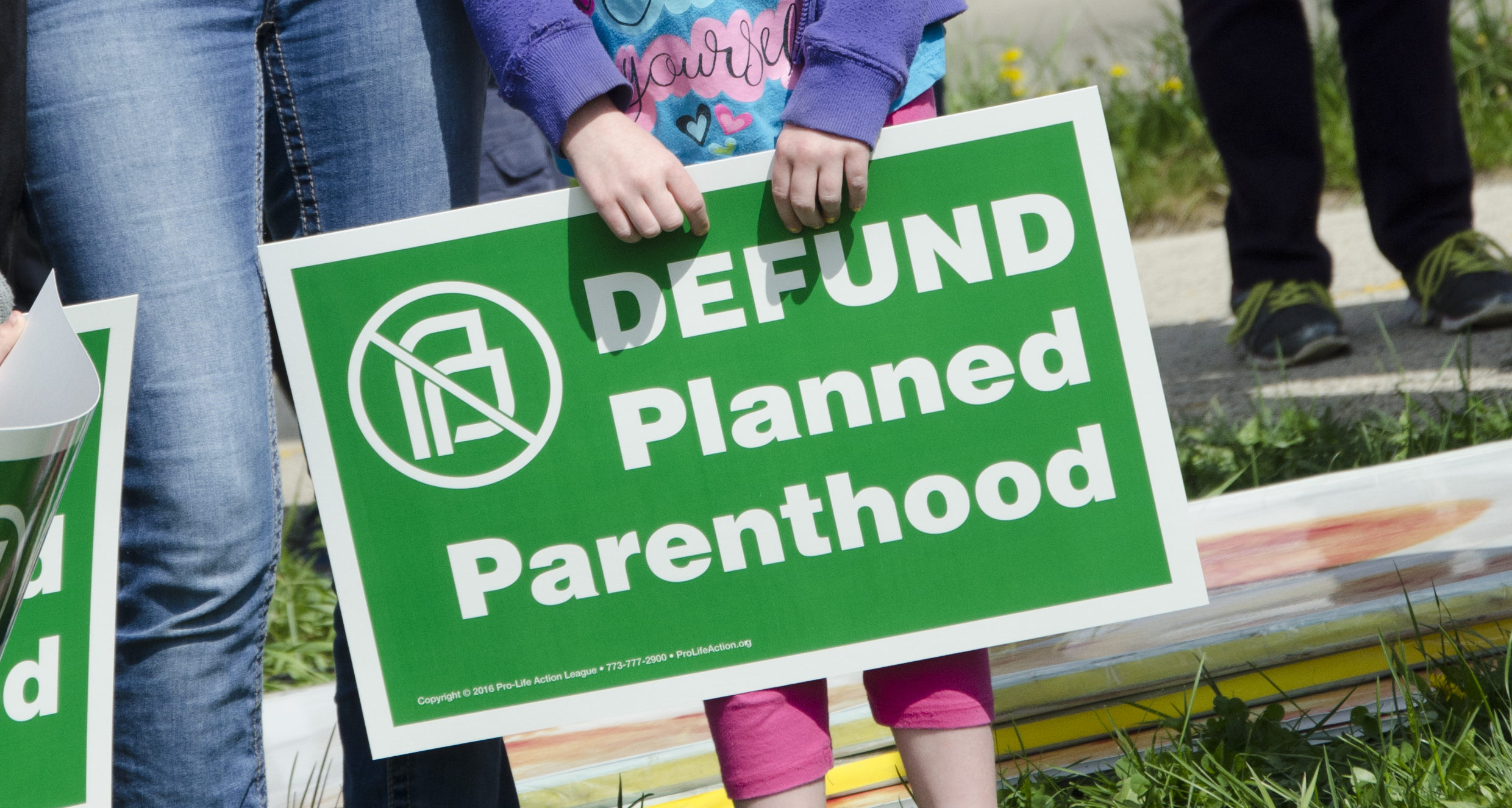
3. Why people support Planned Parenthood and its services excluding abortion

Some people who morally/religiously disagree with abortion are still in support of the other health services they provide, whether that be related to sexual and reproductive health or more general care. According to an article by Newsweek, an interesting point is raised by Dr. Carrie Pierce, a physician who performs abortions in Oregon: “Closing Planned Parenthood would make an increase in abortions more likely… because the organization also provides contraception and standard women’s health care.” People who do not agree that abortions should be performed may agree that the contraception and other healthcare provided by Planned Parenthood can prevent the need for abortions. In addition to contraception, services such as cancer screenings, colonoscopies, and other important healthcare practices are offered that some people normally could not afford. This perspective of partial support for Planned Parenthood is perhaps the most complex, because it is the most relative to the individual person. It may call someone to disagree with abortion but feel that the other services provided are important enough to outweigh their uneasiness; on the other hand, it also has the potential to make people not support Planned Parenthood at all because of this one service with which they disagree.

What are YOU going to do?

While this article explores the various perspectives on the Planned Parenthood debate, diving deeper in shows there are ultimately two options for direct action: people can either vote for the funding or defunding of Planned Parenthood. According to an article by The Washington Post, the defunding debate is particularly complex because “Planned Parenthood cannot use federal funding for abortions, anti-abortion groups claim that federal funding is “fungible” and there is no way to ensure that some of the funding provided for other services does not cross-subsidize abortion services.” This indicates that there are loopholes in any plans to defund Planned Parenthood. Particularly, defunding through Title X is different than any previous attempts in the past because “the new rules will not explicitly forbid abortion counseling by Title X providers.” Thus, with all of the political complexity in the midst of this issue, it is up to you to inform yourself and take action according to your own beliefs, whether that be by attending rallies, campaigns, or ultimately voting for what you believe in.

References:

Belluck, Pam. “Trump Administration Blocks Funds for Planned Parenthood and Others Over Abortion Referrals.” New York Times, 22 Feb. 2019, https://www.nytimes.com/2019/02/22/health/trump-defunds-planned-parenthood.html. Accessed 20 March 2019.

Loffredo, Nicholas. “Both Sides of Planned Parenthood Debate Proclaim #IStandWithPP.”Newsweek, 11 Feb. 2017, https://www.newsweek.com/planned-parenthood-debate-protests-istandwithpp-555711. Accessed 20 March 2019.

Planned Parenthood. Planned Parenthood Federation of America Inc., https://www.plannedparenthood.org/. Accessed 20 March 2019.

Rovner, Julie. “Trump Proposes Cutting Planned Parenthood Funds. What Does That Mean?” Washington Post, 22 May 2018.
https://www.washingtonpost.com/national/health-science/trump-proposes-cutting-planned-parenthood-funds-what-does-that-mean/2018/05/22/76a3a568-5ade-11e8-9889-07bcc1327f4b_story.html?noredirect=on&utm_term=.0e632b9d8c2d. Accessed 11 April 2019.

The Truth Behind Modern Segregation

Martin Luther King Jr.’s moving “I Have a Dream” speech aided in the turn of a new era for civil rights. Even with our positive movement toward racial equality, are there still problems that our society faces with modern segregation? Danah Boyd, Michelle Alexander and Ioana Popescu describe the challenges of modern day segregation and highlight the problematic unawareness that American society faces today. By depicting the differences for Black Americans and White Americans in military, college, socioeconomic status, and criminations, these authors bring light to the civil issue that is still in movement. Through Boyd, Alexander and Popescu’s articles, the strengths as well as the weaknesses of their claims, illustrating the persuasion of each individual’s argument on modern segregation. 

The Race For Equality In Troops and Students

            Boyd’s article, “Why America Is Self-Segregating” highlights the topics of racial segregation in military and on college campuses. The article starts with the polarization of society through the use of social media. “The American public is self-segregating and this is tearing at the social fabric of the country.” Boyd discusses the “filter bubble” that is caused by the use of social media. The content personalization on Facebook determines what people are exposed to for them, causing polarization from real news and world events. Boyd’s claim on this issue not only does not provide a solution to the problem of social media’s contribution to this polarization, but does not address the benefits that social media does have in its ability to connect people everywhere, thus rendering her argument as one sided, and weakening the claim that she is trying to formulate. 

 “Privatizing the military” in Boyd’s article analyzes the differences in the treatment of Black soldiers and White soldiers. “…while serving in active duty, they spend a much higher amount of time on the front lines and in high-risk battle, increasing the likelihood that they will be physically or psychologically harmed.” By providing this information, Boyd strengthens her argument regarding the harmful difference in treatment between White and Black soldiers. The issue of modern day segregation is highlighted by presenting the physical and mental effects on the soldiers. 

        Boyd discusses the effects of self-segregation on college campuses and the impact that choosing roommates online has on the modern civil issue. “learning how to negotiate conflict and diversity in close quarters can be tremendously effective in sewing the social fabric.” The social fabric is deteriorating due to incoming college students being able to choose their own roommates. While this appears as a benefit to the new students, allowing them to connect with their roommate before the school year begins, it causes self-segregation because of the availability to roommate switch, further damaging the diversification in student living. Boyd’s arguments incorporate a logos viewpoint of modern day segregation by providing facts on the issues of segregation within our military and college campuses. Provided in the text are solutions that can be upheld in society, such as becoming aware and educated about the benefit of diversity, as well as the problems that people of color face in our nation today. Along with these solutions, there are no references at the end of the text, weakening the reliability of the facts provided. Boyd outlays the issue, but only reaches the surface of this nationally separating topic, causing society to have the question, “what now?”

What is the “New Jim Crow”?

            Michelle Alexander’s “The New Jim Crow” discusses the enlightenment of Alexander in the discovery of modern day segregation. Her ethos approach on the matter provides an emotional story that brings awareness to the problems facing the criminal justice system in America, described as the “era of colorblindness”, by Alexander. “We have not ended racial caste in America; we have merely redesigned it.”

Describing segregation as being redesigned in modern society brings an emotional awareness to issues such as the War on Drugs and the prison system. She analyzes the difficulties that convicts face while incarcerated as well as those outside of the prison system. “Once they are released, they are often denied the right to vote, excluded from juries, and regulated to a racially segregated and subordinated existence” states Alexander. This strongly supports the theory on of modern segregation by highlighting how convicts are treated as unequals in our society. The segregation worsens when Alexander shows the difference in the crimination of black men compared to white men. “In some states, black men have been admitted to prison on drug charges at rates twenty to fifty times greater than those of white men.” In addition to this, Alexander observes the future consequences of modern day segregation. “One in three African American men will serve time in prison if current trends continue.” By providing information about the future consequences of our nation’s actions, Alexander provides an incredibly strong argument to her claim by showing the negative effects that modern segregation will continue to have in future years. In addition to this, Alexander observes the future consequences of modern day segregation. “One in three African American men will serve time in prison if current trends continue.” By providing information about the future consequences of our nation’s actions, Alexander provides an incredibly strong argument to her claim by showing the negative effects that modern segregation will continue to have in future years. 

The War On Inequality

            Alexander also highlights the War on Drugs and its effect on Black Americans. In the 1980s, President Ronal Reagan proposed the campaign for the War on Drugs to decrease the distribution of crack cocaine. “A few years after the drug war was declared, crack began to spread rapidly in the poor black neighborhoods” The cause of cocaine being spread in poor black neighborhoods led to the drug offenses of colored people to drastically increases. Alexander analyzes how the War on Drugs caused unequal crimination of Black Americans and contrasted with its original goal to eliminate the use of drugs. Alexander delivers a strong argument by providing statistics on how severe the convictions were against black people in America. “…around 300,000 to more than 2 million, with drug convictions accounting for the majority of the increase”, these statistics support the argument and the ethos of the text is strengthened because it allows the severity of modern segregation to be shown through the mistreatment of people of color by the justice system. Alexander depicts strong detailed claims of this major concern in the criminal justice system in our nation and how the inequality of crimination of Black Americans causes separation in our society. 

A Study of Survival

           The statistics are highlighted in Popescu’s text as she conducts an experiment on racial segregation. The study evaluates socioeconomic inequality and observes the survival gap between Black and White men and women between the ages of 35-75. The results that were found in the study depict the dramatic difference in modern segregation as well as the socioeconomic gap between Black and White Americans. “Black men and women had a 14% and 9% lower probability of survival from age 35-75 than their white counterparts.”. Popescu provides strong evidence and logos in the text to prove that racial residential segregation still exists and is an issue in modern society. If we bring Black socioeconomic status to the same level as White socioeconomic status, the gap for survival would decrease, aiding to eliminate the issue. 

            NPR further discusses the problem of racial residential segregation in cities. The text analyzes that all streets that are named after MLK are in distressed living areas. The people in these areas are unable to buy or refinance new homes outside of the area because new developments in the suburbs did not allow black people to buy homes (NPR). Even though the fair housing act began in 1968 and encouraged equal housing opportunities, the effects of residential discrimination already affected the wealth gap between black and white Americans. 

            The texts provided all strongly support a nationwide issue and bring awareness as well as a deeper knowledge into the effects of modern day segregation. To eliminate the issue of segregation today, American society must become aware that the act of discriminating against one group of people, drastically decreases any movement toward equality for all. We are living in a modern past, but by educating the nation, we will begin a new era of sight. 

References:

“Why Are Cities Still So Segregated? | Let’s Talk | NPR.” YouTube, 11 Apr. 2018, youtu.be/O5FBJyqfoLM.

Popescu, Ioana, et al. “Racial Residential Segregation, Socioeconomic Disparities, and the White-Black Survival Gap.” PLOS ONE, Public Library of Science, journals.plos.org/plosone/article?id=10.1371/journal.pone.0193222. 

Boyd, Danah. “Why America Is Self-Segregating.” Points, Data & Society: Points, 5 Jan. 2017, points.datasociety.net/why-america-is-self-segregating-d881a39273ab. 

Alexander , Michelle. “Legal Scholar: Jim Crow Still Exists In America.” NPR, NPR, 16 Jan. 2012, http://www.npr.org/2012/01/16/145175694/legal-scholar-jim-crow-still-exists-in-america.

To Ban a Book

To read, or not to read? To ban a book that holds a controversial topic from those who it might hurt, or to let others read what they want, when they want? A banned book is “one that has been removed from the shelves of a library, bookstore, or classroom because of its controversial content”. While society has taken less abrasive measures over challenging or banning books, in the past, and still practiced in certain districts today, controversial books were “burned and/or refused publication” (ThoughtCo).

Unlike many controversial topics, the arguers cannot be split into just pro-banned books and anti-banned books. There is a spectrum of arguments over banned books, with certain voice arguing over no banning, banning certain topics, or letting people pick and choose within family circles what should be read. Some of loudest voices in the argument are the American Library Association, concerned parents, and authors themselves. These three arguers represent main points of the spectrum of banned books.

There are many reasonings behind why someone, whether a parent, a school district, or even an entire county, would ban a book. These reasons can be organized into eight broad categories, as listed by Butler University: racial issues (Huckleberry Finn with the n-word), encouragement of damaging lifestyles (Light in the Attic with breaking household items), Blasphemous dialogue (Bridge to Terabithia with one of the main characters saying goddammit), sexual situations/dialogue (Looking for Alaska with sex scenes), violence/negativity (Hunger Games with said tournament), witchcraft (Harry Potter with the worldbuilding), political bias (Inherit the Wind with the Scopes v Monkey trial), or it is labeled for an age group that should not be reading about the heavy topics listed prior (The Giver with being in middle and elementary school libraries). (Butler University). While these books have been challenged and sometimes banned, there are organizations fights against banning books while teaching others the consequences of banning.

The American Library Association (ALA) is an organization that promotes libraries and library education. The ALA’s goal in the banning book discussion is “to provide leadership for the development, promotion, and improvement of library and information services and the profession of librarianship in order to enhance learning and ensure access to information for all” and in the situation of banning books, for any reason, fights back against their mission statement. The ALA wants to educate the masses, mainly children and those who cannot access information easily, and if the home/school will not teach those who need education, libraries will fill in what is left out. While libraries hold a position of power within the city and government, many children still have to follow an even greater power: their parents.

While their position of power is smaller compared to ALA, parents all across the world voice their concerns over what their child should or should not read.  One parent, Jenni White, on an education board argues, “School officials didn’t have an interest in standing for children’s innocence. In fact, the only reason their children were able to choose other books from the reading list was their significant pushback against the administration. Although it’s unpleasant, unpopular, and decidedly ‘unfun’, parents must cautiously review all reading materials coming home from school and be prepared to fight for something better on their behalf if necessary” (Federalist).  While the parent’s viewpoint on the topic is not the absolute extreme of the banning books argument, she wants to make sure that his children are not exposed to sensitive information too early in their lives.

Another administrator, Mark Hemingway, describes his opinion on what banning books looks like: “Your local community has simply decided that finite public resources are not going to be spent disseminating them. Judgments are made all the time about what goes on shelves for both practical and moral reasons. This is not book banning” (Federalist). Mark Hemingway makes the connection that the school districts already pick and choose what books goes on their shelves, sometimes varying by library. Why is that not called book banning, yet when a parents speaks up over what books their child has to read in a school curriculum is deemed worse? While librarians and parents are typically the arguers that often shed their opinions on the topic, there have been instances when authors themselves   weigh in on banned books.

An opinion that typically is outspoken by other contenders is an author’s point of view on the subject matter. John Green, author of The Faults in Our Stars, states an opinion that is on the neutral side of the conversation. In his vlog video post not long after his first book Looking for Alaska was published, he informed his viewers “The high school administrators and english teachers got together and they wrote a letter, saying ‘we’re going to teach this book. . .if you’re okay with your kid being taught this book, please sign this permission slip, otherwise the kid will read another book.’ So parents who are cool with having their kid read Alaska will read Alaska, and parents who aren’t cool with it get to have their kid read some other book”. The tone he uses describes that he, as an author, is okay for teachers to warn parents of the potentially triggering book their children are about to read, and give them a fair chance and warning in case they think differently. He does not condone people who read only the passage in question and blindly try to ban the book from the school district.

In another video, posted in 2016, he reiterates his position as an author, “I don’t think it should be up to me whether Looking for Alaska, or actually any book is in a school or a library. Because I am not a teacher or a librarian” (John Green). Even though he is the author of the book, John Green realizes that his opinion no longer matters once the book enters a library. He should not have power over what kids read, only the kid and their school officials, not their parents.

While there are clear extremes on the topic if whether or not books should be banned, the entire argument spans over spectrum a opinions from librarians, parents, and authors, each ranging in between the two extremes. There are many reasons to either ban books, or keep them on the shelves. Each side of the spectrum has valid reasons as to why they believe they are right. If there was any chance to reach a compromise to the discussion, whether to ban books or not within the level of children and young adults, it should be up to the reader.

Works Cited

“About the American Library Association.” About ALA, ALA, 2019, http://www.ala.org/aboutala/.

Admin. “Top Ten Most Challenged Books Lists.” Advocacy, Legislation & Issues, ALA, 27 Dec. 2018, http://www.ala.org/advocacy/bbooks/frequentlychallengedbooks/top10#2017.

Admin. “Frequently Challenged Books.” Advocacy, Legislation & Issues, 9 July 2018, http://www.ala.org/advocacy/bbooks/frequentlychallengedbooks.

“Banned Books Wanted Posters.” Alexandria Library Automation Software, 14 Sept. 2018, http://www.goalexandria.com/banned-books-wanted-posters/.

Culture. “In Defense of Book Banning.” The Federalist, FDRLST Media, 20 Mar. 2014, thefederalist.com/2014/03/11/in-defense-of-book-banning/.

“LibGuides: Banned Books: Reasons for Banning Books.” Reasons for Banning Books – Banned Books – LibGuides at Butler University, Butler University, 15 Sept. 2017, libguides.butler.edu/bannedbooks?p=217686.

vlogbrothers. YouTube, YouTube, 30 Jan. 2008, http://www.youtube.com/watch?v=fHMPtYvZ8tM&t=5s.

White, Jenni. “Parents Shouldn’t Let Schools Force Kids To Read Smut.” The Federalist, FDRLST Media, 17 Mar. 2016, thefederalist.com/2016/03/15/parents-shouldnt-let-schools-force-kids-to-read-smut/.

The Complicated Situation Involving the Payment of College Athletes.

Why paying college student-athletes is not as easy as it seems.

One question that remains fresh on sports fans’ minds before, during, and after any college sports season is whether or not the athletes should be paid for their play.

A recent New York Times article describes the situation from an outside point-of-view. Multiple factors play a role in this massive question that seems to loom over current college sports.

  • Does compensating college athletes balance the risk of injury while playing?
  • Just how much money do college sports programs bring in to the school?
  • Will players who believe they should be paid protest college sports?
Photo credit: https://www.huffpost.com/entry/college-athletes-getting-paid-here-are-some-pros-cons_b_58cfcee0e4b07112b6472f9a

College athletes engage in countless hours of practice and games in order to contribute to their respective teams. This article describes a recent injury to one of men’s college basketball’s best players: Zion Williamson. Williamson, a five-star recruit, chose to attend Duke University in hopes of hearing his name called on NBA draft night. In a recent Duke Blue Devils game, Williamson’s shoe ripped, causing a right knee injury to the elite prospect. Zion Williamson, a projected top two draft pick, almost had his career ended in a regular season basketball game. If this injury was something as serious as a torn ACL (very common among basketball players), he may not have been drafted as high or even at all.

Writer Jeremy Engle illustrates how a possible salary to players would offset potential injury to high-level players. Engle also explains the economical view of the school. Duke, a high division-1 school, is sponsored by Nike. The athletics company gives millions of dollars to the University in order for their players to wear Nike shoes and jerseys. This money is not divided up. It is given back to the program and none of it goes to the players.

NBA athletes have begun to speak out against college athletics, stating that players should protest and not play until they receive compensation. One NBA player, Demarcus Cousins, even went as far as to bash the NCAA in a post-game interview. “College basketball and the NCAA is bulls—…there’s so many risks involved to get to the ultimate goal.” One might argue that Cousins has a point, where some might argue he is hypocritical. Cousins attended the University of Kentucky and was drafted fifth overall in the 2010 NBA draft.

Why Everyone Loses With Paying College Athletes

A world where the NCAA is forced to pay their student-athletes is one that would ruin college sports, according to Cody J. McDavis. He is the author of a New York Times article and former Division-1 athlete that argues against the possible rule change.

Paying college students to play sports is not financially possible with most schools. “A handful of big sports programs would pay top dollar for a select few athletes, while almost every other college would get caught in a bidding war it couldn’t afford.” McDavis explains his reasoning behind his claim that college athletes should be happy with scholarships.

According to McDavis, only a small sample of schools would even get the chance to offer money to its possible players. Many top prospects come from families in need. The players would choose the highest pay in order to help their families. This lack of available compensation would cause players to choose only the most profitable schools, cheating smaller schools of the chance to sign and enroll a top prospect.

Photo credit:https://www.forbes.com/sites/artcarden/2018/07/26/college-athletes-are-worth-millions-they-should-be-paid-like-it/#4907b800452e

College Athletes are Worth More than any Scholarship can Offer

Art Caden, associate professor of economics at Samford University, preaches that these athletes are worth millions to their respective schools. In a Forbes article discussing the value of college players, Caden brings up the scrutiny players endure and how they are not compensated adequately.

  • Do professional athletes require professional salaries?
  • An athlete’s priorities
  • Why even go to college?

Caden focuses on Stanford University star running back Bryce Love in his article. The college athlete draws huge crowds of people who watch in awe at his play. Art Caden quotes former Stanford grad and economist Damon Jones-“You demand professionalism, pay professional salaries.”

As discussed in the Forbes article, athletes are criticized if they do not live and breathe sports. Star running back Bryce Love, a human-biology major, intended to graduate the following winter. Love skipped a PAC-12 media day in order to attend class, for which he was then criticized for his absence.

The emphasis for these star athletes is clearly athletics over education. Art Caden argues for change in this sense. An athlete should be awarded for their dedication to further their education, yet Bryce Love was criticized for his priorities. With current scrutiny over an athlete’s priorities, why should they even be required to attend college if it is just a bridge to pro sports?

‘Ok then, what’s the second most important thing on campus.’ Photo credit: https://www.cartoonstock.com/directory/c/college_sports.asp

But is it Fair to Pay Players?

According to an article written by Matthew Brooks, student at Drexel University, NCAA players not receiving endorsements or any pay besides tuition should be outlawed. The article speaks from the viewpoint of a student currently enrolled in a Division-1 school. It is important to note that this was also published in a student-run editorial based out of Drexel University (more information on the editorial can be found here).

  • Salaries of coaches
  • Revenue of sports
  • Chance of Injury

As reported in the article, University of Alabama head coach Nick Saban made over $11 million this past season. Brooks explains this as malpractice of the school’s money. The author questions the justice of having officials of the team making well over the amount of tuition offered to athletes.

While no specific numbers are provided regarding revenue, the article discusses the profit of big name schools and their sports programs conceptually. Matthew Brooks questions the NCAA’s strict rules prohibiting athletes from self-marketing, arguing that athletes would stay to play at their school longer if they were able to make money.

At the peak of concerns for a college athlete is the high risk of injury, regardless of the sport. From concussions to torn ACLs, athletes face the dangers of playing every time they step on the field or court. Adding pay would possibly even out this risk to allow players to be more comfortable and confident.

It Truly is a “Sticky” Situation

The decision of whether or not college athletes should receive compensation for their play is not one that can be answered easily. Simply put, the dilemma is one filled with opinions of many backgrounds and beliefs. From newspapers to magazines to student editorials, there are multiple arguments for either side. This question has lingered around college sports for decades, and it does not seem to be moving in either direction. Schools with profit would be able to pay their players, but that would also mean they would have to cut programs/plans that would have been funded by the profits. Smaller schools would increase their debt. Yet these players devote huge chunks of their lives training and practicing in order to play college sports. Playing in college is a great way for these amateur athletes to get exposure to possibly play at the next level. This situation is one filled with many side-streets of arguments and information. Fans, officials, schools, and most importantly players of college sports will have to wait for this argument to be worked out completely.

Works Cited:

Engle, Jeremy. “Should College Athletes Be Paid?” The New York Times, The New York Times, 26 Feb. 2019, http://www.nytimes.com/2019/02/26/learning/should-college-athletes-be-paid.html.

Mcdavis, Cody J. “Paying Students to Play Would Ruin College Sports.” The New York Times, The New York Times, 25 Feb. 2019, http://www.nytimes.com/2019/02/25/opinion/pay-college-athletes.html?module=inline.

Carden, Art. “College Athletes Are Worth Millions. They Should Be Paid Like It.” Forbes, Forbes Magazine, 26 July 2018, http://www.forbes.com/sites/artcarden/2018/07/26/college-athletes-are-worth-millions-they-should-be-paid-like-it/#5ce768e1452e

“College Athletes Deserve to Be Paid for Their Play.” The Triangle, 1 June 2018, http://www.thetriangle.org/opinion/college-athletes-deserve-to-be-paid-for-their-play/.

Gaines, Cork. “The 27 Schools That Make at Least $100 Million in College Sports.” Business Insider, Business Insider, 25 Nov. 2017, http://www.businessinsider.com/schools-most-revenue-college-sports-texas-longhorns-2017-11.

Thenoelforte. “About The Triangle, Drexel’s Independent Student Newspaper.” The Triangle, http://www.thetriangle.org/about/.

They Aren’t Just Our Furry Friends: The Underlying Importance of Emotional Support Dogs

Coming home from a long stressful day at school to your dog patiently waiting at the door to give you all the love they have can instantly brighten up somebody’s day. What society fails to notice is the importance that these dogs can have on our everyday lives, especially for people with mental illnesses. Typically, dogs are seen as “at home” pets, but more often we are seeing service dogs and emotional support dogs as we walk in public places. In our society today, Emotional Support Dogs have been more commonly seen. An emotional support animal, provides comfort for people suffering from a psychological, emotional, or mental disability. These animals are prescribed by medical professionals to individuals to help alleviate daily stressors that one may face. While some studies claim that these dogs are effective in the therapy process, naysayers will disagree stating that they are fake and “just a reason to bring a dog places”. Emotional support dogs can provide love and comfort to those in need, but some say that it can also get in the way of the path to recovery. The heated debate of whether emotional support dogs should be allowed in a school setting brings an uproar into our society. Whether it’s the comfort they provide, the treatment plan of the individual, or the effectiveness of these animals, emotional support dogs ultimately have the opportunity to either shine in our society or cause an argument amongst individuals.

Two reasons these furry friends should be allowed in schools

Suppress feeling of loneliness, depression, anxiety, comfort, helps in time of crisis.etc.

Emotional support dogs are there to help people when they are going through mental health related issues. These dogs help suppress feelings of loneliness, depression, anxiety, and many other psychological issues one may encounter, by providing comfort for these individuals. The way they provide this comfort is unique in which it serves as an all-natural antidepressant. Dogs can sense when something isn’t right, and for people who struggle with these emotional hardships, it provides a sense of love and companionship. According to Christine Grove and Linda Henderson, two commonly known journalists for “The Conversation”, “An individual might be encouraged to gently pat or talk to a dog to teach sensitive touch and help them be calm” (Grove and Henderson). The physical feeling of the dog allows the individual struggling to have something to distract them during hard times. This can help someone struggling with anger mask that feeling and practice being gentle to alleviate those feelings. An emotional support dog can allow someone in school who is struggling to take a step back from whatever may be going through and give them a safe space to decompress.

           A lot of times, people who struggle with mental health related problems often feel as if they are alone in this world. With the help of an emotional support dog, this gives these individuals a companion to vent to, love, and care for. Keeping busy when in a time of crisis can be crutial to someone in need. Being able to take care of a dog and have something to do to keep ones mind occupied during hard times is often necessary.

Helps with school work

For people who struggle with emotional and social issues, emotional support dogs can be extremely beneficial. These dogs are meant to provide comfort to individuals and with them being present on school grounds, this may be a new trend that will benefit a lot of students. According to Christine Grove and Linda Henderson,”, “In the wake of the school shootings in Florida, therapy dogs have been used as a way to provide comfort and support for students returning to school” (Grove and Henderson). In a time of extreme crisis these animals have been used to help alleviate the stress of coming back to school after this painful experience. But this is not the only thing that these dogs can provide for students. They also help with social interactions, home work, and attendance at school. Studies have found that dogs are providing emotional support to students by schools that are integrating them into their social-emotional programs. Due to these canines being at school, it reduces students stress levels by having the support of the animal there during tasks that may seem hard.

           With the help of these dogs, students are getting the opportunity to learn through a different style and are becoming more comfortable with the way that they are being asked to do so. “Decreases in learner anxiety behaviors resulting in improved learning outcomes, such as increases in reading and writing levels” (Grove and Henderson). For students who struggle in school with social, test, or any other type of anxiety, these dogs can provide many benefits to them. This can give students the opportunity to let go of their triggers and start feeling more comfortability within themselves. Reading can be hard for some students, especially reading out loud. An elementary school in North Carolina has therapy dogs that provide comfort for these children while they read. These students read to these dogs to help practice reading out loud and help with their confidence. The children who are participating in these studies claim that whenever they have issues with their pronunciation, they don’t feel the sense of judgement that would typically be felt if it was a whole class listening to them. It has been shown that by reading to these dogs, these students want to read more often and gives them a sense of achievement and pride.

Although there may seem like a ton of benefits to emotional support dogs, there is also reasons as to why they should not be allowed as well.

Two reasons these furry friends shouldn’t be allowed in schools

Not effective- can cause issues in classrooms

The idea of having an emotional support dog can be amazing, but it also provides many risks that many aren’t aware of. Many people are allergic to canines and this can cause a huge issue if they are around in schools. The individuals allergic would not be able to be around these animals even if they are hypo-allergenic dogs. This can cause severe reactions and even cause some to need medical attention. Along with this risk, these animals can also be a distraction within a classroom. The thought of a dog in a classroom may seem like an amazing idea, but it can also cause children to not pay attention and have the reverse affect of what an emotional support dog is initially there for. These children can start to not learn to their full potential due to a dog being there roaming throughout the classroom. This can start to bring down their grades, attention span, and their ability to retain information. Dogs are unpredictable, since emotional support dogs aren’t the same as service dogs, this may cause issues within a classroom. According to Linda Jacobson, a well known author and reporter for Education drive, “Some parents might also express safety concerns, especially after reports of children being attacked by emotional support animals” (Jacobson). Dogs who aren’t well trained can have a short temperament and react dangerously around people. This can cause issues with putting students at risk of being injured at school. Along with the dangers of the animal in the classroom, there is also not a lot of research being having these dogs in classrooms. This offers a potential risk since there may be no concrete research behind the benefits of the animal. In order for this to be accepted within all schools, there needs to be more research done behind the benefits and potential dangers regarding these dogs.

Gets in the way of service dogs

According to The Americans with Disabilities Act (ADA), emotional support animals aren’t covered under it, whereas a service dog is. A service dog differs from an emotional support dog in which it provides for an individual with a disability and is allowed anywhere due to the needs of the person who is prescribed this animal. Service dogs go through extensive training that is geared towards the owner of the animal. Since these dogs serve as a function of help with a disability, emotional support dogs can get in the way of this function they are providing. Since emotional support dogs don’t need training to be one, their temperament and behavior can not only influence the service dog, but it can also distract the service animal from its duties. According to Wes Siler, a reporter for outside online, he has interviewed many people that have service dogs. One of the individuals he interviewed was a man named Randy Pierce, who has a service dog that helps him with his blindness. Randy stated that he was on a flight with a dog that was barking and influencing his service dog to act out and not perform his duties. With the dog on the flight distracting the service dog, it made it harder for the dog to do its job which then can create the dog to not protect Randy from barriers in the environment. Siler also interviewed a boy who has epileptic seizures. The boy uses a service dog to protect him from hitting his head during his episodes of seizures, if the service dog is distracted by the other dogs in the environment, this can cause it to not do its job that it’s there to do. With emotional support dogs in schools, if someone has a service dog at a school, this can cause for the service dog to lose focus and not do its job that it’s intended to.

Overall, the debate between the acceptance of emotional support dogs in school still stands today. The lack of research behind emotional support dogs being allowed in classrooms becomes hard to tell if this should be something that every school needs or shouldn’t have. There are both benefits to these dogs and downfalls which may cause underlying issues. The psychological and school work benefit can be a huge impact on classrooms around the world, but the issues that arise with these dogs can cause an uproar in our environment.

Works Cited:

CBSN, director. Therapy Dogs Help Improve Kids Reading. YouTube, YouTube, 24 July 2015, http://www.youtube.com/watch?v=zRmVktOe9GA.

Grové, Christine, and Linda Henderson. “Therapy Dogs Can Help Reduce Student Stress, Anxiety and Improve School Attendance.” The Conversation, 23 Feb. 2019, theconversation.com/therapy-dogs-can-help-reduce-student-stress-anxiety-and-improve-school-attendance-93073.

“Service Animals.” ADA 2010 Revised Requirements: Service Animals, 2010, http://www.ada.gov/service_animals_2010.htm.

Jacobson, Linda. “Dogs Go to School as Part of Social-Emotional Learning Programs.” Education Dive, 1 Mar. 2018, http://www.educationdive.com/news/dogs-go-to-school-as-part-of-social-emotional-learning-programs/518156/.

Siler, Wes. “Stop Faking Service Dogs.” Outside Online, 31 Aug. 2017, http://www.outsideonline.com/2236871/stop-faking-service-dogs.

Somewhere Over the Rainbow

“We Cannot be Silent” – R. Albert Mohler, Jr.

Before the twenty century a rainbow was nothing more than a symbol of hope at the end of a storm. Today, these colors symbolize much more, in fact, they have become the ultimate figure for LGBT pride. Specifically, the movement of transgender’s has become more prevalent than ever. Ever since the Obama administration loosened the legal constraints for the LGBT community people are finding themselves standing up like never before. It is ironic that a culture so obsessed with self-love and positive talk has anything but good things to say about transgender individuals. The big question remains: why should an individual care about something that does not affect them? Whether being transgender is a means for finding one’s true self, in order to live a more meaningful life, or its simple existence in a world of religion calls for a new definition of gender, these differences are shaping the way our culture discusses a topic that was hidden in the dark for way too long.

Military and Gender Identity

Contrary to the way conservatives see gender, there is more than just two sides to a topic of this magnitude. The distinguishing values from both the liberal as well as conservative groups indicate the core of our differences as a society. Traditional views remain as they always have, relentless. In the traitorous winds of controversy Trump takes a step at this issue, specifically in the military. In What the administration’s shifting arguments against transgender military service reveal by Diane Mazur she recognizes the setbacks our country has endured as a whole. Mazur begins with pointing out the odd way that President Trump and his administration address this topic after implementing new policies. Trump begins highlighting the 9,000 transgender individuals who are current active duty members. Then, he pivoted to a smaller number- the 937 transgender service members who have come forward as individuals who intend on transitioning.

A common misconception, not every individual who is transgender intends on transitioning. Doing this, Mazur is utilizing the small numbers given by his administration showcasing the ridiculousness of implementing these laws when there was never a problem in the first place due to such small numbers. With this new policy in place, people’s abilities and attributes to the military are set aside, who they really are is forgotten about.  Mazur notes that “this is a ban on a defining characteristic of transgender people” (Mazur). She is making note that the option to transition is a big part of being transgender and to have that taken away from an individual is a disgrace at its finest.

Faith and Gender Identity

On the other hand, a view so polar opposite to Mazur’s that it seems reliant on its long-time believers and supporters. In a world that fiends off of religion this view is common among our society. Jeff Johnson, in his timely piece Transgenderism- Our Position suggests that transgenderism distorts God’s intentions. On the topic of sexuality, Johnson describes it as something that “is meant to be offered back to Him” (Johnson). Implying that at the end of this life we must return to God just as he left us. This ignores real feelings, suggesting there’s an on and off switch for these individuals. Johnson describes what might be his biggest concern; “This distorts His image and His plan for sexuality, marriage, family, and the just and proper ordering of society” (Johnson). A narrow religious view is prominent and a bias becomes present Being transgender is about coming out and being who you’ve always wanted to be and if one can’t do that than their image of life becomes distorted. Johnson’s argument becomes insulting, by saying implying that someones gender identity is un-proper and un-orderly . Our world is changing, its making strides like never before. Johnson fails to recognize the new era that has begun, an era that is more accepting than ever before.

Acceptance and Gender Identity

Not all conversations of transgenders stem from a group with just an opinion. First hands experience allows for a new perspective, in the sense that it brings forth a side that provides much more than an opinion based on prior beliefs. Laurie Frankel, in From He to She in First Grade, lays out why her and her husband chose to be open and honest about their child’s transition and why it’s important to do so in this society. Frankel values acceptance in her home, “My husband and I were never of the opinion that girls should not wear pants or climb trees or get dirty, or that boys should not have long hair or play with dolls or like pink, so the dress did not cause us undue alarm or worry” (Frankel). This suggests the importance of embracing those who are not like you. Our society is quick to judge but learning to embrace those differences can provide a positive impact for this issue.

Love is a prominent aspect in Frankel’s story when she states, “The question I couldn’t stop asking myself was: Do we love our children best by protecting them at all costs or by supporting them unconditionally?” (Frankel) This exposes a concern among many people, the fear of being different. The hate and cruelty that the LGBT community receives is enough for some to hide from who they truly are. Lastly, Frankel understands the power behind compassion and its ability to make a real difference in this world. Two years later, and her family is choosing to celebrate her daughter’s story instead of hiding it. Arguing the importance of openness and acceptance is something Frankel does tremendously in this short but powerful piece.

Science and Gender Identity

Addressing biological differences and what it means for a transgender individual is of many things we question. The search for the “transgender gene” is on, running the risk of finding it only to pathologize it. With rising questions for an epidemic far too gone, people yearn for an answer and will do anything to find it. In Biology is not destiny by Alex Barasch he argues that the growing desire to find an answer to someone’s gender is impossible. “There’s no such thing as a ‘100 percent male’ man or a ‘100 percent female’ woman – we all have some masculine or feminine traits” (Barasch). Barasch suggests that gender cannot be defined, its name itself struggles to have a meaning and trying to discover what isn’t there is ignorance at its finest. Waiting for an answer has been long and, so far, inconclusive. This piece glaringly omits how much science doesn’t support transgenderism. “If we trust the volume of the frontal cortex over what a person tells us about themselves, we deny them their autonomy and their humanity” (Barasch). Highlighting the idea of respect, Barasch notes that nothing can be done about transgenderism without it. Trying to medically determine someone’s sexual orientation is beyond a limit, as it’s a feeling not only in your brain but in your heart too.

With so many places to fall on a spectrum of opinion, transgenderism has become a highly discussed discourse in today’s society. Finding a common ground seems out of reach, but to even dream of that we must continue to talk about it.

Works Cited

Green, Erica L., et al. “’Transgender’ Could Be Defined Out of Existence Under Trump Administration.” The New York Times, The New York Times, 21 Oct. 2018

Barasch, Alex. “Biology Is Not Destiny.” The Washington Post, 27 June 2018,

“Male and Female: Biology Matters.” Focus on the Family, 13 Aug. 2018,

Frankel, Laurie. “From He to She in First Grade.” “They Say / I Say”: the Moves That Matter in Academic Writing with Readings. W. W. Norton & Company, 2018.