The Technological Debate

There’s no debate in saying whether technology is highly discussed or not, but there is a debate in whether it is good or bad. For many years, people have made countless claims about the pros and cons of using technology. The majority of the people in this country use technology, and even those who make claims that technology isn’t good ironically find themselves using it everyday. We find ourselves on social media, researching, writing, shopping, playing games. Yet after many years of debating, we still haven’t fully come to a conclusion on this topic. But many wouldn’t have been able to share their views on the this topic so easily if it wasn’t for their access to technology. So in reality, whether we think technology is good or bad, it’s everywhere.

Pros

If you were to ask someone why they thought technology was a good thing, their answer would most likely be that it allows for easy communication. Especially nowadays, there are so many different ways to communicate with people besides texting and calling. These new apps allow for communication and self-expression. In Jenna Wortham’s essay, How I Learned to Love Snapchat, she points out the use of this app and how it is leading the new way to communication. Take a picture, add a short caption, press send. It allows for an easier way to understand what a person is implying. It is also a easier and faster way to communicate, for example, if you are trying to tell a friend a story or just trying to explain something, but you don’t want to type it all out, you can take a quick video and when you’re done just press send. Saves time and the hassle of trying to type it all out.

Additionally, Wortham states that snapchat allows for self-expression. She says it is a place to be yourself, and that it is not a place where you go to be pretty. We can compare Snapchat to apps like Instagram and Facebook and find that those apps are more “formal” than Snapchat. On the other hand, Snapchat is seen to be less formal and more of a place where you can share whatever you want. Snapchat incorporates filters, funny filters, which allow for self expression of a person, whether they wanna add the filter to be funny or not. You can draw on your picture, add stickers, you can alter the picture to make it your own and how you want others to see it. This app is very common in kids and adolescents, and Snapchat allows them to express who they are and to learn to be open and expressive with who they are at young age. If a kid doesn’t have Snapchat, it might cause them to feel left out and feel isolated from everyone else. Having Snapchat, which comes from using technology, allows them to communicate with their friends, self-express and to ultimately feel like they fit in.

With technology taking over and being the center of most of our lives, it surprisingly has been making us smarter. You are probably asking how, and here are some answers. We use it every single day of our lives-unless you decide to isolate yourself from technology-for anything and everything. An example of this is seen in Clive Thompson’s Smarter Than You Think: How Technology Is Changing Our Minds for the Better. Thompson discovers a chess master that was beaten by a computer, which led him to the conclusion that our digital tools are making us smarter. This game of chess lead to the discovery that you didn’t even have to be good at chess to win against someone like a chess grandmaster. You just had to be skilled in knowing how to use a computer which would then aid you in winning against someone who was a professional at chess. The computer would show them a bunch of different moves that they didn’t even think of, allowing for a greater imagination and for creative playing that they wouldn’t have done before. This evidence is crucial, proving that technology makes you smarter in allowing you to learn new things. Learning new things allows for greater self confidence and a drive to want to explore more things that you didn’t know before.

Going off of Thompson’s example of the chess game, even if we don’t play chess, technology is still greatly used to teach other things. For example, it is now used in schools starting in elementary, or even pre-school, to aid in the learning of school subjects like math, reading, writing, science, etc.

Cons

Technology is taking over the world and while it may seem as if it is as a good thing, there are many things that cause it to also be a bad thing. If you were to ask someone why they thought technology was a bad they would most likely answer saying that it affects us and our health, and they’re somewhat correct. In chapter nine of Nicholas Carr’s The Shallows, talks about the internet and how it affects our memory; how technology became an “artificial memory” for us, being able to store everything so we can go find it instead of using our brains to think about it. Carr brings up some scientific points talking about how our “…synapses change with experience…” (Carr 182). The synapses are what are in our brain and they work when we try to memorize something. The more we work it, the more better we get at memorizing things. But if we don’t practice memorizing stuff, we lose that habit, lose that memory, and it tends to get replaced with something else.

“The Net quickly came to be seen as a replacement…to personal memory” (Carr 180). We as humans do not take the time to think about stuff anymore and it is causing an effect on the way this next generation thinks. We will start to rely on the computer right away to find things or to store things. People will create a habit of being lazy, wanting to search right away instead of taking the time to think. We train our brain to think of a way to find the solution, instead of finding the actual solution.

Overall, the debate about technology will probably be discussed for many more years to come. There are many pros and cons about the use of our digital devices, but ultimately it all comes down to each person individually and their own biases. The future is open to whatever and there will always be a good and a bad to something, so what side will you take?

Carr, Nicholas. The Shallows. New York, W. W. Norton & Company Inc., 2010.

Thompson, Clive. “Smarter Than You Think: How Technology Is Changing Our Minds for the Better.” They Say I Say, edited by Gerald Graff, Cathy Birkenstein, Russel Durst, W. W. Norton & Company Inc., 2018, pp. 441-461

Wortham, Jenna. “How I Learned to Love Snapchat.” They Say I Say, edited by Gerald Graff, Cathy Birkenstein, Russel Durst, W. W. Norton & Company Inc., 2018, pp. 474-479.


Retribution or Reclamation? The Working Mother’s Tie to Domesticity

How can we stabilize the work/life balance for women in today’s climate?

In American culture today, the amount of women at the top of industry food chains is low, and dwindling at that. While there are multiple sides to the conversation about women and their roles in the workplace, the theme of domesticity and its connection to womanhood unites the arguments. This discussion is between several different vantage points, debating what actions women should take, even though each author is arguing for what they believe is equality. By combining these voices, it shapes the conversation on the fragile balance between work and life with which women are forced to deal. Thus, with this argument of work life balance, the reader can see the views of domesticity and femininity that are held by those in the top of the industry food chains, whether it be retribution or reclamation.

We Can Do It!

In Sheryl Sandberg’s TED Talk “Why We Have Too Few Women Leaders,” there’s a lot of focus on the camaraderie of women. Sandberg effectively encourages women to stay fighting the good fight by planting the seed in her audience members’ mind that one day that half of the C-level positions will be held by females. Sandberg’s ideas are exuberantly optimistic, evoking a call to action, and her tactics are skillfully smart; with her authority of a women at the top of the food chain, the universal labors of motherhood, and a smattering of jarring statistics, she convinces her audience with ease that the days of domesticity are in the past! You! Me! We as women can, in fact, have it all! But what exactly is “it all?” With Sandberg’s argument, having it all doesn’t seem much of anything like balance, but instead working oneself to exhaustion. She says: “Keep your foot on the gas pedal, until the very day you need to leave to take a break for a child.” Success seems like it would include happiness and peace of mind, but Sandberg’s vision seems like there would be little balance between her home and work life. Another thing that Sandberg assumes is that if women are to be successful, they have to really want it. She seems to disregard women who actually do want to stay with their families, looking down on them as if she’s superior because she made the hard decision of becoming the breadwinner. Sandberg also seems to claim that, yes the obstacles are hard, but with a can-do attitude, it’s possible. Sandberg comes from an elitist position, in which she, a wealthy white woman, attended a prestigious college. She’s partially blind to institutionalized racism and classism. This leaves a hole in her argument, and renders it far less effective. Sandberg’s idea of having it all, quite frankly, seems exhausting; and others felt the same as well.

Sit Back, Relax!

Rosa Brooks aggressively claims in her Washington Post article that she “hate[s] Sheryl Sandberg.” Recline! Don’t ‘Lean In,’ she cries to women, and let your natural, domestic, and more informal side take control. Brooks’ op-ed vouches for those who enjoy the slower, less gregarious side of life. Brooks’ argument is more than just allowing space for the introverts of the world, it’s an argument that women shouldn’t have to lean in. Women deserve a spot at the table without having to elbow their way in. She recalls her days of grueling work, and reflects that: “If we truly want gender equality, we need to challenge the assumption that more is always better.” After trying to lean in, Brooks effectively ruined her life. She is making a safe space for the introverts and homebodies of the world in her argument. However, her argument that women should recline is less than empowering. She is feeding into the idea that women want to be domestic. While this may be true for Brooks and other women like her, it’s not true for all. Some women want to be CEO’s, and not be tethered down by their child’s PTA. Brooks doesn’t take this into much consideration as she makes her argument, effectively playing into a the stereotype that women are the caretakers, and thus shaming women who don’t crave the maternal lifestyle.

Sisters Puttin’ in (Too Much) Work

Anne-Marie Slaughter’s piece for the Atlantic is in the same vein as what Rosa Brooks claims. Slaughter also talks about Sheryl Sandberg, and how dangerous it is to ‘lean in.’ A high position women herself, Slaughter actively works to normalize her own domesticity. In a perfect world, she claims, women can have it all: the career of their dreams and a happy family life. But the structure of America’s economy and society are failing women. She is arguing that if we change the structure, we can change the function. Slaughter had the personal experience that gives her a very high authority in her argument. She’s even self aware, recognizing her privilege and speaking to the working women who don’t have the luxury of setting their own schedule while they work as the dean of the Princeton law school. Her pathos is strong, using anecdotes that display the universal maternal instincts in women. Slaughter is on the side of reclamation, stating that a woman’s domesticity should be so normalized that every single American’s work life should model that of a working mother. According to Slaughter, only when there are 100% of women at the top is when there is equality, because when women are in charge, they keep everyone in mind, not just themselves. However, her views can be seen as problematic. She advocates that femininity should be respected as much as masculinity, however that implies that there are inherently feminine and masculine traits and concepts. Her argument leaves no room for those who identify as transgender, non-binary, or gender non-conforming. Femininity, in Slaughter’s eyes, is universally understood- the natural way for a woman to be. Yet, readers are forced to wonder, exactly what is the femininity that she says they should reclaim?

… But Don’t Women Already Have It All?

Richard Dorment has another take on this subject. In this controversy, his Esquire article is full of contradictions. As a man, Dorment has objectively less of a stake to claim in this argument, which allows for a different perspective on this part. He argues that women already have it all; compared to the past tropes, women have progressed leaps and bounds, and this shift has caused men to take the fall for women. He cites statistics that state men are severely more stressed with their work/life balance, and that men tend to spend several more hours a week at the workplace. Dorment’s tone is a bit preachy to his female readers- concerning women’s tendency to be less likely to ask for flexibility, he claims they can either fight for it or not, “but don’t complain that you never had a choice.” This is the exact opposite of what people like Rosa Brooks think. Dorment believes women should fight hard for their opportunities, Brooks says that fighting shouldn’t be required. It’s important to note that Dorment’s tone speaks as if sexism is a thing of the past, which is why his ethos is this situation is important to take a look at. Dorment is a man, writing to women, explaining to them how lucky they are to have what they have and saying they shouldn’t complain when they have to fight for flexibility. This severely hurts his authority with female readers, because he himself has never been a part of the female experience. One thing he does well is create a rapport with the reader through personal anecdotes, however he uses these as support for his arguments, when clearly his experience is not universal. Dorment is on the side of retribution, though not in the same way as Sheryl Sandberg. He’s less on the side of girl power, and more of an advocate for equalism. In his mind, men are the victims. This playing of the victim and passively shaming women for being too successful is a microaggression that leans towards sexism. Dorment’s argument, while well supported, has hints of bigotry sprinkled throughout it.

All in All…

Different writers have different size stakes to claim in the argument, and a certain deserved amplification of their voice. It’s hard to decide what exactly equality is in today’s society, and what solution will work the best in it. Each author has their point of view, followed by varied authority, effectivity, and even downfalls. So the question still remains: reclamation or retribution? There’s only one way to find out- try.

Sources:

Brooks, Rosa. “Recline, don’t ‘Lean In’ (Why I hate Sheryl Sandberg).” The Washington Post. 25 Feb. 2014. https://www.washingtonpost.com/blogs/she-the-people/wp/2014/02/25/recline-dont-lean-in-why-i-hate-sheryl-sandberg/?utm_term=.4491d5cf8f1c. Accessed 25 March 2019.

Dorment, Richard. “Why Men Still Can’t Have It All.” Esquire. 28 May 2013. https://www.esquire.com/entertainment/a22764/why-men-still-cant-have-it-all-0613/. Accessed 25 March 2019.

Sandberg, Sheryl. “Why we have too few women leaders.” TED. Dec. 2010. https://www.ted.com/talks/sheryl_sandberg_why_we_have_too_few_women_leaders.

Slaughter, Anne-Marie. “Why Women Still Can’t Have It All.” The Atlantic. July/Aug. 2012. https://www.theatlantic.com/magazine/archive/2012/07/why-women-still-cant-have-it-all/309020/. Accessed 25 March 2019.

Wait, You Don’t HAVE To Go To College?

Although many people consider the concept of going to college as the unthinkable way, is it always the best option for everyone? To many, college sounds like a shiny idea, but when broken down into the pros and cons, are the benefits certainly worth the sacrifices? Once the expenses and loans get factored in, for some people the cons may start to outweigh the positive experiences young adults encounter in college. Often times, other alternatives get skipped over while people are racing to apply to various universities. It truly would not be the end of the world to either spend two years at a community college before committing to a university, go for a two-year degree, or consider the opportunity costs of even going to college at all.

Costs, Loans, and The Things College Students Don’t Want to Think About

Pretty self-explanatory: college is expensive. This GIF from the movie “Bridesmaids” is found on Giphy.

College is expensive, everyone knows that. What many people do not realize is just how expensive it can be. The average in-state costs of tuition at universities in the U.S. is currently $9,716. This may seem doable at first, but all of the housing, fees, books, dining, and other expenses are not included in that number. The average total cost of four-year universities for in-state students from 2015-2016 was roughly $26,000 a year. Many people see the $9,716 without registering the fact that it will turn into $26,000. In their article “Should Everyone Go to College?” Stephanie Owen and Isabel Sawhill explain that tuitions are rising faster than family incomes, which is causing many students to be more financially responsible and more dependent on loans. Owen and Isabel state that the total federal student loans are about $1 trillion. Not only does their article concern student loans, it also concerns the rate of return on education, which is not what people expect. Owen and Sawhill share that each additional year of schooling adds about 10% onto one’s salary, but after factoring in the costs of the education, the returns are not always as high as many hope. Costs, loans, and future salaries are not the only things to think about; opportunity cost should be considered as well. Opportunity cost is the money students could be earning instead of attending additional school. The writers include that the average opportunity cost for 18-21 year olds that go to a four-year school is about $54,000.

College: The Best Time of Your Life

After all of the life experiences college throws at young adults, students will no longer feel like this kid. This GIF is found on Giphy.

While some people are concerned with the expenses that come along with additional schooling, others claim that the life experiences that one gains from college are well worth the costs. Throughout “The Importance of a College Experience in Life,” an article written by Elon University’s “The Pendulum Online,” many reasons why college is important are shared. The article states that college is a transitional period that is full of growth and learning. It is a time that teenagers develop into adults. College both prepares students for a career and brings forth real-life situations that help the young adults learn more about themselves. The article stresses that this principal period of time allows students to begin to make their own decisions while gaining an understanding of how to live on their own. “The Importance of a College Experience in Life” claims that college provides life lessons through living in the residence halls. Students are surrounded by other people with all types of beliefs, backgrounds, and lifestyles. This gives young adults the chance to build a tolerance and understanding for others, which is key in the real-world. The article also emphasizes the opportunities college brings to young adults. Jobs, clubs, internships, athletics, study abroad programs, fraternities, and volunteer opportunities are all occasions made available to students simply by attending college. Along with new opportunities, college brings forth new friends and connections that can be utilized later on in life. Clearly an education is not the only thing one receives from going to college.

Community College Then University?

This GIF of Forrest Gump represents how students rush to apply to universities. It is found on Giphy.

It is common for high school upperclassmen to look forward to searching for a large university with an impressive athletics program, a beautiful campus, and opportunities to bond with a few of their old friends while making new friends at the same time. Because of this, many high schoolers bypass the idea of spending two years at a community college before heading to a university. Owen and Sawhill, the writers of “Should Everyone Go to College?” explain that many kids are going to college, yet the graduation rates are remaining low. There are many reasons as to why the graduation rates are low, however a common reason for the recurrent dropouts and delays is financial stress. Owen and Sawhill share that fewer than 60% of students who enter four-year schools graduate within six years, and the rate for low-income students is even less. Community college costs far less than universities, making it financially wise to consider both options. Not only is attending a university more expensive, but it can be challenging and scary to jump right into lecture halls consisting of 400+ people when a student is fresh out of high school. It would be academically wise to begin college on a smaller scale in order to confirm that additional schooling is the best option before wasting extensive amounts of money at a university just to decide that college might not be the optimal decision.

Can A 2-Year Degree Really Be Better Than A 4-Year?

By going into the workforce right away, there is a good chance of being promoted to higher positions, which will make you feel like this little guy. This GIF is found on Photofunky.

A common misconception is that either you complete at least four years of schooling after high school, or you stop your schooling altogether after high school. Liz Addison’s “Two Years Are Better Than Four,” implies that contrary to popular belief, more schooling will not always benefit a person. Some jobs only require two years of additional schooling, and in some cases, completing the minimum schooling required for a certain job and then heading straight into the workforce can be beneficial. Someone can benefit financially from paying for just the two years of additional schooling necessary rather than an expensive four years of college that are not all required. One can also benefit from stopping after earning a bachelor’s degree because they are giving themselves more time at their job, making it possible to move up to higher positions more quickly than others. The article “Should Everyone Go To College” shares that depending on the occupation, the lifetime earnings of certain graduates with professional degrees are less than those with bachelor’s degrees or only high school diplomas. 17% of people with a bachelor’s degree earn more than those with a four-year degree. There are multiple reasons for this staggering fact. Regardless of how much schooling one completes, the STEM majors are some of the highest paid majors, while education majors are some of the lowest paid majors. This being said, a person working in the STEM fields who completed two years of college or less will likely earn more than a worker in the education services who completed four years or more of college. Along with that, some majors experience more unemployment than others – such as architecture and art – resulting in skewed data.

It is apparent that there are many pros and cons of attending college, and there are more options than just four-year institutions. Owen and Sawhill stated very clearly that college is not a ticket that can be cashed in for guaranteed success and wealth. Instead, it is a stepping stone and a factor for young adults to review before starting the rest of their lives. Young people should carefully consider their path before wasting vast amounts of money.

Sources

Owen, Stephanie, and Isabel Sawhill. “Should Everyone Go to College?” They Say/ I Say with Readings, edited by Gerald Graff, Cathy Birkenstein, and Russel Durst, W.W. Norton & Company Inc., 2018, pp. 318-335.

Addison, Liz. “Two Years Are Better Than Four.” They Say/ I Say with Readings, edited by Gerald Graff, Cathy Birkenstein, and Russel Durst, W.W. Norton & Company Inc., 2018, pp. 365-368.

Paquette, Danielle. “Why College Isn’t Always Worth It.” The Washington Post, WP Company, 30 Jan. 2015, www.washingtonpost.com/news/wonk/wp/2015/01/30/college-is-worth-it-if-you-graduate-on-time/?noredirect=on&utm_term=.6ba27e142a55.

The Pendulum Online. “The Importance of a College Experience in Life.” The Importance of a College Experience in Life, Elon University, www.elon.edu/e-web/pendulum/Issues/2006/10_26/opinions/editorial.xhtml.

“What You Need to Know About College Tuition Costs.” U.S. News & World Report, U.S. News & World Report, www.usnews.com/education/best-colleges/paying-for-college/articles/what-you-need-to-know-about-college-tuition-costs.

“The NCES Fast Facts Tool Provides Quick Answers to Many Education Questions (National Center for Education Statistics).” National Center for Education Statistics (NCES) Home Page, a Part of the U.S. Department of Education, nces.ed.gov/fastfacts/display.asp?id=76.

Weighing the Costs and Benefits of Prescription Drug Price Strategies-Our Convoluted System

What is a fair price for life saving drugs? This ethically challenging question is one that may not have a correct answer. Take for example the fictional company “Alpha”. Alpha has developed a new drug that is an effective treatment HIV. Before this “breakthrough”, the previous plan for HIV treatment included patients being required to take multiple pills at several different points throughout the day. Alpha company’s drug needs to only be taken one time per day and has shown to provide more consistent treatment rates with fewer side effects. Alpha spent over 100 million to develop the drug, which can now be made for only one dollar a pill. The pills are generally not covered by insurance plans, for the older “cocktail” of medications that patients had previously been taken is more affordable and still meets treatment standards. Alpha company’s drug price is $1,000 a week whereas the current treatment plan costs $500 a week.

Is there a solution? Of course the above scenario is completely fictional, but what options do our elected officials have to regulate (or not regulate) this trillion dollar industry. Could Alpha create a free drug program to cover the costs of those who need it the most? What about lowering their cost to the point that insurance companies would be willing to buy it?

For decades, the high cost of prescription medicine has been a problem in the United States as it continues to rise year after year. Americans are spending more on prescription drugs than any other country. It can be hard for people to determine the origin of this problem because the topic is murky, convoluted, and complex. According to Bloomberg, the path prescriptions take from manufacturing to the consumer is costly and inefficient. Starting with the manufacturers, prescription drugs travel to the wholesalers who sell them pharmacists before they reach the consumers hand. This chain enables price increases at several points, with increases year over year totaling between 9-15% for the past decade. As a result, it is not uncommon  for people to skip days or refills of their medicine because it is not affordable. Imagine being in a situation where you are forced to borrow money, skip out on food, or even pick between your medicine or your rent.

Going back to my example of “Alpha” company, why wouldn’t they just reduce the cost of the drugs to even 25% of what they are currently charging? Well – here’s where it gets complicated.

What level of responsibility does the pharmaceutical company have to provide competitive wages for its employees, and returns for its stockholders? What about the necessary money they will have to make on this drug to continue to innovate and create new medicine? Unfortunately, this “responsibility” has left some patients with no availability to life sustaining drugs.

Insulin, a prescription drug diabetics depend on for survival, has been around for decades and its cost is escalating. “A federal report that said 40 percent of branded pharmaceuticals in 2015 were not subject to rebates, yet prices on those drugs continue to rise,” (Rowland 2). This has led to higher health insurance cost, insurance premiums, and out of pocket expenses for the consumers. Additionally, the lasting effects are hurting the uninsured, underinsured, people with high deductible plans, higher premiums and tax payers.

There is a large dissatisfaction for what some people believe is the largely for-profit health care system. Suggestions on policy efforts to control health care spending have been made, such as putting a cap on how much pharmaceutical companies can increase list prices. It was also proposed that there be price increase transparency. “I feel like I need a Ph.D. in prescription drug pricing to understand how the heck this industry works,” said Senator Maggie Hassan, Democrat of New Hampshire,” (Pear 1).

What can we do as college students in the interim time period before regulation can change this ongoing problem? We can help spread awareness, both of the problem and current resources available. An example, although not a solution, is the absence of knowledge about an app called GoodRX that can tell you where you can currently get your prescription the cheapest in your area. With the cost of a prescription at the counter being the main unsettlement for patients, the chief executive of Pfizer supports efforts to eliminate rebates paid to health plans and middlemen. ““None of the close to $12 billion of rebates that Pfizer paid in 2018 found their way to American patients,” Mr. Bourla said,” (Pear 3). He believes the benefit of such price concessions should be received by patients at the pharmacy counter.  

An example of how it is not just the price at the counter that is a problem but that our system is convoluted is with Mr. Brandicourt. Mr. Brandicourt served as Chief Executive Officer at Bayer HealthCare Pharmaceuticals Inc. and he said “The net price of our insulin product Lantus has fallen over 30 percent since 2012, yet over this same period, average out-of-pocket costs for patients with commercial insurance and Medicare — before the benefit of any Sanofi financial assistance program — has risen 60 percent,” (Pear 4). This exemplifies it is not just drug prices rising but it is also our system.

Patients often request cost controls on prescription drugs, but that might not be the answer. As a matter of fact, Higher costs on branded drugs incentivize and attract community’s talent and assets to the biopharmaceutical business to support and explore new remedies and treatments that will eventually become inexpensive generic drugs. These leading generics represent a precious and under appreciated resource we have.

This issue can be hard for someone to grasp when other countries have the same drug for a half, or even a third of the price. Richard A. Gonzalez, the maker of a best-selling drug for arthritis, Humira, as well as chairman and chief executive of AbbVie, said his company “made profits in countries like Germany and France where prices of brand-name drugs were often much lower than in the United States,” (Pear 1). Trying to understand what it is that needs to be done to counterbalance prices here in the United States compared to other countries, Trump made a few proposals. Drug company executives said under such proposals we “would be importing price controls from other countries where coverage of costly new drugs is sometimes delayed or denied,” (Pear 2). Patients here in America have access to medicines around two years earlier than in other countries, resulting in greater improvements in cancer survival rates.  

A law professor at the University of California Hastings, Robin Feldman, spoke about the topic. She has a particular expertise in antitrust and patent issues. Feldman sheds light on the creativity of drug companies’ legal departments and how they have developed strategies to maintain their power position in the market. She says they try to keep cheaper drugs from entering the market. ””It is very simple. Drug companies are able to pay PBMs — as well as hospitals and some doctors — to make sure cheaper drugs are left out. It’s as simple as that. Drug companies pay everyone along the way so that lower-price drugs lose,””(Nocera 1).

One of the drivers of the American economy is entrepreneurial innovation. What protects innovation is our ability to patent things we create, which last for seven years. As a result, we stand at a crossroad with an odd juxtaposition; should we allow a life saving drug to be withheld from the oppressed population which cannot afford it, all for the sake of helping drive future innovation? There is not one correct answer or solution, other than an understanding that we are facing a growing problem that is effecting everyone’s lives that isn’t talked about enough. Some suspect that as the current aging population of baby boomers requires more medication to maintain a healthy lifestyle, we will see this topic more often discussed both politically and in our day to day lives.

Works Cited & Picture Credits

Blumberg, Yoni. “Here’s Why Many Prescription Drugs in the US Cost so Much-and It’s Not Innovation or Improvement.” CNBC, CNBC, 14 Jan. 2019, http://www.cnbc.com/2019/01/10/why-prescription-drugs-in-the-us-cost-so-much.html.

Nocera, Joe. “Why Big Pharma Is Winning the Drug Price Wars The Creativity of Drug Companies’ Legal Departments Keeps Them One Step Ahead.” Bloomberg.com, Bloomberg, 8 Apr. 2019, http://www.bloomberg.com/opinion/articles/2019-04-08/why-drug-prices-keep-rising-despite-congress-s-efforts.

Pear, Robert. “Drug Makers Try to Justify Prescription Prices to Senators at Hearing.” The New York Times, The New York Times, 26 Feb. 2019, http://www.nytimes.com/2019/02/26/us/politics/prescription-drug-prices.html.

Pianin, Eric. “The Fiscal Times.” The Fiscal Times, 2 Dec. 2015, ttp://www.thefiscaltimes.com/2015/12/02/Why-US-Being-Gouged-Drug-Prices-Compared-Other-Countries

Rowland, Christopher. “Drug Industry Defense for High Prices: Blame Insurance Companies.” The Washington Post, WP Company, 25 Feb. 2019, http://www.washingtonpost.com/business/economy/drug-industry-defense-for-high-prices-blame-insurance-companies/2019/02/25/cc0151ce-35e7-11e9-a400-e481bf264fdc_story.html?noredirect=on&utm_term=.50e3f252c1ad.

A Digital Defense

by Jack Dietz

Our lives revolve around the media we consume. For many, the first action of a new day is to check their cell phone as they dissolve into a mindless world of digital distraction. Technology’s role has evolved at a rapidly increasing rate, and our world seems to be restructuring itself according to the parameters laid out by technology. During what is considered to be pivotal time in our society, this increasing burden placed upon us by the digital world is feared by many. However, fear that our civilization is being reduced to touch-screen tapping monkeys is irrational. Additionally, some of the articles and claims made in recent years commenting on these trends are ridiculous.

Fearing this constant technological growth would be to accept a narrow perspective of our societal change, and how the tools we use truly influence us. It is important for us to recognize that we are not losing something with our new modes of communication, rather, we are reframing the terms of communication entirely. Our society is not worse, just different. The complexities and intricacies that accompany our digital world fulfill society’s desire to grow and adapt. We are evolving as a society at an unprecedented rate, evolving at a rate made possible through technology.

Marshal McLuhan’s famous quote “the medium is the message” remains relevant today when examining the digital age developing in our evolution. With every new technological breakthrough, new contexts and normalities emerge in communication patterns that reflect the new medium. David Carr’s critically-acclaimed novel The Shallows explores the claims of McLuhan, and further investigates the deep connections between technology and our brains. Carr summarizes it in saying “the technology of the medium, however astonishing it may be, disappears behind whatever flows through it—facts, entertainment, instruction, conversation.” (Carr, 23). Although Carr adopts a rather pessimistic view of recent technological developments, many of the points made and studies referred to in The Shallows are very noteworthy. This quote reveals how the development of new mediums has rapidly changed the messages of our media, and the modes in which we communicate. The important question to consider, however, is have we changed for the better?

Many journalists and researchers (including Carr) would say “no,” and then would continue to cite some statistic about our shortened attention spans or distracted natures as they yearn for the good ole’ days. It is pretentious to insinuate that paper writing is somehow superior to computers and typing. There is some truth wrapped inside of their criticisms, however. In 2000, the average human attention span was 12 seconds, and in just fifteen years that average dropped all the way to 8.25 seconds. That is shorter than a goldfish’s attention span of 9 seconds (Digital Information World, 2018). The statistic was drawn from an infographic on Digital Informational World, which included many more interesting statistics that gave insight on this . The average page visit lasts less than a minute, and users often leave a web page in 10-20 seconds (Digital Information World, 2018). These figures may seem alarming from a certain perspective.

From another perspective, these figures tell me something completely different when considering our life-long educations in technology. Rather, I feel that our short attention spans and rapid navigation of the web demonstrate a generational increase in skill and knowledge of technology which has been fine-tuned by the continued exposure to different gadgets throughout our developments. Our actions on the Internet reflect our societal mastery of the medium, as users are so well-adept at this point they can swiftly bounce from site to site, collecting whatever data or information they see fit. Students like myself have much more extensive databases of information and accessible due to modern technological capabilities. Nobody before 2000 was able to run multiple complex programs at once and meet the level of multi-tasking required of advanced college courses. Therefore, I feel that society’s communication and digital habits have changed out of necessity in a way that allows us to better navigate our busy, expanding world- for the better.

Our ability to collaborate with technology and expand previous possibilities today surpasses any sort of traditional knowledge previously measured. Our society has essentially mastered the art of working in conjunction with computers, which has led us to new discoveries and endless links to different portals of information. A prominent example of the potential our collaboration with computers can yield comes from an excerpt of Clive Thompson’s book Smarter Than You Know adapted for They Say, I Say. In this passage, Thompson describes how the role of computers in high-level chess has evolved throughout the years- as well as the stigma surrounding them.

Chess Grand Master Gary Kasparov, left, comtemplates his next move against IBM’s Deep Blue chess computer while Chung-Jen Tan, manager of the Deep Blue project looks on in New York, Saturday, May 3, 1997, during the first game of a six-game rematch between Kasparov and Deep Blue. The computer program made history last year by becoming the first to beat a world chess champion, Kasparov, at a serious game.(AP Photo/Adam Nadel)

“The idea of a machine outplaying a human has always provoked both excitement and dread.” (Thompson, 441). This idea would become a reality in 1997, when IBM’s supercomputer Deep Blue beat chess world champion Gary Kasparov. People were feared technology was on the brink of taking us over, until we realized how successful we could be working alongside computers. This was the birth of “freestyle chess” which allowed players to combine the speed and endless possibilities of the computer with the insight and skill of human players. Players were reaching new heights and optimizing the sport as a whole. The 2005 victory of amateur chess players Steven Cramton and Zackary Stephen over the supercomputer Hydra (probably faster and stronger than Deep Blue itself) demonstrated the results that collaboration between humans and computers is capable of producing. These results reflect the strengthening of the relationship between humans and technology, and how our uses of the Internet are making us even more web-savvy.

Many of those who discredit web-based interactions fail to recognize some of the social discourses and new methods of communications it has fostered. Now more than ever, there are a multitude of creative platforms where people can express ideas. Social media platforms and instant-messaging apps like Snapchat have arguably brought us closer than ever. The level of intimacy and comfort in our interactions has been aided by the expressive natures of the platforms provided. New York Times writer Jenna Wortham’s “How I Learned To Love Snapchat” is wonderful piece that explores the rise of app and its context in the digital era. The brilliance of her article is her analysis of where Snapchat compares to other communication methods. She says: “Snapchat is just the latest and most well realized example of the various ways we are regaining the layers of meaning we lose when we began digitizing so many important interactions.” (Wortham, 474). Her stance recognizes the importance of new communications such as Snapchat while still addressing that meaning has been lost in our transition to technology. Like Wortham does, it is important that we recognize and understand some of concerns while resuming our digital habits. We are not worse at communicating- we just communicate differently.

This generational difference in communicational methods represents the classic opposition from those who fear the rapidly-changing world. The digitalization of our world does not mean a complete destruction of paper books and phone calls. You can still enjoy the traditional feel of a paper book, however, who knows how long they will be here to stay. Inversely, the digitalization of our world is definitely here to stay. Our world of social media, blogs, and streaming is becoming our new reality. Regardless how you feel about our communication trends, it is impossible to argue that technology is the most central aspect of our culture. Therefore, accepting and adapting to the changing world of technology is much more useful than resisting an inevitable present.

Works Cited

Carr, David. The Shallows. HW Norton & Company, 2010

Digital Information World. “The Human Attention Span [INFOGRAPHIC].” Digital Information World, 10 Sept. 2018, http://www.digitalinformationworld.com/2018/09/the-human-attention-span-infographic.html.

Thompson, Clive. “Smarter Than You Think: How Technology is Changing Our Mind for the Better.” They Say, I Say, edited by Gerald Graff, Cathy Birkenstein, Russel Durst, W.W. Norton & Company, 2014, 500-504

Wortham, Jenna. “How I Learned to Love Snapchat.” They Say, I Say, edited by Gerald Graff, Cathy Birkenstein, Russel Durst, W.W. Norton & Company, 2014, 500-504

The Liquid Crystal Glasses

Considering Technology’s Implications on a Meaningful Life

By: Preston Peddicord

A family at dinner more focused on technology than each other. A screenshot from Watsky’s music video, Tiny Glowing Screens Part 1. Source

There are certain things in life one can simply not avoid experiencing as they are so pervasive in society that they are presented and framed to many as a need. Modern technology is just one of those things (and particularly the way society uses it). People are born with a screen in their hand, so when it comes time to have one attached to their hip they see no harm in it nor do they question its possible effects. This is not to say modern technology is necessarily evil, but is meant to push the questioning of its usage as little thought is put towards the issues it creates with work and life balance, attention span, and degrading the quality of one’s real world experiences. However, technology also brings about many positives that make its sparsely questioned nature feel pleasant.

The benefits espoused by those wanting to continue to develop technology’s extended reach are its convenience and social connectedness, while the opposition contends that it draws individuals away from the joys of the real world to their own personal screen. However, the issue and question at hand is in fact much deeper than this. Be it the casual articles or pieces developed by musicians that take a stance on technology or the more scholarly and philosophical questioning of its use, the concern of either side is that one is living their most meaningful life. Both viewpoints are asking the same question: Does the current way in which society uses technology cater towards living the most meaningful life?

Liquid Crystal is just Fancy for Tunnel

Representation of Technology’s effect on one as Tunnel Vision. Source

Those against technology’s pervasiveness claim that technology is “Enframing” one’s view of the world to be more focused on things that are quick and efficient, degrading the quality and limiting the quantity of one’s real world experiences. The limited scope these screens present vanquishes the world’s potential meaning.

In Watsky’s, a talented rap artist, music video Tiny Glowing Screens Part 1, the scene is a Watsky concert, however, everyone in the audience is holding their cell phone recording the concert- not an unfamiliar sight today. As opposed to experiencing this moment to its fullest, individuals put technology between them and the event in an attempt to capture the moment and experience it again. Later in the video, Watsky pans back into the scene of the concert and the audio and visuals mirror the degraded experience of the audience. Much like the state of the video itself nearing the end, he is claiming technology degrades the actual experience.

To go even further, according to Watsky, continued exposure to meaningful events through technology would lead one to experience reality with significantly less meaning. However, to those who have grown up constantly exposed to technology, is their experience of meaning degraded if that was all the knew?

According to an analysis of Heidegger, a renowned 20th-century German philosopher, by Mark Blitz, an esteemed philosophical author, technology Enframes one’s experience of reality and constricts one’s freedom. To preface his point, Heidegger does not believe modern-technology is evil; Heidegger views it as a neutral tool that, if used in the right way, would further humanity’s progress. He argues its current use leads one to be evermore attracted to immediate gratification.

Because modern-technology is all about convenience this will eventually lead society to be all about convenience, what Heidegger calls “Enframing.” Passions and mental processes would all begin to be enclosed and give people tunnel vision. They will become drawn towards convenience and immediate gratification as people would be less willing to experience deep thought as such an activity is not immediately rewarded and instead would experience much shallower and surface level thoughts. Not only this, but they would begin to try to do things in the most efficient way possible making the final product lacking and potentially insufficient in its intended responsibility.

The trouble is that individuals would be doing these things subconsciously, feeling as though they aren’t losing anything, while while Enframing is unknowingly restricting their freedom. Connecting back to the end of Watsky’s video, this would mean they experience a lesser meaning from life than an individual without technology.

On a more scientific note, a study conducted by Diaz, Chiaburu, Zimmerman, and Boswell, well respected researchers, found a positive correlation with the use of communications technology in the workplace and work-to-life conflict. This means that the more an individual’s work uses communications technology the more it interferes with their life.

This undoubtedly would result in an increase in frustration and again a restriction of an individual’s freedom, though this time the person may be more aware of it. However, it still would result in a decrease in one’s satisfaction and meaningfulness of their life due to the conflict and having to be torn from their life due to technology keeping them continually connected to their work.

This notion can be seen in Watsky’s music video near the beginning where a young girl is sitting at her dining table looking at her family as they have their heads buried in their mobile devices. Technology is taking them from a moment that is usually quite meaningful for a family. They are almost making themselves more alone by attempting to be more connected.

Liquid Crystal is a Similar Color to Rose


Representation of Technology’s effect on one as Rose-Colored Glasses. Source

On the other side, they believe nearly the exact opposite; technology increases general satisfaction and expands one’s world view by keeping society connected. In his Article, The Upside to Technology? It’s Personal, Nick Bilton, a New York Times writer, highlights the importance of technology in connecting individuals even after their death, “Is he ever going to tweet again? No… Technology still connects us (me) to David.”

Bilton acknowledges the negatives of technology, however it brings more positive than it does negative. For many it is used in coping with loss of a friend who has been preserved digitally. Technology makes “us all feel a little more connected, and a little less alone.” This notion every individual could appreciate. Someone may feel rather lonely, but technology gives one access to millions of people, specifically those closest to them, and cultures all around the world.  

Being given a chance to more easily cope with a death of someone close to one and connecting one to the rest of the world for assistance in development would undoubtedly lead to a life with more meaning.

There is also scientific backing to suggest that a more meaningful life may be found from the usage of technology In the same study conducted by Diaz, Chiaburu, Zimmerman, and Boswell mentioned above, it was found that an increased use of communications technology resulted in an increase in work satisfaction. This means that an individual who is always connected to their work feels more satisfied.

This suggests that technology makes it convenient to do work thus reducing stress on an individual from their job. By finding more satisfaction in their job and experiencing less stress from it, an individual would feel as if their life carried more meaning with it as a significant portion of one’s life is spent at work.  

So Which Is It?

Does a liquid-crystal lens cause tunnel vision or allow one to view reality from a rose-colored view? Well, the answer is not so clear, but it is important to remember that both sides are asking the same question, how is the most meaningful life lived? The technology argument is merely a small portion of this and it is worth noting and regarding. However, the forest must not be lost among the trees. This is simply one question among many an individual should ask themselves in order to obtain the most meaningful life. The facts are the facts, but in grey areas, they only have so much weight in meaningfulness, and the rest must be left to one with the hope they make the decision they feel is right. Be it a tunnel or rose-colored, the decision stands by the user and may not be nearly as all-or-nothing as many people, even Heidegger, suggest.

Works Cited

Adams, Jackson, director. Tiny Glowing Screens Part 1. YouTube, YouTube, 12 May 2013, http://www.youtube.com/watch?v=vAqVmUciDSc.

Bilton, Nick. “The Upside to Technology? It’s Personal.” The New York Times, The New York Times Company, 30 Mar. 2016, http://www.nytimes.com/2016/03/31/fashion/social-media-technology.html.

Blitz, Mark. “Understanding Heidegger on Technology.” The New Atlantis, The Center For the Study of Technology and Society, 2014, http://www.thenewatlantis.com/publications/understanding-heidegger-on-technology.

Diaz, Ismael, et al. “Communication Technology: Pros and Cons of Constant Connection to Work.” Science Direct, Elsevier Inc, 26 Aug. 2011, http://www.sciencedirect.com/science/article/pii/S000187911100114X.

Galdes, Andrew. “Person In Tunnel.” Agix Linux, Linux Support in Adelaide and Melbourne, 4 July 2018, http://www.agix.com.au/how-to-ssh-tunnel-access-resources-behind-a-firewall/.

Sabau, Adriana. “Looking Through Rose Colored Glasses.” Odyssey, Adriana Sabau Photography, 18 Nov. 2015, http://www.theodysseyonline.com/if-youve-ever-been-called-overly-emotional-or-too-sensitive-this-is-for-you.

Dunlapp, Jess. “Family at Dinner Focused on Technology.” Shards of Blue, ShardsOfBlue, 5 July 2014, http://www.shardsofblue.com/blog/2014/other-worlds/azelles-adventures-in-second-life/the-internet-is-real-life/.

Wild Animals in Cages and Cruel Ones on the Outside: Wildlife in Captivity and What it Means

Emilee Rotter

At the Core of the Debate

In 2013, CNN released the documentary Blackfish which exposed the level of cruelty and mistreatment the whales at SeaWorld theme parks were suffering and the danger posed to humans because of it. Within a year afterwards, Alex Halberstadt of The New York Times Magazine wrote an article analyzing and discussing the mental and emotional states of animals kept in captivity. The killing of a silverback gorilla at a zoo later on in 2016 resulted in articles from both Time Magazine and The Atlantic. Time Magazine’s article took the stance that zoos and aquariums play a vital role in conservation efforts. The Atlantic’s article discussed the changes zoos and aquariums continue to make to better the lives of the animals in their care. While this argument appears to just be about animals in captivity it actually raises a deeper argument about the connection between knowledge and entertainment, and where the line should be drawn in the pursuit of both.

Zoos are Helpful for Animals Both Captive and Wild

In an article penned by Dr. Robin Ganzert, CEO of the American Humane Association, for Time Magazine, Ganzert points out that, while there are bad zoos and aquariums, “ethical institutions enrich and ultimately protect the lives of animals.”

The idea Ganzert provides to back up this claim is that by having animals in captivity humans can better study them. This allows for a better understanding of how animals behave, including how they socialize, communicate, and think. With that kind of knowledge, humans can use it to protect endangered species and make other strides for wildlife conservation while also adjusting how they care for said animals in captivity.

The argument against this particular claim is that the information gathered on how animals in captivity behave cannot accurately depict the lives of animals living in their natural habitats. For example, the documentary Blackfish points out that while there is no documentation of an orca whale ever attacking a human in the wild an orca at SeaWorld is responsible for the deaths of three people.

Captive Animals are Dangerous Animals

Tilikum

Blackfish centers itself on the 2010 incident in which Tilikum, an orca whale of approximately 12,500 pounds, attacked and killed Dawn Brancheau, an orca trainer, during an event at SeaWorld in Orlando, Florida.


He’s not killing, because he’s a savage. He’s not killing, because he’s crazy or because he doesn’t know what he’s doing. He’s killing, because he’s frustrated and has aggravation. And when he’s… He has no outlet for it.

John Jett, Former SeaWorld Trainer (Blackfish)

Blackfish digs deep into Tilikum’s history. He was captured off the coast of Iceland at the age of 2 and separated from his family, and he went on to spend over 20 years in captivity. During that time, he sired 21 calves (10 of which are still alive), performed in shows to entertain paying crowds, lived in a tank not nearly large enough for him, and, most notably, was responsible for the deaths of 3 people.

As a documentary, Blackfish is able to reach a variety of different people; its accessiblity on platforms such as Netflix and YouTube allows it to appear in recommended settings for people that may have never considered looking for media about animals in captivity. Its balance of ethos and logos is shown off by interviews with SeaWorld trainers, marine animal experts, and a man who helped capture orcas for SeaWorld being its main source of information, but it does not lack in pathos. The documentary appeals to its audience mentally, but it also does so emotionally by mixing footage of orcas in SeaWorld and in the wild and encouraging the viewer to connect with Tilikum and the other orcas on an almost personal level. While SeaWorld is its main target, the documentary addresses the living conditions for animals in any captive environments and questions just how ethical it is to use animals for entertainment purposes.

Harambe

An animal does not just have to be extremely large to be dangerous, or to suffer the consequences of being danger. In 2016, the Cincinnati Zoo found itself at the center of a worldwide controversy regarding the death of their silverback gorilla, Harambe. The incident started when a 4-year-old boy crawled over the wall and into Harambe’s enclosure. Harambe grabbed the child and moved around his enclosure with said child in his grasp. In doing so, the child was at risk of being thrown against hard objects, held underwater, and injured in a variety of other ways. Zoo employees felt a tranquilizer would take too long to take effect, so they decided to shoot and kill Harambe.

The death of Harambe sparked widespread debate all over social media about animals in captivity and whether or not the existence of zoos, aquariums, and others businesses that have wild animals in captivity for entertainment purposes are ethical.

In the article, “Do We Need Zoos,” from The Atlantic, the pros and cons of zoos are weighed in a modern context, fueled by stories like Harambe and Tilikum’s, where the safety of both the animals and humans are considered to be at risk. J. Weston Phippen, the author of the article, acknowledges that, yes, zoos and similar establishments educate the general public about animals, give people an opportunity to see amazing creatures in person, and, in some cases, act as conservation centers to some degree.
However, Phippen also points out that animals suffer greatly in settings like zoos. Even if they are not being physically abused or neglected, being in captivity alone has a highly negative impact on the mental and emotional state of animals, often making them depressed, unusually aggressive, or both.

The article states that zoos and other establishments like it have the ability to change how they house and care for their animals drastically enough that they can maintain the positives that come with their business and lose the negatives. Phippen argues that an environment where wild animals are kept in cages, whether for entertainment, knowledge, or both, can never be ethical, but if humans were to create expansive enclosures where the animals have the freedom to move about as they would outside of captivity, are properly cared for, and the zoo patrons are seemingly more caged than the animals, then the establishment could perhaps be considered ethical.

Are There Others Like Tilikum and Harambe?

An article published in 2014 in New York Times Magazine addresses the psychology of animals in captivity and argues that animals in captivity can never truly be content. The article follows Dr. Vint Virga, a distinguished animal behaviorist and practitioner of veterinary medicine, through a morning at Roger Williams Park Zoo.

The article begins by citing a paper published in 2012, “The Cambridge Declaration on Consciousness in Human and Nonhuman Animals,” which asserts that mammals and some other types of animals do in fact think and feel. Therefore, they have emotional needs. Many of those needs, such as freedom, companionship, and ability to hunt and scavenge, cannot be properly met while the animals are in captivity. The evidence for this lies in the lives of animals currently in captivity. Virga introduces the writer to a range of animals, from a giraffe to birds to a red panda, all of which have difficulty living in captivity for reasons that would not affect them if they lived in the wild. Virga essentially states that the majority of what animals in captivity think and feel is negative.

So Where Does This Leave Us?

For all intents and purposes, establishments which hold animals in captivity do have benefits. They offer people the chance to see and appreciate exotic species of animals and allow research opportunities about wildlife and conservation. Dr. Ganzert’s articles is situated within this side of the argument. Whereas Blackfish and the New York Times Magazine article are on the other side of the debate. They believe that animals in captivity live unhappy and unhealthy lives, and they can even become dangerous to the humans around them. The article from The Atlantic sets itself in a place between the others; it appears that animals in captivity are not living the best lives they can, but there is hope that within time there will be a way to keep animals in captivity in a way that is both valuable and ethical. The argument here lies in a question about where the ethical line is drawn in the quest for knowledge, and while some sources believe animals in captivity does not cross this line, others do. It seems the only real answer here is to seek understanding and find the middle ground that gives animals happy and comfortable lives, provides an opportunity for research, education, and conservation initiatives, and also is a source of entertainment for guests. Whether or not this can exist, though, has yet to be discovered.

Works Cited

Cowperthwaite, Gabriela, director. Blackfish. CNN Films, 2013.

Ganzert, Dr. Robin. “Zoos Are Not Prisons. They Improve the Lives of Animals.” Time,
Time, 13 June 2016, time.com/4364671/zoos-improve-lives-of-animals/.

Halberstadt, Alex. “Zoo Animals and Their Discontents.” The New York Times, The New
York Times, 3 July 2014, http://www.nytimes.com/2014/07/06/magazine/zoo
-animals-and-their-discontents.html.

Phippen, J. Weston. “Do We Need Zoos?” The Atlantic, Atlantic Media Company, 3
June 2016, http://www.theatlantic.com/news/archive/2016/06/harambe-zoo/485084/.

Legalization of Marijuana: Debate of Government Power over Morality

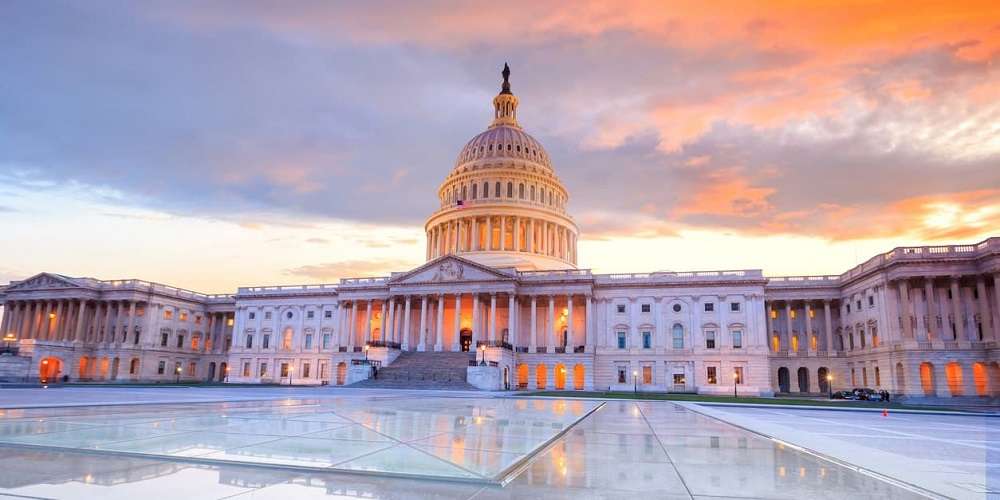
U.S. Capitol, History and Government in Washington D.C.

In recent years the debate over the legalization of marijuana has come to the forefront of national politics. As some states have been leading the cause by allowing the drug to be available widely available for medical and recreational use, a debate over who possesses the power to regulate citizens behavior has emerged. Without a clear ruling by the Supreme Court, states have allowed for the use of this federally illegal drug within their borders. However, the debate has more overarching implications. It has sparked in broader sense, the question of exactly how much power the government should have over the behaviors of its citizens.

It makes sense for this question to come from the “land of the free”. Exactly how free are the people of the United States? With gay marriage only recently becoming legalized, censorship and prohibition of certain substances, the people in the United States may not in actuality be as free as they believe. In some instances, it makes sense for the government to regulate their citizens, on things such as murder and crimes against others, however, what about on topics that are by definition debates of morality. Issues such as gay marriage and the legalization of marijuana are simply put, opinions based on one’s feelings of morality. Thus, leading to the question of whether or not the government has the right to regulate issues based on morality.

Is this Really an Issue?

Currently, for the issue of marijuana legalization, the federal government has ruled it the use and distribution of marijuana for any purpose to be illegal. However, with states going against this policy and allowing for the use and distribution of the drug in their borders, there has begun a legal and philosophical debate about the government and their roles in defining laws that one may deem as a moral issue. When looking more deeply at this issue, I was not able to find any research or articles posing that question. Instead what I found was a debate over whether it was the state or federal government who should wield that power. This debate outlined not only the legal aspect of it, but the idea that state government may or may not be more responsive to its constituency. For some, the idea that the state government should wield the power comes from the reality that every individual has more say in their state government than the federal government. Thus, in certain terms, these people are saying they want these types of moral issues to be influenced more by the individual public. In the next few paragraphs I will be outlining four sources with different views to give a better sense of what kind of conversation is currently at work.

Federal Government First

Image result for big government

Government was originally set-up to provide a way for rule of law to be made and enforced. It started out through necessity, to provide citizens with a set of clear rules and provide a safe environment for the individuals living in that society. However, as the years progressed, more power was given and taken by governments. It was through the need for safety of its citizens under which government began to provide not just basic rules of law, but to regulate the behavior patterns of their citizens. Taxes for things such as sugar, alcohol, and nicotine became more prominent as government attempted to control the everyday lives of its citizens by promoting healthier lifestyles. One such “lifestyle” issues is the use of drugs. Marijuana, being considered as one of these things was outlawed by the federal government.

In his political cartoon shown below, Paul Combs provides insight into why the federal government has the right and obligation to prohibit the use of the drug. This does come from an opinion piece and therefore is not backed up by facts. Although this is not considered to be a scholarly piece, the effect of the image is powerful and has logical connections to the statistical evidence about underage drinking. The aim of this piece is to provide more support for keeping the use of the drug illegal and leaving the power of this decision to the federal government.

Illustration by Paul Combs of the Tribune Media Services

One of the main topics of discussion in the debate of marijuana legalization is the use of the drug by underage teens. Under current state marijuana laws in states that allow for the use of the drug, only someone 21 years or older can purchase it. However, this is met with controversy. For many years, the legal age of alcohol purchase has also been 21, yet studies show that this has not stopped many teens for using and abusing it. In Paul’s mind, legalizing the drug and allowing states to do so will only increase its use by underage teens. In effect, what he is arguing for is that the federal government should have the right to regulate its citizens behavior on morale issues. Basically stating that in some instances the federal government should protect its citizens from themselves. His argument mainly states that people although may want the choice of whether not they do something, but it is in the best interest of the people for the choice to be taken away by the government.

Why Did it Become Illegal?

It seems reasonable for anyone to ask the question, why did it even become illegal in the first place? In his article, On This Date: FDR Made Marijuana Illegal 81 Years Ago, Eric Revell discusses how and why the drug became illegal in the first place. He uses sources such as the Federal Bureau of Narcotics to explain how this drug became caught up in a war between the United States government and drug use. Using statistics about national drug use, he gives a compelling argument for the need to regulate drug use. Citing the high number of crimes committed by those under the influence of drugs. In addition to this, he cites the astounding number of individuals who were arrested or cited for violating marijuana laws in 2014. At 700,000 cases, he provides a reasonable explanation to why the war on drugs became and still is so prominent in the United States.

The use of facts and premier sources of information gives his argument more weight. His use of logos is powerful and cannot be ignored. There is only a slight bias in his article as the question of why marijuana use is so bad is never mentioned within the article. He does however discuss the use of the law to focus on minorities in particular and outlines this bias. Even so, his argument for the need of government to regulate the use of the drug is apparent and backed up through facts.

The implications of this article again suggest that it is the right of the federal government to regulate its citizens choices. Specifically using the staggering statistic about the number of drug arrests and citations for violation of marijuana law. He shows that citizens are not able to make what is deemed as the preferable behavior of not using drugs even when the it is illegal. This provides basis for showing that there is a necessity for the government to save the people from themselves, as the number of users would most likely increase if it were to be made legal by the states.

People Above All

Image result for group of people

As states have already begun to construct and pass their own marijuana laws, the majority of Americans are standing behind their states. In an article entitled, Who Should Regulate Marijuana? Most Say States Over the Federal Government, Joanna Piacenza lays out facts about Americans attitudes over who should have the right to regulate the drug. Using national polls, she shows that about 56% of US adults believe that states should have the right to decide, while only 26% believe that the federal government should have the right to decide. She gives a convincing and seemingly unbias update on the current attitudes towards the legalization of marijuana using facts and quotes from senators and experts in the field. This push for states rights over federal shows that the people want to have more influence on the decision and do not want things that fall into the category of morality to be run by big government.

Next, in the article from Safe Access Now, an update on the federal and states laws over marijuana legalization are given. The article goes over the new and old court cases with their decision and explain how they are slowly giving more and more power to the states to handle the issue. It talks about how government agencies are dealing with the tension between the law of the federal government and the states that have legalized the drug. The article does very well to put aside personal biases and outline only the facts from court cases. In addition to this, since it is just a summary of the court cases and the findings of them, there is a large amount of logos that goes into this article. This article allows for a deeper look into how the people are putting the power in their own hands. No longer are they just waiting for the federal government to make a decision, they go through local and state government, of which they have a much bigger impact on, to get the laws passed in order for the law to represent their ideals.

Not only this, but the people are finally taking action. This fact in itself expresses how strongly the individuals on this side are. For them to fight using a legal avenue to pursue their beliefs, it shows that this is not just a issue that can be put aside, but rather a fight for the right to control their own lives separate from the supervision of the federal government.

References:

https://www.safeaccessnow.org/federal_marijuana_law

https://morningconsult.com/2018/07/20/who-should-regulate-marijuana-most-say-states-over-federal-government/

https://www.washingtontimes.com/cartoons/paul-combs/legalizing-marijuana-will-not-increase-or-promote-/

https://www.countable.us/articles/849-date-fdr-made-marijuana-illegal-81-years-ago

Pictures:

https://openclipart.org/detail/304147/group-of-people

https://rowan.campuslabs.com/engage/event/3184137

What’s Up With Doctors Now?

When someone needs their hip replaced, they see an orthopedic surgeon; if someone has cancer, they might see an oncologist; if a woman is having a baby, she’ll probably go to an OB/GYN. This being said, contemporary views on healthcare are drastically different than how they used to be. As medicine and its practices are improving, the dissatisfaction of patients is rising from a plethora of issues. This frustration for people seeking the care they need generally doesn’t stem from doctors being inadequate in their respective field, but rather the lack of compassion in the physician-patient relationship. Explicitly, the cause of this apathy is not the fault of the doctors alone, but the healthcare institutions that breed from consumerism as well as physician manipulation and overhaul.

Bang For Your Buck

The simplest approach at which healthcare is discussed is the drive for profit. Today, many people prioritize their money over their health. In conjunction, so do hospitals in the idea that patients aren’t careseekers but that they are customers. Martyn Lewis would agree that, maybe unknowingly, patients are always just a buyer the hospital needs to sell for.

As a proclaimed behavioral economist, Martyn Lewis views hospitals simply as another revenue chain for maximizing profits and investments. He believes that while hospitals have the duty to serve those who are in need of medical attention, they also function as an underlying business. His key points are most people are uninterested in the products themselves, but rather the end-goal associated with said product and little things unrelated to the treatment are what build patient satisfaction. Claiming it as “the DNA of the buying journey,” Lewis supports his statements by describing a patient in need of a knee replacement (3:30). He says, “buyers actively do not want to buy surgery” due to fear and anxieties over possible complications or postoperative difficulties but eventually relent because they are focused on “what that purchase is going to enable them to do” (4:27 & 8:18). He goes on to explain that instead of giving advice and the run-down of a procedure in the first consultation, physicians should rather “actively navigate [the patient], support [the patient], and manage [the patient] through that journey” to target and secure the sales pitch (6:03). Furthermore, Lewis adds that little things like a receptionist with a nice demeanor or anesthetists giving patients better pillows is what triggers people to refer friends and/or family to see a certain doctor. He asserts that small triggers are what push people to return to a doctor which in turn helps the business.

The human mind is full of little quirks that take time and practice to acknowledge, recognize, and take advantage of. Much of healthcare today utilizes strategies like Martyn Lewis’s to exploit issues within patients and force them to feel pressured to fix. The idea of creating a pitch to someone actively avoiding an operation or treatment is taking advantage of patients who may not require anything at the moment. The heart of the pitch revolves around the desire “to be healthy… to be without pain” even when there isn’t enough pain to warrant an operation (8:54). In similar fashion, health officials often prey on small pieces of each operation that don’t affect patient outcome or well-being. For example, a nurse changing a pillow is what Martyn Lewis calls a trigger to trick a patient into becoming a referral system. This not only diminishes the jobs of hospital staff, but also diminishes the focus on the patient. Turning a blind eye from the patient’s long-term recovery and onto the mundane task of getting a better pillow is not only a nurse’s job already, but clouds the patient’s own opinion on how they feel their operation and recovery has gone. Despite this Lewis argues that while this business model can currently detract from a physician’s focus on the patient, it will help both doctor and patient decide on the best option for the patient’s health when the patient can be confident in the operation they purchase.

Integration of Technology in Medicine

Relatedly, as society expands further into technology-based workstyles, so do health institutions. Physicians now have electronic medical records (EMRs) compared to carrying binders with medical sheets. These EMRs improve many processes documentation of patients such as filling prescriptions, connecting doctors with updated records and allowing them easier access when collaborating, and make sure doctors get paid correctly. Although they are helpful in many ways they can slow down the workflow of physicians, says Rick Vaughn, the Chief Medical Information Officer of SSM.

The difficulties of integrating technology into the world of health is caused by multiple reasons, Vaughn asserts. He states that adaptation and comprehension of programs “is sort of a bell curve” in which some doctors are apt and others have severe challenges (4:40). In like manner, he says the technologies that are possible to integrate either don’t exist or can be inefficient themselves and makes the EMR the best choice to document patients at the moment. The development and use of the EMR, as Vaughn proclaims, “required excessive documentation—required physicians to do things that have nothing to do with taking care of the patient” (7:37). Moving forward, thoughts of utilizing artificial intelligence have become more of a reality now with increasing knowledge of AI technology. The hopes that “EMR must evolve into an intelligence agent that’s going to work hand-in-hand with the provider” are what Vaughn declares to be the ultimate goal for physicians to help focus their full attention towards the patient (9:23).

In some workplaces, technology can make an astounding difference in performance. The problem with incorporating electronics into a profession full of handwritten notes is that technology hasn’t evolved fast enough to efficiently service physicians. Provided that doctors are given technology that isn’t advanced enough anyways, they are forced to do the same job as they did before but learn the program, interface, and data systems in EMRs on top of added documentation for billing and coding. Equally, doctors are unhappy they are overburdened and forced to stay late to finish records and this can cause burnout that is visible to patients. For this reason, Vaughn positions himself on the side that until technology can improve, like AI working with the physician and patient, there will be very little advancement in the pairing of medicine and technology.

Privatized Equals Pain

To further doctor dissatisfaction, running a private facility for primary care, for instance, has become largely unavailable due to the fiscal risks a physician has to take. With high overhead costs and typically low reimbursement, the benefit is rarely worth the cost. In addition, hospitals have incentivized doctors to join their alliances which causes a further cycle of the hospital monopoly.

(2)

Many primary care physicians feel, like Gillian Griffith, O.B., that they “don’t think independent practice is really an option” anymore (Griffith). With 22% of medical residents saying they didn’t even plan to own or co-own a private facility in a 2016 study, insurance companies are often to blame for the lack of desire to own a practice (Johnson). Due to EMRs many insurance companies can search records to deny coverage. In the same fashion, being an administrator for an independent practice is an incredible burden financially and emotionally and is “a leading contributor to physician burnout” from bureaucratic paperwork (Johnson). However, the drive to open an independent care facility is being replaced with the option of joining an alliance in hospital. This allows doctors to keep in much better communication with others, as well as let them seek other paths in their careers. For example, hospitals allow doctors to further pursue education. In Anna Goldheim’s, M.D., case, she was able to earn her master’s degree in public health to “obtain the skills necessary to improve the health system in which [she] will deliver care, and to explore opportunities outside of clinical medicine, should [she] decide to balance clinical medicine with an allied job” (Goldheim). Similarly, Ishani Ganguli, M.D.,  can do research in healthcare policy while balancing clinical work and teaching at Harvard Medical School and asserts that “working for an institution enables her to wear multiple hats and ‘leads to greater mobility’” (Johnson & Ganguli). Correspondingly, many businesses are looking for physicians to give them credibility in the healthcare industry and this leads many doctors to follow non-traditional pathways in their careers.

As caregivers stray further from the norms of private practice, hospitals and corporations have created more opportunities for diversity in their careers. This being said, the problems within hospital capitalism will not change for the time being, and encouraging doctors to become more entrepreneurial further pushes the current status quo to create the highest profit. This circularity of the process leads to more capitalistic approaches in medicine that overall do not benefit the public. While private practices are not the most optimal pursuit for doctors today, they are shown to be a good option for the public because they have deeper patient connection and are more patient-health oriented.

Doctors are People Too

Healthcare is very heavily focused around the caretakers, but the caregivers can often go unnoticed. Physicians can often be seen as disconnected and cold to patients, but this is often not the fault of the physician. As noted by Angeliki Kerasidou and Ruth Horn, “the open expression of feelings is perceived as weakness,” and patients do not desire fragility from the person responsible for helping them overcome their own weakness (Kerasidou & Horn). This mentality forces doctors to lack empathy and neglect their own emotions in order to be medically and scientifically objective which causes “emotional exhaustion, burnout, depression or even attempt suicide.” Estimated per year, over 300 doctors commit suicide for a population of 100,000 compared to 40 people out of 100,000 in the general population (Kerasidou & Horn). These astronomical numbers are argued to stem from the mental duress physicians have to undertake on the daily, such as working 80 hours a week while balancing a family life, dealing with newly implemented systems, or simply being burned out from the lack of patient-wellness oriented care.

(3)

As has been noted, physician health is as important as patient health because health is a common theme central to all individuals. Their jobs are highly stressful alone, but adding other stimuli to deepen their hole causes a deprivation of emotion that is also deemed necessary by society. This apathy, in turn, increases the likelihood of doctors forming negative habits or mindsets that can ultimately lead to suicide. The importance of the argument made is not to preserve the number of doctors in the workforce but allow them to be patients as well, and seek help when they need it. The problem, however, is that the healthcare industry has put many roadblocks in their path of medicine that doctors often feel they are unable to do their true purpose: care for their patients.

How Does This Define Healthcare?

All things considered, there are many problems with healthcare, in general, resulting in the conclusion of patients who are often unhappy with the care they receive. On the superficial level, this can be attributed to the lack of doctors in the workforce, or even the lack of character amongst the staff. But when looked at a deeper level, the root of patient dissatisfaction arises from the pressure put on the doctors from their work environments. Hospitals have forced doctors to be a piston in the machine of hospital consumerism in order to sell treatments and operations and the argued solution for this is create a larger private sector for caregivers. This model is controversial because it is currently overtaxing for doctors, but once implemented smoothly it can help better inform the patient of their purchase and decision. At the same time, overhaul from bureaucracies and insurance companies deters the doctors from pursuing a privatized path of medicine in which they can control their own schedules and manners of patient care. Coupled with a physician’s inability to leave the hospital systems, technology’s adaptation into the medical field has been subpar by creating further complications in how doctors keep records and get paid. The argued solution to this is finding an improved form of voice recognition software or even AI to record and process data. Nonetheless, one of the most direct effects on which the patients view the quality of their care is the conduct of the doctor. Patients want their doctors to be confident yet personable, but the consequences of how administrators and technology affect not only their demeanor towards their career but their emotional well-being too. The added workload of the aforementioned EMRs and learning how to sell care is a large part of physician apathy and burnout. In brief, this cycle of monopoly to apathy is the underlying reason for patient complaints.

(4)

Works Cited

Pitt, Alan. “Why Don’t You Eat Your Vegetables. What Can We Learn From Sales?” Healthcare Pittstop, 6 Jan. 2019, healthcarepittstop.com/why-dont-you-eat-your-vegetables-what-can-we-learn-from-sales/.

Pitt, Alan. “‘We Have Plenty of Physicians- We Just Have to Stop Asking Them to Do Silly Things’ Rick Vaughn- Chief Medical Officer of SSM.” Healthcare Pittstop, 14 Sept. 2017, healthcarepittstop.com/plenty-physicians-just-stop-asking-silly-things-rick-vaugh-chief-medical-officer-ssm/.

Shea, Julie. “What’s Killing Private Practice? | Healthcare Careers.” Clinician Today, 4 Jan. 2017, cliniciantoday.com/whats-killing-private-practice/.

Johnson, Megan. “Young Doctors Want Jobs, Not Partnerships.” AthenaInsight, 1 Mar. 2018, www.athenahealth.com/insight/young-doctors-want-jobs-not-partnerships.

Kerasidou, Angeliki, and Ruth Horn. “Making Space for Empathy: Supporting Doctors in the Emotional Labour of Clinical Care.” BMC Medical Ethics, BioMed Central, 27 Jan. 2016, www.ncbi.nlm.nih.gov/pmc/articles/PMC4728886/.

Farmer, Blake. “When Doctors Struggle With Suicide, Their Profession Often Fails Them.” NPR, NPR, 31 July 2018, www.npr.org/sections/health-shots/2018/07/31/634217947/to-prevent-doctor-suicides-medical-industry-rethinks-how-doctors-work.

Social Media: Hit or Miss? Does it ever miss, huh?

A modern-day smartphone user, bombarded with the various social medias

The Role of Social Media in Modern Society

From the rise of Myspace that millennials connected over in the late 2000s to the creation of Instagram and Tiktok which have defined many of the online experiences of those known as the iGen or GenZ, social media has taken root as an important part of socializing in the 21st century. For many, particularly the younger generation, social media has not only provided people with a new outlet to relate to and vent to others, but also with a slew of new opportunities that range from modeling deals to sponsorships, and even features on nationally recognized television shows, potentially dramatically changing livelihoods. However, the use or overuse of these digital platforms has faced backlash, from both older and younger generations, with claims of detrimental effects on both the society as a whole and for the individual. Ever since the beginning of the rise of social media, people have debated on the effects of social media, and whether the positive effects outweigh the negative ones, or if it even has any positive bearings.

Although it is clear that the issue of social media is more that just black or white, there are two main sides. One argues that the usage of social media has more positive than negative effects, while the other argues that social media’s detrimental effects far outweigh its positive ones. Overall, it appears that most have a very mixed view on social media, and believe the evidence for either side is not conclusive enough to turn to one side or the other.   

Some Things to Keep in Mind

Both of these sides are mainly based in the view that communicating via social media or using social media is unnatural as opposed to the “natural” face to face interactions. However, this may not necessarily be true, as social media has been built on fundamental human interactions. Networking, sharing and showing off one’s lifestyle, and communicating with important people in one’s life has not been recently invented with the rise of social media, rather, it has been around for centuries. Indeed, the way that these interactions are done have changed. Sending photographs via mail may have been replaced by texting “pics”, and composing letters may have been replaced with starting a conversation in DMs, but it would be unreasonable to deny that although social media has furthered these interactions on a large scale, it is based in the same desire of humans to connect to each other that has been around since the beginnings of civilization. This is valuable to keep in mind as treating social media as some incomprehensible “newfangled” invention can greatly impact one’s analyses. Further, none of these articles make any particular differentiations between the various social media platforms, which is important, as not all social medias are alike or even used for the same reasons, and can greatly differ, especially in whether their positive aspects outweigh their negative ones or not.

The “Hits”

What many seem to agree upon is that social media has made it easier for people to become a “connected” member of society thanks to the technological aspects of social media. Whether this “connection” is good or bad is another debate, but most see that it as a good representation of the technological advancements of the 21st century.

Agrawal, a journalist for Forbes, argues that one of the biggest functions of social media is to spread information and to connect people in a beneficial manner. He argues, “While some may be addicted to their social media networks, it is one of the best ways to stay informed.” and therefore, “…social media does more good than harm in retrospect.” It is indeed true that social media, most commonly used on mobile devices, helps bring information and news to the audience in mere minutes, taking only a few more for it to reach a sizable audience, and can therefore be considered one of the quickest and most accessible methods of receiving information. Agrawal gives the examples of news alert distribution, traffic message delivery, increased teen awareness, increased marketing exposure, helping to understand technological needs, and global natural disaster relief support as areas that can benefit from the proliferation of social media use.

News Alert Distribution

His first point, he points out news alert distribution is important because “News outlets can share breaking stories, alerts and other important bits of news instantly with their followers.” This is very valid, as the proliferation of news reaches more people, faster.

Traffic Message Delivery

His second point, traffic message delivery, is arguably weaker. He states that “[Social media] is a valuable tool for sending safety message and showing photos from severe crashes resulting from distractions”, and although this is true, this is a weaker point as news about safety while driving is not something that many people consider when using social media.

Increased Teen Awareness

His third point, increased teen awareness, is based on the idea that “Using social media allows teens to follow organizations and causes that they believe in”, and this is a much stronger point, as it connects to his other points about how social media allows various connections to be made that would not have been made otherwise due to distance or other factors.

Increased Marketing Exposure

For Agrawal’s fourth point, increased marketing exposure, he states, “In terms of marketing, it is the most cost effective way to reach mass amounts of consumers”. This can be seen as a both positive and negative aspect, as it is beneficial to companies who are marketing, but it can also be detrimental to consumers who enjoy impulse buying, which will be discussed later in The “Misses” section. But for those who look to sell their products or services, it is certainly a boon.

Helping to Understand Technological Needs

For his fifth point, helping to understand technological needs, he suggests that “Noting what areas of the world lack access helps developers understand the basic needs of a specific demographic group faster”, and although that would certainly be true, and definitely beneficial to those in need of access, he does not elaborate on how companies would do so, and if it this technology is currently being employed to help. He does discuss how the access brought about would help, based on how wifi can be installed to help people keep in contact especially during natural disasters.

Global Natural Disaster Relief Support

His last point about global natural disaster relief support is arguably the strongest, as it is one of the most visible on social media. After natural disasters or even tragic events such as school shootings, there are an extremely large number of people asking for donations and donating in order to help support people overcome the difficult times, and is therefore one of the most helpful.

The “Misses”

Nevertheless, social media certainly has its downfalls, and it appears as though it has the biggest negative impacts on people’s mental and emotional health. In BBC’s article, the author, Brown, discusses several mental states and emotions that could potentially be negatively affected by others on social media, even if it is indirectly.

Stress

Although many people open up a social media app to relax and de-stress, research shows that it may in fact help foster greater stress. Although it can be a place to go and rant, a coping mechanism that may decrease stress, overall others’ venting and stressing can negatively impact someone. Further, it appears that many believe that social media is a waste of time, become stressed after use, due to their perceived waste of time spent scrolling through feeds, that could have been put to use on something productive, according to one survey of 1,800 people that Brown references. Therefore, an interesting cycle appears to occur. A user might try and de-stress by opening up

Twitter and ranting, only to read others’ rants, get off the app feeling more stressed and guilty about the time spent, and then after a period of time open up the app again, to rant about how stressed they are. As for anxiety relating to stress, it appears that although rates may be higher in social-media using teens, it is yet unclear how it does.

Depression

Many people tend to associate this strongly with social media, and if one were to do so, it would not be entirely unfounded. Social media does tend to cause depression due to many factors. Brown discusses how a study “..involving 1,700 people found a threefold risk of depression and anxiety among people who used the most social media platforms.” Therefore, the concern of

Envy of others and their seemingly enjoyable lives, and low-self esteem and feelings of oneself being unattractive may also surface strongly, as image after image of perfectly Facetuned and Photoshopped faces and bodies float by. Social isolation from lack of human interaction due to time spent on social media may also contribute to depression. However, as with stress, a depressed user can also be positively impacted by social media. This is because social media is able to diagnose depression as well. Although not by a professional opinion, it can certainly help people recognize their depression, get confirmation from a licensed professional, and get the necessary treatments.

Finances

It is no secret that social medias try to sell users various products, tailored to fit one’s interests based on their activity. Therefore, many people tend to spend more money solely by utilizing social media. They see things that advertisers know they’re interested in. Gone are the times of throwing advertisements into a newspaper and hoping it reaches its target audience, now, they KNOW you are the target audience.

One journalist for the New York Times, a former Facebook user, described his life after parting with Facebook, and how he cut his online spending around 43 percent. People with restraint should scroll right past, but unfortunately many social media users are teens and younger adults who are used to online shopping, and drop hefty sums of money each month on purchases made online. Further, apps such as Instagram have now added a feature that allows users to tap on a photo to get information on where to buy, as well as prices on items featured, further encouraging online spending.

So Why do Good Girls like (the) Bad (social media) Guys?

I’ve had this question for a really long time.

Social media is extremely enticing for many, with its endless barrage of information thrown at users, thanks to the conveniences of modern technology.

Social media is still relatively new, and much of the research has been inconclusive thus far. Thus, it is difficult to determine if it is more “good” or “bad”. However, this does not mean that any of the findings should be ignored, but rather understood and taken with a grain of salt. Social media has yet to show its full potential, and is expanding, improving, and changing every day. Kids, younger and younger, join these social medias, influencing their views on the world and of themselves, and add to the growing number of users that are connected all across the world. Whether it is a boon or destructive, social media has planted itself in the middle of mainstream cultures and shows to signs of leaving.

Works Cited

Chen, Brian X. “I Deleted Facebook Last Year. Here’s What Changed (and What Didn’t).” The New York Times, The New York Times, 21 Mar. 2019, http://www.nytimes.com/2019/03/21/technology/personaltech/facebook-deleted.html?rref=collection/timestopic/Social Media&action=click&contentCollection=timestopics®ion=stream&module=stream_unit&version=latest&contentPlacement=8&pgtype=collection.

Brown, Jessica. “Future – Is Social Media Bad for You? The Evidence and the Unknowns.” BBC, BBC, 5 Jan. 2018, http://www.bbc.com/future/story/20180104-is-social-media-bad-for-you-the-evidence-and-the-unknowns.

Agrawal, AJ. “It’s Not All Bad: The Social Good Of Social Media.” Forbes, Forbes Magazine, 18 Mar. 2016, http://www.forbes.com/sites/ajagrawal/2016/03/18/its-not-all-bad-the-social-good-of-social-media/#45e786ce756f.