Have you ever wondered what it’s like to be a women in a society like today? Women are pressured by not only the opposite gender, but the norm of society that discriminates their rights and voice in many aspects. For abortion being one aspect, women should not have to feel guilty or entirely criticized for doing what’s best for them in the moment they’re in. Topics like abortion are important to acknowledge and understand the real meanings as to what makes it so significant in the world today.
Abortions are a controversial topic worldwide with divided sides. One side believes in pro-choice, while the other side believes in pro-life. This divide is seen throughout life and it is especially prominent in religion and politics. The article What Can I Do About Abortion? talks of the all the bad and issues abortions cause. The article Abortion Bans Strip People of Their Human Rights. Here’s Why We Must Stand In Solidarity Against Them, talks of the reasons why abortions should be protected. Regardless of where someone stands, it is important to understand the thoughts and beliefs from both sides.
What Can I Do About Abortion?
Brian, who is a Christian, uses his religious views as a way to influence his audience. Most religions and churches do not condone abortions, saying they are killing innocent life. About half of all Americans do not condone abortions, however, they do nothing for the fight for pro-life. The author wants his audience to stand up against abortions, so he uses the Book of James as a form of persuasion. He went on to say, “Certainly, fighting for life in a post-Christian society is a crucible for the activist, but he or she will almost always reap huge spiritual benefits from fighting for life.” The Book of James from the Bible and the statement contain examples of logos. Logos are seen when he talks of the Bible and of the benefits from God that would come from fighting for pro-life. Often, religious people believe that abortion is a sin. Murder of innocent life is a sin. His statement would persuade them logically, based on their prior beliefs surrounding murder and abortions (Clowes).
Clowes stresses the importance of the audience’s help in standing against abortions. He says to start by educating yourself on the topic. The knowledge learned will help you to become an advocate but also educate you on the importance of life. The author states the most important thing the audience can do to help would be to pray and to recruit others into the pro-life movement. He lists many sources, groups, and resource centers that help to educate and prevent. He talks of safe centers where people help mothers with their decision to not have an abortion. They list other options, like adoption or keeping the baby. This helps list other options than abortions and offer to counsel for the mothers. These resources listed are an example of logos. They help to logically strengthen the point of this article (Clowes).
Overall, this article is used to persuade an audience to the pro-life side of the abortion divide. The author believes that abortions are religiously and morally wrong. He discusses ways to support the fight, offering sources and resources that help to end abortions. The tone of the paper was seen as a cry to help. The language used was powerful and driving. The author did not shy away from his use of words. Instead, he used them proudly and relentlessly. The article showed pictures of “pro-life” headers and smiling people. The tone, wording, and imagery seen in the article helped to add to the appeal of logos and pathos.
Abortion Bans Strip People of Their Human Rights
The article, Abortion Bans Strip People of Their Human Rights. Here’s Why We Must Stand In Solidarity Against Them, by Mishra-Newbery and Todd-Gher discusses the reasons why safe and legal abortions must be protected. Their first argument says that abortions will occur whether they are legal or not. It is important to protect safe abortions. If abortions were illegal, people would resort to hangers and toxic medications, causing the mother harm. The authors say, “When governments restrict access to abortion, abortions continue to take place at roughly the same rate, according to the World Health Organization.” This example shows how logos are presented in the argument, giving logical information on the effects of restricted access to abortions (Mishra-Newbery and Todd-Gher).
The authors next present the idea that abortion bans in other countries and some U.S. states. Mishra-Newbery and Todd-Gher said that the bans are meant to control females, forcing them to conform to their stereotyped gender roles. The article stated, “They are an affront to their human rights and dignity and constitute gender discrimination.” The authors also state that queer and transgender people who need abortions face more laws that are an attack on their freedoms. The attacks on women and members of the LGBTQ+ community help to add to the pathos of the article. The statements made against the above populations are seen as an attack on basic human rights. This is used as a way to persuade the audience.
The article states that “any person who does not control what happens to their body cannot be free.” The authors say that there are many reasons for an abortion. They go way beyond the harm of a mother. It is a human right to decide what to do with your own body. The authors stated, “Governments must not only decriminalize abortion and ensure access to safe abortion in practice but also create social conditions in which people can make pregnancy-related decisions free of oppression, discrimination, stigma, coercion, violence, lack of opportunities or punishment.” This statement is a great example of how logos can be seen in the article. They use logical information on basic human rights to persuade their audiences.
The article talks about the importance of speaking out on the issue. Women activists from the U.S. and other countries speak out about the stigma surrounding abortions, sharing their stories. Marches and protests occur often, with women and people demanding to be heard. Educating yourself, donating, supporting, and protesting for pro-choice rights is what is needed for women to reclaim their rights. This is an example of pathos. The words used in this paragraph, like rights, protests, and so on helps to emotionally pursue an audience.
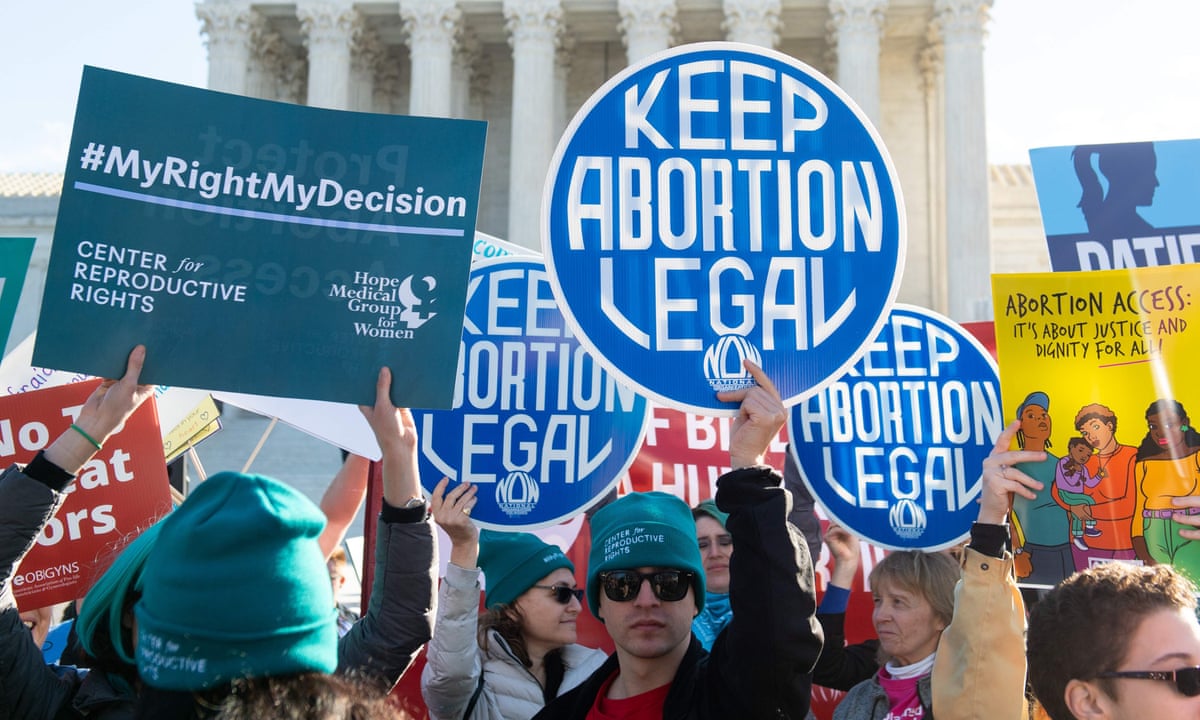
In conclusion, this article supports the pro-choice movement. They speak out on the reclaiming of rights of women and members of the LGBTQ+ community. The many reasons for an abortion were discussed, helping to explain why some people chose to receive one. The article also speaks of the many ways to help support the pro-choice movement. The tone of the article was seen as empowering. The language used was powerful and inspiring. The authors used captivating words like freedom, human rights, and more. The article showed pictures of protests supporting pro-choice. The tone, wording, and imagery seen in the article helped to add to the appeal of logos and pathos.
Through the conversation on such a heavily debated topic, abortion should be acknowledged in the right perspective. No matter the debate, there is more to change and focus on with the development of protecting and legalizing abortion. The decision lies in the hands of the individual and their right to make the decision for themselves should be protected and safe.
Mishra-Newbery, Uma, and Jaime Todd-Gher. “Abortion Bans Strip People of Their Human Rights. Here’s Why We Must Stand In Solidarity Against Them.” Time, Time, 27 Sept. 2019, https://time.com/5684858/international-safe-abortion-day/.
An illegal immigrant is seen as a person of a foreign nationality fleeing or immigrating to the US illegally without the permission of the government. Many people within the United States view immigrants who do come to the US illegally as an “Illegal Immigrant”. Some people may argue that these illegal immigrants are viewed by others as criminals, but nothing makes them criminals until they take the action to do something. The US, still today, is having many debates and conflicts regarding our borders and border security of the United States. Many political figures view their opinions differently as well as different beliefs within the American people are prevalent throughout the nation and has been a hot topic that is still looking for a solution to this day.
Obtaining Citizenship
Illegal immigration can be seen both positively and negatively affecting our country in different ways. There are an estimated 11 million undocumented immigrants currently living and providing for their families in the United States. It is very unrealistic and inhumane to deport these individuals from their families and lives in the United States. According to Allan Jokerst’s “Can the government allow immigrants who are here illegally to become US citizens” article, these immigrants “should be offered a path to legal status and eventually earned citizenship, as well as this path to citizenship be realistic, rather than unsafely” (AJC). This quote proves the fact that there should be a safe way to attain citizenship in the United States because many of these immigrants flee their natural-born homes to find a new life, and experience the “American dream” they they have heard about, and talked about their entire lives. This is something these people work for and ultimately dream for to be free, and to be free in a very united nation.
As seen negatively, “immigration reform should focus heavily on enforcement and upholding the rule of law, and including the intention of use of force and action to better the country” (Goodlatte). This quote directly proves a more conflicting and dangerous way to handle the immigration problem by using force and enforcement of the rules and laws. This may seem like the favorite to use, and it is. But using violence and force is not the correct and the most effective way to deal with this on going issue. The ability to do it peacefully, while still upholding the law is the most effective way to go about dealing with it. These examples are both positive and negative effects of illegal immigration and how one should be able to attain citizenship in the United States.
Affecting Economy
Illegal immigration has many effects regarding our economy and workforce throughout the United States. There are different views on how these immigrants promote and provide for our economy, while also seeing them intruding and potentially harming our economy. Positively, these immigrants have “helped the economy overall, the benefit is largely in certain industries. Immigrants with advanced degrees gravitate toward scientific and technical jobs that don’t require high communication” (Amadeo 1). The benefit that these immigrants bring to the US is high advanced skills in certain industries that can help and support our economy. These immigrants provide goods and services for the American people without posing a threat or harming the economy in any way. Using these skills, these immigrants provide jobs with high efficient working, while doing it for a low wage over a longer period of time. This directly helps with our economy and positively influences the efficiency of the good or service to the consumer overall.
While oppositely, some of these immigrants take advantage of having a place in the work force and negatively affect the economy overall. These people who do come to America looking for a job “lower the price of goods and services for everyone. That’s because they provide low-cost labor that allows companies to reduce the prices of consumer goods” (Amadeo 2). These immigrants not only lower the price and quality of the goods for the company, but for the American people as a whole. Instead of having young hard working Americans, these people are taking away jobs from others and wasting their time by producing bad to below average goods and products. They do have the necessary skills for the job, but not the necessary attitude or work ethic like young Americans have and that drive to be the best. Both of these quotes and points of views support how immigrants can both positively and negatively affect the US economy by their negative mindset, but amplified efficient work skills.
Debate
The debate about Illegal immigration has been going on for decades and still, people see two different sides to this issue facing our country. These two sides and points of views are split between the democratic and republican parties which do not see eye to eye. The Democratic Party, who favor “ see it as a moral and economic imperative—millions of undocumented immigrants risk abuse and poor working conditions . Those with families are afraid to seek health care and cannot enroll their children in school. They cannot call the police if they are robbed, assaulted, and/or raped “ (Passel 1). These illegal immigrants can not escape the dangers of simply living because they can’t reach out for help when in need. Due to them immigrating here illegally, it forces them to fly under the radar and not bring attention to themselves, only to focus on helping and providing for their families. This is dangerous for them because they are not getting the necessary protection that normal citizens do, but the trade off, they cannot ask for help because then they will get caught and eventually deported back to the place they came from, and thats what makes this issue so complex.
The other point of view, coming from the Republican Party, expresses dislike and uneasiness with letting these illegal immigrants into our country. The Republican Party advocates “that the influx of immigrants drives down wages and displaces hundreds of thousands of native workers each year. They also argue that because the quality levels for most illegal immigrants are so low, they create a drain on the economy by increasing the burden on social programs “ (Passel 1). As stated in the quote, the dangers and worry come from how these immigrants affect not only the country, but society as a whole, and the citizens within it. Because these people are being let in daily, million of workers are displaced each year and they drive the economy down. In order to be a successful nation, the economy must be reinforced and strong to help maintain the American people, and if it crashes, so does the country. As seen, this political battle has affected our country for so long, and it’s paved its way for even more debating in the future without the process of finding a solution.
Lasting Effects
Illegal immigration has taken an affect on our countries population, financial state, and employment. The door to our country has not always been wide open, but hasn’t been completely shut either. Stated by Smith regarding immigrants into the country, “As long as there is a virtually unlimited supply of potential immigrants, the nation must make choices on how many to admit and who they should be” (Smith 2). Regarding who is accepted and at what rate, the United States government has always had a problem with this idea of acceptance and who should/should not be. Again, there are many different viewpoints on this topic but all have similarities in trying to better the nation as a whole. The United States has about 1 million immigrants a year who receive green cards and are allowed permanent legal residence status’s. Immigrants live with 16 million American-born children who are US citizens. These immigrants, who are documented, make up 25 percent of the US residents. Concluding, immigration has a lasting and big impact on our countries population, financial state, and employment and the numbers keep rising year to year as more crowd in.
Conclusion
In conclusion, illegal Immigration has an affect on our nation that is viewed differently amongst different people. Illegal immigration has taken a role on our economy, the way we live, and the conditions we live in for not just the American people, but society as a whole. Many people may view this problem differently and have different opinions, but that has only shaped our nation into who we are, what we are, and how we handle our problems as a country. Immigration can provide many positives for our country but at the same time many negatives that affect people everyday and ultimately will affect what our future will look like as a united nation.
Works Cited
“Can the Government Allow Immigrants Who Are Here Illegally to
Become US Citizens?” What Are the Solutions to Illegal
Immigration in America?, Allan Jokerst, immigration.procon.org/.
view.answers.php?questionID=001362.
“How the Pro & Con Arguments shape us.” What Are the Solutions
to Illegal Immigration in America?, Dave Passel, immigration.procon.org
Krogstad, Jens Manuel, et al. “5 Facts about Illegal Immigration in
the U.S.” Pew Research Center, Pew Research Center, 28 Nov. 2018
Kendal Smith. “The Economic Logic of Illegal Immigration.” Council
on Foreign Relations, Council on Foreign Relations, report/economic-logic-illegal-immigration.
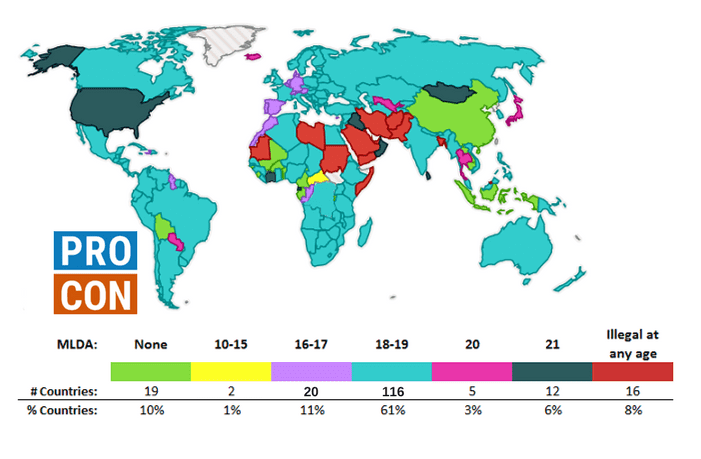
Alcohol. It’s what seems to be the forbidden fruit for many American teenagers until they reach the ripe old age of 21. Compared to the rest of the world, 21 seems a bit late to finally allow citizens to indulge in alcohol. Many European countries allow their taxpayers to legally buy and consume alcohol at age 18, some even as low as 16 years old (“Minimum Legal Drinking Age in Other Countries”). To many, it seems only natural that the U.S. should follow in the footsteps of the rest of the world and change the drinking age from 21 to 18, but to others, the 21-age stamp is here to stay.
The drinking age is something of a continuous hot topic throughout America. It seems silly to many that at 18, someone can join the military, but they can’t join their buddies for a drink at the bar. They can get married, but they can’t celebrate with a glass of champagne. Many people against the idea of lowering the drinking age shake it off that it’s only teenagers who want this. That they want to be legal so they don’t have to keep sneaking around. While that may be true, and a large majority of the supporters for lowering the drinking age are in a relatively younger age bracket, there are many older adults who seem to feel the same. One in particular being 81 year-old Dr. Ruth C. Ensburg, a professor at Indiana University’s School of Public Health. At the beginning of this paper she wrote, “Why the drinking age should be lowered: An opinion based on research”, Dr. Ensburg does an effective job at establishing ethos. She’s researched this opinion she’s had for 30 years and has become somewhat of an expert in the topic. Throughout this essay, there are also many compelling statistics revolving around the use of alcohol and college students. This use of statistics enhances her claim that lowering the drinking age would be beneficial for the health of college age students. A particularly interesting statistic was that 22% of alcohol consumers under the age of 18 are considered to be heavy drinkers. This is compared to the 18% of people that reported consuming the same amount, but are legal drinkers (Ensburg). It seems to be that by raising the consumption age to 21, the American government has pushed unhealthy and irresponsible drinking habits on young adults. Later on in her essay, Ensburg covers the topic of responsible drinking. She goes to mention that because America has raised the legal drinking age, it has created an era of irresponsible drinkers. Percentages of unsafe and reckless acts have risen since the implementation of MLDA, the mandated legal drinking age (Ensburg). Another author, Kynslie Otte seems to agree with Ensburgs points. Otte points out that just because MLDA was enforced, it doesn’t mean that underage drinking stopped. The National Center on Addiction and Substance Abuse recorded that underage drinking is responsible for 17.5 percent of consumer spending on alcohol. MLDA didn’t stop the purchasing of alcohol, all it did was make young adults sneakier with their ways of purchasing and consuming alcohol. It pushes college students to more unsafe methods of drinking. Instead of being able to sit in a supervised bar or restaurant, college kids go to unsupervised house and frat parties where drinking and drug use is common. This can lead to injuries or situations that kids are too afraid to report to the authorities (Otte). Both of their articles target pathos, with their main point being it will keep kids that partake in these activites safer. These two articles corroborate with each other’s findings, making a compelling argument that lowering the drinking age, would in fact, be more beneficial for the younger generations’ health. I found a third article that is also in agreement with the articles I talked about above. Gabrielle Glaser published her article, “Return the Drinking Age to 18, and then Enforce it”, in the New York Times. She goes on in her article to explain how lowering the drinking age, would benefit the health of the younger population, which seems to be the reoccurring theme for people to talk about when talking about lowering the drinking age. Glaser talks about the rise in alcohol themed deaths in her article as well. She briefly mentions traffic deaths and chooses to focus more so on alcohol poisoning deaths, as well as the rise in hypothermia cases and falls. During the years of 1998 and 2005, the amount of alcohol poisoning deaths in 18 to 24 year olds, almost tripled, going from just 779 cases to a whopping 2,290 (Glaser). I find this statistic particularly interesting because Glaser chose to include ages that were over 21. Most people would think that because someone is 21, they understand how to drink responsibly, but that’s just not the truth. Glaser makes an interesting analogy in her conclusion paragraph about how society doesn’t just let a new, 14 year-old driver drive alone. They need to have an adult in the car, go through a whole class to get their license, and so on, so why is that not the case with drinking (Glaser)? Surely if kids were able to drink in a controlled setting and learn how to do it responsibly, there would be less problems related to alcohol consumption in our world.
However, not everyone is in agreement with the findings in the above paragraph. There are countless other studies that have been published that would say the safety of the people is endangered, were America to lower the legal drinking age. Most of these studies run along the lines of driving fatalities and alcohol, failing to account for other factors that could be attributed to their findings. Statistics reported by the CDC saw a 16 percent decline in automobile crashes after the enforcement of MLDA (“Minimum Legal Drinking Age of 21 Saves Lives”). Another article, published on verywellmind.com, agrees with the CDC’s research and simply puts that the higher drinking age is what is saving lives on the highway. The author, Buddy T, includes a rather persuasive statistic in his article that targets the pathos of readers, especially readers that are parents to people that fall into this age bracket, that drivers who are between the ages of 16-20 and who’s blood alcohol level is .08% and above, are 17 times more likely to die in a motor vehicle crash (T). This is extremely persuasive when both sides of this argument are concerned with the health of these younger drinkers. As mentioned earlier, pathos targeted towards parents or guardians is especially prominent within these articles. Yes they mention many statistics which would imply the use of logos, but all of these statistics are centered around the teenage years, where adolescents are still living with their parent or guardian. No one that loves a child in this age bracket is going to look at the statistics of drunk driving being reduced and think that lowering the age would be a good idea, which is something that the articles against lowering the drinking age do an effective job of portraying. It just goes to show that the basis of both sides of this argument are concerned with health and safety. One side thinks lowering it would save more lives, while the other thinks keeping it where it is at right now is what is saving lives. It’s an extremely important cultural debate because both sides think that they are saving the lives of not only the American youth, but the American people as a whole.
However, the articles mentioned above that use these statistics chalk up the fall in drunk driving crashes to raising the legal age, but fails to account for the rise of drunk driving education in schools, as well as tighter seatbelt and D.U.I laws (Glaser). Drunk driving education has been integrated into drivers ed courses, as well as the health curriculum in middle and high schools. They try and teach kids young what driving under the influence can do to your life in theory, but because the legal age is much higher than the age of kids in school, they don’t think about it, and in turn don’t truly learn how to be a responsible drinker. Whether law makers decide to change the legal drinking age or not, kids need to start becoming more educated when it comes to alcohol. We cannot continue to wholeheartedly preach staying away from alcohol in the schools until the legal age because that simply just isn’t feasible when looking at the data for underage drinking and alcohol sales. Kids will continue to find ways to get their hands on it whether the law changes or not, and school health courses need to cater to this and teach kids what being a responsible alcohol consumer looks like. Otherwise, the American society will continue to find itself at a crossroads when it comes to adolescents and alcohol.
Works Cited
Engs, Ruth C. (1997, 2014). Why the drinking age should be lowered: An opinion based upon research. Indiana University: Bloomington, IN. Retrieved from IUScholarWorks Repository:http://hdl.handle.net/2022/17594. Accessed 9 November 2020.
“Minimum Legal Drinking Age in Other Countries – Drinking Age – ProCon.org.” Drinking Age, 18 Feb. 2020, drinkingage.procon.org/minimum-legal-drinking-age-in-other-countries/. Accessed 9 November 2020.
Speaking on social issues can cause a lot of controversy in whatever scenario you are in. Whether it is a family function, work environment or with your friends’, people can feel very strongly towards one side or the other. Athletes are often put in very difficult situations when it comes to these issues. Athletes have a large following and are often thought to be role models for us, and if they act too strongly to either side, they might get some push back from the media. At the same time if athletes don’t do anything then might get criticism for not using their platform to lead others to what they believe is right.
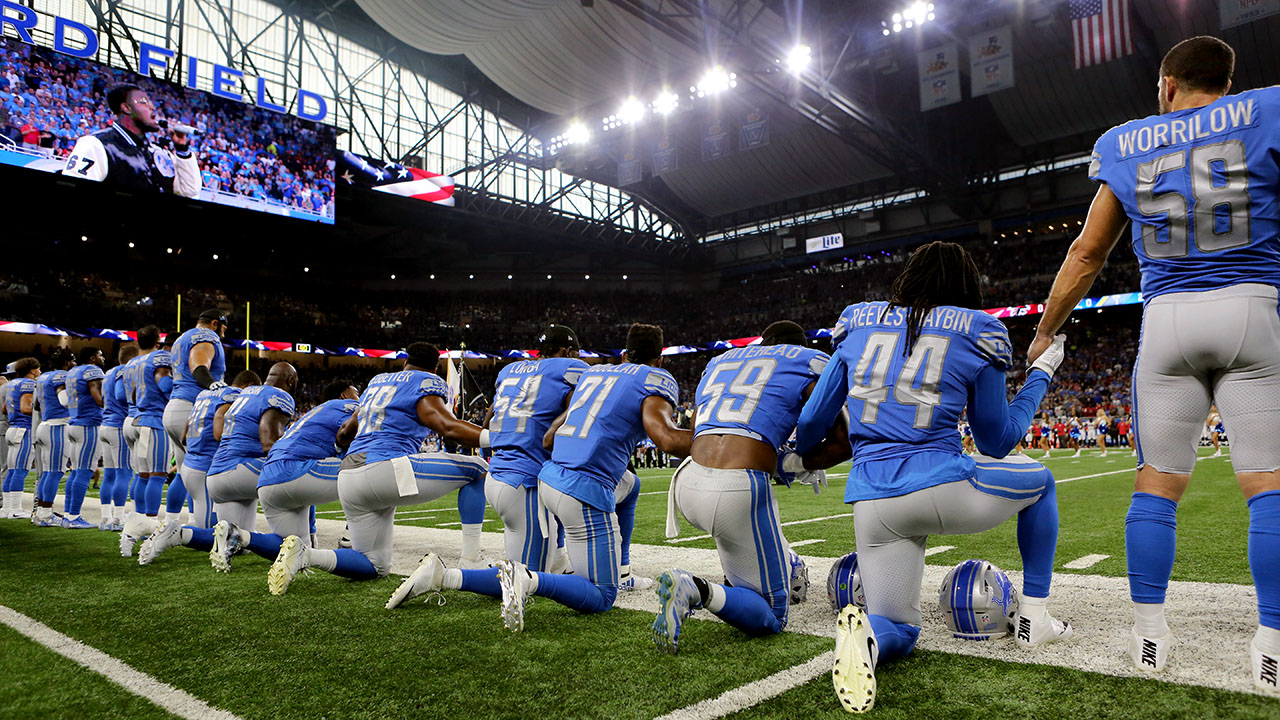
The biggest athlete as of late to take a stance on a social issue was Colin Kaepernick protesting in support of Black Lives Matter in the 2016 football season. Colin Kaepernick received lots of criticism from people in media accusing of him being anti-American, however he felt that this was a peaceful way to call out the mistreatment of Black Americans in our society. He was not thought highly of for what people believed as the wrong time to protest, however his protests are the base for what athletes protest for today. During the most recent NBA season many protests took place with the same beliefs as Kaepernick had. There was a difference in the way in which people thought of these players. The media was a lot more supportive of their beliefs and weren’t as critical. This shows the progress that has been made over the last four years.
In the Time article by Sean Gregory the main focus is an interview with Jason McCourty and how he feels that the protest of Colin Kaepernick and George Floyd are similar. McCourty believes that both of them were protesting the cops use of authority as a whole rather than just the specific action. Athletes have grown to be bolder in their views and not listen to those who want them to “stick to sports.” The athletes aren’t concerned with how many people, but rather want to see real change by seeing a decline in police brutality and innocent lives being lost. In the article he makes a great point about how he sees the other side of wanting to keep politics out of sports. Showing the other side of the argument provides ethos by showing that people don’t want politics when they watch sports. He goes one step further by saying that it isn’t about politics to them, it is their lives at stake. Overall the aim of this article is to show us how athletes standing up for their beliefs is not to just gain attention, however, it is their life they are fighting for. This contributes to the conversation by advocating for athletes to stand up for their life.
Michael Jordan is arguably not only the best basketball player of all time, but best athlete to ever play sports. His on the court play is really how he got his name, Jordan steered clear of politics and black advocacy during his time playing. Jordan was quoted saying “I never thought of myself as an activist. I thought of myself as a basketball player,” he said. “I wasn’t a politician. I was playing my sport. I was focused on my craft.” This quote shows that Jordan didn’t want to get involved in social issues of the time. Jordan didn’t want others to not like him because of his political views. The article from The Undefeated criticizes Jordan for not showing his political beliefs to the public. The most famous instance of this is when he was asked to support a political candidate, Harvey Gantt, from North Carolina who was running against a historically racist white Republican. Jordan was quoted saying “Republicans buy sneakers too.” Michael Jordan was more concerned by making money and not wanting to hurt his profit by making some folks uneasy about his words. By avoiding these controversial topics, he was able to remain neutral to the public eye and become a brand for himself. Jordan generated more than $3 billion dollars in the most recent fiscal year. All of this was because of this because he remained neutral and didn’t broadcast his views to the world. In this text by Jesse Washington, he points out something that I think is very interesting. He thinks that Jordan wanted to use his power in his own way and not be told what to do. He probably hated Jesse Helms, but because he was asked to support him publicly, he didn’t want to. I believe that this is a little not fair. If you are so self-centered about yourself that you can’t show your views, it is a problem. I believe that the reason Jordan didn’t support him was because he didn’t want to support something he didn’t know about. After this came out Jordan remained “uncontroversial – but not uninvolved” as Washington points out. I really like this quote, it shows that somebody can have views, but not want everybody to hear about them. Jordan hosted many events for Obama in his campaign to be president as well as donated lots of money to various groups in support of black lives. Overall, I believe that this article does a good job of showing both sides of Jordan, in ways he did good and times that he might have made a mistake. At the end of the day people get to have their own opinions and it is up to them how they express them.
The next text that contributes to the conversation is a video from Ketra Armstrong, a Professor of Sport Management and Director at Center for Race and Ethnicity in Sport at the University of Michigan. Ketra points out the power of the institution that sport is. Sports impact on a daily basis culturally, socially, psychologically, and politically. All of these things together make it a very powerful platform to communicate messages. I think that is a very important thing here. Ketra is showing us that all types of people watch sport, therefore messages can speak to many people. Sporting events are the most watched thing of entertainment. All of these things that come together make it that we can talk about controversial issues like race and politics. Ketra makes a fabulous point about that black athletes make up a majority of the sport, and other members of the community feel connected to them because of their race. Athletes spend much more time in their community rather than on the field. So, when they’re decorated in their element of blackness and they’re not associated with a team, they’re subject to the same types of harassment and violence that the other members of their communities are. This is the reason that it is acceptable to speak out on these issues. This claim that is made is very important to note because often times we don’t see them as community members, but rather as athletes. This video by Ketra Armstrong strongest piece is the tone it shows. The tone is very upfront and bold which helps us understand the problems in the world. Her audience is also one to note. She is talking to those who think athletes should “stick to sport” and “shut up and dribble” which she does a very good job with her logic and logos. She makes this easy to understand and puts it in real world applications.
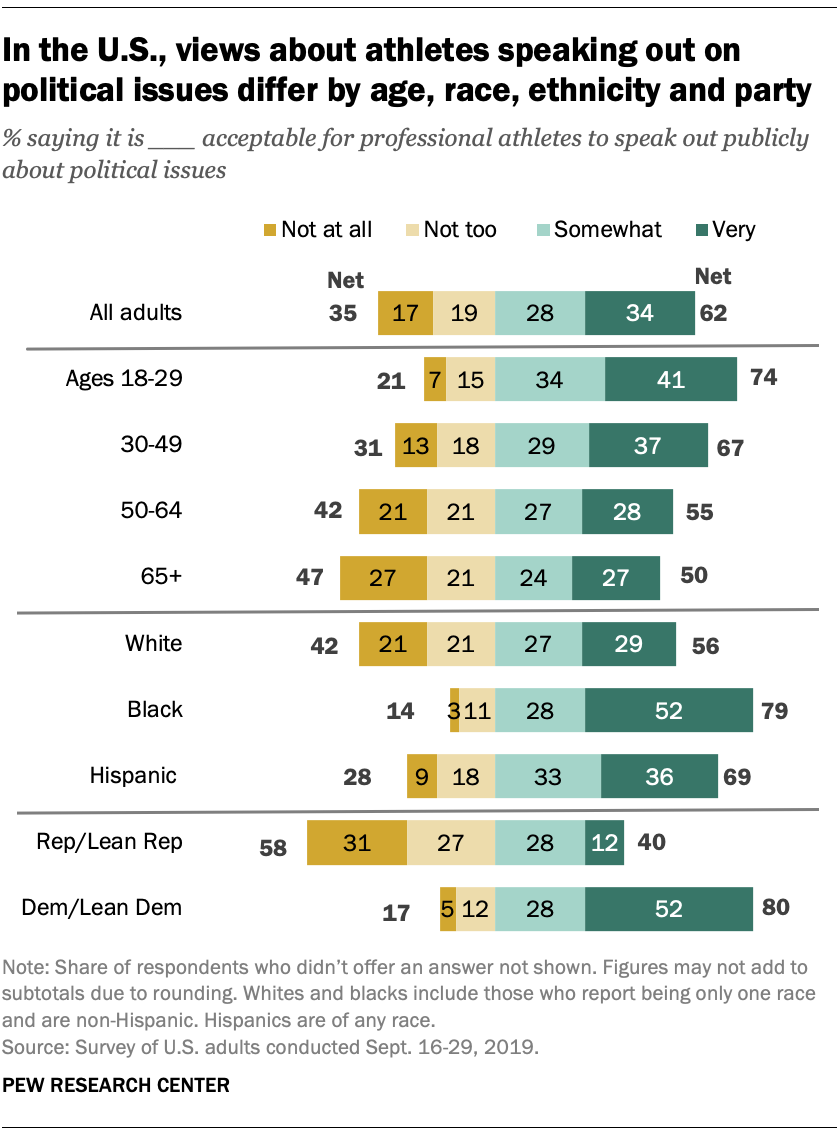
The final piece that I looked at was research from Pew Research Center specifically the graph that are shown. The first graph is the US views towards athletes speaking out publicly among political issues based of age, race and political party. The data that I find most intriguing is how different the political parties are. For example, 31% of Republicans say it is not acceptable to speak out and 12% say very acceptable while 5% of Democrats say not acceptable at all and 52% say very acceptable to speak out. To me I am confused how just because of the political party makes you think one thing or another. The chart also points out that the older you get the more likely you are to not want the athletes to speak out. I think that this is because as young adults we are so in search of what we think it right and interesting in learning that we want to hear all sides of the argument. I believe that this graph is very logical and makes it very clear to point out the trends in the United States.
After doing the analyzing of different texts I think it is important to see what role athletes play in our country. They are often very highly paid and widely followed. We place lots of importance on sports and athletes. When speaking on controversial issues it can be a little awkward and when it comes to athletes speaking out, they can take a lot of heat for it. Many times, they are told to not involve politics in sport, however this is their life that they are fighting for. As of recent we have seen a shift in how social issues are dealt with. Igniting with the death of George Floyd many leagues have allowed their athletes to speak out, along with making changes across the league. This has gone a long way to help improve the treatment of all people. While there is a lot more work to be done this is a good start to the conversation of activism in sport.
Speaking on social issues can cause a lot of controversy in whatever scenario you are in. Whether it is a family function, work environment, or with your friends’, people can feel very strongly towards one side or the other. Athletes are often put in very difficult situations when it comes to these issues. Athletes have a large following and are often thought to be role models for us, and if they act too strongly to either side, they might get some push back from the media. At the same time if athletes don’t do anything then might get criticism for not using their platform to lead others to what they believe is right.
The biggest athlete as of late to take a stance on a social issue was Colin Kaepernick protesting in support of Black Lives Matter in the 2016 football season. Colin Kaepernick received lots of criticism from people in media accusing of him being anti-American, however, he felt that this was a peaceful way to call out the mistreatment of Black Americans in our society. He was not thought highly of for what people believed as the wrong time to protest, however, his protests are the base for what athletes protest for today. During the most recent NBA season, many protests took place with the same beliefs as Kaepernick had. There was a difference in the way in which people thought of these players. The media was a lot more supportive of their beliefs and weren’t as critical. This shows the progress that has been made over the last four years.
In the Time article by Sean Gregory, the main focus is an interview with Jason McCourty and how he feels that the protest of Colin Kaepernick and George Floyd are similar. McCourty believes that both of them were protesting the cops use of authority as a whole rather than just the specific action. Athletes have grown to be bolder in their views and not listen to those who want them to “stick to sports.” The athletes aren’t concerned with how many people, but rather want to see real change by seeing a decline in police brutality and innocent lives being lost. In the article, he makes a great point about how he sees the other side of wanting to keep politics out of sports. Showing the other side of the argument provides ethos by showing that people don’t want politics when they watch sports. He goes one step further by saying that it isn’t about politics to them, it is their lives at stake. Overall this article aims to show us how athletes standing up for their beliefs is not to just gain attention, however, it is their life they are fighting for. This contributes to the conversation by advocating for athletes to stand up for their life.
Michael Jordan is arguably not only the best basketball player of all time, but the best athlete to ever play sports. His on the court play is really how he got his name, Jordan steered clear of politics and black advocacy during his time playing. Jordan was quoted saying “I never thought of myself as an activist. I thought of myself as a basketball player,” he said. “I wasn’t a politician. I was playing my sport. I was focused on my craft.” This quote shows that Jordan didn’t want to get involved in social issues of the time. Jordan didn’t want others to not like him because of his political views.
The article from The Undefeated criticizes Jordan for not showing his political beliefs to the public. The most famous instance of this is when he was asked to support a political candidate, Harvey Gantt, from North Carolina who was running against a historically racist white Republican. Jordan was quoted saying “Republicans buy sneakers too.” Michael Jordan was more concerned about making money and not wanting to hurt his profit by making some folks uneasy about his words. By avoiding these controversial topics, he was able to remain neutral to the public eye and become a brand for himself. Jordan generated more than $3 billion in the most recent fiscal year. All of this was because of this because he remained neutral and didn’t broadcast his views to the world. In this text by Jesse Washington, he points out something that I think is very interesting. He thinks that Jordan wanted to use his power in his way and not be told what to do. He probably hated Jesse Helms, but because he was asked to support him publicly, he didn’t want to. I believe that this is a little not fair. If you are so self-centered about yourself that you can’t show your views, it is a problem. I believe that the reason Jordan didn’t support him was that he didn’t want to support something he didn’t know about. After this came out Jordan remained “uncontroversial – but not uninvolved” as Washington points out. I like this quote, it shows that somebody can have views, but not want everybody to hear about them. Jordan hosted many events for Obama in his campaign to be president as well as donated lots of money to various groups in support of black lives. Overall, I believe that this article does a good job of showing both sides of Jordan, in ways he did good and times that he might have made a mistake. At the end of the day people get to have their own opinions and it is up to them how they express them.
The next text that contributes to the conversation is a video from Ketra Armstrong, a Professor of Sport Management and Director at the Center for Race and Ethnicity in Sport at the University of Michigan. Ketra points out the power of the institution that sport is. Sports impact us on a daily culturally, socially, psychologically, and politically. All of these things together make it a very powerful platform to communicate messages. I think that is a very important thing here. Ketra is showing us that all types of people watch sport, therefore messages can speak to many people. Sporting events are the most-watched thing of entertainment. All of these things that come together make it that we can talk about controversial issues like race and politics. Ketra makes a fabulous point that black athletes make up a majority of the sport, and other members of the community feel connected to them because of their race. Athletes spend much more time in their community rather than on the field. So, when they’re decorated in their element of blackness and they’re not associated with a team, they’re subject to the same types of harassment and violence that the other members of their communities are. This is the reason that it is acceptable to speak out on these issues. This claim that is made is very important to note because often we don’t see them as community members, but rather as athletes. This video by Ketra Armstrong’s strongest piece is the tone it shows. The tone is very upfront and bold which helps us understand the problems in the world. Her audience is also one to note. She is talking to those who think athletes should “stick to sport” and “shut up and dribble” which she does a very good job with her logic and logos. She makes this easy to understand and puts it in real-world applications.
The final piece that I looked at was research from Pew Research Center specifically the graph that is shown. The first graph is the US views towards athletes speaking out publicly among political issues based on age, race, and political party. The data that I find most intriguing is how different the political parties are. For example, 31% of Republicans say it is not acceptable to speak out and 12% say very acceptable while 5% of Democrats say not acceptable at all and 52% say very acceptable to speak out. To me, I am confused about how just because of the political party makes you think one thing or another. The chart also points out that the older you get the more likely you are to not want the athletes to speak out. I think that this is because as young adults we are so in search of what we think is right and interesting in learning that we want to hear all sides of the argument. I believe that this graph is very logical and makes it very clear to point out the trends in the United States.
After analyzing different texts, I think it is important to see what role athletes play in our country. They are often very highly paid and widely followed. We place lots of importance to sports and athletes. When speaking on controversial issues it can be a little awkward and when it comes to athletes speaking out, they can take a lot of heat for it. Many times, they are told to not involve politics in sport, however, this is their life that they are fighting for. As of recent, we have seen a shift in how social issues are dealt with. Igniting after the death of George Floyd many leagues have allowed their athletes to speak out, along with making changes across the league. This has gone a long way to help improve the treatment of all people. While there is a lot more work to be done this is a good start to the conversation of activism in sport.






 Cosner Rhetoric